
There are two common and very popular misconceptions in our sampradaya:
- Being a son of acharya is an enough qualification to be acharya.
- Taking the sambandham of acharya (Diksha) is enough for moksham.
This has not been told by any of the Purvacharyas and in any of the granthams. What they have said:
- Acharya must be having gyaanam and anushthaanam (Plus sambandham of Acharyas appointed by Ramanuja).
- Shishya must be having gyaanam and anushthaanam, without which Moksham is impossible. (Exceptions can’t be general rule. Anyday Moksh-pradatvam isn’t in our hand but with Bhagwan).
Thus, a Sri Vaishnava who has surrendered to an acharya who have gyaanam and anushthaanam and he himself possess gyaanam and anushthaanam gets Moksham.
But don’t we get Moksham from Ramanuja-Sambandham?
Yes, true. But the acharya to whom we surrender should be Ramanuja dasa and the shishya himself/herself should be Ramanuja dasa.
Being Ramanuja dasa means having gyanam of aacharya-sheshatvam and anushthaanam as per that gyaanam. The Sambandhis appointed by Ramanuja are Avayavas (body parts) of Bhagwad Ramanujacharya. Thus sheshatvam toward Upakaarak acharya and kainkaryam to him is actually kainkaryam towards Ramanuja swami himself.
Also, we never say that only Ramanuja-sambandhis can get moksham. Other Sampradayas have their own methodologies. We follow what our purvacharyas gave us. We can’t say who will get Moksham and who won’t get. Bhagwan is param swatantra to give to anyone he wishes.
74 Simhasanadhipatis
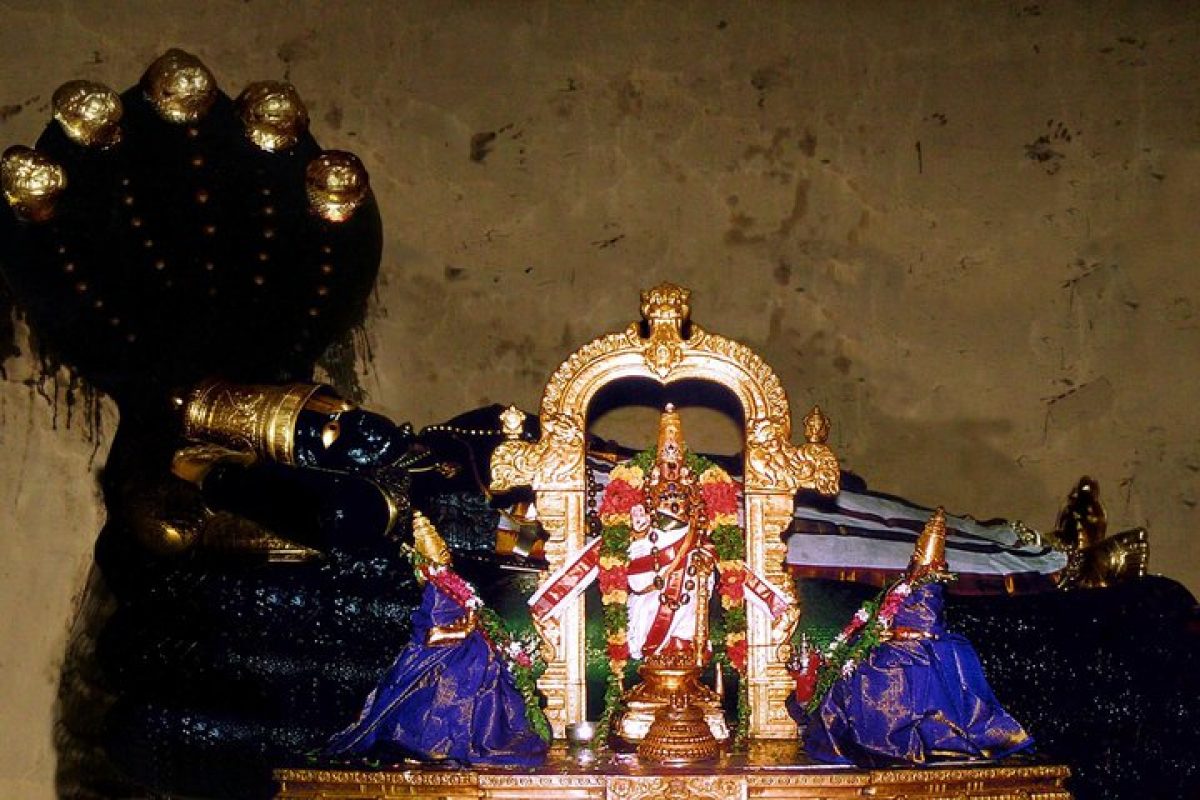
Sri Vaishnava Sampradaya is anaadi and begins from Sri Ranganaatha Bhagwan in ShriRangam (as per the present existing disciple successions. There may be other ones but unknown to us). This anaadi Sampradaya reached Ramanujaacharya swami. All the streams of parampara merged into him, he being the acharya of all. Bhagwan has assured to give moksham to all Ramanuja-Sambandhis. Bhagwad Ramanuja has laid down some rules. One who abides by those rules, are Ramanuja dasa and Moksham is ensured to them by Ramanuja Sambandham.
(No, it’s not like getting diksha from acharya and moksham is ensured. That is just a start.)
After Ramanujacharya swami, the parampara diverged to 74 Simhasanadhipatis. By convention, the hereditary Vamshajas of them are considered acharyas, but not ONLY they are the acharyas.
The present acharya can give diksha adhikara to his disciples based on his gyaanam and anushthaanam. That may be his son as well some of gyaana-vamshaja as well. Parashar Bhattar gave Acharyatva to Nanjeeyar (Vedaanti swami). Nanjeeyar gave to Nampillai (Kalivairi das swami) and Nampillai to Krishnapaad suri and Periyavachchan pillai. It’s worth noting that they aren’t from the hereditary Vamsha parampara of 74 Simhasanadhipatis. They were chosen as the leader of the Sampradaya in Oran-Valli parampara based on their gyaanam and anushthaanam only. Swami Periyavachchan Pillai had many shishyas, including glorious Vadi Kesari Jeeyar parampara. Swami Pillai Lokacharya appointed Tiruvaimozhi pillai (शैलेश स्वामी) as his successor, who wasn’t from the hereditary (auras) Vamsha parampara of 74 Simhasanadhipatis. Sri Shailesh swami was a King by that time and had almost left the sampradayam. Swami appointed Vilan Cholai Pillai to reform him and bring back to sampradayam and give acharyatva.
Coming to the most important acharya, Swami Varavara muni who appointed asht-diggajas. Swami established important acharya peethams like Vanmamalai Totadri mutt, which don’t belong to 74 parampara but is one of the most glorious parampara in preaching and spreading Sri Vaishnava Sampradaya throughout the length and breadth of India. Swami Varavara muni through his disciple Koil Annan VaradaNarayanacharya swami, established Goverdhan mutt parampara in Mathura-Vrindavan, which spread the sampradaya from Rajsthan to Nepal-Bhutan horizontally and Kashmir to Maharashtra vertically. Gadi Anantacharya swami established several mathams in North and gave them Diksha adhikaara like Buxar Tridandidev mutt etc.
Even much before this, we have many ancient mutts as well like Orissa Embar mutt, Jeeyar swami mutt, Rajsthan Jhalariya mutt etc.
It’s good to have Vamsha-gauravam but that itself isn’t enough qualification for Acharyatva. All the Acharyas from Lokacharya swami to Varavara muni swami, Devaraaja swami etc have given Acharya Lakshanams. They are of primary importance. We have a word “Acharya-Purusha”. What does it mean? It’s simple meaning would be ‘Ramanuja-dasa’. Thus, one who have enough gyaanam and Anushthaanam of his swarupam as Ramanuja-dasa can only be Acharya. An Acharya should have received diksha adhikaara from his own acharya (who would lie in the 74 parampara but may or may not be from 74 auras Vamshas). It’s not that some shishya can voluntarily declare himself as acharya. The shankh-chakra mudra is given to the shishya by the acharya.
Swami Pillai Lokam Jeeyar in his Vyakhyanam of Upadesha Ratnamala says, “From Prapanna-jana-kootastha Shathakopa alwar to vartmaana acharya is unbroken Vamsha-pravaaha“.
(//pazhuthilA ozhugalAtru engira padiye prapannajana kooTastharaana AzhwAr thodangi swAchAryaparyantamaaga vamshapravaahaththil naduve oru aBhishasta sambanDham kalashaadhE nitya nirduShtan aagai//)
What Vamsha-pravaaha is being talked here? Does Shathakop Alwar have any Auras (hereditary) Vamsha? The Vamsha being talked here is gyaana-parampara only. Natha Muni was Vamshaja of Nammalvar. Not by hereditary genes but by being gyaana-putra.
As a Sri Vaishnava, what’s our pravar? It’s ‘Paraankusha-Parakaal-Yativaraadi’. Thus we all have same gotra and same Vamsha.
How?
Remember Parakaal Alwar saying, “I wasn’t born then (from mother). Once I was born (gyaana-janma), I never forgot.
CONCLUSION
An acharya in one having Ramanuja sambandham from his acharya, and empowered by his acharya with aacharyatvam. The 74 Simhasanadhipatis are 74 doors of the dam of the compassion of Ramanuja. The acharya in the traditions further empowered other acharyas, established other muttams and thus Ramanuja sampradaya grew in all directions.
Gyaanam and anushthaanam of upakaaraka acharyas is important for the uplifment of the shishya. Someone lacking in gyaanam and anushthaanam can’t be an acharya.
Thus both, being in shishya parampara and given aacharyatva by his aacharya plus gyaanam and anushthaanam is important to recognize someone as acharya. Take shelter of an Acharya having both the qualifications.
Appendix
There are amaryaadit allegations against Chinna Srimannarayana Jeeyar swami from Andhra and many fake social media accounts are declaring him a fake acharya. While I agree with their criticism that devataantara sambandham should be avoided. I strongly condemn the criticism that targets his guru-parampara. He was appointed as the successor of his acharya Pedda Jeeyar swami as per his acharya’s wish and in front of most all the stalwarts of the sampradaya in Tirupati. Thus, he received rights to be an acharya by his acharya. Pedda Jeeyar swami was an iconic figure of the sampradaya who had cordial relationships with all the stalwarts of the sampradaya and together they worked for the betterment of the sampradaya. Allegations against such a glorious parampara is like spitting towards the Sun.

 Ramanujasiddhantam