
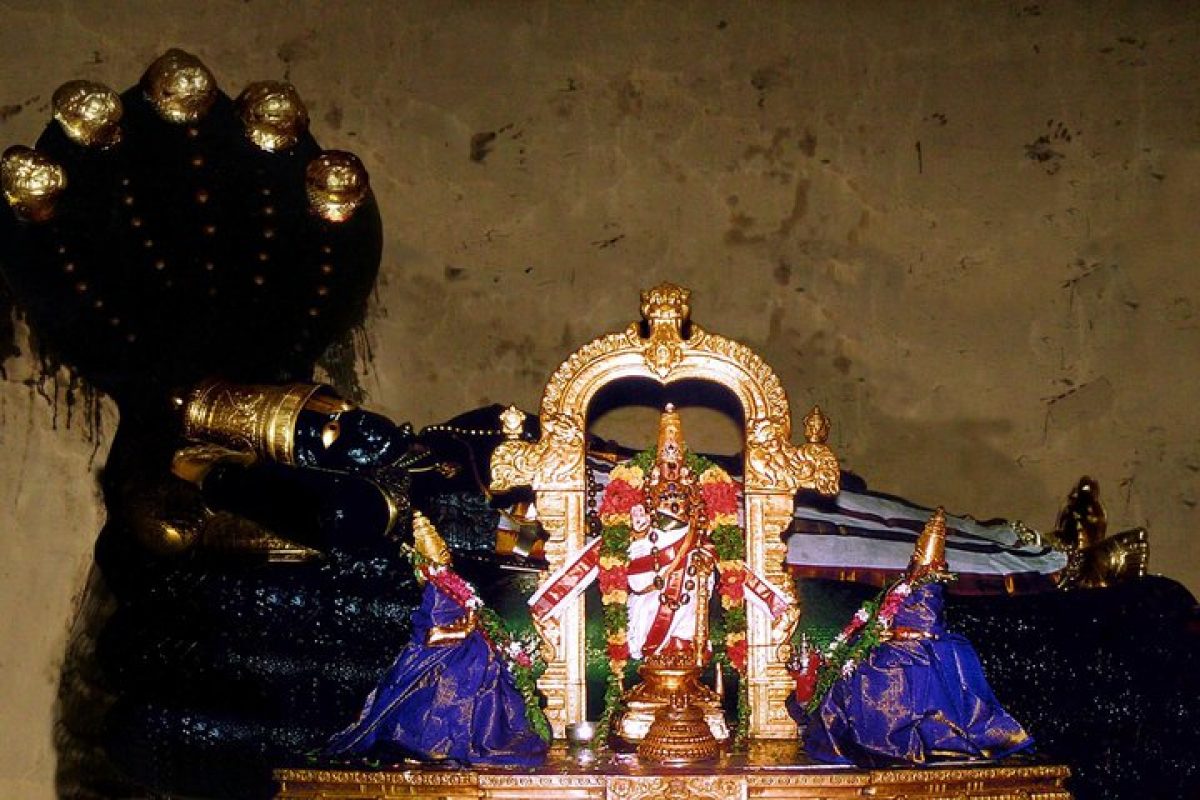
To understand the niyaamyatvam of Bhagwan as antaryaami, we need to first understand the kartritvam.
Purva-paksha
Saankhya darshana says that kartritvam (doership) belongs to Prakriti. The actions are a result of gunas of prakriti and don’t belong to a jeevatma.
As a pramana, they quote Bhagwad Gita:
नान्यं गुणेभ्यः कर्तारं यदा द्रष्टाऽनुपश्यति ।
कार्यकारणकर्तृत्त्वे हेतुः प्रकृतिरुच्यते।
पुरुषः सुखदुःखानां भोक्तृत्वे हेतुरुच्यते ।।
(भगवद्गीता १४/१९-२०)
The doership belongs to Prakriti and Jeevatma is just a receiver of fruits of the actions, Sukham and Dukham.
प्रकृतेः क्रियमाणानि गुणैः कर्माणि सर्वशः ।
अहङ्कार विमूढात्मा कर्ताऽहमिति मन्यते ।।
The kartritvam belongs to Sattva, Rajas and Tamas gunas of prakriti but the jeevatmas considers themselves as karta, out of ego/ahankaar.
Also, Kathopanishad tells that Aatma is not the karta:
हन्ता चेन्मन्यते हन्तुं हतश्चेन्मन्यते हतम् ।
उभौ तौ न विजानीतो नाऽयं हन्ति न हन्यते ।।
How the gunas of prakriti leads to action?
Sattvaguna leads to laaghav (lightness) and prakaash (increase of gyaana).
Rajoguna leads to Chanchalata (volatile) and krodh (anger).
Tamoguna leads to gaurav (heaviness) and aavaran (ignorance).
In moola prakriti, all the three gunas are in equal proportion. When Sattva guna increases, it causes happiness. When Rajoguna increases, it causes krodha. When Tamoguna increases, it causes Moha (delusion).
Let’s see how Vedantis refute their view in the next post.
Uttara-Paksha
If prakriti is the only karta (doer), then why does the shastras order a jeevatma to do something and refrain from something? If prakriti is accepted as karta, the meanings of shastra vaakyas will become useless (vyartha).
Saankhya darshana upholds kartritvan (doership) of the actions to prakriti and fruits of the actions to the jeevatma. If jeevatma is not a doer, why should he experience fruits of the karma (actions).
Brahma sutra discusses these aspects in 2.3.33:
कर्ता शास्त्रार्थवत्वात् ।
If jeevatma is accepted as karta, then only, the shastric injections will be fruitful. Shastric injunction like ‘स्वर्गकामो यजेत’ or ‘मुमुक्षुर्बह्मेपासीत’ tells a jeevatma to do yagya and upasana for Swarga and moksha respectively. Thus, both karta and bhokta of karma-fala are jeevatma only.
OBJECTION
Jeevatma’s actions like running after females, wealth, taste etc can’t be said appropriate to their swarupa. Thus, jeevatma can’t be the doer. Prakriti is the doer.
UTTARA PAKSHA
In saansaarika (worldly) involvements, the actions of the jeevatma like running after stri, anna, paana etc bhogas are not swaabhaavika (natural) but caused to contact with three gunas of prakriti.
Karta is the jeevatma only, but due to the contact of Sattva, Rajas and Tamas gunas, it develops Ahankaara. Ahankaara here means dehaatmaabhimaanam or consideration deha as aatma (I). He considers ‘I’ as body and ‘my’ as those related to his body.
प्रकृतेः क्रियमाणानि गुणैः कर्माणि सर्वशः ।
अहङ्कार विमूढात्मा कर्ताऽहमिति मन्यते ।।
Due to this Ahankaara gyaana (which is actually a vipareeta gyaan), he is involved in worldly pursuits like Stri, Anna, Paana.
When he realizes his swarupa as Shesha to bhagwaan, his Ahankaara gyaana vanishes and his actions become kainkaryam to Bhagwan.
SIDDHANTA
Brahma Sutra 2.3.40 says परात्तुतच्छ्रुतेः । The doership belongs to Ishwara i.e. the karta is Ishwara. But again we reach a contradiction, don’t we? Earlier we have proved jeevatma as the karta. If Ishwara is the karta, why does shaastra vaakyas tell jeevatma to do an action and also suggest rewards of that action?
Lets first understand what an action (kriya) is:
क्रिया हि नाम जानाति इच्छति यतते करोति। ज्ञानचिकीर्षाप्रयत्नान्तरभाविनी प्रवृत्तिरूपा, तदाश्रयत्वं कर्तृत्वम् ।
First knowledge (gyaan) comes. Then desire (chikeersha or ichchha) comes. Then comes effort (prayatna) to do something.
जानाति – इच्छति – प्रयतते – (ईश्वर अनुमति) – करोति
Now, the antaryaami gives anumati (permits) or remains udaseena. If he permits, jeevatma proceeds to the action.
Gyaana, Chikirsha and prayatna too belong to the jeevatma but are very much given by Ishwara only. Antaryaami gives gyaanam as per the previous karma of the jeevatma. So, as to give fruits of the karma.
सर्वस्य चाहं हृदि सन्निविष्टो मत्तः स्मृतिर्ज्ञानमपोहनं च। (Gita)
"I am sitting in everyone's heart and from me comes remembrance, gyaana and agyaana."
(As per the previous karma of the jeevatma).

Till now, we discussed, “परात्तुतच्छ्रुतेः”. The doership belongs to Ishwara. How is it so? It is because anumati-daanam or grant of permission for the action after the gyaana, chikirsha and efforts of jeevatma is done by Bhagwan.
Let’s understand the ‘anumati-daanam’ of bhagwan and how it doesn’t affect the free-will and kartritvam of jeevatma.
कृतप्रयत्नापेक्षस्तु, विहितप्रतिषिद्धावैयर्थ्यादिभ्यः ॥2.3.41॥
“Bhagwan makes the individual selves act, based on the efforts made by the jeevatma. Thus, injunctions and prohibitions don’t get meaningless”.
Though gyaana and agyaana is granted by bhagwan as per the previous karma, the free-will to act or abstain from belongs to individual jeevatmas. Since jeevatmas are gyaanaashraya, they can use their buddhi can decide whether they should make effort or not.
Taking into account the efforts of the jeevatma to engage or abstain in an action, he allows accordingly. A weak person cannot carry a heavy load of wood etc. himself. Yet he carries the same with the help of a strong man and comes in the scope of the Vidhi (injunction) or Nisedha (prohibition) of the act. In the same way the individual selves do an act with the permission of the Highest Self. Yet they become parties to the injunctions or prohibitions. Hence no contradiction arises.
Aadya pravritti is the first effort for an action by Bhagwan. At the first stage, Bhagwan is UDAASEENA or Witness. Based on the vasana, when jeevatma makes effort the second time, Bhagwan becomes ANUMANTAA or he permits. The third time jeevatma makes effort, he promotes (by giving gyaana/smarana as per their vaasana).
While giving anumati and pravartana, he remains indifferent and detached (anukti and anaadara). He does anugraha to those who engage in good (dharmic) actions and Nigraha of those who engage in adharmic actions.
These are the general rules. To some special jeevatmas, bhagwan does special anugraha and does remain indifferent and detached.
तेषां सततयुक्तानां भजतां प्रीतिपूर्वकम् ।
ददामि बुद्धियोगं तं येन मामुपयान्ति ते ।।
तेषामेवानुकम्पार्थमहमज्ञानजं तमः
नाशयाम्यात्मभावस्थो ज्ञानदीपेन भास्वता ।। (Gita 10.10-11)
To some jeevatmas, bhagwan makes them paatra of his kripa and gives righteous gyaana, desire and engage them in righteous efforts. He then permits them and makes them engaged in righteous actions. (This is different from the general rule where he gives gyaana, desire as per their vaasana and permits being indifferent.)
To some aasuri jeevatmas, he does nigraha:
तानहं द्विषतः क्रूरान् संसारेषु नराधमान् । क्षिपाम्यजस्रमशुभानासुरीष्वेव योनिषु ।। Gita 16.19
Those aasuri jeevatmas, who envy me (considers jagat as asatya), I keep throwing them in kroor aasuri yonis.

 Ramanujasiddhantam
2 thoughts on “Who is the doer?Prakriti, jeevatma or Ishwara?”