
In the previous part (https://ramanujramprapnna.blog/2024/03/17/the-unlimiting-compassion-of-bhagwan/), we discussed the efforts of Bhagwan to get the jeevatmas to attain him out of his compassion, and for this purpose, Bhagwan has been creating the samsara (to provide jeevatmas body, senses, etc. so that they can attain bhagwan) and dissolving them (so as to break the vasnas and ruchis of jeevatmas). The question of whether feeling sorrow for the suffering jeevatma will bring dosha to Bhagawan was answered in the first part.
Sri Sudarshana Suri defines karunyam as “स्वार्थ निरपेक्ष परदुख असहिष्णुता”.
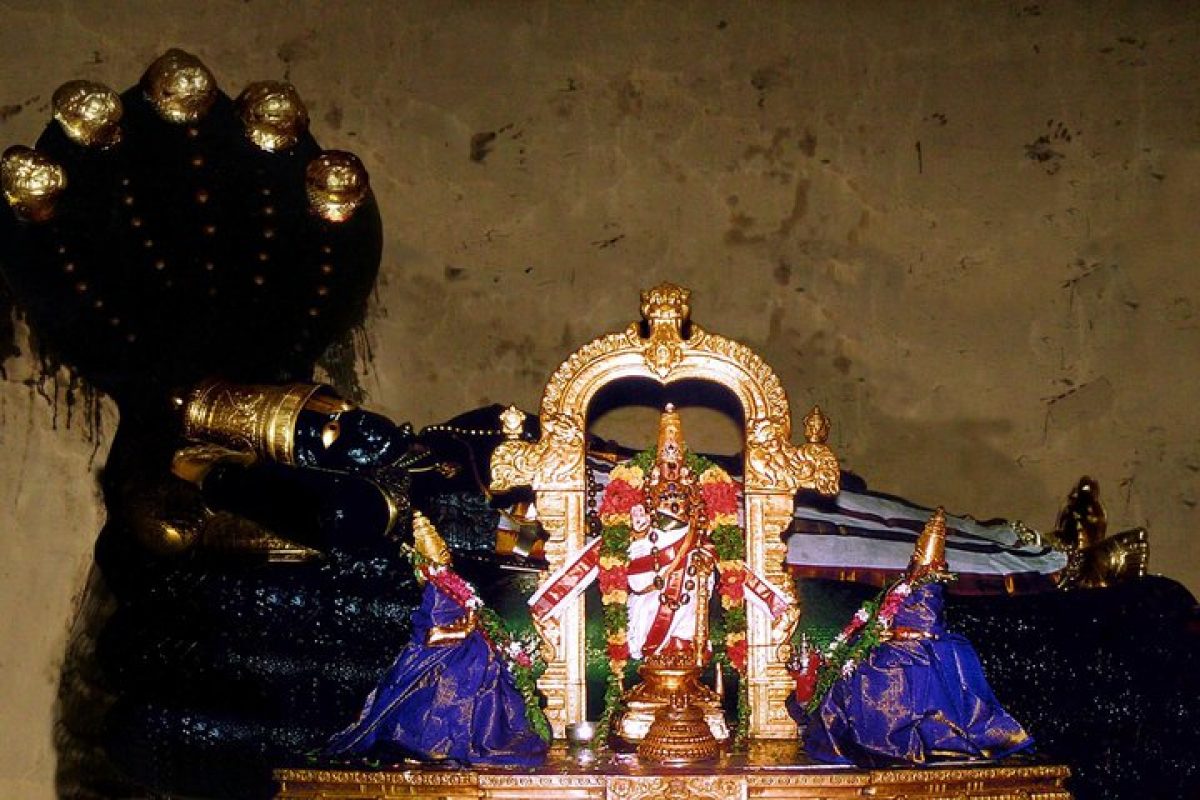
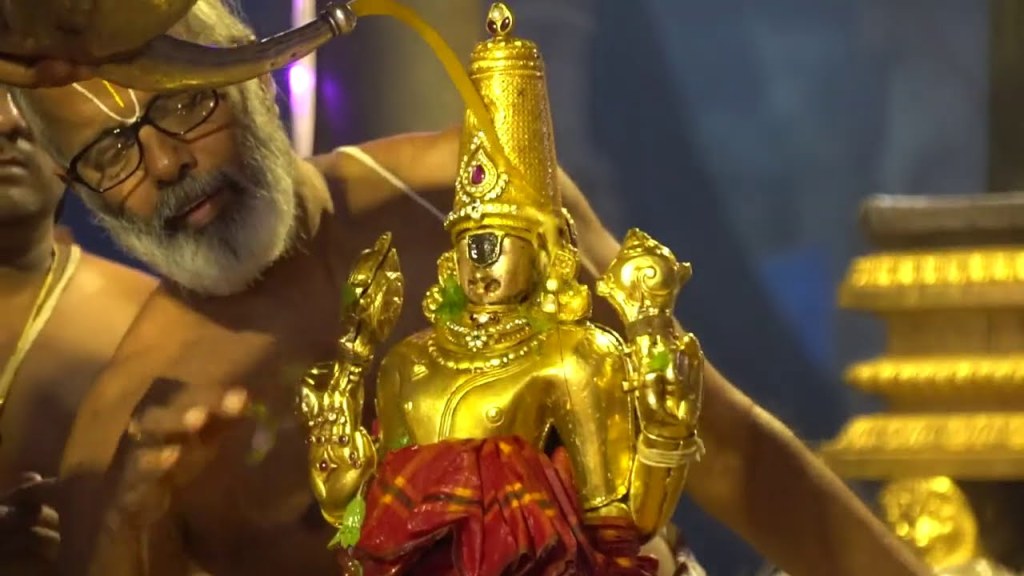
The efforts of Bhagwan to bring jeevatmas and the continuous refusal of jeevatmas is very well presented in a Tirumanjan kattiyam of Sriman Parashara Bhattar, the illustrious son of Kureshacharya Swami, and the leader of the sampradaya after Sri Ramanujacharya. Tirumanjan refers to the divine bath of Bhagwan. In olden days, when someone had to take an oath, he would enter the river, raise both hands, and declare his words. Namperumal (Utsava murti of Bhagwan) was having tirumanjan and Sri Bhattar got the anubhavam as if Bhagwan is dipped in water, raising his both and declaring that the jeevatma belongs to me. The jeevatma is quick to refuse and declare that I belong to myself. He cites two arguments: anaadi-siddhaat, anubhava-vibhavaat. Let’s tell it Pre-conditioning and Sensation in English. From anaadi births and since childhood in this birth, we have conditioned that I belong to myself and that life is all about vishayaanubhavam. In sensation, jeevatma gets temporary pleasures and he is working with animal consciousness to avhieve that.
त्वं मेऽहं मे कुतस्तत् तदपि कुत इदं वेदमूलप्रमाणत्
एतच्चानादिसिद्धात् अनुभवविभवात् तर्हि साक्रोश एव ।
क्वाक्रोशः कस्य गीतदिषु मम विदितः कोऽत्र साक्षी सुधीः स्यात्
हन्त त्वत्पक्षपाति स इति नृकलहे मृग्यम्ध्यस्थवत् त्वम्॥Paramatma – tvam me – I am your master. I own you.
Jeevatma – aham me – I am my own master
Paramatma – kuthastath – How do you claim that?
Jeevatma – tadhapi kutha – How do you claim that then?
Paramatma – idham veda moola pramaNaath – This is has been established in the Vedas
Jeevatma – yethacchaanaadhisiddhaath anubhavavibhavaath – I speak from my own experience from the begin of time
Paramatma – tarhi saakrosha yeva – But it is discarded as not true
Jeevatma – kvaakroshaha kasya – by whom and when?
Paramatma – Githaadheeshu mama vidhithaha – In Bhagavad Gita, I myself have said that
Jeevatma – ko athra saakshee – Who is the witness for that?
Paramatma – sudhee syaath – The wise men
Jeevatma – hantha tvath pakshapaathee – They are all on your side. They are partial to you.sa ithi nrukalahE mrugyamadhyasThavath tvam – Thus, the debate between the Jeevatma and Paramatma continued.
https://anecdotevault.wordpress.com/tag/parasara-bhattar/
Let’s see some questions:
Q. From Vaishnava philosophy, we learn that Sri Bhagwan is compassionate and omnipotent, and that He didn’t create this anadi samsara (it just existed anadi). Then why does not He stop, liquidate this terrible project of beginningless suffering for billions and billions of jivas, this anadi samsara?
Answer: Samsara is not a world where jeevas are kept to torment them. Samsara is created because Jeevas have always been vimukha to bhagwan. It’s not that jeevas have been kept in Samsara, but Samsara has evolved to accommodate the jeevas vimukha to Bhagwan. It’s not that Bhagwan created this anadi samsara. Since anaadi kaala, jeeva has been vimukha to bhagwan, so, samsara is created for them to enjoy the fruits of their desires and cultivate them on the right path. He wants the jeevas to be abhimukha to him, so he is trying to liquidate the mindset of the jeevatma.
Q: If Bhagavān were able to empathise with material suffering, then He would be compassionate to the people in the material world, and everyone would have stopped suffering because Bhagavān is fully capable of all action. Because he has no experience of suffering, however, he does not become compassionate. Bhagavān’s sphere of interaction is only with devotees, and His every action is for their sake alone. He has no interest in dealings in the material world, and this has been the case since beginningless time.
Reply: Sita says in Sundarkandam that the greatest gunam is Kaarunyam (Compassion) in 5.38.41. (आनृशंस्यं परो धर्मस्तवत्त्त ऐव मया श्रुतः।). कारुण्यं परदुखासहत्वं|
The material suffering of a jeevatma is due to their own karma. Every act of karma has to bear fruit. However, the compassion of Bhagwan is instrumental in saving the jeevatmas from the samsara and attaining the eternal service of Bhagwan. If the sphere of interaction of Bhagawan was towards his devotees only, there would not have been the creation itself in the first place. What punya or austerity have the Jeevatmas done so that Bhagwan should give him the great wealth of body, senses, etc.? This only proves that the karuna of Bhagwan is causeless, and it showers on jeevatma without any efforts from their end. It’s because of the sankalpam of bhagwan to lequidate the mindset of jeevatma that he created the samsara.
If so, why does not everyone get moksha? Why is someone a bhakta and someone a materialist? If Bhagwan is satya-sankalpa and bhagwan has made sankalpa to get every jeevatmas, how are there still baddh-jeevatmas?
Bhagwan karuna is for everyone, like rain showers equally on every field, but the output of the crop is dependent on the quality of the seed. The seend in the context of the jeevatmas is their karma. Due to karma (paap punya rupa karma), the jeevatma’s prakriti sambandham and hence avidya have covered the gyaanam of a jeevatma. It doesn’t realise that it is paratantra to Bhagwan and unless that knowledge develops, and jeevatma develops a strong desire to attain Bhagwan, the jeevatma suffers in samsaram.
Yes, Bhagwan is Satya-sankalpa. His Sankalpam is to achieve the jeevatma with his wish to attain him. If he wishes Vishaya bhogams, he gets them from Bhagwan, as per their karma.
Q. So, if everything is as per Karma of the jeevatma only, how can we say that the bhagwaan is the rakshaka (saviour)?
Reply: The karma of a jeevatma is just a vyaaja. Let’s understand it with a few examples:
कथञ्चिदुपकारेण कृतेनैकेन तुष्यति। न स्मरत्यपकाराणां शतमप्यात्मवत्तया।।2.1.11।।
Gifted with selfrestraint, Rama was pleased even with a single benefit done somehow to him, yet did not remember even a hundred offences committed by others.
Here, the word ‘kathanchit’ (even with, somehow) is very important. Bhagwan cannot leave such arrogant people, who are vimukha to bhagwan and hence he keeps trying to reform them. Jeevatma realises his swarupam when gets sattva gunam. He gets sattva gunam when he stores some punyam. But it is a matter of regret that even the required amount of Punyam for improvement is probably not found in them. Even in such a situation, God does not get disheartened, but he takes their random act as Punyam and grants them sattva-gunam and gyaanam. What’s Punyam and Paapam? The pleasure of bhagwan is Punyam and displeasure of Bhagwan is Paapam.
Our purvaacharyas have quoted a number of stories from the shastras:
A thief who always goes after people to pick their pockets would have entered God’s temple with someone with money, when God would believe that he is my devotee coming to my temple.
Or, while running after the cow that was running in fear to kill the cow grazing in his field, a killer might suddenly wander around a temple, to which God would interpret that this is the Mahatma who is circling around me (doing pradakdhina).
Or, a God-hating atheist might have slandered God by taking the name of God, or while calling his friends and friends, he might have chanted the name of God, like Ajamil, seeing which God would have believed that he is a saint who chants my name.
Or, while counting the ordinary mountains, along with the other mountains, Sheshadri, Sinhadri, Yadavadri etc. will also be counted, and then God will say that this is a saint who takes the name of my residence.
Or, a miser who never does charity would plant garlic, chard, etc. in his fields and would draw water from a distant well with the help of a machine, and at that time some Mahatmas travelling on that route, fed up with the heat, would water the water. While searching, seeing that water, he must have been a little happy after washing his hands and feet in it, seeing which God would understand that he is a great man who removes the sorrows of my devotees.
Or, some cunning people, engaged in vices like gambling, adultery, etc., might have kept a secluded house suitable for their misdeeds on the outskirts of the village. During the rainy season, some devotees travelling on a journey might have suddenly come and rested for a night, due to which the Lord would wake up with the same interest, saying, Oh! What a favour he did for my devotees!
Ramanuja tells in Sri Bhashya, “यथा अयं आत्मानम् प्राप्नोति, तथा भगवान स्वमेव प्रयतत
Meaning: As we take effort on our own to reach our dear ones, similarly, Bhagwaan himself chooses to deliver us by his own efforts at the appropriate time.
Sri Sudarshan Suri says, “पुण्यक्षेत्रादिषु भगवतः प्रीति: स्वस्मिन् प्रीतिमत् पुरुष वरणार्था”| Bhagwan is stationed in divya desas, only to choose the persons who have love towards them.
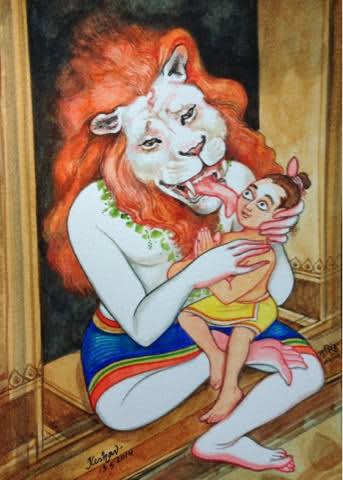
vaatsalyam
Like a cow licks the dirt of calf and removes her dirt, makes her clean and accepts her, bhagwan also makes us clean, removes prakriti-sambandha, avidya, develops paratantrya gyaanam in us and then accept us by declaring that the jeevatma has surrendered to me.
Swami Alvandar says that the jeevatma is your property, so how can I do aatma-samaprpanam? It was possible if the aatma was my property and I was surrendering to him with my own independance/free will. But, jeevatma is bhagwaan’s property, dependant on him and it was his efforts through millions of births that jeevatma got prified (Like the calf) and develops swarupa gyaanam and thus accepts Bhagwan as both means and refuse and thus attain him.
If someone says that I attained bhagwan through gyaana or Bhakti or Karma, isn’t is being ungrateful? If someone says that Bhagwan showed kaarunyam to me as I was qualified for it, isn’t that highly ungrateful?
Yes, it is, going by the discussion above. Even a jeevatma having adwesha (no opposition/hatred) towards bhagwan, that itself is due to the efforts of Bhagwan. If a jeevatma is having opposition/hatred towards bhagwan, that means that the stubborn jeevatma have not yet received the kaarunyam of Bhagwan.
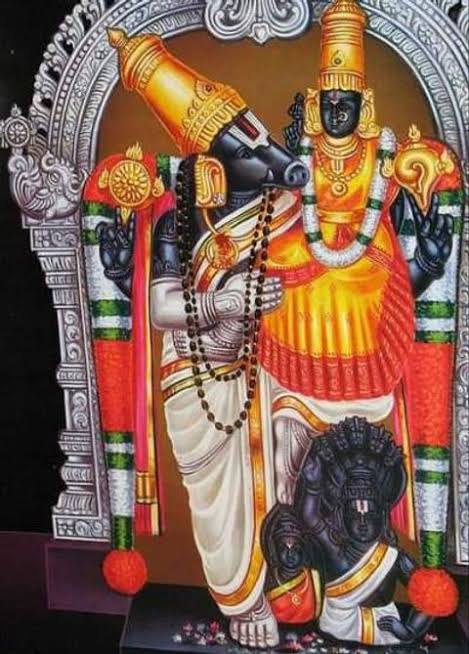
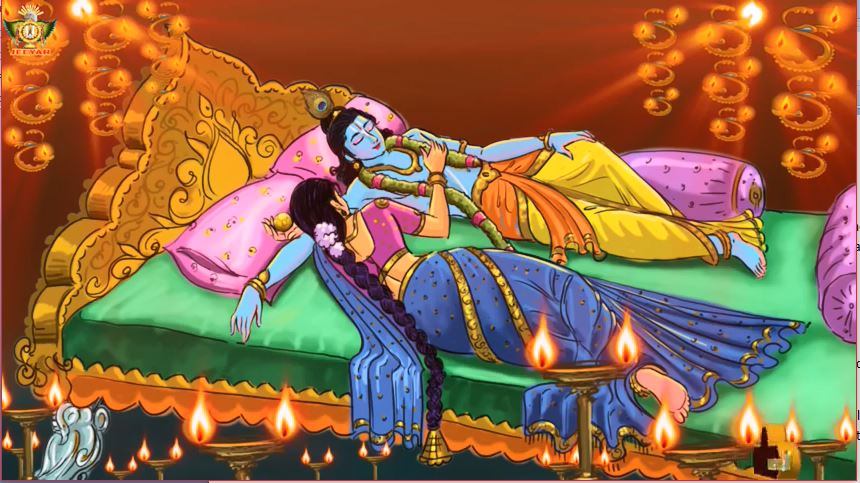
 Ramanujasiddhantam