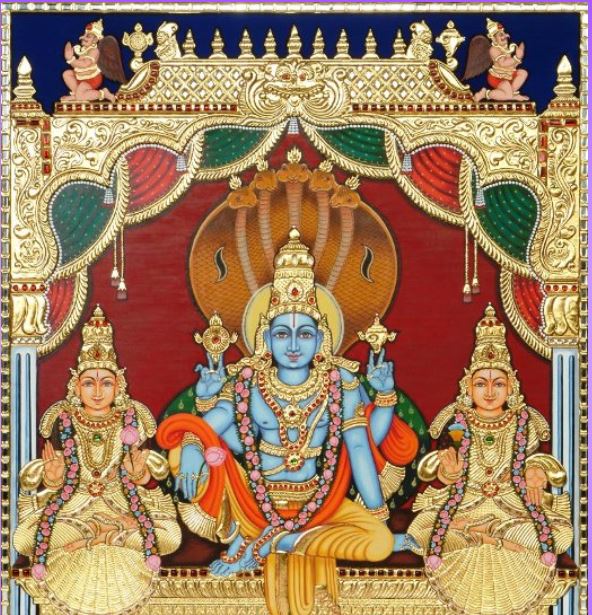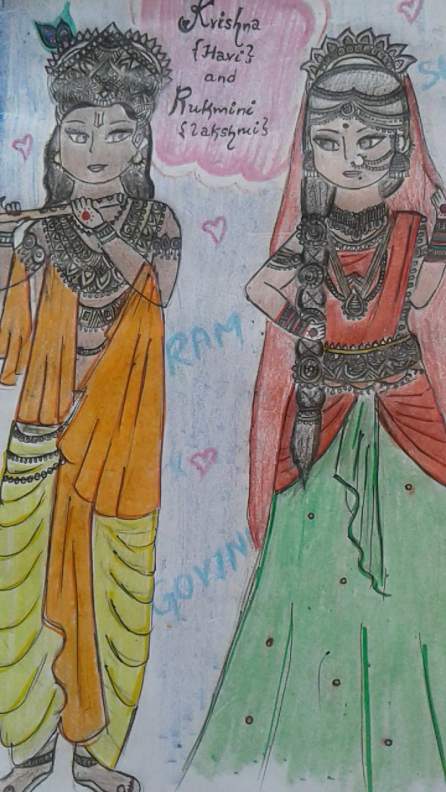
श्रीमद भागवतम महात्म्य भाग 1

नारायणं नमस्कृत्य नरं चैव नरोत्तमम्। देवीं सरस्वतीं व्यासं ततो जयमुदीरयेत् ॥
निगमकल्पतरोर्गलितं फलं शुकमुखादमृतद्रवसंयुतम् ।
पिबत भागवतं रसमालयं मुहुरहो रसिका भुवि भावुकाः ॥
शृण्वतां स्वकथां कृष्णः पुण्यश्रवणकीर्तनः। हृद्यन्तःस्थो ह्यभद्राणि विधुनोति सुहृत्सताम् ॥

भाग 2: श्रीमद भागवतम महात्म्य भाग 2

सर्गश्च प्रतिसर्गश्च वंशो मन्मंतारानी च, वंशानुचरितनचेति पुराणं पञ्चलक्षणं।
पुराणों के पाँच विषयों का वर्णन है- १) सृष्टि २) प्रलय ३) सूर्यवंश और चन्द्रवंश का विवरण ४) अलग-अलग काल के मनुओं का विवरण ५) विस्तृत कथा

श्रीमदभागवत पुराण और विष्णु पुराण में इन पाँचों विषयों की पूर्ण रूप से चर्चा है, इसलिए ये दोनों ही पूर्ण-पुराण कहे गए हैं।
ऋग्यजुःसामाथर्वाख्या वेदाश्चत्वार उद्धृताः। इतिहासपुराणं च पञ्चमो वेद उच्यते ॥10.4.20॥

श्रीमद भागवत पुराण सभी शास्त्रों का सार है। जब वेदों के संकलन और महाभारत, पुराणों की रचना के बाद भी उन्हें शांति न मिली तो उनके गुरु नारद मुनि ने उन्हें श्रीमद भागवत पुराण लिखने को प्रेरित किया। यह श्री वेदव्यासजी की आखिरी रचना है और इस कारण पूर्व के सारे रचनाओं का निचोड़ है।

वेदव्यास जी का नाम “कृष्ण द्वैपायन” है। कृष्ण अर्थात श्याम वर्ण के और द्वैपायन अर्थात छोटे कद के या द्वीप में निवास करने वाले।  व्यासदेव स्वयं भगवान के शक्त्यावेश अवतार थे और आने वाले कलयुग का ध्यान कर उन्होंने वेदों को ४ भाग में विभक्त किया और शास्त्रों को लिखित रूप में संरक्षित किया।भगवान स्वयं शब्दात्मक स्वरुप में भागवत में विराजते हैं।

व्यासं वसिष्ठ नप्तारं शक्तेः पौत्रमकल्मषम् ।
पराशरात्मजं वन्दे शुकतातं तपोनिधिम् ॥ (व्यास जी वशिष्ठ के प्रपौत्र, शक्ति के पौत्र एवं पराशर केपुत्र हैं)

व्यासाय विष्णु रूपाय व्यासरूपाय विष्णवे ।
नमो वै ब्रह्मनिधये वासिष्ठाय नमो नमः ॥ (व्यासदेव स्वयं भगवान के अवतार हैं)

भगवतः इदं भागवतम।

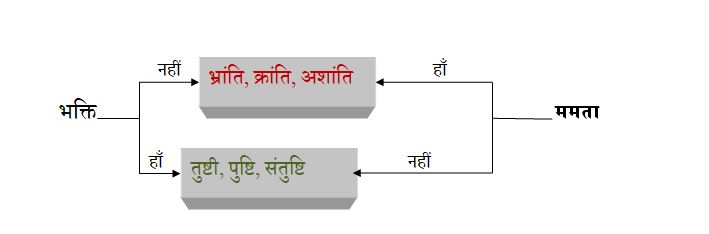
इसके दो अर्थ निकलते हैं- भगवान के द्वारा कहा गया, भागवत और भगवान का जो है, भागवत। भगवत मूल शब्द में तद्धित प्रत्यय लगने से बना है भागवत। भागवत का अर्थ है- “भगवान का”। ‘का, के, की’ चिन्ह है संबंध का, जैसे माता का पुत्र, पिता की पुत्री; वैसे ही भगवान का भागवत। भगवान के होने का यह मतलब नहीं की हम बेटे के बाप नहीं रहेंगे बल्कि संसार के नातों के प्रति ममता (आसक्ति) का त्याग है। अ

संसार में हर व्यक्ति किसी का होकर जीता है जैसे नाना का नाती, पति का पत्नी। लेकिन इन सांसारिक आसक्तियों से हमें मिला क्या? अवसाद, ग्लानी, पीड़ा, दर्द और परेशानी। जड़ वस्तु से हमारा नाता ही हमें दुःख देता है। लेकिन क्या कोई ऐसा नाता है जो हमें आनंद की ओर ले जाये?

भगवान के होने का यह मतलब नहीं की हम बेटे के बाप नहीं रहेंगे बल्कि संसार के नातों के प्रति ममता (आसक्ति) का त्याग है। असली हम भगवान के हैं। क्या पिता का पुत्र हो गया तो पत्नी का पति वह नहीं है? मामू का भांजा नहीं है? नाना का नाती नहीं है? सबका रहेगा पर पिता का पुत्र, बस दिल से मान लिया तो पिता के सम्पति का वह अधिकारी हो गया। बस ह्रदय से मान लो और मान कर जान लो। इतना ही पर्याप्त है। यही मानाने वाले मुक्त हो गए, नहीं मानने वाले धोखा खा जाते हैं, यहीं रह जाते हैं। जब से मानव बुद्धिमान माने जाने लगा, तभी से किसी ‘का’ होकर जीना सिख गया। सबसे संबंध स्थापित किया पर भगवान का होना नहीं सिखा और इसलिए उसकी ग्लानी, पीड़ा, दर्द आजतक समाप्त नहीं हुआ। अगर संसार का नाता लेते हुए हम भगवान से संबंध जोड़ लें, फिर हमारी पीड़ा सहज ही दूर हो जाए। हम भगवान से किसी भी तरह का संबंध जोड़ लें जैसे पिता, मित्र, पति या दुश्मन भी, तो बड़ा पार हो जायेगा। हम संसार के संबंधों का आधार लेकर भगवान से संबंध जोड़ सकते हैं।

अंशी का स्वाभाव हमेशा अंश की ओर जाने का है। जैसे पत्थर या पत्ता हमेशा पृथ्वी की ओर, अग्नि हमेशा सूर्य की ओर और जल हमेशा समुद्र की ओर। जीव भी भगवान का शाश्वत अंश है (ईश्वर अंश जीव अविनाशी) और इसलिए जीव का सहज स्वाभाव है ‘भगवान का हो जाना’। जब तक जीव भगवान से संबंध नहीं जोड़ लेता तब तक दुनिया की फैक्ट्री में ऐसा कोई टैबलेट या इंजेक्शन नहीं है जो उसकी पीड़ा को दूर कर दे।

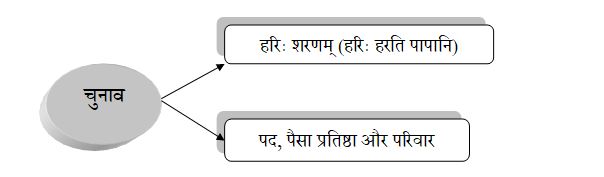
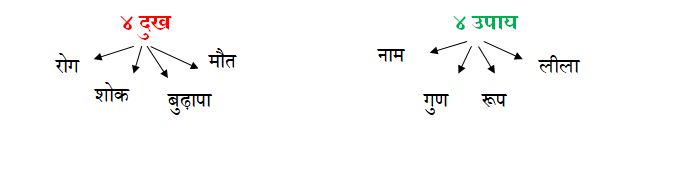
पीड़ा के चार प्रकार हैं: रोग, शोक, बुढ़ापा और मौत। चारों ही लाइलाज हैं और चरों कोई कोई नहीं चाहता पर चारों हीं मिलते हैं। इन चार पर विजय प्राप्त करने हेतु मनुष्य चार चीजें अर्जित करना चाहता है- ‘पद, पैसा प्रतिष्ठा और परिवार’; पर ऐसा आजतक न हुआ है न होगा। मनुष्य जो भी पाप करता है वो इन चार चीजों के लिये ही करता हैं। भगवान से संबंध स्थापित करके ही हम इन चार चीजों पर विजय प्राप्त कर सकते हैं।
b1.JPG

भगवान यह नहीं कहते की उन्हें दान दो, खेत लिखकर दो; बल्कि मुझे अपना मानकर प्रेम करो। जैसे रोता हुआ बच्चा हुआ कोई कितना भी प्रयास क्यों न करे, चुप नहीं होता पर माँ की थपकी मात्र से चुप हो जाता है क्योंकि माँ से दूरी के एहसास ने ही तो उसे रुलाया था। हमारे दुःख का कारण भी भगवान से दूरी ही है। हम भगवान से दूरी और जड़ वस्तु से आसक्ति बढ़ाते हैं। जड़ वस्तु का स्वभाव ही है मिटना पर हम चाहते हैं की वो हमेशा हमारे पास रहे। मिटने वाली वस्तु यानी अचित से आसक्ति ही हमारे दुःख का कारण है। वस्तु या व्यक्ति से संबंध जितना ही घनिष्ठ हो, हमें उतना ही रुलाता है। यह शरीर जिसे हम अपना समझते हैं वो भी हमें एक दिन छोड़ना होगा। जिसे शरीर से आसक्ति नहीं होगा, वो शरीर छूटने का भी भय नहीं होगा।
सच्चिदानन्दरूपाय विश्वोत्पत्यादिहेतवे। तापत्रय विनाशाय, श्री कृष्णाय वयं नमः।।
भगवान का स्वरुप है- सत, चित और आनंद। सत शब्द अस धातु से बना है जिसका है, “वह जो है”। चित का अर्थ है जिसमें जागृति हो और आनंद का अर्थ है जो मुरझाये नहीं, रोये नहीं, मुस्कुराता रहे। यदि आनदंरूप भगवान से नाता जोड़ लें तो दुखों से विजय प्राप्त कर सदा के लिये आनंदमय हो जायेंगे।
सत्यम ज्ञानम् अनंतम ब्रह्म।


भक्ति देवी की व्यथा

श्रीमद भागवत पुराण का महात्म्य पद्म पुराण में आता है। जबतक हम किसी चीज का महत्व नहीं जानते तब तक उसे समझने में समय नहीं देते। एक बार की बात है, नारद ऋषि पुष्कर, काशी, कुरुक्षेत्र, गोदावरी आदि तीर्थों का भ्रमण करते-करते वृन्दावन पहुंचे। उन्होंने अद्भुत घटना देखा। एक 5 वर्ष की युवती पास में दो 85-90 वर्ष के मूर्छित पड़े वृद्धों को “हे पुत्र! हे पुत्र!” कहकर संबोधित कर रही थी। नारद जी जे देखकर युवती ने कहा, “महाराज! हमारे दुःख को दूर कीजिये”
“कौन है तु”।
अहं भक्तिरिति ख्याता इमौ मे तनयौ मतौ । ज्ञानवैराग्यनामानौ कालयोगेन जर्जरौ” ॥

bhakti born dravid.JPG
“मैं भक्ति हूँ। द्रविड़ देश में पैदा हुयी, महाराष्ट्र तक आयी थी, गुजरात की सीमा में प्रवेश करते मैं बुढ़िया हो गयी लेकिन जवान बेटों के सहयोग से मैं यमुना किनारे मथुरा-वृंदावन आयी। यहाँ आते ही नजारा बदल गया। मैं युवती से वृद्धा हो गयी और मेरे जवान बेटे मूर्छित (बेसुध) हो गए। इन्ही की दशा देखकर मैं रो रही हूँ”?

जब भक्ति वैकुण्ठ से चली तो भगवान ने उसकी दासी मुक्ति को साथ-साथ भेज दिया।

(मुक्तिं दासीं ददौ तुभ्यं ज्ञानवैराग्यकाविमौ ॥)

उन दोनों की मदद के लिये भगवान ने ज्ञान और वैराग्य को भेजा। द्वापर के शुरुआत में भक्ति वैकुण्ठ वापस चली गयी और कहा कि जब भी तुम मुझे बुलाओगी, मैं जरुर आउंगी। कलयुग आते आते ज्ञान-वैराग्य भी मूर्छित हो गए। अब भक्ति बैठे बैठे रो रही थी।

अर्थात: ज्ञान-वैराग्य युक्त भक्ति  के लिए मुक्ति दासी की तरह है|

नारद जी ने ज्ञान को जगाने वाला और वैराग्य को प्रवृद्ध करने वाला वेद मंत्र सुनाने लगे लेकिन परिणाम बेअसर रहा। कभी-कभी आँख खोलकर करवट बदलने की चेष्टा की पर मूंह खोल न सके, कुछ बोल न सके। नारद जी ने प्रतिज्ञा की कि जबतक इनकी मूर्छा दूर न होगी, मैं तपस्या करूँगा, भगवान को प्रसन्न कर उन्हीं से उपाय पूछूँगा। नारद जी संत-महात्माओं से उपाय पूछते चले। बद्रिकाश्रम की ओर चले तो उन्हें ४ कुमार मिले (सनक, सनंदन, सनातन, सनत कुमार), जो देखने में ५-६ वर्ष के बालक लगते हैं पर वास्तव में हैं बूढ़ों के बूढ़े।

(कुमारान् ,वृद्धान् दशार्धवयसो विदितात्मतत्त्वान्)।

योगबल से उम्र का असर अपने शरीर पर नहीं होने दिया। दिगंबर महात्मा हैं। नारद जी के बैचैनी को उन्होंने समझ लिया। कुमारों ने कहा, “ज्ञान यज्ञ करो भागवत का, यही वास्तविक सत्कर्म है”।

इदं भागवतं नाम पुराणं ब्रह्मसम्मितम् । भक्तिज्ञानविरागाणां स्थापनाय प्रकाशितम् ॥
ज्ञानयज्ञं करिष्यामि शुकशास्त्रकथोज्ज्वलम् । भक्तिज्ञानविरागाणां स्थापनार्थं प्रयत्नतः ॥

जब भगवान अपनी लीला खत्म कर अपने दिव्य जाने को तत्पर हुए तो उनके घनिष्ठ मित्र उद्धव ने उन्हें रोक लिया। उन्होंने कहा, “आप मुझे छोड़कर अकेले कैसे जा सकते हैं। हम आपके बिना कैसे रह पायेंगे। मुझे भी अपने साथ लेते जाईये”। रामावतार में भगवान अपने साथ पूरी अयोध्या को लेते गए थे। लव-कुश के राज्य करने के लिये कोई भी प्रजा नहीं बची थी। भगवान ने उद्धव से कहा, “बद्रिकाश्रम के गंधमातन पर्वत पर जाकर मेरे स्वरुप का ध्यान करो। जब भी तुम्हें मेरी दर्शन की लालसा हो, मुझे स्पर्श करना या प्रत्यक्ष अनुभव करना चाहो; तो मैं अपने स्वरुप सहित भागवत पुराण में प्रवेश कर रहा हूँ”।
४ कुमारों ने संसार संसार में प्रवेश करने से मना कर दिया। हरिद्वार तक आये। नारद जी भक्ति, ज्ञान और वैराग्य को भी हरिद्वार ले आये और गंगा किनारे, आनंद घाट पर, सनकादिक कथा बाचने लगे। कार्तिक शुक्ल-पक्ष, अक्षय नवमी से पूर्णिमा तक सप्ताह का योगं हुआ। ७ दिन बाद ज्ञान और वैराग्य युवक होकर नाचने लगे। मूर्छा सदा के लिये मिट गयी। सनकादिक गाने लगे और नारद जी बीना बजने लगे। भक्ति भी आनंद विह्वल होकर नाचने लगी।

बिना ज्ञान और वैराग्य के भक्ति नहीं आती। भगवान से संबंध स्थापित करने के लिये ज्ञान की आवश्यकता है। ज्ञान के चार प्रकार हैं- सामान्य, विशेष, विशेषतर और विशेषतमसामान्य ज्ञान (आहार, निद्रा, भय, मैथुन) का ज्ञान पशु को भी है। इसके ज्ञान के लिये किसी विश्वविद्यालय जाने की जरुरत नहीं है। विशेषतर ज्ञान है कवि, आचार्य या राष्ट्रपति बन जाना। विशेषतम ज्ञान ये है कि हम भगवान के हैं, भगवान हमारे हैं और बाकी सारे सपने हैं। इस ज्ञान को ही विवेक कहते हैं। ज्ञान जब परिपक्व होता है तो विवेक कहलाता है। परिपक्व, जागृत ज्ञान विवेक कहलाता है और विवेक वो तेज तलवार है जो अज्ञान से होने वाले मोह और उससे पैदा होने वाले अहंकार को जड़ से काट देता है। विवेक बिना सत्संग के नहीं आता। जब कई जन्मों का पुण्य संचित होता है तो सत्संग मिलता है।

भाग्योदयेन बहुजन्मसमार्जितेन सत्सङ्गमं च लभते पुरुषो यदा वै।
अज्ञानहेतुकृतमोहमदान्धकारनाशं विधाय हि तदोदयते विवेकः

बिना सत्संग के सुनी हुयी बातें जीवन में नहीं आयेंगी इसलिए भक्तों का संग करो और भौतिकवादियों का संग काम से काम करने का प्रयास करो।

बिनु सत्संग विवेक न होई, राम कृपा बिनु सुलभ न सोई।

होई विवेक मोह भ्रम भागा, तब रघुनाथ चरण अनुरागा।।

सत्संग——-(से)——विवेक———-(से)—————वैराग्य——–(से)———-भक्ति

जिस तरह से जानवरों को पालतू बनाने के लिये हम बल और हथियारों का इस्तेमाल करते हैं वैसे ही मनुष्य को सही दिशा में मोड़ने का काम करती है सत्संग। सत्संग करने से हमें विवेक की प्राप्ति होती है। विवेक की प्राप्ति के बाद मोह और भ्रम भाग जाते हैं। जब मोह और भ्रम भाग जाते हैं तब हम भगवान से सम्बन्ध स्थापित कर लेते हैं। विवेक का अर्थ है परिपक्व ज्ञान। जैसे फुलौना के फूट जाने पर बच्चा फूट-फूट कर रोता है पर बाप नहीं रोता क्योंकि बाप को ज्ञान है की बैलून का स्वभाव ही है फूटना। इस उदाहरण में फुलौना विषय है, बालक अज्ञानी और बाप विवेकी। हम भी इस संसार में रो रहे हैं क्योंकि हमें अपने स्वरुप का ज्ञान नहीं है। साधु नहीं रोते क्योंकि उन्हें अपने और इस संसार के स्वरुप का ज्ञान है।

b4

उमा कहों कछु अनुभव अपना, सत हरि भजन जगत सब सपना।।
उमा राम स्वाभाव जेहि जाना, तेहि भजन तजि भाव न आना।।

अज्ञान का कारण है ६ गन्दगी- काम, क्रोध, मद, लोभ, मोह और मात्सर्य (इर्ष्या)। जब मन की गन्दगी मिट जायेगी तो हम बालक बन जायेंगे और जब बालक बन जायेंगे तो संसार की स्त्रियाँ माँ नजर आयेंगी। जैसे छोटा बालक संसार को देख रहा है पर संसार के पीछे नहीं भागता, उसकी आँखें रूप को देख रहीं हैं पर रूप के पीछे आँखें नहीं भागती। संसार में नाँव की भाती रहो। नाव पानी में रहे पर नाव में पानी न आ पाये। अगर पानी आ रहा है, तो ४ बर्तन हैं जिससे पानी उबीछते रहो: भगवान का (१) नाम (२) रूप (३) गुण और (४) लीला।
निर्मल मन जन सो मोहि पावा, मोहि कपट छल छिद्र न भावा।
b2.JPG
वैराग्य के भी दो प्रकार हैं-कच्चा वैराग्य और पक्का वैराग्य। यदि भक्ति को चंगा बनाना है तो वैराग्य पक्का होना चाहिए। वह विवेक किस काम का जो पक्का वैराग्य न दे पाए। कभी-कभी लोग कच्चा वैराग्य को भी पक्का वैराग्य समझ लेते हैं। जैसे फल्गु नदी, उपर से देखो तो सुखा हुआ और खोद कर देखो पानी ही पानी। नकली वैराग्य लोगों को धोखा देने के लिये होता है। बाहर से ऐसे लोग साधु हैं, विरागी हैं पर भीतर से विरागी हैं। पद्म पुराण के इस कहानी से व्यास देव कहते हैं कि पक्का वैराग्य संसार की वास्तविकता को बतलाता है।

विवेक और वैराग्य साथ-साथ चलते हैं, अकेले नहीं। ज्ञान और वैराग्य भक्ति के पुत्र हैं। किताबी ज्ञान से नहीं बल्कि सत्संग, भक्ति और महापुरुषों के सानिध्य एवं सेवा से विवेक उत्पन्न होगा। ज्ञान और वैराग्य के सहयोग से जब भक्ति आपके जीवन में लहराएगी, तो आपकी दुर्दशा और दयनीय दशा सदा के लिये समाप्त हो जाएगी और खुशहाली आ जाएगी।


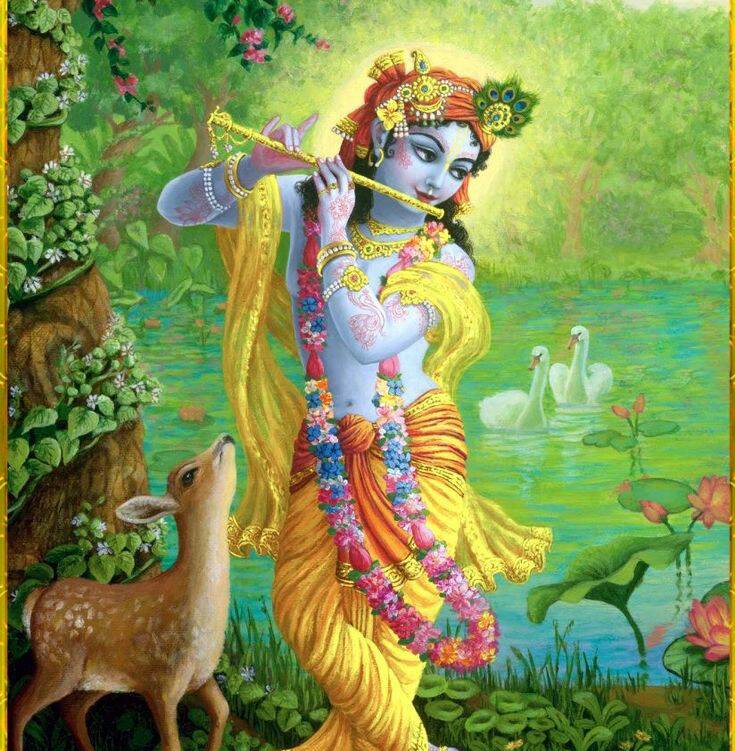
भागवत की कथा के प्रभाव से धीरे धीरे ज्ञान-वैराग्य की मूर्छा दूर हुई| ज्ञान-विशिष्ट-भक्ति  उलास के मारे नृत्य करने लगी| अलौकिक भक्ति देख भगवान स्वयं अपने लोक से उतर आये।

अथ वैष्णवचित्तेषु दृष्ट्वा भक्तिमलौकिकीम् । निजलोकं परित्यज्य भगवान् भक्तवत्सलः ॥
वनमाली घनश्यामः पीतवासा मनोहरः । काञ्चीकलापरुचिरो लसन्मुकुटकुण्डलः ॥
त्रिभङ्गललितश्चारुकौस्तुभेन विराजितः । कोटिमन्मथलावण्यो हरिचन्दनचर्चितः
47685704_101662107547161_709171788596117504_n

श्रीमद भागवत एक कड़वी मिश्री है। अगर कड़वी दवा सीधे दी जाये तो बच्चा लेने के लिये तैयार नहीं होता लेकिन वही कड़वी दवा अगर मिश्री के साथ मिला कर दी जाए तो बच्चा खा लेता है। श्रीमद भागवत में कथाएँ मिश्री हैं और सिद्धांत (शिक्षाएँ) कड़वी दवा। अगर हम दोनों का सेवन करें तो ‘दुखालयम अशाश्वतं’ से ‘नित्य आनंद’ की ओर निश्चित ही जायेंगे। एक प्रकार के मिट्टी में कोई विशेष फसल, किसी विशेष मौसम में बढ़िया पैदावार देती है। कलयुग में भागवत पुराण का भी वैसा ही महत्व है क्योंकि इसमें स्वयं भगवान श्री कृष्ण का वास है।
सप्ताहश्रवणाल्लोके प्राप्यते निकटे हरिः । अतो दोषनिवृत्त्यर्थमेतदेव हि साधनम् ॥
शृण्वतां सर्वभूतानां सप्ताहं नियतात्मनाम् । यथाविधि ततो देवं तुष्टुवुः पुरुषोत्तमम् ॥

अगर १०० साल आयु है तो १५ साल बाल्यावस्था में, १ साल बारात में और बच्चा हुआ तो बाकी जीवन रोटी और भात में। १०० में से ५० साल तो रात्रि में बेहिसाब बीत जाता है। जीवन की सच्चाई को कब समझ पाओगे? इसलिए भागवत पुराण है। इसमें भगवान स्वयं स्थित हैं, जगत के कल्याण के लिये।
श्रीमद्भागवताख्योऽयं प्रत्यक्षः कृष्ण एव हि । स्वीकृतोऽसि मया नाथ मुक्त्यर्थं भवसागरे ॥


भाग २: श्रीमद भागवतम महात्म्य भाग 2
b5.JPG

Authenticity of Panchratra

The Brahma Sutra in its second chapter categorically rejects and refutes the number of works authored such as authored works by the Saankyaas, Yoga, Chaarvaakas, Vaiseshikas, the four kinds of Buddhist schools of thoughts (namely Maadyantika, Vaibhashika, Sowntrantika and Yogaachara), the Jainas and the Paasupata-Saiva. The only authored work accepted by the Brahma Sutra as authoritative as Vedas is the Paancharaatra Aagama.

I have heard few saying that the Brahma Sutra has not mentioned directly the name of Shreeman Naaraayana as the Para Brahman. This is absurd to say so because the Brahma Sutra has clearly established that Paancharaatra Aagama as authoritative as the Vedas and there is no room for any doubt regarding Shreeman Naaraayanan is the Parabrahman. The qualities declared for Para Brahman in the Brahma sutra only identifies with Shereeman Naaraayanan who is declared as the Para Brahman in the Vedas – “Naaraayana param brahma Tatvam Naaraayana Paraha: Naaraayana Paro Jyothihe Aatmaa Naaraayana paraha”.

Aagmas

The Aagamas are authored works. They have divisions called samhitas. There are numbers of such aagamas found to be existing based on which religions have evolved. All such Aagamas are not to be accepted as authoritative because it has to be analytically studied whether the Aagama supports the Veda or not. In case of an Aagama contradicting the veda, it has to be appropriately synchronized in accordance with veda or if such aagama if found to deviate from veda, it has to be rejected.
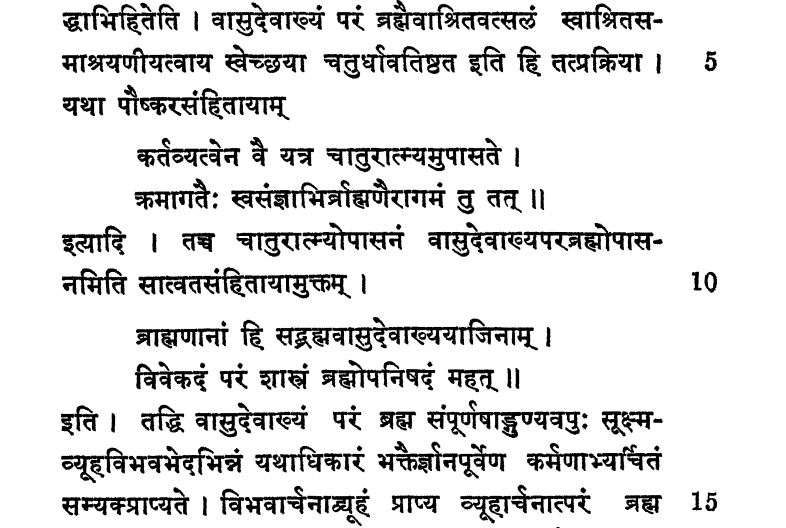
Pancharaatra aagama has numerous samhitas of which Saatvata, Jayaakya and Pouskara Samhitas are considered as gems. Shreeaman Narayanan himself authors Pancharaatra aagama.

Capture.JPG

MahaBharata (Shanti-Parv) says that the author of Pancharaatra is Shreeman Narayanan himself. Paancharaatra aagama deals with the tatva (reality), hita (means) and the purushaartha (goal). It also talks about temple constructions, worshiping of the Lord in temples, the temple festivals and consecration of aarcha form of Vishnu. It also talks about yoga, mantra, yantra, dharma and code of conduct for people. It is in strict agreement with the Veda.
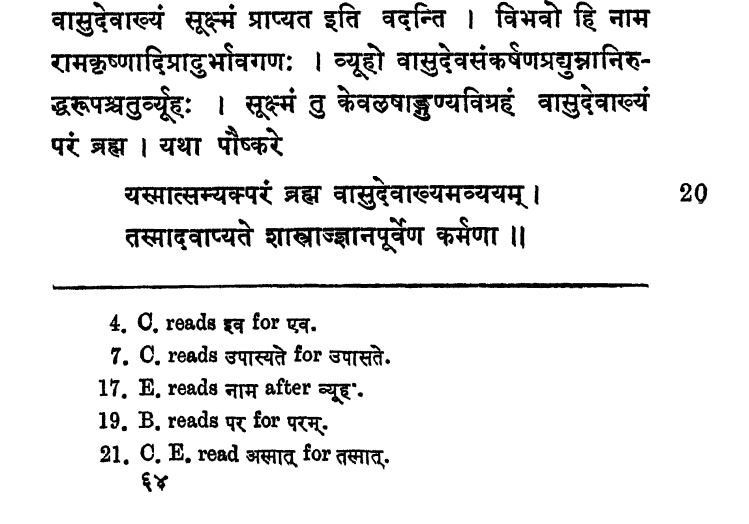
Paancharaatra specifically deals with a class of forms of Vishnu called the Vyuhaa Roopas. It also talks about the mighty discus (Sudarsana Chakra) of Shreeman Naaraayana. The eternal abode of the Lord namely Shree Vaikunta Paramapada is also described by it. In short Paancharaatra covers every aspect of the Vedic philosophy and practice which is Visistaadvaita (Shree Vaishnavam). Its origin can be traced to a Vedic branch called Ekaayana Veda.

Authority in Vedanta-Sutra

Having declared the Samkhya, Vaisheshika, Yoga, Bauddha, Jaina, and Pashupata doctrines as contradictory to the Vedas in the previous adhikaraNas, these opponents retaliate by raising objections against the pAncarAtra system accepted by the author of the sUtras himself (Brahma Sutras, 2.2.42-43). The first two sUtras of this adhikaraNa is the pUrvapakSha portion that describes the objections. The next two sUtras (2.2.44-45) is the siddhAnta portion that answer these objections. One can refer to Sribhashya of Ramanuja for the details

Utpatiyasambhava-adhikaranam is otherwise called as Paancharaatra-Adhikaranam. This is the last aadhikaranam present in the second paada of second chapter of the Brahma Sutra.

Meaning of Adhikaranam

Before going into the analysis of the four sutras present in this aadhikarana, may I present to you the meaning of the term Aadhikaranam. Aadhikaranam is a sub-section in paada of an aadyaaya in Brahma sutra. Each aadhikaranam has five components. They are Vishayam (Subject), Samsayam (Doubt), Poorvapaksham (Opponent view), Sidhaantam (Established truth with proof) and Prayojanam (Benefit of establishing the truth with proof).
In this Utpatiyasambhavaadhikaranam (otherwise called as Paancharaatraadhikaranam), we find the above five components.

  • The “Subject” is regarding the authenticity/authority of Paancharaatra Aagama.
  • The “Doubt” is “whether Paancharaatra is a authentic authority or not”.
  • The “Opponent View” is “Paancharaatra is not an authentic authority as it contradicts the Veda”.
  • The “Established truth with proof” is “Paancharaatra is an authentic authority as it is not contradicting the Veda and only is in perfect accordance with the Veda”.
  • The “Benefit” of establishing this truth is accepting Paancharaatra aagama as authentic authority as that of the Veda and comprehend its philosophy and practice to attain all the four purushaarthas.

Veda Vyasa has categorically rejected many authored scriptures – those authored by Chaturmukabrahma (Yoga) and that of Pasupathi (Paasupata Saivam). Chaturmukabrahma can recite all four vedas. Pasupati (Siva) is called Sarvajnya (he who know everything). When Vyasa has rejected even their smruties, is this Paancharaatra which is authored by Vishu to be accepted or rejected? Thus is the doubt.

Sutras:

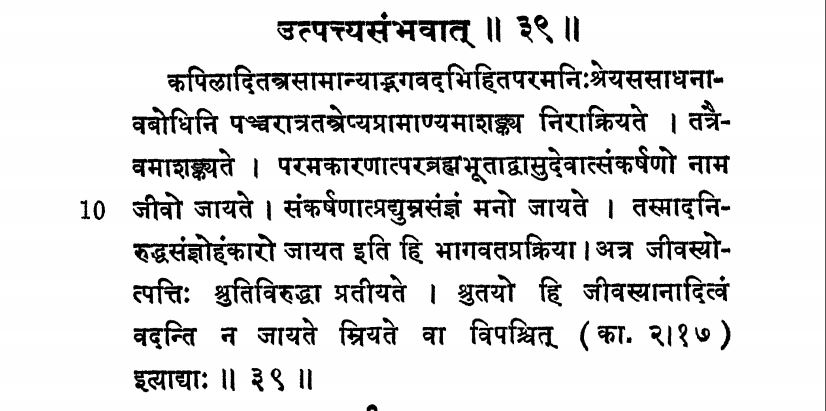
  1. Utpatiyasambhavat (Subject and doubt))

(The Views of Pancharatra System are untenable) on account of the impossibility of Origination.”From Vasudeva, Sankarshan (Jiva) is born; From Sankarshan, Pradyumn (mind) is born; from Pradyumn, Aniruddh (ego) is born”. Like Sankhya, Pancharatra says that individual selves are created. This is opposed to what is stated in scriptures.1 2. Na cha kartuhu karanam (opponent’s view) “And, there is no Origination of the instrument from the agent”. Again the opponent objects that Paancharaatra contradicts the Veda by declaring that the Indriyas like Manas (mind) etc., are born from the Jeeva. The Veda has declared that the Indriyas like Manas are born from Iswara who is Shreeman Naaraayana.

Mundak upnishad 2.1.3:

एतस्माज्जायते प्राणो मनः सर्वेन्द्रियाणि च। खं वायुर्ज्योतिरापः पृथिवी विश्वस्य धारिणी।।2.1.3।।

From Him originates the vital force as well as the mind, all the senses, space, air, fire, water, and earth that supports everything. But, Panchratra as opposing views:”Samkarshanaat Manas Samiyjna Pradyumno Jaayate” meaning – “From Sankarshana, the mind called Pradyumna was born”


  1. 2

3.Vignyjanaadi bhaave vaa tataprathishedaha

Or, if they (the four Vyhaas) are held to be the lord, who is knowledge and the origin, there is no contradiction in the system.

अजायमानो बहुधा विजायते (Taitriya Aranyak 3.13.1; Purush-Suktam)

“He is unborn, yet he is born as many, in various forms”.

The Sankarshan and others are of the form of Knowledge i.e. Brahman. He assumes on his own accord, these four forms for the good of devotees. Sankarshan and others are called jivas etc. as they are the presiding deities of the jivas, mind, ego etc. Hence, the nomenclecture is appropiate as Brahman too is declared as ‘Akash, Praan, Indra” etc. 3.13.23.33.4 4. Viprathishedaancha

And on the account of denial (of the birth of the Jeeva)

4.14.2

The Paancharaatra itself has clearly stated that the Jeeva(Chit), Achit and Iswara are eternal. It itself has clearly negated the birth of jeeva.”The connection between Prakriti and the self is an inseparable in nature”.It is similar to Chhandogya Upanishad (6.2.3)

 तत्तेज ऐक्षत बहु स्यां प्रजायेयेति तदपोऽसृजत । तस्माद्यत्र क्वच शोचति स्वेदते वा पुरुषस्तेजस एव तदध्यापो जायन्ते ॥

‘That Being willed, “May I become many, may I grow forth.” It created fire. That fire willed, “May I become many, may I grow forth”. It created water. Therefore whenever a man grieves or perspires, then it is from fire that water issuesTherefore the Paancharaatra is fully in accordance to the Veda and there is no contradiction with Veda.

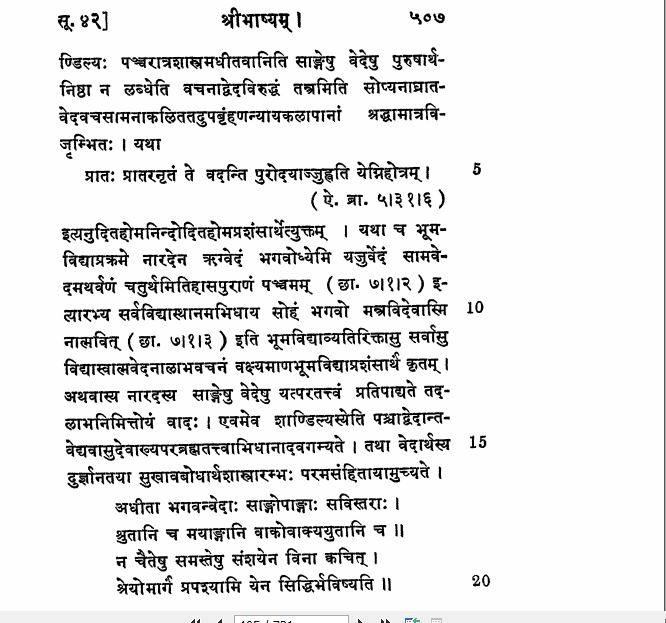
Objection: Sandilya is said to have promulgated the Pancharatra system. He found that the teachings of the Vedas couldn’t help him. This shows that the system is opposed to Vedas.

Ans: As regards to the Sandilya’s statement, it’s similar to the Narada’s statement in Chhandogya Upanishad (7.1.2-3).

  1. ऋग्वेदं भगवोऽध्येमि यजुर्वेदm+ सामवेदमाथर्वणं चतुर्थमितिहासपुराणं पञ्चमं वेदानां वेदं पित्र्यm+ राशिं दैवं निधिं वाकोवाक्यमेकायनं देवविद्यां ब्रह्मविद्यां भूतविद्यां क्षत्रविद्यां नक्षत्रविद्याm+ सर्पदेवजनविद्यामेतद्भगवोऽध्येमि ॥ ७.१.२॥ सोऽहं भगवो मन्त्रविदेवास्मि नात्मविच्छ्रुतm+ ह्येव मे भगवद्दृशेभ्यस्तरति शोकमात्मविदिति सोऽहं भगवः शोचामि तं मा भगवाञ्छोकस्य पारं तारयत्विति तm+ होवाच यद्वै किंचैतदध्यगीष्ठा नामैवैतत् ॥                                                                          ‘Revered sir, I know the Rig-Veda, the Yajur-Veda, the Sama-Veda and the Atharvanas the fourth, the Itihasa-Purana as the fifth, grammar, the rules for the worship of the ancestors, mathematics, the science of portents, the science of treasures, logic, the science of ethics, etymology, the ancillary knowledge of the Vedas, the physical sciences, the science of war, the science of the stars, the science related to serpents, and the fine arts – all this I know, revered sir.’ VII-i-3: ‘Revered sir, however, I am only a knower of verbal texts, not a knower of Atman. Indeed I have heard from persons like your revered self that a knower of Atman goes beyond grief. I am in such a state of grief. May your revered self take me across it.’ Sanatkumara replied to him,’ Whatsoever you have studied here, really it is only a name.                                                                                                                                  Such a statement is not meant to disparage the Vedas, but to praise the bhuma-vidya taught by Sanat-Kumar teaches later as gives in clear and succinct manner, the teachings of Vedas which can be grasped even by dulls.

    Sri Yamuna Muni shows that itihAsas and purANas and praise pA~ncarAtra highly:

    MAHABHARATA

    bharat2.JPGइदं महोपनिषदं चतुर्वेदसमन्वितम्।
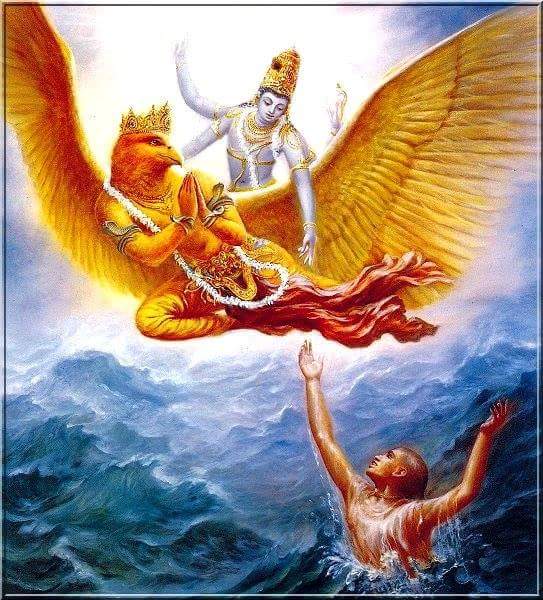
    सांख्ययोगकृतं तेन पञ्चरात्रानुशब्दितम्॥ 12-348-62
    नारायंणमुखोदीतं नारदोऽश्रावयत्पुनः। (Mahabharata, Shanti parvan)

    Meaning: This great doctrine, that takes one close to Brahman (upaniShad), explains the purport of the four Vedas harmoniously. It is based on sAMkhya (j~nAna) and yoga (bhakti) and called ‘pancarAtra’. It has been expounded by Narayana, and Narada explained it once more.

    “ब्राह्मणैः क्षत्रियैर्वैश्यैः शूद्रैश्च कृतलक्षणैः ।
    सेव्यतेऽभ्यर्च्यते चैव नित्ययुक्तैः स्वकर्मभिः ॥ 6-66-39
    द्वापरस्य युगस्यान्ते आदौ कलियुगस्य च।
    सात्वतं विधिमास्थाय गीतः संकर्षणेन वै” ॥ 6-66-40 (Mahabharata,  Bhishma parvan)

    Meaning: Brahmins, Kshatriyas, Vaishyas, and Shudras, worship Him (shrI vAsudeva) in their daily rituals and activities. They are to worship Him in the dvApara and in the beginning of kali yuga, using the sAtvata rules expounded by Sankarshana (in the Pancharatra texts).

    “तैरेकमतिभिर्भूत्वा यत्प्रोक्तं शास्त्रमुत्तमम्॥ 12-343-28
    वेदैश्चतुर्भिः समितं कृतं मेरौ महागिरौ।” (Mahabharata, Shanti parvan)

    Meaning: This lofty pancaratra shAstra that has been expounded unanimously, has been declared equal to the four Vedas on the great mountain Meru.

    Purans

    VARAHA PURANA (proof)

    “वेदेन पञ्चरात्रेण भक्त्या यज्ञेन च द्विज ।
    प्राप्योऽहं नान्यथा प्राप्यो वर्षलक्षशतैरपि ॥” (Varaha Purana, Chapter 66)

    Meaning: I am attainable by means of Vedas, Pancharatra, as well as by devotion-filled worship. I am not attainable by any other means even in millions of years.

    “पञ्चरात्रं सहस्राणां यदि कश्चिद्ग्रहीष्यति ।
    कर्मक्षये च मां कश्चिद् यदि भक्तो भविष्यति ॥
    तस्य वेदाः पञ्चरात्रं नित्यं हृदि वसिष्यति ।” (Varaha Purana, Chapter 66)

    Meaning: He who, among a thousand people, grasps the pancarAtra, and he who remains my devotee after his deeds are exhausted (i.e., at the time of his death after he has surrendered to me), in his heart the Vedas and Pancaratra will remain forever.

    “यदिदं पञ्चरात्रं मे शास्त्रं परमदुर्लभम् ।
    तद्भवान् वेत्स्यते सर्वं मत्प्रसादादसंशयम् ॥” (Varaha Purana, Chapter 66)

    Meaning: You will know in entirety this pAncarAtra shAstra belonging to me, which is the highest means, and which is easy to follow, through my grace. There is no doubt about this.

    Pancharatra Authority accepted by Advaitins:

In his commentary to Srimad Bhagavatam, Shridhara Swami says that the highest devotee of the Lord follows the dharma explained in the pAncarAtra texts, and performs worship of Vishnu according to them (Proof: 1, 2):

(11.10.1) “ मयोदितेष्ववहितः स्वधर्मेषु मदाश्रयः वर्णाश्रमकुलाचारम् अकामात्मा समाचरेत् ” मया – पञ्चरात्राद्युक्तवैष्णवधर्मेषु, अवहितो अप्रमत्तः।

Meaning: “Taking full shelter in Me, with the mind carefully fixed in the devotional service of the Lord as spoken by Me, one should live without personal desire and practice the social and occupational system called varṇāśrama.” Here, ‘devotional service spoken by me’ refers to the Vaishnava dharma explained in the pAncarAtra texts. ‘Fixed in such devotional service’ means to be attentive/careful.

(3.29.15) “ क्रियायोगेन शस्तेन नातिहिंस्रेण नित्यशः ” क्रियायोगेन – पाञ्चरात्राद्युक्तप्रकारेण
Meaning: “Without excessive violence, one should regularly perform one’s devotional activities.” Here, kriyA yoga means “by the method of worship enjoined in the pAncarAtra etc.”
If Sridhara Swamin had considered these Vaishnava Agamas as veda-bAhyas, he would not have said that exemplery devotees of the Lord follow the Vaishnava dharma of pA~ncarAtra diligently.
Sridhara Swamin also says that the Vishvaksena the commander of Lord’s army in Shri Vaikuntha, is the personification of the pA~ncarAtra tantra, just as Shri Garuda the Lord’s mount is the personification of the Vedas, in Srimad Bhagavatam 12.11.19-20.

Even Aadi Sankara Bhagavat paada is in agreement with Paancharaatra but he says “the portions of paancharaatra, which do not contradict the Veda, are authentic authority”. But as established by the Sutrakaara (Veda Vyasa) and the Bhaashyakaara (Shree Raamanuja), there is no portion in the Paancharaatra aagama, which is contradiction, the Veda. Therefore the entire Paancharaatra Aagama is authentic authority. The paancharaatra aagama is a treasure of knowledge. It stresses that he/she who has undivided faith in Lord Shreeman Naaraayananan alone can reach the eternal abode attaining moksha and doing eternal service to His lotus feet. I will elaborate this more in the future lessons after a detailed study of certain Veda verses.


“विद्याविनयसम्पन्ना ब्राह्मणा वेदपारगाः । मयि भक्तिं न कुर्वन्ति ये ते चण्डालतां गताः ॥
ब्राह्मणो वैष्णवो ज्ञेयो न ह्यस्मादन्यदेवता । मातृवत् परिरक्षन्तं जगत्स्रष्टारमीश्वरम् । यो हि नार्चयते मूढस्तमाहुर्ब्रह्मघातकम् ॥
वृथा जप्तं वृथा दत्तं वृथा चेष्टं वृथा हुतम् । वृथा तप्यं च तप्तञ्च यो न भक्तो मयि द्विजः ॥
यत्कृतं हुतञ्चापि यदिष्टं दत्तमेव वा । अवैष्णवकृतं सर्वं राक्षसा एव भुञ्जते ॥”

Meaning: Those brAhmaNas who are not devoted to Me must be considered fallen to the state of outcastes. It does not matter if such persons are thorough experts in the Vedas, endowed with learning and qualities such as humility. A Vaishnava must be considered a brAhmaNa. There is no devatA to be worshipped other than such a Vaishnava. I create, protect and rule this universe like a mother. Therefore, a person who does not worship Me is a fool and a killer of brAhmaNas. If a Vedic rite is performed by a person who is not devoted to Me — whether it is chanting (japa), gifting (dAna), sacrificial offering (iShTam), oblations (hutam), austerity performed and yet to be performed — all of it will go in vain. Vedic rites performed by a non-Vaishnava will only nourish evil beings like rAkShasas.

Thus says bhagavAn shrI kR^iShNa to yudhiShThira. (This shloka is quoted in the Adyar library edition of Shankara’s Vishnu Sahasranama Bhashya of name- Vishwa.).
Moreover, advaitins like amalAnanda has acknowledged total acceptance of pAncarAtra siddhAnta as vedic.
amalAnanda says thus in shAstra darpaNa as well as in bhAmati kalpataru (Proof: 12) —
जीवाभिन्नब्रह्मणो जगत्सर्गं वदतः समन्वयस्य जीवोत्पत्तिप्रतिपादकपाञ्चरात्रस्मृतिविरोधसंदेहे, अधिष्ठातैवेश्वर इति मते निरस्ते, प्रकृतिरपि स इति मतस्य वेदसंमतत्वाज्जीवोत्पत्तावपि प्रमाणत्वम् — एवंभूतावान्तरसंगतिलोभेन स्मृत्पादसंगतमप्यधिकरणमिह लिखितम् । तत्र —
ईशोक्तं न पुराणेषु व्यामोहार्थमितीरितम् ।
पञ्चरात्रमतो जीवो विकार इति मीयते ॥
पञ्चरात्रकर्तुर्वासुदेवस्य वेदादेव सर्वज्ञत्वावगमात् कपिलपतञ्जल्यादीनां च जीवत्वात्, पञ्चरात्रस्य च पुराणेषु बुद्धादिदर्शनवत् व्यामोहार्थमीश्वरप्रणीतत्वाश्रवणात् ब्रह्मनिमित्तत्वप्रकृतित्वसंप्रतिपत्तेश्च जीवोत्पत्तावप्यद्वैताव्याघातात्तत्सिद्धजीवोत्पत्तिरबाध्या । अत एवागतार्था च । एवं प्राप्ते, अभिधीयते —
“बुद्धिपूर्वकृतिस्तन्त्रं ब्रह्मनिःश्वसितं श्रुतिः ।
तेन जीवजनिस्तत्र सिद्धा गौणी नियम्यते ॥”
यावद्ध्येकदेशे वेदाविरोधादीश्वरबुद्धेर्वेदमूलत्वं वेदाद्वा सर्वविषयत्वं प्रतीयते, तावदेव स्वतःप्रमाणवेदाज्जीवानुत्पत्तिप्रमितौ तादृशबुद्धिपूर्वकेश्वरवचनान्न जीवोत्पत्तिरवगन्तुं शक्यते । अतः प्रमाणापहृतविषये गौणं तद्वचनम्, न तु भ्रान्तं पूर्वोक्तयुक्तिभिरिति ।
Meaning: The adhikaraNa is begun as follows — there is a doubt as to whether the the origination of the individual soul (jIvotpatti) must be accepted literally from statements in the pAncarAtra Agama. This tantra was composed by the Omniscient Lord, and are in agreement with the Veda in terms of the oneness of material and efficient causes. It cannot be said that these statements are made in error, since they were uttered by the Lord Himself, compared to other darshanas like sAMkhya, yoga, etc. that were composed by jIvas like Kapila, Patanjali, etc. Moreover, we do not see anywhere in the Puranas that the pAncarAtra tantra was propagated by the Lord Himself for the sake of delusion not unlike the doctrine of the Bauddhas propagated again by Himself to delude the wicked. Such a doubt is raised here.
The correct position, on the other hand , is as follows: “Since the Lord’s voluntary composition is the pAncarAtra tantra, and His involuntary breath is the shruti, statements of origination of the soul are secondary and figurative, not primary and literal”. The omnscience, benevolent nature, and infalliability of the Lord are all understood to be true only from the self-evident shruti. Hence, the pAncarAtra Agamas are dependent on the Veda for their authority. Hence, it cannot be said that they propagate the theory of origin of the individual soul literally, since it would contradict the shruti that says the individual soul is eternal. Therefore, such statements in the pAncarAtra are to be understood as secondary and conveying something else, and are not erroneous due to the reasons given in the prima facie position.
Note also that amalAnanda agrees with the pUrvapakSha’s reasons to believe in the infalliability of pAncarAtras, which we have highlighted above. This guru notes that no purANa condemns pAncarAtra as un-vedic.

Refereces:

  1. Sri Bhasya translation by Swami Sarveswaaranand and Swami Adidevanand
  2. https://narayanastra.blogspot.com/2013/05/vishnu-supreme-brahman-according-to-all.html#h.65zjr22zskcg


प्रपत्ति (शरणागति)

प्रपत्ति (शरणागति, न्यासं, आत्मसमर्पण, आत्म-निक्षेपं, भरन्यासम)

अनन्यसार्थे स्वाधिष्ठे महाविश्वासपूर्वकं, तदेको उपायताकांक्ष प्रपत्ति शरणागति।अनन्यसार्थे स्वाधिष्ठे महाविश्वासपूर्वकं, तदेको उपायताकांक्ष प्रपत्ति शरणागति।जब व्यक्ति यह समझता है कि वो खुद अपनी रक्षा करने में असमर्थ (कर्म, ज्ञान एवं भक्ति से हीन) है और भगवान के अलावा कोई और उसकी रक्षा करने में समर्थ नहीं हैं तो वह भगवान को असहाय भाव में रक्षा करने को पुकारता है। मन कि इस अवस्था को को शरणागति (शरणं आगति) कहते हैं। अपनी हार स्वीकार कर भगवान को उपाय बनने की विनती करना ही उपाय है। ‘उप आयते इति उपायः’। जो लक्ष्य के करीब ले जाए उसे उपाय कहते हैं। शरणागति में तत्त्व नारायण हैं, पुरुषार्थ भी नारायण हैं और हित (उपाय) भी नारायण ही हैं।

अहमस्य अपराधानाम आलयः अकिंचनोगति:

     त्वमेव उपाय भूतो में भवति प्रार्थनाम इति शरणागति।।

     शरणागति इति उक्त्वा सा देवेऽस्मिन प्रयुज्यताम। (अहिर्बुध्व संहिता)

अपनी आत्मा को परमात्मा को सौंप देना ही शरणागति (आत्म-निक्षेप) है।

आत्मा आत्मीय भारन्यासो ही आत्मनिक्षेप उच्यते।। (लक्ष्मी तंत्र 17.29)

प्रपत्ति दो मूल धातु से बना है- ‘प्र’ और ‘पद’। ‘प्र’ का अर्थ है ऊँचा और ‘पद’ यानि कदम। अर्थात सर्वोच्च की ओर कदम बढ़ाना ही प्रपत्ति है।

प्रमाण

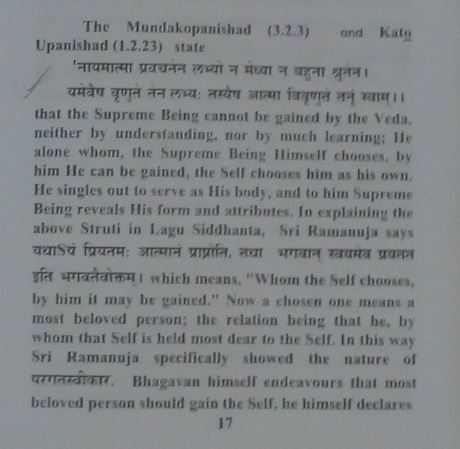
  1. नायमात्मा प्रवचनेन लभ्यो, न मेधया न बहुना श्रुतेन।

        यमेवैष वृणुते तेन लभ्यः, तस्यैष आत्मा विवृणुते तनूँ स्वाम्॥

{मुण्डक उपनिषद (3.2.3) और कठोपनिषद (1.2.23)}

लघु सिद्धांत में रामानुज स्वामीजी, इस श्लोक की व्याख्या करते हुए लिखते हैं:

यथा अयं प्रियतमः आत्मानम् प्राप्नोति, तथा भगवान स्वमेव प्रयतत इति भगवतैव उक्तं।

अर्थ: जैसे हम अपने प्रियतम को स्वयं प्रयत्न कर प्राप्त करते हैं, वैसे ही भगवान स्वयं, अपनी निर्हैतुक कृपा से, शरणागत जीवात्मा को अपना लेते हैं।  एक शरणागत को भगवत-प्राप्ति हेतु अपनी ओर से कोई प्रयत्न नहीं करना चाहिए क्योंकि ऐसा करना भगवान की निर्हैतुक कृपा में बाधा होगा।

  1. यो ब्रह्माणं विदधाति पूर्वं यो वै वेदांश्च प्रहिणोति तस्मै ।

        तं ह देवमात्मबुद्धिप्रकाशं मुमुक्षुर्वै शरणमहं प्रपद्ये ॥ – (श्वेताश्वतरोपनिषत् 6-18)

जो श्रृष्टि के आरम्भ में ब्रह्मा को उत्पन्न करता हैऔर जो उसके लिये वेदों को प्रवृत करता है, अपनी बुद्धि को प्रकाशित करने वाले उस देव की मैं मुमुक्षु शरण ग्रहण करता हूँ।

  1. अनन्यचेताः सततं यो मां स्मरति नित्यशः।

      तस्याहं सुलभः पार्थ नित्ययुक्तस्य योगिनः।। (गीता 8.14)

जो पुरुष मुझ में अनन्य-चित्त होकर सदा ही निरंतर मुझ पुरुषोत्तम को स्मरण करता है, जो मेरे साथ निरंतर संपर्क चाहता है, उसे मैं सहज ही प्राप्त हो जाता हूँ।

अहं सुलभ’ की व्याख्या करते हुए स्वामीजी लिखते हैं: अहम् एव प्राप्यः न मद्भाव ऐश्वर्यादिकः

मैं एकमात्र वस्तु हूं जो वह प्राप्त करना चाहता है और न कि मेरे किसी भी तरीके की संप्रभुता आदि। मैं उससे बहुत प्रिय हूं, वह मुझे याद किए बिना खुद को बनाए रखने में असमर्थ है। मैं उसे खुद को प्राप्त करने के लिए आवश्यक भक्ति अभ्यास में पूर्ण परिपक्वता प्राप्त करने की क्षमता प्रदान करता हूं।

तात्पर्य चन्द्रिका में स्वामी वेदांत देशिका ‘अहमेव’ शब्द की व्याख्या करते हुए लिखते हैं:

परमकारुणिकस्य ममैव अयं भर इति अभिप्रायः

  1. राम चरम श्लोक (रामायण युद्धकाण्ड 18.33)

जब विभीषण अपना सब कुछ त्यागकर भगवान की शरण में आते हैं तो भगवान ने शरणागति-मार्ग की व्याख्या करते हुए कहा:

‘सकृदेव प्रपन्नाय तवास्मीति च याचते | अभयं सर्व भूतेभ्यो ददाम्येतद् व्रतं मम ||’

जो एक बार भी मेरी शरण में आकर ‘मैं तुम्हारा हूँ’ ऐसा कहकर मुझसे अभय चाहता है, उसको मैं सब भूतों का अभयदान देता हूँ, यह मेरा व्रत है।

  1. कृष्ण चरम श्लोक (गीता 18.66)

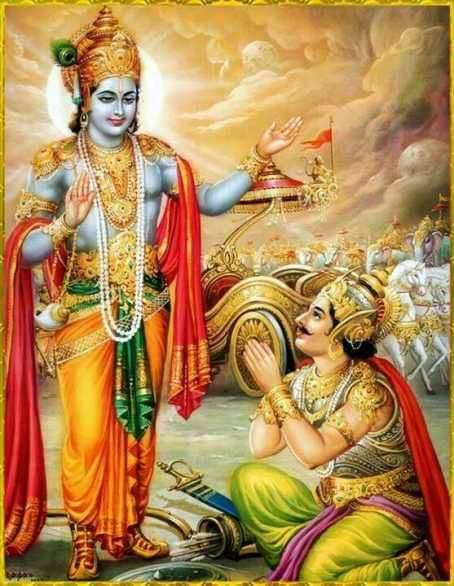
    भगवान ने गीता में पहले कर्म-योग, उसके बाद ज्ञान योग और फिर भक्ति योग की विस्तृत व्याख्या की। सभी प्रकार के योगों के बारे में भगवान से सुनने के पश्चात अर्जुन ने अपनी असमर्थता व्यक्त की तो भगवान ने आखिरी उपदेश दिया:

सर्व धर्मान परित्यज्य मामेकं शरणं व्रज |

अहं त्वा सर्व पापेभ्यो मोक्षिष्यामी मा शुचः||

सभी उपायों (कर्म-योग, ज्ञान योग, भक्ति योग) को त्यागकर मेरी शरणागति करो, मैं तुम्हारे सभी पापों को नष्ट कर तुम्हें मोक्ष प्रदान करूँगा|

  1. लक्ष्मी तंत्र (१७.१००)
  2. शरणागतिः इति उक्त्वा सा देवे अस्मिन प्रयुज्यताम।

         इदं तितिरिष्टाम पारं सर्वे नाश्यन्ति तातक्षनात।। {अहिर्बुधन्य संहिता (37.3)}

  1. न धर्म निष्ठो, न च आत्मवेदी; न भक्ति माम त्वात चरणारविन्दे।

        अकिंचनो अनन्यगति शरण्यं, त्वत पाद मूलं शरणम् प्रपद्ये ।। (स्त्रोत रत्न. 22)

हे प्रभो! मैं न निष्ठापूर्वक धर्म का पालन (कर्म-योग) करनेवाला हूँ और न आत्म-तत्त्व (ज्ञान-योग) का ज्ञाता हूँ। न आपके चरण कमलों की भक्ति में संपन्न हूँ, न कोई अन्य साधन प्राप्त करने में समर्थ हूँ। असहाय अवस्था में, अन्य कोई गति न होने के कारण, आपके चरणतल में शरणागति करता हूँ।

  1. कोटि विप्र वध लागहिं जाहूं। आये शरण ताजऊँ नहीं ताहू।।

       सनमुख होई जीव मोहि जबहीं। जन्म कोटि अध नासहिं तबहीं।। (रामचरितमानस)


उपाय को दो भागों में वर्गीकरण किया गया है:

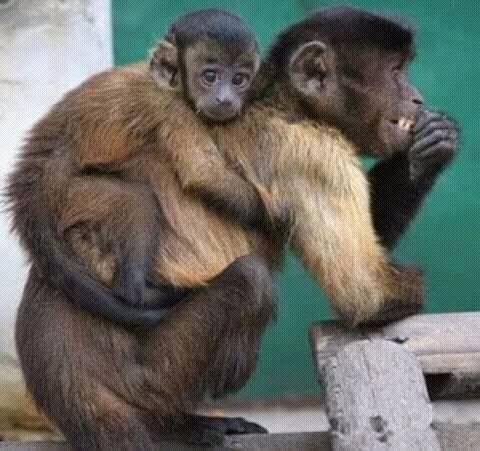
१) साध्योपाय: वह उपाय जो हमारे द्वारा स्थापित किया जाये और हमारे द्वारा क्रियाशील हो। इसे स्वगत स्वीकारा भी कहते हैं क्योंकि इस उपाय में हम अपने प्रयत्नों द्वारा भगवान तक पहुँचने का प्रयत्न करते है। उदाहरण स्वरुप बांदरी का बच्चा जो स्वयं उछलकर अपने माँ को पकड़ता है। इसलिए इस उपाय को मर्कट-किशोर-न्याय भी कहते हैं। कर्म योग, ज्ञान योग और भक्ति योग साध्योपाय है।

images (1)

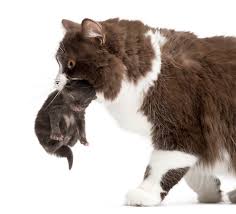
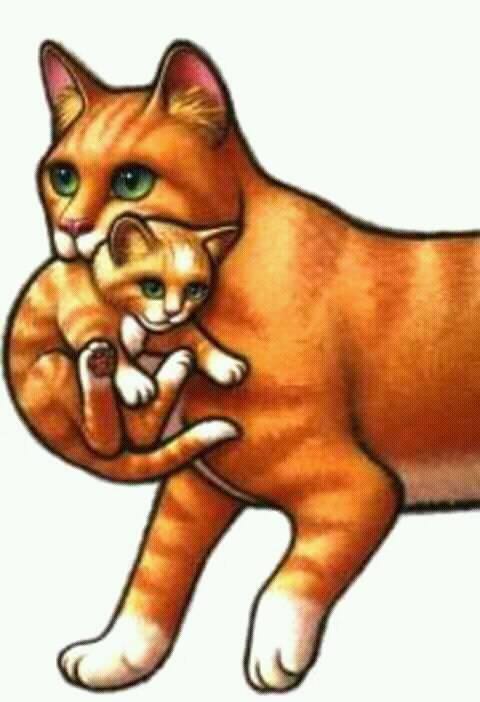
२) सिद्धोपाय: वह उपाय जो पहले से स्थापित है और हमें सिर्फ उसका चुनाव करना है। इसे परगत स्वीकारा भी कहते हैं क्योंकि इस उपाय में हमारे भगवान तक पहुँचने का उत्तरदायित्व भगवान पर ही होता है और भगवान ‘सत्य-संकल्प’ हैं, कभी भी अपनी जिम्मेदारी से नहीं चूकते। उदाहरण स्वरुप बिल्ली का बच्चा जिसे पकड़कर ले जाने की जिम्मेदारी स्वयं बिल्ली की है। इसलिए इस उपाय को मर्घर-किशोर न्याय भी कहते हैं। शरणागति सिद्धोपाय है। शरणागति भी भक्ति ही है पर भक्ति योग में भक्ति उपाय है और शरणागति में स्वयं भगवान ही उपाय हैं। एक शरणागत कर्म, ज्ञान, भक्ति सबका अनुशीलन करता है पर उपाय के तौर पर नहीं बल्कि सिर्फ भगवान के मुखोल्लाष के लिये। इस मार्ग में सफलता कि १०० फीसदी गारंटी है क्योंकि बांदरी का बच्चा शायद चूक भी जाए अपनी माँ को पकड़ने में, पर बिल्ली अपने बच्चे को सुरक्षित उस पार करने में कभी नहीं चुकती। यह उपाय खास तौर पर अयोग्य, लाचार और सभी साधनों से हीन साधकों के लिये है।

images

पञ्चरात्र आगम में आता है:भक्त्या परमया भावी, प्रपत्या वा महामदे। (भक्ति और प्रपत्ति ही केवल दो मार्ग हैं भगवान तक पहुँचने के लिये।)दोनों ही मार्ग के अपने फायदे और कमियाँ हैं। भक्ति योग के कर्म और ज्ञान योग दो अंग हैं। ज्ञानयुक्त कर्म ही भक्ति की ओर ले जाता है। भक्ति योग में मन, बुद्धि और शरीर निर्बाध भगवान की ओर होने चाहिए (अनन्य चिंतयतो माम; सततं कीर्तयन्तो माम)। प्रपत्ति मार्ग की सबसे बड़ी परेशानी यह है की मानसिक रूप से एक शरणागत के ढाँचे में ढलना मुश्किल है और दूसरा यह की हमें शरण्य (भगवान) के प्रति यह अटूट श्रद्धा होनी चाहिए की वो अवश्य हमारी रक्षा करेंगे। लेकिन एक बार शरणागत होने के बाद आगे का मार्ग अत्यंत सुगम हो जाता है।

उदाहरणस्वरुप छत पे जाने के दो उपाय हैं। एक तो सीढियों के द्वारा और दूसरा लिफ्ट से। सीढ़ी से चढ़ना साध्योपाय है क्योंकि व्यक्ति को अपने सामर्थ्य पर भरोसा है। लिफ्ट के द्वारा जाना सिद्धोपाय है क्योंकि लिफ्ट का उपयोग करने का अर्थ ही है की हमने अपनी हार स्वीकार कर ली है कि हम अपने स्वयं के प्रयास से छत पे चढ़ने में असमर्थ हैं और दूसरा की हम जल्दी से जल्दी छत पे जाना चाहते हैं। इस उदाहरण में लिफ्ट भगवान हैं और लिफ्टमैन गुरु। हमें लिफ्ट और लिफ्टमैन पर पूर्ण विश्वास होने की जरुरत है।

अन्यथा शरणं नास्ति त्वमेव शरणं मम। तस्मातकारुण्यभावेन रक्ष रक्ष परमेश्वर।।

शरणागत होने के लिये पूर्वापेक्षा

यूँ तो सभी तरह से अयोग्य होना ही सबसे बड़ी योग्यता है प्रपत्ति में, फिर भी आचार्य कुछ पूर्वापेक्षा बताते हैं:

अनन्यसार्थे स्वाधिष्ठे महाविश्वासपूर्वकं, तदेको उपायताकांक्ष प्रपत्ति शरणागति।

1) स्वाधिष्ठे अनन्यसार्थे (निराश्रयता) :-

  1.  आकिंचन्यम: शरणागति ‘अहंकार, ममत्व और स्वातंत्र्य’ का त्याग है। इस दुनिया में कोई भी व्यक्ति अपनी हार स्वीकार करने को तैयार नहीं है। हर व्यक्ति अपने-अपने अलग अलग प्रकार के अभिमान के साथ जी रहा है। अहंकार त्याग करने की मुश्किल के कारण ही शरणागति मुश्किल दृष्टिगोचर होती है। हमें यह स्मरण रखना चाहिए की सर्वोत्तम तत्त्व क्या है, सर्वोत्तम पुरुषार्थ क्या है और उसका उपाय क्या है। अगर मैं अपने प्रयासों से मोक्ष प्राप्त करने में सक्षम होता तो कई हजार वर्ष पहले ही कर चूका होता। आकिंचन्यम का अर्थ है अपने आप को कर्म, ज्ञान और भक्ति से हीन समझना और पछताते हुए भगवान से उपाय बनने की प्रार्थना करना। “हे श्रीमन नारायण! मैं सभी साधनों से हीन हूँ पर मैं आपके दिव्य धाम में आपके नित्य कैंकर्य की प्रार्थना करता हूँ कृपया अपने अहैतुकी कृपा से मुझे मोक्ष प्रदान करें।
  2. अनन्य-गतित्वं : इस बात का पूर्ण विश्वास की भगवान के अलावा कोई और हमारी मदद नहीं कर सकता। लोकाचार्य स्वामी बताते हैं की यदि पिता रक्षक होते तो हिरण्यकशिपू ने प्रह्लाद की रक्षा की होती। यदि माता रक्षक होती तो कैकेयी ने भरत की रक्षा की होती, यदि भाई रक्षक होता तो रावण ने विभीषण की रक्षा की होती। यदि पति रक्षक होते तो द्रौपदी के पाँच महाबली पतियों ने उनकी रक्षा की होती। यदि हम स्वयं अपने रक्षक होते तो गजराज ने ग्राह से स्वयं की रक्षा की होती। इन सभी की रक्षा श्रीमन नारायण ने ही की इसलिए श्रीमन नारायण ही एकमात्र रक्षक हैं। अन्य देवताओं के पास इस भाव से जाना की वो हमारी रक्षा करेंगे, यह शरणागति के प्रतिकूल है। शिव, इंद्र आदि देवता स्वयं संसार-मंडल में फंसे हैं अपनी रक्षा के लिये श्रीमन नारायण पर आश्रित हैं।

2) महाविश्वास : श्रीमन नारायण पर यह पूर्ण विश्वास की वो अवश्य ही हमारी रक्षा करेंगे। अगर महाविश्वास न हो तो फिर शरणागति का अर्थ ही क्या है।

उपजई राम चरण विश्वासा, भवनिधि तरहीं नर बिनहिं प्रयासा

संसारकूपे पतितोऽत्यागाधे, मोहान्धपूर्णे विषयाभितप्ते।

करावलम्बं मम देहि विष्णो, गोविन्द दामोदर माधवेति।।

हे गोविन्द! दामोदर! माधव! मैं मोह रूपी अंधकार से व्याप्त और समस्त विषयों की ज्वाला (दावाग्नि) से संतप्त इस संसार रूपी गहरे कुएँ में पड़ा हूँ। हे विष्णो! आप मेरा हाथ पकड़कर इस कुएँ से बाहर निकालिए। मुझे अपने हाथ का सहारा दीजिये, मैं अपने प्रयत्न से बाहर नहीं निकल सकता।

सवाल) भगवान हमारे ‘उपाय’ बनने को क्यों तैयार होंगे?

उत्तर):  भगवान हमेशा ही हमारे उपाय बनने को उत्सुक रहते हैं पर हमें अपने बल, बुद्धि और सामर्थ्य पर यकीन होता है। हम भगवान से पृथक हो इस संसार का आनंद लेना चाहते हैं, इसलिए भगवान हमारे ‘उपाय’ नहीं बनते। जबतक हम अपनी हार स्वीकार कर भगवान से असहाय अवस्था में प्रार्थना नहीं करेंगे तबतक भगवान हमारे उपाय कैसे बन सकते हैं। गजेन्द्र और द्रौपदी के संकट में भी भगवान ने तबतक ‘उपाय’ बनना स्वीकार नहीं किया जबतक उन्होंने शरणागति नहीं की।

(नारायण अखिलगुरो भगवन नमस्ते)। (गजेन्द्र स्तुति)

कृष्ण! कृष्ण! महायोगिन्! विश्वात्मन! विश्वभावन। प्रपन्ना पाहि गोविन्द कुरुमध्येवासीदतीम्। (द्रौपदी स्तुति)

कोई कंजूष से महा-कंजूष व्यक्ति ही क्यों ना हो, यदि कोई भिखारी उसका चरण पकड़ ले तो वह कुछ न कुछ भीख अवश्य देगा तो फिर अपार-वात्सल्यमय भगवान हमारे उपाय बनने को तैयार क्यों नहीं होंगे। एक मालिक अपने कर्मचारियों को उनके योग्यता के अनुसार ही वेतन देता है पर यदि कोई उसके आगे दंडवत हो जाये और अपनी लाचारी जताए तो मालिक बिना किसी योग्यता के कुछ रुपये अवश्य देगा। इसी तरह हमारे कर्म, ज्ञान और भक्ति हीन होने के वावजूद भी हमें मोक्ष अवश्य प्रदान करेंगे अगर हम उनके चरणों का आश्रय लें। ऐसा स्वयं भगवान की प्रतिज्ञा है. (धनं मदीयं तव पाद-पड़्कजं)।

जिस तरह एक बछड़ा के धूल में लिपटे होने के वावजूद गाय उसे चाट-चाटकर साफ करती है, उसी प्रकार भगवान भी अपने शरणागतों के दोष और पूर्व के संचित पाप नहीं देखते। (वात्सल्यं),

सवाल) क्या शरणागति उपाय है?

उत्तर) वास्तव में शरणागति उपाय नहीं योग्यता (व्याचम) है। उपाय तो केवल श्रीमन नारायण की अहैतुकी कृपा है।

सवाल) क्या कोई भी शरण्य बन सकता है?

उत्तर) एक आदर्श शरण्य के पास निम्न दो गुण होने चाहिए:

१) परत्वं : जिसके जोड़ का दूसरा कोई न हो।

२) सौलभ्यम: जो सर्व-सुलभ हो ( भगवान अन्तर्यामी, अर्चा और आचार्य के रूप में सर्व-सुलभ हैं)

सवाल) क्या शरणागति कोई भी कर सकता है?

उत्तर): हाँ। शरणागति में जाति, कुल, रंग, जन्म आदि का कोई भेद नहीं है। शबरी (शूद्र वर्ण में जन्म); निषाद, सुग्रीव (बन्दर), विभीषण (राक्षस), विदूर (दासीपुत्र) इत्यादि उदाहरण हैं।

मां हि पार्थ व्यपाश्रित्य येऽपि स्युः पापयोनयः। 

स्त्रियो वैश्यास्तथा शूद्रास्तेऽपि यान्ति परां गतिम् ।। (गीता 9.73)

“हे अर्जुन! स्त्री, वैश्य, शूद्र तथा पापयोनि चाण्डाल आदि, जो कोई भी हो; वे भी मेरी शरण में आकर परमगति को ही प्राप्त होते हैं”।

आनयैनं हरिश्रेष्ठ दत्तमस्याभयं मया।

                                      विभीषणो वा सुग्रीव यदि वा रावणः स्वयं।। ( रामायण युद्धकाण्ड 18.34)

हे वानरश्रेष्ठ सुग्रीव! वह व्यक्ति विभीषण हो अथवा स्वयं रावण भी हो, तो भी उसको ले आओ, मैं उसे अभी अभयदान दे दूँगा।


शरणागति के 6 अंग

आनुकूलश्च संकल्पः प्रातिकूलश्च वर्जनं; रक्षिष्यती इति विश्वासः,

गोप्त्रिप्त वर्णनश्तथा;कार्पण्य आत्मनिक्षेपे षड्विधा शरणागति।।

१) भगवान के अनुकूल कर्म करना

२) भगवान के प्रतिकूल कर्म का परित्याग

३) यह विश्वास की भगवान अवश्य हमारी रक्षा करेंगे

४) भगवान से शरणागति की प्रार्थना करना, दैन्यभाव (कार्पण्यं)

५) स्वयं को कर्म, ज्ञान और भक्ति से हीन समझना (कार्पण्यं)

६) आत्मा जो की भगवान की सम्पत्ति है, भगवान को वापस सौंप देना।
कहानी: परकाल सूरी आलवार एक बार जब शालिग्राम गए थे, जहाँ विश्व का सबसे गहरा दर्रा है, उन्होंने देखा की दो कीड़े आपस में बात कर रहें हैं। पहले कीड़े ने कहा मैं दर्रे के उस पार सामने वाली पहाड़ी पे जाउँगा। दुसरे कीड़े ने मानने से इनकार कर दिया। एक कीड़े की आयु ही कितनी होती एक पहाड़ से उतरकर दूसरे पहाड़ पर चढ़ने में तो उसके कई जन्म बीत जायेंगे। दोनों में शर्त लगी। पास ही एक शेर छलाँग लगाने को था। उस कीड़े ने अपने को उसके पैरों के सामने कर लिया और वो शेर के पैर से चिपका हुआ उस पार चला गया। यही शरणागति है। सभी प्रकार से मोक्ष के अयोग्य होने के वावजूद भी अगर हम श्रीमन नारायण के चरणों का आश्रय लें तो श्रीमन नारायण अवश्य ही हमें परमपद देंगे।

टिप्पणी:- नारायण के प्रति कोई भी शरणागति बिना श्री (महालक्ष्मी माता) के पूर्ववर्ती शरणागति के सफल नहीं होती।

‘श्री’ शब्द महालक्ष्मी मैया को सूचित करता है, यह श्री सूक्तं से स्पस्ट है| हम माता महालक्ष्मी के माध्यम से भगवान नारायण की शरणागति करते हैं| वात्सल्यमयी माता (लक्ष्मीआषः ऋषिकेष: देव्या कारुण्यरुपया) अपने पुत्रों को उसके दोषों समेत अपनाती हैं और हमारे अनर्थों को नष्ट कर, भगवान के समक्ष हमारे शरणागति कि सिफारिश करती हैं| माता के इस गुण को ‘पुरुषकारत्वं’ भी कहते हैं|

श्री शब्द का निम्न ३ अर्थ बताये गए हैं:

१) श्रयते श्रीयते इति श्रियः

जो भगवान का आश्रय लेती हैं एवं जीवात्माओं को आश्रय प्रदान करती ।

२) श्रुनाती श्रावयति इति श्रियः

जो जीवात्माओं के प्रार्थनाओं को सुनती हैं एवं भगवान को सुनाती हैं (बाधा चढ़ा कर) ।

३)श्रृनाती श्रीनाति इति श्रियः

जो हमारे पापों सहित संचित कर्मों को नष्ट करके हमें निर्मल बनाती हैं एवं भगवान के करीब लाती ।


Ras-Krida (रास-लीला)

Excerts from various lectures and my notes.

There are various questions that people raise on Krishna’s character. today’s youth are not aware of krishna’s timeline .he was not young when he was in Vrindavan. he was a small little kid of vrindavan when he danced with gopis (7-10years differs with versions). What today’s ppl are collectively doing wrong is showing krishna in painting and daily soaps as if he was a grown up young boy which gives a wrong thought that he romanced with gopis. And even if he does ras krida there is nothing wrong in that because it was in consent of gopis. gopis themselves wanted manohar.

The gopis were actually rishis of dandakaranya so,though disguised as householders they were completely detached. They took next birth only with a dream of experiencing the madhurya of Rama (Krishna). they took next birth only with a dream of experiencing the madhurya of Rama (Krishna ).
AS per Padm Puran

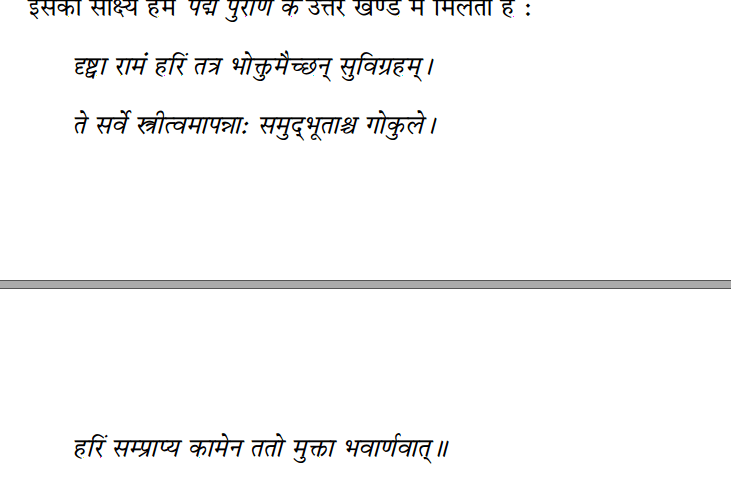
/ drishtva Ramam hari tatra, bhoktumaichhan suvigraham|

te sarve stritvamapannah samudbutaasch gokule|| //

Meaning: When the Rishis of Dandkaranya wished to be the consorts of Ram, when they were filled with ‘kaam’ toward Ram; Ram assured them to be loved by him in Dwapar Yuga. The Rishis were then born near Gokul.

padm puran


35238988_458485871260099_3690265780810678272_n.jpg

Even Parikishit had this doubt. Let’s visit the pastime.

Ras-krida was a particular form of dance. One Krishna-one gopika, one Krishna-one gopika, they alternated. Krishna decided to perform Ras-krida, a type of dance. He invited many girls, even wives of other husbands arrived to dance with Krishna. Krishna said, “why are you here? You have your home. Mind your responsibility. Why did you come”? They replied, “We are here for you. Don’t reject us. Don’t send us away”. Krishna accepted and started dancing with them.

रास-क्रिडा एक विशेष प्रकार का नृत्य था। एक कृष्ण-एक गोपीका, एक कृष्णा-एक गोपीका, इस प्रकार वो । कृष्णा ने रास-क्रिडा, एक विशेष प्रकार का नृत्य करने का फैसला किया। उन्होंने कई लड़कियों को आमंत्रित किया, यहां तक तक ​​की अन्य पतियों की पत्नियां भी कृष्णा के साथ नृत्य करने आईं। कृष्णा ने कहा, “तुम यहाँ क्यों आयी हो? तुम्हारा आपका घर है अपनी ज़िम्मेदारी याद रखो। तुमलोग क्यों आए”? उन्होंने जवाब दिया, “हम यहां आपके लिए हैं। हमें अस्वीकार मत करो। हमें दूर मत भेजो “। कृष्ण ने उनकी प्रार्थना स्वीकार किया और उनके साथ नृत्य शुरू किया।

Quickly Parikshit asked Shukacharya, “Is it right? Can Krishna do this? Is it not wrong”?


Shukacharya replied, “It’s perfectly right. It’s perfectly in order. Be the gopikas or her husbands or her parents or her children; Krishna resides in everyone. It’s not her husband, parent or children but ‘Krishna-rupam’. Every aatman has Krishna as their antaryaami. Every aatman is the body of Krishna. Bhagwaan creates everything and permeates. He is omnipresent (Sarv-vyapak). He is not found in Vaikunth or ksheerabdhi alone, even Prahlaad confirms.

urvyAm asti, udakEshu cha asti, vidikshu Vayu nabhasO tiryakshu atiryakshu cha asti anta:

bahirasti sati asati vA sArEshu asArEshu vA sarvatra asti sadA asti kim bahunA tvayi asti mayi asti cha (Srimad Bhagwatam)

Meaning: the Lord was to be found on the earth, in water, in air, in the sky and in the four directions. He is ever present inside and outside all animals and others. “He is present everywhere all the time, present in you and me”, concludes Prahlada.

He is found in everyone. We all are his body. Aatma has many limbs. It has eyes, head, legs, and nose.Now see, if a girl is married to her husband, will she only love only the nose, only the ears or only the hands? Not at all. She loves all parts of her husband and husband loves all parts of her wife.

If that is not found wrong, similarly, if Parmatma is the atma, he permeates and all the the jeevatmas are part and parcel of his body, then what is wrong in aatma loving the body? When Krishna is residing inside everyone, it’s nothing wrong for him to dance with everyone. Krishna permeates (vyapaka) and we all are permeated (vyapya). So, Shukacharya clarifies, “don’t worry, there is nothing wrong in this happening”.

Afterall, when any father weds his daughter with a husband, there is a mantra, “Vishnurupaay varaay dadaami”. When every husband is Vishnu-rupa, of course, there is nothing wrong.

‘Striyam prayam itaram jagat.’ As per Vedas, Krishna is the husband of all the aatmas. He is the only Purusha. Entire prakriti is female.

So, Ras-Krida is the accepted practice for Krishna, not for us.

तुरंत परीक्षित ने शुकाचार्य से पूछा, “क्या यह सही है? क्या कृष्ण ऐसा कर सकते हैं? क्या यह गलत नहीं है “?

शुकाचार्य ने जवाब दिया, “यह बिल्कुल सही है। यह पूरी तरह से क्रम में है। गोपीका, उसके पति, उसके माता-पिता या उसके बच्चे; कृष्ण सभी में वास करते हैं। ये पति, माता-पिता या बच्चे नहीं बल्कि ‘कृष्णा-रुपम’ है। कृष्ण हर आत्मा के अन्तर्यामी हैं। हर आत्मा कृष्ण का शरीर है। भगवन सब कुछ बनाता है और पारगम्य बनाता है। वह सर्वव्यापी है। वह अकेले वैकुंठ या क्षीराब्धि में नहीं पाए जाते हैं।

वह हर किसी में पाए जाते हैं। हम सब उनके शरीर हैं।

  1. यः पृथिव्यां तिष्ठन्। पृथिव्या अन्तरो यं पृथिवी न वेद यस्य पृथिवी शरीरं यः पृथिवीमन्तरो यमयति स त आत्मान्तर्याम्यमृतः – {शतपथब्राह्मणम् १४.६.७.[७]} satpath Brahman 14.6.7 (7)

  2. य आत्मनि तिष्ठन् आत्मनोऽन्तरो यमात्मा न वेद यस्यात्मा शरीरं य आत्मानमन्तरो यमयति स त आत्मान्तर्याम्यमृतः – {शतपथब्राह्मणम् १४.६.७.[३०]}           Satpath Brahman 14.6.7 (30)    ‘जो आत्मा में स्थित होकर आत्मा की अपेक्षा भी आन्तरिक है, जिसको आत्मा नहीं जानता, आत्मा जिसका शरीर है, जो आत्मा के अन्दर रहकर उसका नियमन करता है, वह अन्तर्यामी अमृत तेरा आत्मा है।’

  1. यः सर्वेषु भूतेषु तिष्ठन्सर्वेभ्यो भूतेभ्योऽन्तरो यं सर्वाणि भूतानि न विदुः। यस्य सर्वाणि भूतानि शरीरं यः सर्वाणि भूतायन्तरो यमयति। एष त आत्मान्तर्याम्यमृतः (बृहदाअरण्यक उ0 3।7।15Brihadaranyak Upanishad 3.7.15

‘जो सब भूतों में स्थित होकर समस्त भूतों की अपेक्षा आन्तरिक है, जिसको सब भूत नहीं जानते, सब भूत जिसके शरीर हैं, तथा जो सब भूतों के अन्दर रहकर उनका नियमन करता है, वह सर्वान्तर्यामी अमृत तेरा आत्मा है।

  1. जगत् सर्वं शरीरं ते  (वालमीकि रामायण-युद्धकाण्ड-117/25)
  2. हमात्मा गुडाकेश सर्वभूताशयस्थितः। अहमादिश्च मध्यं च भूतानामन्त एव च।। गीता 10.20।।(अर्जुन! सब भूतों के हृदय में स्थ्ति आत्मा मैं हूँ और मैं ही सारे भूतों का आदि, मध्य और अन्त हूँ)।।


शरीर के कई अंग हैं- आंखे, सिर, पैर, नाक। क्या कोई विवाहित स्त्री अपने पति के केवल नाक, केवल कान या केवल हाथों से प्यार करेगी? बिल्कुल नहीं। वह अपने पति के सभी हिस्सों से प्यार करती है और पति अपनी पत्नी के सभी हिस्सों से प्यार करता है।

यदि यह गलत नहीं पाया जाता है, वैसे ही, अगर परमात्मा अन्तर्यामी है, वह आत्मा में प्रवेश करते हैं और सभी आत्मा उनके शरीर का अभिन्न हिस्सा हैं, तो आत्मा का शरीर से प्रेम करने में क्या गलत है? जब कृष्णा हर किसी के अंदर रहते हैं, तो उसके लिए हर किसी के साथ नृत्य करना गलत नहीं है। कृष्ण पारगम्य (व्यापाका) और हम सभी पारगम्य (व्याप्त) हैं। शुक्राचार्य ने स्पष्ट किया, “इस घटना में कुछ भी गलत नहीं है”।

आखिरकार, जब कोई पिता अपनी बेटी को पति को दान करता है, तो वैदिक मंत्र है, “विष्णुरूपाय वराय ददामि“। जब हर पति विष्णु-रूप है, तो विष्णु का गोपियों के संग नृत्य करने में निश्चित रूप से कुछ भी गलत नहीं है।वेदों के अनुसार, कृष्ण सभी जीवात्माओं के पति है। वह एकमात्र पुरुष है। पूरी प्रकृति स्त्री-स्वरुप है।

रास-क्रिडा कृष्ण के लिए स्वीकार्य अभ्यास है, न कि हमारे लिए।

There are many types of questions on the theme of Srimad Bhagwat’s Ras that people raise in today’s environment. It is described in five chapters (Ras-Panchaydani). Kamdev was very egoistic that I had not even put any less in distraction of Shankar. Although Shankar ji got angry and burnt Kamdev, the anger did not left him.  Cupid’s aspiration did not fall, but rather high. Kamdev promised that I would have got a rival. In the full moon moonlight of Autumn, the waist came tightly to fight Kamdev. Kamdev also started attacking his Krishna with his five arrows.

Shyam Sundar accepted the challenge of Cupid and defeated Kamdev so that his name became Madan-Mohan. Also, That is why at the end of the Ras-Panchaydya, it is written that by reading and meditation everyone can conquer Kaam-Dev.

रसानां समूहो रासः

श्रीमदभागवत के रास के प्रसंग पे बहुत तरह के प्रश्न आज के वातावरण में लोग करते हैं। पाँच अध्यायों में (रास-पंचाध्यायी) इसका वर्णन है। कामदेव बहुत अहंकार में था कि मैंने तो शंकर को भी विचलित करने में कोई कोर-कसर नहीं रखा था। शंकर जी यद्यपि क्रोध में आ गए और कामदेव को जला दिया पर क्रोध ने तो उनको पटक ही दिया न। कामदेव का मनोरथ गिरा नहीं बल्कि ऊँचा हो गया। कामदेव ने प्रतिज्ञा किया की मेरा जोड़ देने वाला कोई प्रतिद्वंदी मिले। शरद ऋतू की पूर्णिमा चाँदनी में कामदेव लड़ने के लिये कमर कसकर आया था। कामदेव भी अपने पाँच बाणों को लेकर श्री कृष्ण पे प्रहार करने लगा।

श्याम-सुन्दर ने कामदेव की चुनौती स्वीकार की और कामदेव को ऐसा परास्त किया कि उनका नाम हो गया मदन-मोहन। कामदेव को भी मोह देने वाला। इसलिए रास-पंचाध्यायी के अंत में लिखा है कि इसका पाठ और चिंतन करने से हर मनुष्य कामदेव पर विजय प्राप्त कर सकता है।


Why Can’t I do Ras if Krishna did?

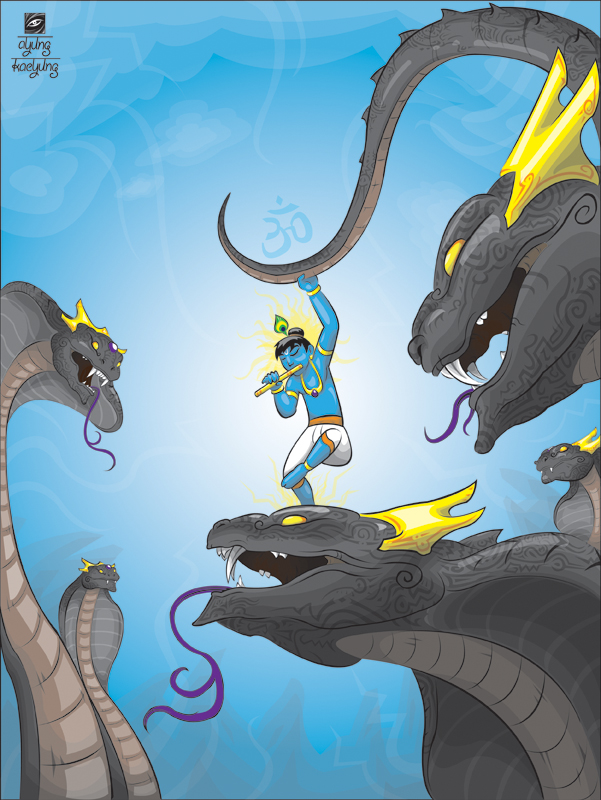
Oriya baba of Vrindavan used to say, “O fools! if you want to copy Krishna, then, before Ras-nritya, there is naag-nritya, Krishna danced on 101-hooded snake. If u think that you too can enjoy Ras-nritya then at least dance over ordinary snakes. Dance over cobra”.

You face turns pale on the name of dancing on snake, but you are ready to dance with girls? Now-a-days even elders and gaurdians are dancing with their siblings on leud songs. What would be the character of younger generation?

वृन्दावन के उड़िया बाबा कहा करते थे कि तु कृष्ण को देखकर यह कहते हो हम भी रास करेंगे? अरे अभागे! रास-नृत्य से पहले है नाग-नृत्य। रास-पंचाध्यायी से पहले भगवान ने १०१ फन वाले नाग को नाथा था। नाग-लीला करने वाले को रास-लीला करने का अधिकार है। नाग लीला न सही, गेहुमना-लीला ही कर दो।  नाग-लीला करने में नानी मरती है और रास-लीला करने आगे आ जाते हो?

आजकल तो डिस्को चला है। किसको क्या कहा जाए? नृत्य करना अपराध नहीं है पर नृत्य के नाम पर फूहड़पना और बच्चों को उसमें शामिल करना, यह आने वाली पीढ़ी के लिये अभिशाप होगा, वरदान नहीं। दिलेरी दिखाना है तो कोसी के बाढ़ में, रोटी-कपड़ा के अभाव में कितने लोग मर जाते हैं, जरा उसमें दिलेरी दिखाओ। ये नहीं कि आप फूहड़पना के द्वारा छोटे-छोटे बच्चे को बिगाड़ दो।

afcb743ccb0ad75d859850d345d10a40-d2qgarv.jpg


Krishna was just seven years old at the time of Ras-nritya

जिस समय भगवान का रास हुआ था वृन्दावन में, उस समय उनकी आयु कितनी थी? सात वर्ष। आज भी सात-आठ वर्ष के बालकों में काम-वासना नहीं होता। आयुर्वेद भी मानता है। उसके लिये काम-से-काम १४-१५ वर्ष की आयु चाहिए। इसलिए आज के ५००० वर्ष पहले ७ वर्ष की आयु में काम-वासना का आविर्भाव हुआ, यह मत उचित नहीं है।

At the time of Ras-nritya in Vrindavan, at that time how old was his age? Seven years Even today, seven-eight-year-olds do not have sexual desire. Ayurveda also believes in affirmative. For him, minimum age should be 14-15 years old. Therefore, saying that 5000 years ago, there was an appearance of lust in the age of 7, this opinion is not appropriate.

आत्मारामो परिरवत।

जो अपनी आत्मा में रमण करते हैं। उनका नाम योग-योगेश्वर है। अखंडानंद सरस्वती का मत है कि जो कालिया नाग के विष से बेअसर है, उसके लिये कामदेव का मान-मर्दन करना कोई अतिश्योक्ति या काल्पनिक बात नहीं है।

aatmaramo parirvat.

Who who takes pleasure in his soul. His name is Yoga-Yogeshwar. He doesn’t need anything outside to experiance pleasure. Akhandanand Saraswati is of the opinion that it is not an exaggeration or a fictitious thing to say that Krishna doomed over Kaam-dev as  with the venom the Kaliya is ineffective over him.


Possible interpolation?

Another argument that Vidwans provide is that, these 5 chapters are later additions or interpolations by people like those of Sakhi-sampraday who dresses like women. Krishna, who preached karma-Yoga, can never present such an example.

Sishupala gave 101 abuses to Krishna but did not say that you danced with the other’s women. “Makhan-thief, cow-herd, woman-kidnapper” etc. – these all he said. Why such an envious enemy doesn’t mention the incident that is vastely quoted today to raise questions over the character of Krishna?

yadyadācarati śrēṣṭhastattadēvētarō janaḥ.

sa yatpramāṇaṅ kurutē lōkastadanuvartatē৷৷3.21৷৷

Whatever ‘an eminent man,’ i.e., he, who is famous for his knowledge of all the scriptures and for his observance of the scriptural dictates, performs, others who have incomplete knowledge of the scriptures will also perform, following his example.

This argument stands no ground. All the commentators on Bhagwatam has commented on the 5 chapters including Madhvacharya. Problem lies in their understanding.

विद्वानों द्वारा प्रदान किया जाने वाला एक अन्य तर्क यह है कि, इन 5 अध्यायों में बाद में जोड़ दिया गया, या हस्तक्षेप हैं जो सखी-संप्रदाय जैसे महिलाओं की तरह कपड़े पहनते वाले भक्तों ने किया है। कृष्ण, जिन्होंने कर्म-योग का प्रचार किया, कभी ऐसा उदाहरण नहीं दे सकते।

यद्यदाचरति श्रेष्ठस्तत्तदेवेतरो जनः।

स यत्प्रमाणं कुरुते लोकस्तदनुवर्तते।।3.21।।

श्रेष्ठ पुरुष जैसा आचरण करता है अन्य लोग भी वैसा ही अनुकरण करते हैं वह पुरुष जो कुछ प्रमाण कर देता है लोग भी उसका अनुसरण करते हैं।।

शिशुपाल ने भगवान को १०१ गालियाँ दी लेकिन यह नहीं कि तु दूसरे कि स्त्रियों के संग नाचने वाले हो “माखन-चोर, ग्वाला, स्त्री-हरण करने वाला”  इत्यादि कहा। कृष्ण के चरित्र पर प्रश्न उठाने के लिए इतने ईर्ष्यापूर्ण दुश्मन इस घटना का जिक्र क्यों नहीं किया, जो आजकल के लोग प्रायः उठाया करते हैं?

(Thanking my sis Tanuja for her contributions)

Gopi Geet

जब गोपियों के मन में आया कि श्रीकृष्ण तो हमारे कठपुतली हैं, जैसा नचाते हैं, वैसा नाच रहे हैं; तभी श्रीकृष्ण उनके बीच से गायब हो गए।  अब गोपियाँ व्याकुल, बिह्वल हो गयीं, खोज रहीं हैं पर खोजना व्यर्थ हो गया। भगवान कहीं मिले नहीं। बड़ा सुन्दर भाव हमारे गुरुदेव ने व्यक्त किया है:

When the Gopis came to understanding that Shri krishna is our puppet, as we dance,he is dancing like this; Then Shr ikrishna vanished from them. Now the gopis are distraught, have become disturbed, are searching, but the search was in vain. They couldn’t find Krishna anywhere. Our gurudev has expressed great beauty

दृष्टो वा कश्चित् अस्वथ?

अस्वथ नाम है पीपल के पेड़ का संस्कृत में। तिष्ठति इति थ, यानि खड़ा रहने वाला। स्व यानि सोने वाला और अस्व यानि कभी न सोने वाला। गोपियाँ ‌‍‍‌पीपल से कहति हैं, “तुम तो हमेशा खड़े रहते हो। कृष्ण अभी रास-मंडली में थे पर अब निकल गए। तुम्हें तो दूर तक दिखाई पड़ता है क्योंकि लम्बे हो न। दृष्टो वा? तुमलोगों ने देखा? नंदनंदन श्रीकृष्ण चला गया। चला भी गया तो खाली नहीं गया, हमलोगों के मन को चुराकर चला गया।

मन तो भीतर होता है, चुराया कैसे? गोपियाँ कहतीं हैं, “प्रेमहासा अवलोकनी”।पहले तो उसने प्रेम का प्रस्ताव रखा, मीठे-मीठे प्रेम भरे वचनों से हँस दिया। जब हँस दिया तो हमें भी हँसी आ गयी, हमारा मुँह खुल गया और मुँह खुलने से भीतर घुसकर मन को चुरा लिया। जैसे तालाब के बीच में खिले कमल के फूल के सौरभ/पराग को भौंरा लेकर उड़ जाता है, वैसे ही काला-काला कन्हैया हमारे मन को लेकर भाग गया। जब उद्धव जी ज्ञान देने आये थे तो गोपियों ने यही कहा था, “तुम्हारे ज्ञान की बात सुने कौन उद्धव। एक ही मन तो सबके पास होता है, उस मन को तो कन्हैया लेकर भाग गए। जब मन नहीं है, संकल्प-विकल्प करने वाला साधन नहीं है तो तुम्हारे कर्म, ज्ञान और उपासना की हमें कैसे समझ पड़ेगा? तुम्हारे उपदेश देने का कोई प्रयोजन नहीं रह गया।”

उद्धव मनन भये दस बीस

एकहूँ तो सो गयो श्याम संग, थोड़ा 

मन जिस विषय में नहीं लगेगा, उस विषय का आकरन आप नहीं कर सकते हैं। सुनने के बाद शब्द कान के द्वारा कहा जाता है? मन के पास। मन बुद्धि को पहुंचाता है और बुद्धि आत्मा से संपर्क करती है।

गीता का मनोवैज्ञानिक विश्लेषण है- “व्यक्ति जब किसी के पास कुछ पाने की आशा लेकर जाता है और वह मिल जाता है तो व्यक्ति को लोभ हो जाता है। नहीं प्राप्त हुआ तो क्रोध”। ऐसे गए गुजरे के पास गए की हमको कुछ दिया नहीं।  हर हालत में आप मनोविकार पर विजय प्राप्त नहीं कर सकते हैं। इसलिए मैंने शुरुआत में कहा था कि भीतर की लड़ाई संत लोग लड़ते हैं- काम, क्रोध, मद, लोभ, मोह, मात्सर्य से। पराजित हो जाने पर उनका संत होना सिद्ध नहीं होता। बाहर की लड़ाई तो रोज लोग लड़ रहे हैं- पद, पैसा, प्रतिष्ठा, परिवार के लिये।  पेड़ कभी जबाब देते हैं। गोपियों को जबाब नहीं मिला। श्री राम भी कहते हैं: हे खग मृग हे मधुकर श्रेणी, तुम देखी सीता मृगनयनी? यहाँ लक्ष्मण जी राम को समझा रहे हैं, वहाँ गोपियों को उद्धव जी समझा रहे हैं।

जब पीपल ने उत्तर नहीं दिया तो पलाश (पाकड़) से पूछ रही हैं। पलाश में नए-नए लाल-लाल पत्ते निकले थे। गोपियाँ कहती हैं, “ऐसा प्रतीत होता है कि तु भी रास देख रहा था। रात भरे जगे हो तभी तुम्हारी आँखे लाल-लाल हैं। किसलय को आँख समझ रही हैं। जब पलाश ने उत्तर नहीं दिया तो उलाहना देते हुए कहने लगीं, “तभी तो तुम पाप का परिणाम मिल रहा है। दिन-रात धूप में, पानी में, ठण्ड में सिकुड़ते हो”। बरगद के पास गयीं। सबके पास गयीं पर निराशा के सिवा कुछ न मिला। जब जीव परमात्मा की खोज में व्याकुल हो जाता है, व्याकुलता के बाद भी सफल नहीं होता है; जब अनाथ होकर रोने लग जाता है तो निश्चय ही परमात्मा की प्राप्ति हो जाती है। जब गोपिकाएं विह्वल होकर रोने लग जाती हैं, भाव-विभोर हो जातीं हैं तो श्याम-सुन्दर अचानक प्रकट हो जाते हैं। जब काम में व्यस्त माँ बच्चे पर ध्यान नहीं देती है तो बच्चा कुछ नहीं करता बस रोने लग जाता है। जब रोते हुए बच्चे को देख माँ सारे काम को छोड़कर दौड़ आती है, तो उस माँ से कई गुना अधिक वात्सल्यमय परमात्मा क्यों नहीं आयेंगे? आप ह्रदय से रोयें। पत्नी और बेटे के वियोग में रोते हो, पैसा-मोबाइल खो जाए तो रोते हो पर परमात्मा के लिये कहाँ कभी रोते हो? कभी ह्रदय से रोकर देखो। जिस दिन तेरे ह्रदय से करुण पुकार निकलेगी, परमात्मा निश्चय तेरे पास होंगे।

Prapatti (Sharnagati) Part 2

We have practicle experiances that even a mean boss who is hard-taskmaster and gives salaray to his employees only after hard work; he too gives a begger some alms when he fall on his legs. Thus if we too, fall on the feet of Narayana, who himself is the ocean of compassion, saying that I have no other means, no any other way; now you be my means (upaay) and way; he would definitly provide himself to us

Aparadha sahasra bhajanam patitam bhimabavarnavavodare |
Agatim saranagatim hare krupaya kevalamatmasat kuru || (Strot Ratna. 48)

Oh my saviour who eliminates the sorrows! I am the abode of countless faults, am fallen in the terrible ocean of samsAra (material realm), have no other refuge and declare to be surrendered unto you; by your mercy only, you should accept me as yours.

(http://divyaprabandham.koyil.org/index.php/2017/02/sthothra-rathnam-48/)

For reading Part 1 of the discussion:

Prapatti (Sharnagati) Part 1

Sadhan Bhakti-Yoga vs Prapatti

Those practicing Sadhan Bhakti-Yoga are under constant stress that whether they would be able to achieve Bhakti or Moksh or not. Am I capable of reaching the destination or not. Have I cleared my Karmas or not?

However, those who choose the path of Sarnagati, are in peace and confidence that Bhagwaan would definitely shower his causeless mercy. They have already accepted that they are completely useless and helpless. So, they don’t perform any action as a means to get the destination.

Krishna, throughout the Bhagwat Gita, preached Karm-Yoga, Gyaan-Yoga, Bhakti-Yoga. But, Arjun found himself unable to practice them. In Bhakti-Yoga, constant remembrance is required just like oil tipping from a larger vessel to the smaller vessel.

Satatam kirtayanto maam..

सततं कीर्तयन्तो मां यतन्तश्च दृढव्रताः। नमस्यन्तश्च मां भक्त्या नित्ययुक्ता उपासते।।BG 9.14।।

Further, last minute remembrance is essential.

anta-kāle ca mām eva smaran muktvā kalevaram 

अन्तकाले च मामेव स्मरन्मुक्त्वा कलेवरम्। यः प्रयाति स मद्भावं याति नास्त्यत्र संशयः।।8.5।।

However, for a Sharnagat, last minute remembrance is not required. Bhagwaan takes care of him, as it’s his responsility now to transfer the Sharnaagat just like a mother cat transfers her baby.

Varadraaj Perumal himself assured Bhagwat Ramanuj. Further, Varah Bhagwaan in his Varaah-Charam shloka, assures the prapannas:

Varaah Charam Shloka

Sthite manasi susvasthe shareere sati yo narahaa lDhaatu-saamye sthite smartaa Vishwaroopam ca Maamajam llTatas-tam mriyamaaNam tu kaashtta paashaaNa sannibham lAham smaraami madbhaktam nayaami paramaam gatim ll


If anyone thinks of Me, when the mind is sound (sthite manasi),with the body in good health (suswasthe shareere), and with allmental and physical faculties working perfectly and intact (dhaatusaamye sthite) – thinks that I am indeed the very cause of thisuniverse (or the form of this universe, vishwaroopam), that I amwithout birth (ajam) – then I assure (You, Devi) that I will remember this devotee of Mine when he/she is on his/her death bed, lying (helplessly) like a stone or a log of wood, and  personally take him/her to the Supreme Abode.

34392606_10214295771405380_3127991838061887488_n.jpg

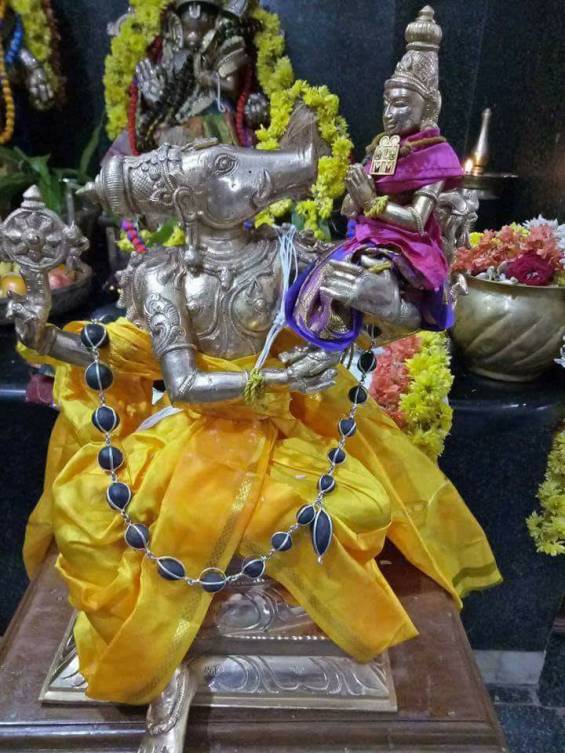
Pic: Bhu-Varaah Swami

Lord Rama too  assures that if an aatman surrenders just for ONCE, he takes care of him

Ram Charam shlok:

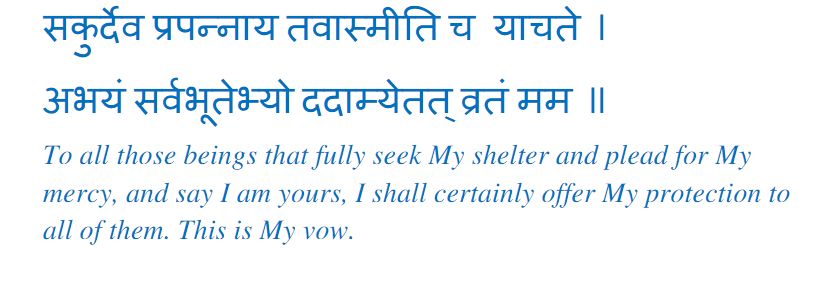
Sakrud eva prapannaaya tavaasmeeti ca yaacate l

Abhayam sarva bhootebhyo dadaamyetad vratam ma-ma ll

To all those beings that fully seek My shelter and plead for Mymercy, and say I am yours, I shall certainly offer My protection toall of them. This is My vow.

mqdefault

Lord Krishna too assures at the end of Bhagwat Gita (18.66) that it’s his responsibility to transfer the devotee to the Supreme Abode.

Krishna Charam shlok:

Sarva dharmaan parityajya maam ekam sharaNam vraja l

Aham tvaam sarva paapebhyo mokshayishyaami maa shucahaa l

Relinishing all Dharmas means the complete relinishment of the sense of agency, possessiveness, fruits etc., in the practising of Karma, Jnana and Bhakti Yogas in the way instructed, and the realising of Me as the agent, object of worship, the means and the end.  If you practise such abandonment of the sense of agency and fruits, I will release you from all ‘sins’ – i.e., I will release you from all evil incompatible with the attainment of Myself, consisting of innumerable acts of the nature of doing what ought not to be done and not doing what ought to be done. These piled up from beginningless times from the obstruction in the way. Grieve not, you should not despair; for I shall release you from all these obstructions.

(@ githa.koyil.org)

Who can be a Sharnagat?

One who possess these two qualities can be a Sharnagat:

1) Akinchanyam, Ananya-gatitvam: Thinking oneself to be helpless, not able to reach Bhagwaan on his own and nor anyone other than Bhagwaan can help him/her.

Thinking that if I was able to protect myself or reach the supreme abode on myself, I could have done it thousand births earlier. So, I am helpless.

It’s difficult to accept our defeat first of all that I can’t protect myself. A Sharnagat must shed these 3 things:

  • Ahankaar: Thinking body to be self.
  • Mamkaar: Thinking that I am the doer or everything belongs to me.
  • Swantriyam: Thinking that I belong to myself. I would enjoy my life.

2) Mahavishwaas: Absolute faith that Bhagwaan will definitely save me.

Now, suppose we have taken a lift, then we would have to faith the lift and the liftman. Have you not had faith, you could have used stairs. Onus to reach me upstairs shifts to the lift and I become a non-performer. The lift is Sharnagati and the liftman is Acharya.


Who can be a Sharanya?

One who possess these two qualities can be a Sharnaya (to whom sharnagati is performed)

1) Paratvam (Supremacy): No is parallel to him in the might.

2) Saulabhyam (Accessibility): One who can be easily approached?

It’s our general experience that one who has Paratvam e.g President; don’t have Saulabhyam. One who has saulabhyam e.g. our neighbor; don’t have Paratvam.

Bhagwaan has Paratvam since none is equal to him. (naa tasya pratima asti).  Along with Paratvam, Bhagwaan possess Saushelyam as well. He is present as Archa form in various divya-desham e.g. Tirumala, Sri-Rangam, Badrinaath, Rameshwaram etc. he is present inside every one of us. Infact none is as much closer to us as Bhagwaan is.


Obstacles in Sharnagati:

1) Bhaagwat-apcharam: Offence toward Vaishnavas.Never hurt or speak bad of devotees. This is a simple condition. Come on, if you’re humane, you actually shouldn’t hurt or speak bad of anyone, no matter you do prapatti or not

2) Anya-devata Paratva buddhi: Thinking other devtaas to be of the level of Narayan and considering them as upaay. (Stick to one krishna and forget about all others. It’s actually very relieving and convenient).

Swamy Desikan says in vairagya panchakam, For a sri vaishnava wat ever lord gives or make available for them he/she should satisfy with that. They should not approach other beings who are similar to them (anya devata brahma, siva, sakthi, indra and so on, they too are jeevathmas). Workshiping them is not a true nature of jeevathma, which is being shesha to Narayanan alone.

Pilla Lokacharya too says “Bhagavath seshathvathilum anya sheshathvam kazhigaye pradhanam”.


In Sharnagati,  Bhakti or Bhagwat-Prem is pure

Sri Ramanuj explains the Kathopanishad (1.2.23) mentions the word प्रियतमन् i.e. The person who is a refugee will have more devotion on Lord than one practices Sadhan Bhakti-Yoga.  Hence, the supreme being’s love toward him is more than an Upasaka.

This is well explained by Pillai Lokacharya in Sri Vachan Bhushan Meemansa bhasya. Normally, one who practices a Sadhana, he will have love towards that means. But, that is not in the case of a refugee. Noramally, an Sharanagat  takes refuse in Lord both as Upaay (means) and Upey (destination). For a refugee, both means and destination is only Supreme being and will have devotion toward him only. He has no other means than the Supreme being. Thus, an Upasaka may be प्रियतर: not प्रियतम:

172-adikesava-perumal-temple-in-sriperumpudur-tamil-nadu-4.jpg

Q) Why would Bhagwaan be our Upaay?

Bhagwaan is ever ready to be our Upaay. His mercy is causeless i.e. flows without any cause.

सेयं देवतैक्षत हन्ताहमिमास्तिस्रो देवता अनेन जीवेनात्मनानुप्रविश्य नामरूपे व्याकरवाणीति ॥ (Chhandogya Upanishad 6.3.2)

Entering into them with this living self, let me evolve names and forms. Here, हंत means means pity or kripa or mercy. The sentient being has no knowledge and power to request the supreme being till it enters into a body. Hence, Supreme being, out of his ‘nirhetuk kripa’, provides body to the aatmas so that they can perform Bhakti or Sarnagati.

Thus, the Supreme being’s mercy is raining continuously but we have applied umbrella above over our head. Due this umbrella or Barrier the rain i.e. Bhagwat-Kripa is not reaching us.

What’s that Umbrella?

Our Ahankaar or ego is the umbrella. Our belief that we can protect ourself on our own, that we belong to our bodily relations and that we can enjoy independent from Bhagwaan is the barrier.

Thus, Narayan is the cloud, his mercy is the rains and our Ahankaar, Mam-kaar and Swatantriyam is the umbrella which is stopping the mercy of Bhagwaan to reach us.

One of the ‘kalyaan-gunas’ of Narayan is Vatsalyam. Just like a mother cow cleans the dirt of her baby by licking through her lips, she don’t care for the dirt lying on the body of the calf. Similarly, Bhagwaan too ignores the karmas of his Sharnagatas. He himself cleans the jeevatma of his past Karma and provide him his intimate love or Bhakti.

Sudarshan Suri comments:

यद्वा स्वतः प्रियत्वं वरणीयत्वं च स्वस्मिन् प्रीतिमत एव|

To a person who takes refuge in the Supreme being, as ordained in Vedant, for his own fruitation he will have intense bhakti and love toward supreme being.


Q) Is Sharnagati an Upaayam (Means)?

Ans: No. In real sense, Sharnagati is just an requirement (Vyacham); not means. Means is Bhagwaan himself.

In Sarnagati. **Narayan is the tattva, Narayana is the means and Narayana is the destination.**

सियाराम ही उपाय हैं, सियाराम ही उपेय हैं|


Q) Who can surrender to Narayana?

Ans: Anyone can surrender, regardless of caste, Zender and birth.

मां हि पार्थ व्यपाश्रित्य येऽपि स्युः पापयोनयः।

स्त्रियो वैश्यास्तथा शूद्रास्तेऽपि यान्ति परां गतिम् ।। (Gita 9.32)

“Women, Vaisyas and Sudras, and even those who are of sinful birth, can attain the supreme state by taking refuge in Me. How much? – more then the well-born Brahmanas and royal sages who are devoted to me! Therefore, roayl sage that you are, do worship Me, as you have come to this transient and joyless world stricken by the threefold afflictions. Sri Krsna now describes the nature of Bhakti:”।

( Ramayan Yuddhkand 18.34)

आनयैनं हरिश्रेष्ठ दत्तमस्याभयं मया।

विभीषणो वा सुग्रीव यदि वा रावणः स्वयं।।

O Monkey-king Sugreev! Even if he either Vibhisan or, Ravan himself, let him come. I would grant him Surrender.

Prapatti can be done by anyone.

Pillai lokacharya has beautifully shown in his works as to who all performed prapatti and for what reasons. Draupadi did prapatti for clothes. Gajendra performed prapatti for service. Kalinga (or kaliya) and kaakasura (jayanta) performed prapatti for saving their lives, and so on. The range of fruits is wide, and the number of souls who perform prapatti for those fruits are unlimited.

Pillai lokacharyar broadly categorizes the souls into three categories for showing their ‘dislikes’ and ‘likes’. He says ‘bubhukshu’s (material minded souls) do not like diseases or difficulties (in other words, that is their ‘anishtam’). They are happy with food and other material/physical enjoyments (that is their istham). Similarly, ‘mumukshu’s (souls seeking liberation) do not like material enjoyments. Their liking is eternal service to the Lord at Sri Vaikuntham. The ‘nitya’s and ‘mukta’s (liberated and ever-liberated souls) do not like any hurdles in their eternal service. Their liking is in uninterrupted service to the Lord in all ways possible. Prapatti can be done for any of these fruits, and that was shown with several examples.

So as mumukshus, we (Sri Vaishnavas wanting to be liberated from the cycles of births and deaths and perform eternal service to the Lord at Sri Vaikuntham) perform prapatti for moksha (that involves kainkaryam or eternal service to the Lord). In other words, we give up the onus of protecting ourselves (effort to reach moksha) and let Bhagavan do that for us more effectively. This comes in the wake of realizing our true natures as being subservient to Bhagavan, and more so, being His sole properties.

(Credit for info: http://qr.ae/TUptx2)

Q) Does Sarnagati means abstaining from work and being idle?

Ans: Krishna never adviced to leave work. In fact, all through the Gita, he has always advised to perform our Niyat Karma.

Sharnagati is less physical or Vocal and more mental. Mentally we have to leave the thought that we are the doer and our work would lead us to our destination. In fact, the prapannas like Ramanuj and Vedant Desika worked much more than what we could. Vibhishan too didn’t sit idle after Sharnagati. He was involved in his Karma.

The ‘nivritti’ is mental, not vocal or physical.

A Sharnagat or Prapanna performs Karm-Yoga but don’t desire any fruit out of it. He performs Gyaan-Yoga but desire Kaivalya moksha out of it. He performs Bhakti-Yoga but don’t desire moksham out of his performance of Bhakti.

Why?

Since, he has already accepted that he is completely helpless and dependent on Bhagwat-Kripa.

Hanuman was bound in the Brahmastra of Indrajeet. They Rakshas army, who were enough tormented by the utpaat of Hanuman, perceived it as an opportunity and tied Hanuman with ropes. Watching this insult, Brahmastra faded away.

Similarly, one who has sought Prapatti, should not indulge in any lower means like Karma, gyaan and Bhakti-Yoga.


Q) If Bhagwaan is showering his mercy on everybody, why is someone in merry and other in grief?

Ans: This is enlightened in Brahm-Sutra (2.1.34)

वैषम्यनैघृण्ये न सापेक्षत्वात्

There is not inequality and cruelty, on the account of there being regard to Supreme Being, for so declares.

Here, Sri Ramanuj beautifully cleared the doubts by quoting Brihadaranyak Upanishad (6.4.5)

साधुकारी सधुर्भवती पापकारी पापो भवति पुण्यः पुण्येन कर्मण भवति पापः पापेन कर्मणा|

means: He who performs good works becomes good, he who performs bad works becomes bad. He becomes pure by pure deeds, bad by bad deeds . There is no chance of partiality or lack of compassion of Supreme being.

The connection of individual souls with bodies of different kinds, depends upon karma of those souls.


All these requisites of saranagati is complete in Krishna Charma-shloka itself.

Sarva dharmaan parityajya maam ekam sharaNam vraja l

Aham tvaam sarva paapebhyo mokshayishyaami maa shucahaa ll (*BG 18.66)

  • (sarva dharman): The virtues that are to be renounced – Karm, Gyaan and Bhakti-Yoga.
  • (parityajya): The way to renounce
  • (maam): The object of surrender
  • (ekam): The truth that Krishna is the ONLY means and not even Sharnagati
  • (saranam): The upayama – Krishna’s lotus feet
  • (vraja): Accept absolutely and belief that Krishna is the upayam
  • (aham): Krishna – the supreme granter
  • (tvam): Jiva the beneficiary
  • (sarva paapebhyo): The benefit- (removal of sins)
  • (mokshayishyami): The benefit- (moksh-prapti)
  • (maa sucha): Command to be relieved of concern.

Prapatti (Sharnagati) Part 1

12814684_818848321593949_4107259235620545854_n.jpg

Prapatti (Sarnagati) or total self-surrender is indeed an evolutionary concept. The general rule says that harder the labour, more is the reward, but the concept of Prapatti or Sarnagati challenges it. It says that for lesser effort, you get highest effort.

In ancient times as stated in taittiraya upanishid prapatti was kept as a close secret “yetat vai mahopanishadam devanam guham” (get tis detail from saranagathi gadyam intro @ sadgopan.org)

  • अनन्यसार्थे स्वाधिष्ठे महाविश्वासपूर्वकं, तदेको उपायताकांक्ष प्रपत्ति शरणागति।

When a person realizes that he can’t protect himself by his own efforts (devoid of Karm, gyan, bhakti) and none other than Bhagwaan can protect him, he cries to bhagwaan to protect him in mode of complete helplessness. Such a state of mind is called Sharnagati.

  • अहमस्य अपराधानाम आलयः अकिंचनोगति: ।

त्वमेव उपाय भूतो में भवति प्रार्थनाम इति शरणागति।।

शरणागति इति उक्त्वा सा देवेऽस्मिन प्रयुज्यताम। (Ahirbudhva Samhita 37.3b)

“O Bhagwaan! I am an ocean of offences (apraadh), I am completely helpless, repentingly, I pray to you to become my means to reach you. I accept my defeat that I can’t reach you by my own efforts. Now, you be my upaay”. Such a prayer is Sharnagati.

  • आत्मा आत्मीय भारन्यासो ही आत्मनिक्षेप उच्यते।। (Lakshmi tantra 17.29)

Surrendering aatma, which is a property of Bhagwaan, back to Bhagwaan is Shaarnagati or Aatm-nikshep.

  • Yamunacharya establishes sarnagati maarg in his ***(Sthothra Rathnam- 22nd sloka)***

na dharma nishtOsmi na cha atma-vEdi na bhaktimaan tvat charaNAravindE

akinchanO ananyagatih saraNya! tvat paadamoolam saranam prapadye.

// न धर्म निष्ठो, न च आत्मवेदी; न भक्ति माम त्वात चरणारविन्दे। 

अकिंचनो अनन्यगति शरण्यं, त्वत पाद मूलं शरणम् प्रपद्ये ।।      //

Here Alvandaar, Yamuna Muni repents that he has neither karma-Yoga, nor gyaan-yoga, nor bhakti-Yoga. Repenting that but with undeviating faith, he falls on the feet of Lakshmi-Narayana and prays him to be his upaay or means to reach him.

The term ‘Prapatti’ is derived from two root words- ‘pra’ and ‘pad’. ‘pra’ means ‘high’ and ‘pad’ means ‘step’.  Thus ‘Prapatti’ means taking a step toward supreme.

We all have practical experiences that even a mean boss who is hard-taskmaster and gives salaray to his employees only after hard work; he too gives a begger some alms when he fall on his legs. Thus if we too, fall on the feet of Narayana, who himself is the ocean of compassion, saying that I have no other means, no any  no any other way; now you be my means (upaay) and way; he would definitly provide himself to us.

Pramaan (Authorities for Prapatti)

  1. {Mundak Upnishad (3.2.3) और Kathopanishad (1.2.23)}

नायमात्मा प्रवचनेन लभ्यो, न मेधया न बहुना श्रुतेन। यमेवैष वृणुते तेन लभ्यः, तस्यैष आत्मा विवृणुते तनूँ स्वाम्॥

//nāyamātmā pravacanēna labhyō na mēdhayā na bahunā śrutēna .

yamēvaiṣa vṛṇutē tēna labhyastasyaiṣa ātmā vivṛṇutē tanūōsvām ৷৷ //

1223

Meaning: Neither hearing, chanting nor learning can lead you to Bhagwaan but own whom bhagwaam himself chooses, he gets him.

Explaining it in** Laghu-Siddhant,** **Ramanuja** says:

यथा अयं आत्मानम् प्राप्नोति, तथा भगवान स्वमेव प्रयतत

Meaning: As we take effort on our own to reach our dear ones, similarly Bhagwaan too himself chooses to deliever us, by his own efforts on appropiate time. So, a Sarnagata shouldn’t try own his own make any effort to reach him. Sita although calpable of her own, waited for Sri Ram to come and deliever her. Bhagwaan is always over-anxious to deliever us, only that we don’t surrender to him. Bhagwaan just keep looking for an excuse to deliever us.

  1. यो ब्रह्माणं विदधाति पूर्वं यो वै वेदांश्च प्रहिणोति तस्मै ।

तं ह देवमात्मबुद्धिप्रकाशं मुमुक्षुर्वै शरणमहं प्रपद्ये ॥ – (Shvetaswar Upanishad 6-18)

yō brahmāṇaṅ vidadhāti pūrvaṅ yō vai vēdāṅśca prahiṇōti tasmai.
taōha dēvamātmabuddhiprakāśaṅ mumukṣurvai śaraṇamahaṅ prapadyē৷

Meaning: who at the commencement of creation created Brahma and who gave the Vedas to Him., whose light turns the intellect towards the Atman.

  1. ananyacētāḥ satataṅ yō māṅ smarati nityaśaḥ.tasyāhaṅ sulabhaḥ pārtha nityayuktasya yōginaḥ৷৷।। (Gita 8.14)

I am easy to access to that Yogin who is ‘ever integrated with Me,’ i.e., who wants constant contact with Me, who recollects Me; and whose mind is not in ‘anything else without break’ (Nityasah), i.e., at the time of meditation and also during all other times (Satatam). As I am exceedingly dear to him, he is unable to sustain himself without remembering Me and cherishing My memory which is incomparably dear to him.

‘अहं सुलभ’ is described by Swami Ramanuj as: अहम् एव प्राप्यः न मद्भाव ऐश्वर्यादिकः।

I am the only object he wants to attain and not any mode of My being like sovereignty, etc. I Myself grant him the capacity to attain full maturity in devotional practice necessary for attaining Me – namely, the annulment of all obstacles and the establishment of the state of mind that renders Me exceedingly dear to oneself.

Vedant Desika in tatparya Chandrika explains ‘अहमेव’ :

परमकारुणिकस्य ममैव अयं भर इति अभिप्रायः।

  1. Ram charam Shloka (Ramayan Yuddhkand. 33)

Ram charam shlok.PNG

Who even for once come and tell, “I am yours, I provide protection to him.

mqdefault.jpg

  1. Krishna charam shloka (Gita 18.66)

sarvadharmānparityajya māmēkaṅ śaraṇaṅ vraja.

ahaṅ tvā sarvapāpēbhyō mōkṣayiṣyāmi mā śucaḥ৷৷||

githacharya-2.jpg

Meaning (Ramanuj’s commentry): Relinishing all Dharmas means the complete relinishment of the sense of agency, possessiveness, fruits etc., in the practising of Karma, Jnana and Bhakti Yogas in the way instructed, and the realising of Me as the agent, object of worship, the means and the end. It means that relinishment is not of all devotional duties but only of the sense of agency and the fruits. This is the Sastraic relinishment of all Dharmas. It is firmly established in the beginning of this chapter commencing from, ‘Listen regarding My decision, O Arjuna, about abandonment; for abandonment is declared to be of three kinds’ (18.4), and ‘Renouncing attachments and also the fruit, such abandonment is regarded as Sattvika ৷৷. for it is impossible for one who bears the body to abandon acts entirely. But he who gives up the fruits of works, is called the abandoner’ (18.9-11). If you practise such abandonment of the sense of agency and fruits, I will release you from all ‘sins’ – i.e., I will release you from all evil incompatible with the attainment of Myself, consisting of innumerable acts of the nature of doing what ought not to be done and not doing what ought to be done. These piled up from beginningless times from the obstruction in the way. Grieve not, you should not despair; for I shall release you from all these obstructions.

Another (alternative) explanation is this: Bhakti Yoga is possible only for those people to whom the Lord is exceedingly dear and who are free from all evils. Those evils are so huge in their case that the expiatory rites which could wash them off, could not be performed in the limited time of one’s life span. Ajuna therefore thought that he was unfit for commencing Bhakti Yoga. To remove the grief of Arjuna the Lord said: ‘Completely relinishing all Dharmas, seek Me alone for refuge.’ Expiatory rites can be taken here as what is meant by Dharma, Completely forsake these rites (Dharmas) appropriate for the removal of numerous and varied sins piled up from beginningless time and obstructing the starting of Bhakti Yoga. The expiatory rites consist of practices like Krcchra, Candrayana, Kusmanda, Vaisvanara, Vratapati, Pavitresti, Trvrit, Agnistoma etc., which are of manifold varieties, and which are difficult to perform on account of the brevity of life. So in order to succeed in commencing Bhakti Yoga, seek Me alone for refuge. I am supremely compassionate, the refuge of all without considering the differences of character among them, and am an ocean of tenderness for those dependent on Me. I will release you from all evil, the nature of which has been explained as incompatible with the commencement of Bhakti Yoga. Grieve not. [Both these interpretations of this famous verse are said to teach only Bhakti Yoga and not Prapatti. But the estion will rise in one’s mind – why should it not be so taken?]

gita bhasyam

  1. Lakshmi tantra.100)

Idam saaranam agyaanam idamev vijaanatam

Idam titirasataam paaram idam aanantyamicchataam

Means: Surrendering to Lord is the safest and surest means for liberation for even one, those who are aware of bhakti or prapatti or not aware of it.

  1. Sandilya Smriti:

Vrithaiva bhavato yaata bhuyasi janma satatih|

Tasyaamanyatma mam janma sanchintya mama saranam vraj||

Meaning: All the life you have spent in this world have gone waste. Before this life also goes the same way, surrender to me.

  1. शरणागतिः इति उक्त्वा सा देवे अस्मिन प्रयुज्यताम।

इदं तितिरिष्टाम पारं सर्वे नाश्यन्ति तातक्षनात।। {Ahirbudhnya samhita (37.3)}

Means: All the sins of a person who surrenders to Vishnu is vanished.

  1. Itihaas Samuchchya (39-119):

Although a person is of an evil disposition, thinks evils of others and has bad habits, if he surrenders, he becomes pure.

  1. Lakshmi Tantra

Satkarm nirataah suddhaah sankhyayoga vidastathaa|

Naarhanti saarnasthya kalaam koti tamimapi||

Meaning:  Those who perform good deeds, who keep their mind pure and those who adopt ‘gyaan’ and ‘bhakti’ yoga, don’t get even a millionth part of the glory of one who surrenders.

  1. Sanat-Kumar Samhita:

Prapatteh kvachitaapyevam paraapeksha na vidyate

Sarala hii sarvesham sarm kaamphal pradayanah||

Meaning: Prapatti (Surrender) is easy, available to all and yields all fruits.

  1. कोटि विप्र वध लागहिं जाहूं। आये शरण ताजऊँ नहीं ताहू।।

सनमुख होई जीव मोहि जबहीं। जन्म कोटि अध नासहिं तबहीं।। (Ramcharitmanas)


Classification of means

भक्त्या परमया भावी, प्रपत्या वा महामदे। (Pancharaatra agam)

Either bhakti or Prapatti are theonly  two means to reach Bhagwaan.

There are two methods of climbing at rooftop:

  1. Climbing via Stairs. Here we have belief on our own strengh and we endevour by our own. It is called Markat-Kishor Nyay (Kid of monkey). Monkey’s kid takes effort on his own to cath his mother.34511293_852502658290546_4057146955296407552_n
  2. Climbing Via lift. Here we accept our defeat that we can’t reach on our own efforts. The liftman is our Guru and Lift is Sarnagati. It is called Maarjaar-Kishor-nyay. The Cat’s Kid makes no effort on his own. She just surrenders and her mother herself transfers her from one place to another.34728533_852502224957256_4242793502167007232_n

 1.Saadhya- Upaay (Sadhyopaay)

The upaay (means) which is established by us is called Siddhopaay. Here, means is performed by us, we put efforts to reach the destination.

It is also called Swagat-Swikaar or Markat-Kishor Nyay.

Examples: Karm-Yoga, Gyaan-Yog, Sadhan Bhakti-Yog

images (1)

2.Siddh-Upaay (Siddhopaay)

It is an Upaay (means) which is already established and we have to just catch it. Bhagwaan is Siddh-Upaay. In the earlier case, the onus to reach God was no Saadhak itself but in this case, the onus lies on Bhagwaan itself. Transferring this responsibility is called Sharnagati.

It is also called Marjhaar kishor nyay or Pargat-swikaar

images (1)

If the child of Monkey falls, the blame goes to the kid itself since it was his responsibility to catch her mother. However, in case of kid of Cat, the mother cat is to be blamed if the child cat falls.

In case of Sharnagati, if a Sharnagat falls down, blame goes to Bhagwaan itself. Bhagwaan never fails since he is blemishless. (Akhil Hey Pratyanik).

That’s called Sarnagati. **Narayan is the tattva, Narayana is the means and Narayana is the destination.**

सियाराम ही उपाय हैं, सियाराम ही उपेय हैं|

A sarnagat performs everything, either Karma-yoga, Gyaan-Yoga or Bhakti-Yoga but only for the purpose of pleasure of Bhagwaan not as Upaay (means) to get something. A Sarnagat don’t want fruit of his any saadhana. Bhagwaan pleasure is the only reward. Akinchanyam i.e. not performing anything as means to get something and Ananya-gatitvam i.e. Not considering anyone other than Bhagwaan as our master.

अन्यथा शरणं नास्ति त्वमेव शरणं मम। तस्मातकारुण्यभावेन रक्ष रक्ष परमेश्वर।।

We first should do sarnagati of Maha-Lakshmi and she recommends us to Narayan. It makes our case stronger.

Pre-requisites for sharnagati or Prapatti

  1. Akinchanyam and Ananya-gatitvam: Realising that I am helpless to reach him. None other than Bhagwaan himself can save me, not even other devtaas. No-one is able to accept his/her defeat in this world. So, to come at this state of mind is extremely tough. Once we realize our true nature i.e. sheshi to Bhagwaan, this state of mind is achieved.
  2. Maha-vishwasam: The believe and faith that Bhagwaan would definitely save me.

In his Daya Sathakam, Sri Vedanta Desika writes elaborately, and eloquently, about the mandates that are required of the Surrenderer (or Prapanna, or Saranagatha). These tenets have been handed down to us by Sri Bhagavad Ramanujacharya. They are as follows:

आनुकूलस्य संकल्पः प्रातिकूल्यस्य वर्जनं;  रक्षिष्यती इति विश्वासः, गोप्तृत्ववरणं तथा;

कार्पण्यं आत्मनिक्षेपे षड्विधा शरणागति।।

  1. Prathikoolya Varjanam: Giving up anything that is antagonistic to Sriman Narayana (The Saranya).
  2. Anukoolya Sangalpam: Only doing things that are conducive to attain
  3. Maha Vishwasam: Absolute and Unshakable Faith in Sriman Narayana (The Saranya) as absolutely the Sole and Only Protector.
  4. Gopthrupthva Varanam: The deliberate choice of Sriman Narayana (The Saranya) as absolutely the Sole and Only Protector.
  5. Kaarpanyam(Absolute humility) or Ananya-Gateethvam: The realization that there is NO alternative except Sriman Narayana (The Saranya) as absolutely the Sole and Only Protector.
  6. Aatma-nikshep: Surrendering the aatma to Parmatma.

There are absolutely NO pre-requisites to perform Saranagathi. Anyone can surrender at any time, at any place regardless of caste, zender and birth. You can surrender anywhere. You can surrender at any time – there is no time criteria as long as the Saranya is willing. The surrenderer who agrees he is a destitute is called a Saranagatha or Prapanna. The person being surrendered to (the grantor) is called a Saranya. The act of surrender is called Saranagathi or Prapatthi.

संसारकूपे पतितोऽत्यागाधे, मोहान्धपूर्णे विषयाभितप्ते।

करावलम्बं मम देहि विष्णो, गोविन्द दामोदर माधवेति।।

O Govind! Damodar! Madhav! I। have fallen in the deep well of materialism and I am getting burnt by lust, greed anger. O Vishno! Please extend your hand and fetch me out। I can’t come out of the well on my own efforts.

To perform Saranagathi, the Saranagatha should fall at the feet of the Saranya with:

  • Two folded hands – indicating Akeechanyam meaning, I do not have anything to offer,
  • Two feet touching/brought together – indicating Ananyagatheethvam meaning, I have no other place to go, I am a destitute, my feet are tied,
  • Head touching the ground,
  • With his mind (manas) under total control,
  • With his intellect (buddhi) under total control, and
  • With his ego (ahamkara) under total control

For Part 2 of the discussion

Prapatti (Sharnagati) Part 2

15391169_211213205997267_104142580829817107_n

तत्त्व-त्रय- ईश्वर (ब्रह्म)

नमो नमस्तेऽखिलकारणाय निष्कारणायाद्भुतकारणाय| सर्वागमाम्नायमहार्णवाय नमोऽपवार्गायपरायणाय||

ब्रह्मशब्देन च स्वभावतः निरस्तनिखिलदोषः अनधिकाशय असंख्येयकल्याणगुणगणः पुरुषोत्तमो अभिधीयते (श्रीभाष्य)।cropped-srirangam-ranganathaswamy-periyaperumal.jpg

ब्रह्म को परिभाषित करते हुए रामानुज स्वामीजी कहते हैं:

  • जो समस्त दोषों से रहित हैं। (अखिल हेय प्रत्यनिक)। निर्गुण निरंजन शब्दों  का अर्थ समस्त दूषणों और रज, तम  गुणों से रहित होना है।
  • जो अनन्त कल्याण गुणों से युक्त हैं जैसे सत्यकाम, सत्यसंकल्प, कारुण्य, ज्ञान, बल, आदि। (अनंत कल्याण गुणाकरम)
  • श्रृष्टिस्थितिसंघारत्वं: जो सृष्टि की उत्पत्ति, पोषण और संहार को पुर्णतः नियंत्रित करते हैं।
  • ज्ञानान्दैकस्वरुपं: संपूर्ण ज्ञान और अपरिमित आनंद का भण्डार हैं।
  • वह जो श्रीदेवीजी, भूदेवीजी और नीलादेवीजी के प्राण प्यारे नाथ हैं।

यस्मात् सर्वेश्वरात् निखिलहेयप्रत्यनीक स्वरूपात् सत्यसंकल्पात् ज्ञानानन्दाद्यनन्तकल्याणगुणात् सर्वज्ञात् सर्वशक्ते: परमकारुणिकात् परस्मात् पुंसः श्रृष्टिस्थितिप्रलयाः प्रवर्तते, तत् ब्रह्मेति सूत्रार्थः (श्रीभाष्य)।

भगवान समय/ काल के संदर्भ में (नित्य/ अनादी) और स्थान के संदर्भ में (सर्वव्यापी स्वरुप) असीमित हैं। वह प्रत्येक जीवात्मा में अन्तर्यामी परमात्मा हैं (दिव्य-आत्म स्वरुप)। भगवान विभु हैं जबकि जीवात्मा अणु। ईश्वर शब्द का अर्थ है कि जो समस्त ऐश्वर्यों से परिपूर्ण हो। भगवान की सम्पत्ति क्या है? नित्यविभूति और लीला विभूति। नित्य विभूति विरजा नदी के उस पार है। वहाँ भगवान अपने पर-स्वरुप (दिव्य मंगल विग्रह) में नित्य एवं मुक्त आत्माओं के संग विराजमान हैं। लीला विभूति भगवान का क्रीडास्थल है। यहाँ भगवान लीला हेतु अवतार लेते हैं। लीला विभूति में बद्ध जीवात्माओं का निवास होता है। लोकवत्तु लीलाकैवल्यं

वेदार्थ संग्रह का मंगल-श्लोक:

भगवान विष्णु के तीन गुण है:

[i] अशेष – चिद् – अचिद् – वस्तु – शेषिन्

समस्त चेतन और अचेतन के स्वामी है।

[ii] शेषशायिन

आदिशेष पर विराजमान होते है।

[iii] निर्मलाकान्त कल्याण निधिः

भगवान विष्णु पवित्र और समाप्त न होने वाले शुभ के स्वामी है। भगवान् विशुद्ध सत्त्व है। भगवान् कभी भी कलंकित नही हो सकते है। उनके विभिन्न अवतार अकलंकित, दोष रहित एवं दिव्य है। वह पारलौकिक तो है ही अपितु मोक्षदाता भी है (सभी जीवों को मोक्ष प्रदान कर सकते है)। भगवान् ऐसे असीमित दिव्य शक्तियों से युक्त है जिनसे वह मोक्षदाता व मोक्षप्रदायक के रूप में प्रकाशमान है। अतः यह स्पष्ट है कि हम उसके (भगवान् के) प्रति समर्पित हो और मोक्ष प्राप्त करें।

Capture.PNG


भगवान के दिव्य कल्याण गुण और उन गुणों के लक्ष्य-

  • भगवान का ज्ञान, उन जीवों की सहायता के लिए है, जो स्वयं को अज्ञानी स्वीकार करते हैं।
  • भगवान की शक्ति, उनकी सहायता के लिए है, जो स्वयं को दीन समझते हैं।
  • भगवान की क्षमा, उनकी सहायता के लिए है, जो स्वयं को अपराधी मानते हैं।
  • भगवान की कृपा, उनके लिए है, जो स्वयं को इस संसार पीढ़ा से व्यथित जानते हैं।
  • भगवान का वात्सल्य, उनकी सहायता के लिए है जो स्वयं को सदा दोषयुक्त समझते हैं।
  • भगवान का शील (भव्यता), उनकी सहायता के लिए है, जो स्वयं को दलित समझते हैं।
  • भगवान का आर्जवं (सत्यता), उनकी सहायता के लिए है, जो स्वयं को कपटी समझते हैं।
  • भगवान का सौहाद्र (सह्रदयता), उनकी सहायता के लिए है, जो स्वयं को अच्छा नहीं मानते हैं।
  • भगवान का मार्धवं (ह्रदय की कोमलता), उनकी सहायता के लिए है, जो भगवान से वियोग सहन नहीं कर सकते।
  • भगवान का सौलभ्यं (सुलभता), उनकी सहायता के लिए है, जो सदा उनके दर्शन को चाहते हैं।


भगवान के प्रत्येक दिव्य गुण जीवात्मा के लिये कल्याणकारी हैं। लोकाचार्य स्वामी बताते हैं कि जो जीवात्मा भगवान के परत्वं और स्वातंत्रियम से डरकर भगवान के समीप जाने से संकुचाते हैं, उन्हें भगवान के सौलभ्यम (सुगमता से प्राप्त होने वाले), सौशील्य (दयालुता/ उदारता), कारुण्य और वात्सल्य (मातृ प्रेम) गुणों का ध्यान करना चाहिए। श्रीराम का गुहा, हनुमान आदि में हिलना मिलना और श्रीकृष्ण का ग्वाल-बालों के संग हिलना मिलना भगवान के सौलभ्यम और सौशील्य गुणों के उदाहरण हैं। भगवान इस संसार में पीड़ित जीवात्माओं के दुःख को देखकर व्यथित/ चिंतित रहते हैं  और सदा उनके कल्याण के लिए सोचते हैं (परदुःख असहत्वं)। जो भगवान के शरणागत होते हैं, उन जीवों के लिए भगवान जन्म, ज्ञान, कर्मों आदि पर आधारित उनके किसी भी दोष को नहीं देखते हैं।

वैषम्यनैघृण्ये न सापेक्षत्वात् (ब्रह्म सूत्र 2.1.34)

There is no chance of partiality or lack of compassion of supreme being. He who performs good works becomes good, he who performs bad works becomes bad. He becomes pure by pure deeds and bad by bad deeds.

सर्वोच्च होने की करुणा की कमी का कोई मौका नहीं है। जो अच्छा काम करता है वह अच्छा हो जाता है, जो बुरा काम करता है वह बुरा हो जाता है। वह शुद्ध कर्मों से शुद्ध हो जाता है और बुरे कर्मों से बुरा होता है।

वैकुण्ठ

जगत कारणं

जिस प्रेम और चिंता से एक गाय अपने नये जन्में बछड़े के लिए बड़े बछड़ों को दूर कर देती है उसी प्रकार, भगवान भी नये जीवात्मा के शरणागत होने पर श्रीमहालक्ष्मीजी और नित्यसूरियों को पीछे करते हैं।

तैतारियोपनिषद (3.1.1)

यतो वा इमानि भूतानि जायन्ते। येन जातानि जीवन्ति। यत्प्रयन्त्यभिसंविशन्ति। तद्विजिज्ञासस्व। तद्ब्रह्मेति।

जिससे निश्चय ही ये सब भूत उत्पन्न होते हैं? उत्पन्न होनेपर जिसके आश्रयसे ये जीवित रहते हैं और अन्तमें विनाशोन्मुख होकर जिसमें ये लीन होते हैं उसे विशेषरूपसे जाननेकी इच्छा कर वही ब्रह्म है।

जिससे सारा जगत उत्पन्न हुआ है, जिसमें ही यह प्रलय के समय लीन होता है और जिसके द्वारा यह धारण किया जाता है

स्वरुप निरूपक धर्म:

  1. सत्यत्व (eternality),
  2. ज्ञानत्व (form made of knowledge),
  3. अनंतत्व (not being limited by time, place, object),
  4. आनंदत्व (boundless bliss),
  5. अमलत्व (free from any blemishes)

निरुपित स्वरुप विशेषण: (भग)

ऐश्वर्यस्य समग्रस्य धर्मस्य यशसः श्रियः।  ज्ञानवैराग्योश्चैव षण्णां भग इतीरणा।। (विष्णु पुराण ६.५.७४)

“सम्पूर्ण ऐश्वर्य, सम्पूर्ण धर्म, सम्पूर्ण यश, सम्पूर्ण ज्ञान और सम्पूर्ण वैराग्य – इन छहों का नाम ‘भग’ है”। ये सब जिसमें हों, उसे भगवान कहते हैं।

उत्त्पतिं प्रलयं चैव भुतानमागतिं गतिम्। वेत्ति विद्यामविद्याम च स वाच्यो भगवानिति।। (विष्णु पुराण ६.५.७८)

अर्थात “उत्पत्ति और प्रलय को, भूतों के आने और जाने को तथा विद्या और अविद्या को जो जानता है, वही भगवान है”। अतः भगवान’ का अर्थ सर्वऐश्वर्यसंपन्न, सर्वज्ञ और साक्षात् परमेश्वर है।

प्रवरगुणषट्कं प्रथमजं गुणानांनिस्सीम्नां गणनविगुणानां प्रसवभूः। (वरदराजस्तव.15)

भगवान के ६ प्रमुख गुण अनंत कल्याण गुणों (जैसे कृपा) की जननी है।

भगवान् चूंकि कलंक रहित व दिव्य शक्तियों से युक्त व पूर्णतया शुद्ध व अतिशयोक्ति सुन्दरता से युक्त है, भगवान् श्री विष्णु का यह अनुभव बहुत आनन्दप्रद है। इस प्रकार जीव भगवान् विष्णु के साथ अपने निज व नित्य सम्बन्ध को समझकर भगवान् के प्रति समर्पित हो, तब वह जीव सुख व आनंद का अनुभव करता है। उनका स्वामित्व व आधिपत्य अपने आप मे आनन्दमय है। भगवान् अपने स्वामित्व का प्रभाव किसी भी जीव पर जोर जबरदस्ती से नही करते। परन्तु, आध्यात्मिक ज्ञानाभिज्ञ जीव जैसे सन्त महापुरुष यथार्थ रूपेण भगवदानुभव करते है और इस अनुभव के प्रभाव से भगवद् प्रेम से पूरित रहते है। भगवद् सेवाभाव का प्रादुर्भाव ऐसे प्रेम युक्त भगवदानुभव से होता है। अतः ऐसे भगवान् का अभिमत व सोद्देश्य की सेवा करने से, जीव आनन्द व परिपूर्ण तृप्ति प्राप्त करता है। भौतिक संसार का सम्बन्ध अनित्य एवं बहुत दुःखद है। भगवान् विष्णु का जीव से सम्बन्ध निज एवं नित्य व आनन्दमय हैं।

नारायण

नारानाम नित्यनाम अयनं इति नारायण|

नर= न + र

अर्थात जिसका कभी क्षय न हो, जो शाश्वत (नित्य) है, उसे नर कहते हैं

नार = नर का बहुवचन, नरों का समूह अर्थात जगत्

नार + अयन = नारायण (संधि)

क) नराणाम् अयनं नारायणम् ( तत्पुरुष समास )

जो समस्त जगत के आधार हैं (बहिर्व्याप्ती) एवं हर नर के अन्दर आधार स्वरुप अंतर्यामी परमात्मा हैं ( अंतर्व्याप्ती), वो नारायण हैं|

ख) नारः अयनं यस्य सः नारायणं ( बहुब्रीहि समास)

समस्त जगत (नारः) जिनका शरीर (अयनं) है एवं जो जगत के आत्मा हैं, वो नारायण हैं (शरीर-आत्मा भाव)।

भगवान के अनंत रूप हैं और उन अनंत रूपों में एक रूप अरूप होना या निराकार होना भी है।

अवतार

34840892_456483878126965_3954263436082282496_n

Pic Credit: Tanuja Joshi

मर्त्यावातारस्तिवः मर्त्यशिक्षणम, रक्षो बधायै व सज्जनाय केवलंविभो:।

भगवान यद्यपि इन आँखों के विषय नहीं हैं, फिर भी,वो इन आँखों के देखने लायक हो जाते हैं। इसी को कहते हैं अवतार लेना। निर्गुण-निराकार; सगुण-साकार बनकर आ जाते हैं। उनको सगुण साकार मानना कोई अतिशयोक्ति या काल्पनिक बात नहीं है। गोसाईं जी ने एक पद में सीधे समझा दिया है:

निर्गुण ब्रह्म सगुन सोई कैसे, जलु हिम उपल बिलग नहिं जैसें॥

अगुन अरूप अलख अज जोई। भगत प्रेम बस सगुन सो होई॥

जल हम पेय पदार्थ तरल देख रहें हैं। यदि हम एक टन पानी भी किसी के सर पे गिरा दें तो कोई विशेष पीड़ा नहीं होगा लेकिन अगर १ लीटर जल को भी बर्फ बना दिया जाए और सात फीट की ऊँचाई से सर पे पटक दिया जाए तो मजा आ जाये। क्या विशेषता हो गयी? उस जल में है तो वही हाइड्रोजन और ऑक्सीजन लेकिन विशेषता है ठंढ की। ठंढ बढ़ गयी तो ठोस हो गया और मजा अलग हो गया। जिस तरह तरल पानी वह काम नहीं कर सकता जो बर्फ कर सकता है, उसी तरह निर्गुण, निराकार वह काम नहीं कर सकता जो सगुण, साकार कर सकता है।

कहते हैं कि एक रोते हुए पोता को चुप कराने में लगे बाबा जब उपाय करते-करते थक गए तो अपने ही गाल में एक तमाचा मार लिया और रोने का बहाना करने लगे। पोता चुप हो गया और बाबा को चुप कराने का प्रयास करने लगा। देखने वाले को अजीब लग सकता है। वास्तव में वह रो नहीं रहा है अपितु रोने वाले को चुप कराने का उपाय कर रहा है। यह एक मनोवैज्ञानिक सच्चाई है, वास्तविकता है। अज्ञानी मनुष्य को प्रशिक्षित करने के लिये भगवान भी कभी-कभी उसी बाबा की तरह नकल करने लग जाते हैं।

15391169_211213205997267_104142580829817107_n


माखन चोर : The Butter-bandit

When God gradually started walking on his knee, then Braj’s gopis invited him to their homes. Entire Gokul was blissful of God’s mischief. Krishna had special happiness in generating problems.

Opening knots to the calves, burning firecrackers under the tails of the calves, and when the gopis fell, he made fun of them. Although the house of God himself had a lot of butter, he was not satisfied with it. He went to Braj’s house to steal Makhan. His butter-thieves had their own crew. The Gopikas started  complaining to Yashoda Maiya but the clever Lord forbade Maiyya.

krishna butter stealing

Yashoda was not ready to believe that Krishna had stolen butter, his house was filled with ghee-butter. The gopikas decided to capture Krishna with their hands.

भगवान जब धीरे-धीरे  घुटनों के बल चलने लगे तब ब्रज की गोपिकाओं ने उन्हें अपने घरों में आमंत्रित किया। भगवान की शरारतों से सारा गोकुल आनंदित था। भगवान को परेशानियाँ उत्पन्न करने में विशेष आनंद आता। बछड़ों के knot खोल देते, बछड़ों के पूंछों के नीचे पटाखे छोड़ देते और जब गोपिकाएँ गिर जातीं तो उनका मजाक उड़ाते। यद्यपि भगवान के घर स्वयं भरपूर माखन था पर वो इससे संतुष्ट न थे। वो ब्रज के घरों में जाकर माखन चोरी करते। उनका माखन-चोरों का अपना एक दल था। गोपिकाएँ यशोदा मैया के घर शिकायत लेकर पहुँचने लगीं पर चतुर भगवान मैया को मना लेते। यशोदा यह मानने को तैयार न थी कि कृष्ण ने माखन चोरी किया है, उनका घर स्वयं घी-माखन से भरा-पूरा था।

गोपिकाओं ने कृष्ण को रंगे हाथों पकड़ने की ठानी। तब तक भगवान कि कभी न पकड़े जा सकने वाले चतुर चोर के रूप में प्रसिद्धि हो चुकी थी। पर एक दिन एक होशियार गोपिका ने चालाकी से जाल बिछाया और भगवान को माखन चोरी कर खाते हुए रंगे हाथों पकड़ लिया।

By that time, Krishna had got  fame as a devious thief who could never be caught. But one day a clever Gopika trapped a clever  net  and caught the Krishna red-handed.

Krishna caught red-handed

कस्त्वम् बाल बलानुजः किम् इह ते मन्मन्दिराशङ्कया
युक्तम् तत् नवनीतपात्रविवरे हस्तम् किम् अर्थम् न्यसेः।
मातः कङ्चन वत्सकम् मृगयितुम् मा गा विषादम् क्षणाद्
इति एवम् वरवल्लवी प्रतिवचः कृष्णस्य पुष्णातु नः॥

kaHtvam bAla bala-anujaH kim iha te mat mandira Asha~NkayA

yuktam tat navanIta pAtra vivare hastam kim artham nyaseH

mAtaH ka~Ncana vatsakam mR^igayitum mA gA viShAdam kShaNAd

iti evam vara vallavI prati-vacaH kR^iShNasya puShNAtu naH

Gopika asked, “कस्त्वम् बालः”?  (ओ कृष्ण! तुम कौन हो?) (O Krishna! Who are You?)

बलानुजः”। (I am Baldev’s younger brother.) The fame of Balram ji was in the form of a religious child, whereas Lord was naughty  by nature itself.

(मैं बलदेव का छोटा भाई हूँ।) बलराम जी की प्रसिद्धि एक धार्मिक बालक के रूप में थी जबकि भगवान स्वभाव से ही नटखट थे।

Gopika asked again, “किम् इह ते ”? (Why did u come to this house?) (इस घर में क्यों आये?)

Krishna replied, “मन्मन्दिराशङ्कया”। (O Gopi! All houses of Gokul are look-alike. I get so tired after feeding calves throughout the day that your house seemed like my home.)

(हे गोपी! गोकुल के सारे घर एक जैसे ही हैं। मैं दिन भर बछड़ों को चराने के बाद इतना थक जाता हूँ कि तुम्हारा घर मुझे अपने घर जैसा ही लगा।)

“युक्तम् तत् नवनीतपात्रविवरे हस्तम् किम् अर्थम् न्यसेः”? (Then why did you put hand in the pot of Makhan?)

(तो फिर तुमने माखन की हांडी में हाथ क्यों डाला?)

कङ्चन वत्सकम् मृगयितुम् (O gopi! I did not find a lovely baby calf for a few days. I thought if she was in this handi)

ओ गोपी! मेरी एक प्यारी बछिया कुछ दिनों से नहीं मिल रही थी। मैंने सोचा कि कहीं इस हांडी में तो नहीं”?

Gopika asked with a serious face, “बछिया मिली”? (Did u find the calf?)

Krishna with even more serious face repiled, “NO

कृष्ण ने उससे भी अधिक गंभीर मुद्रा में जबाब दिया, “नहीं”

Why then did you stay in this house“?

तो फिर इस घर में क्यों रुके थे”?

I was staying to tell you all about it and run away after getting the opportunity“.

मैं तो इस कारण रुका था कि तुम्हें यह सब बताऊँ और मौका पाकर भाग जाऊं”

Again, Krishna escaped secretly. Gopis also failed to catch God  even this time. After many attempts, the gopikas caught Krishna red-handed and grabbed him and took him to complain to Yashoda. Yashoda was a mistress of Braj, but her son did not take care of her honorably as well. But Kanhaiya made such excuses that Maaya was convinced that Kanha did not eat butter.

बस भगवान चुपके से भाग निकले। गोपियाँ इस बार भी भगवान को रंगे हाथों पकड़ने में नाकाम रहे। अनेक प्रयत्नों के बाद आखिर गोपिकाओं ने कृष्ण को रंगे-हाथों पकड़ लिया और उन्हें पकड़कर यशोदा के पास शिकायत करने ले गयी। यशोदा ब्रज की रानी (mistress) थीं पर उनके पुत्र ने उनके मान-सम्मान का थोड़ा भी ख्याल नहीं रखा। पर कन्हैया ने ऐसे-ऐसे बहाने बनाए कि मैया को विश्वास हो गया कि कान्हा ने माखन नहीं खाया। (मैया मोरी, मैं नहीं माखन खायो)।

गोपियों ने माखन के मटकी की ऊँचाई बढ़ा दी, पर कन्हैया अपने दल-बल के साथ माखन चोरी के नए-नए तरकीब निकालते रहे। भगवान अपने मित्रों के संग मिल-बाँटकर माखन खाते और खिलाते। कोई भी घोटाला सामने तभी आता है जब हिस्सेदारी सही न हो। भगवान का सबकुछ perfect होता है।

Krishna ate butter and broke the pot. Butter signifies us (jevatmas) and pot represents our body. Krishna takes us by his own efforts and leave our body here. Krishna is fond of butter and he is fond of jeevatmas, which are indeed his own property.

भगवान माखन चोरी कर मटकी फोड़ देते और ग्वाल-बालों के संग माखन खाते। भगवान भी शरणागत जीवात्मा का स्वयं उद्धार करते हैं। क्या वो शरीर भी साथ ले जाते हैं? नहीं, शरीर को मटकी की भांति इसी संसार में छोड़कर, भगवान जीवात्मा को अपना लेते हैं। शरीर को जलाया जाता है। अंत्येष्टि संस्कार में  मटकी फोड़े जाने का रिवाज है। भगवान द्वारा मटकी का फोड़ा जाना उसी का संकेत है। भगवान के लिये हर जीवात्मा माखन है। कृष्ण माखन से अत्यंत प्रेम करते थे, भगवान भी जीवात्मा से अत्यधिक प्रेम करते हैं। हमें स्वयं को माखन के समान समझना चाहिए|

His theft of butter, etc., and His getting punished for the same, highlight the glorious attribute of Souseelyam (easily available), while His stealing our bodies and souls is indicative of His insatiable hunger for Chetana lAbham (profit of getting jeevatmas).

What does the theft means? Jeevatma, the property of bhagwan is entangled in samsara and longing of temporary inferior sukham. He established Vedas, preached Bhagwat Gita, sent many nitya aatmas as acharyas but the Jeevatmas are least desirous of getting knowledge. How to deal with this? He had to steal his own property. For the purpose of stealing, he is staying inside the aatma as it’s antaryaami aatma. Taking an unintentional good work as good karma, he gives them sattvika bodies in sattvika family in next birth. Thus, out of his nirhetuka kripa, the jeevatma becomes desirous for moksha (mumukshu).

Example given is of a king, whom the mantris won’t respect. He made an effigy of of a pandit, made it bow toward him and placed it in his court. He immediately declared that the pandit is prostrating me. In the similar fashion, Bhagwan makes us sharanagatas, declare that the Jeevatma has surrendered and delievers him moksha. It’s not to our credit that one becomes a bhakta or sharanagata, it’s his efforts through countless years that wore fruits.

Like butter don’t take any efforts to reach Krishna, similarly jeevatma should not perform any karma-yoga or bhakti-yoga to reach him. Krishna himself steals the butters and consumes it. Even sharanagati is not an act to be performed. It is a state of knowledge, state of acknowledging that only Bhagwaan is the means (upaaya) to reach him. Jeevatma shouldn’t make any efforts on his own to reach God or Jeevatma shouldn’t make any efforts on his own to earn the grace of God. All we need to do is performing kainkarya (service) to him, for his pleasure (mukhollasa), and remaining away from virodhi-swarupa which hinders the grace of God to reach us.

Nammazhwar (Sathakopa Suri) is the Chief among Azhwars and is described as the very personification of ‘thirst for Krishna’ “krishNa thrishNaa tattvam iva uditam”. He calls Krishna ‘Kalva’ or thief. Tirumangai Azhwar too calls him ‘Kalla Kuzhavi, KaLvA” etc. Sanskrit poets too called him ‘Navaneeta chora’.

Theft of milk and butter is hardly a matter for serious concern. Sri Satakopa Muni accuses Him of a much graver offence-that of stealing his soul- and
warns others to beware of this Divine Thief.

thiruvAimozhi – 10.7

senjoRkavigAL! uyirkAtthAtcheymmin thirumAlirunjOlai
vanjak kaLvan mAmAyan mAyak kaviyAy vandhu en
nenjum uyirum uL kalandhu ninRAr aRiyA vaNNam en
nenjum uyirum avai uNdu thAnEyAgi niRaindhAnE

emperumAn, being in thirumalai, who steals without the knowledge of those from whom he steals, who has very amazing form, qualities etc, who remains with mischievous acts to make me sing poems, is arriving in my heart and mixing in my heart and self even without the knowledge of lakshmi et al who remain with him; he consumed my heart and self, became the exclusive enjoyer and became avAptha samastha kAma. Oh all of you who can sing poems with honest words! Protect yourselves and your belongings from being stolen and try to serve him with your speech. Implies that for those who immerse in bhagavAn as ananyaprayOjana (without any expectation other than kainkaryam), it is unavoidable to have the self and belongings to be stolen by him.

thiruvAimozhi – 10.7.1 – senjoRkavigAL

Again,


The gopis of Sri Gokulam are united in their complaint to Sri Yasodha that ever since Sri Krishna was born, their milk and butter were not their own, and kept disappearing mysteriously. To add insult to the injury, he broke the pots even.

Vishnuchitta Azhwar says (2.9.6):

thiruvudaip piLLaithaan theeyavaaRu thEkkamonRumilan thEsudaiyan
uruga vaiththa kudaththOdu veNNai uRinji udaiththittup pOnthu ninRaan

Means: The pot containing the ghee, clarified butter, kept in the uRi,
krishna drank that by sucking and making that `ur ur’ sound, whirring sound while eating and also broke the pot.

1.9.7

poththavuralaik kavizhththu adhan mElEri thiththiththa paalum
thadaavinil
veNNaiyum meththa thiru vayiru aara vizhungiya aththan –

Meaning: The mortar, which has a hole in the centre, is turned upside
down, and used as a stool to reach the rope hanger. Then milk, butter
are swallowed nicely contained in these pots. Being quite aware of the contents of a pot, They pick holes in it. While the elderly gopis go about their
household affairs, Krsna and Balarama sometimes go into a dark room,
brightening the place with the valuable jewels and ornaments on Their
bodies and taking advantage of this light by stealing.

[ramanuja] command begging


Siginificance of Vaishnav Urdhva Pundra

श्री वैष्णव तिलक के निहितार्थ


श्री वैष्णव उर्ध्व-पुण्ड्र  में दो सफेद रेखाएँ और उनके बीच एक लाल रेखा होती है| आइये इसके निहितार्थ समझते हैं:

download

  1. उर्ध्व पुण्ड्र की सफेद रेखाएँ भगवान् के चरण चिह्न   एवं लाल रेखा माता श्री देवी के चरण चिह्न का प्रतिनिधित्व करते हैं। थेन्कल वैष्णव उर्ध्व पुण्ड्र के नीचे आसन भी देते हैं हालाँकि वडकल वैष्णव ऐसा नहीं करते।
  2. दूसरी व्याख्या यह भी है कि  दो उजली रेखायें क्रमशः जीवात्मा और परमात्मा को दर्शाती हैं और मध्यम लाल रेखा जीवात्मा एवं ब्रह्म के बीच स्थित माया (प्रकृति) को।
  3. जीवात्मा को परमात्मा की शरणागति से पहले महालक्ष्मी माता की शरणागति करनी चाहिए। ममतामयी माता के जरिये हम भगवान के चरणकमलों का आश्रय लेते हैं  । सफेद रेखाएँ  बीच की लाल रेखा माता के ‘पुरुषकारत्वं को दर्शाती है|

मानसकार कहते हैं: उभय बीच शोभति कैसे, जीव ब्रह्म बिच माया जैसे।  वैष्णव तिलक इसी तत्त्व-त्रय सिद्धांत का प्रतिपादन करती है|

प्रकार हमारा वैष्णव तिलक ॐकार को दर्शाता है। ओंकार को वेदों का सार भी कहा जाता है (सकल वेद सारम्)

Capture

:- अकार का अर्थ जगत की श्रृष्टि, स्थिति एवं संहार करने वाले भगवान विष्णु हैं|  (जन्मादि यस्य यतः)

अक्षरानाम अकारो अस्मि (गीता)

:- उकार भगवान (अकार) एवं जीवात्मा (उकार) के विशेष संबंध को दर्शाता है, जो किसी अन्य संबंध के समान नहीं है| उकार यह दर्शाता है कि मकार अर्थात जीवात्मा केवल और केवल अकार अर्थात परमात्मा भगवान विष्णु का ही दास है|

उकार जीवात्मा एवं परमात्मा के मध्य संबंध स्थापित करने वाली ‘जगन्माता महालक्ष्मी’ को भी दर्शाता है|जयंत की रक्षा भी माता सीता ने ही की थी|

म:– मकार जीवात्माओं (चेतन) को दर्शाता है| वर्णमाला में ‘म’ २५ वाँ अक्षर है एवं वेदांत में जीवात्मा को भी २५ वाँ तत्त्व कहा गया है (२४ अचेतन, २५ वाँ चेतन एवं २६ वाँ ईश्वर)

हमारे वैष्णव तिलक (उर्ध्व-पुन्ड्र) में भी एक उजली रेखा ‘अ’कार (विष्णु) को दर्शाती है तथा दूसरी उजली रेखा ‘म’कार (जीवात्मा) को। मध्य कि लाल रेखा ‘उ’कार को दर्शाती है।

स्वामी वेदांत देशिका ओंकार का निम्नलिखित अर्थ बताते हैं:

  1. अ – अनन्यार्घे शेषत्वं
  2. ऊ – अनन्य शरणत्वं
  3. म – अनन्य भोगत्वं

तत्त्व-त्रय- अचित

अचित

अचित (अ+चित) का अर्थ है चेतना से रहित। चित्त,जो अपरिवर्तनीय है, से भिन्न अचित परिवर्तन से गुज़रती हैमाया ज्ञानहीन है और परिवर्तन का निवास है। क्योंकि माया ज्ञानहीन है, वह पुर्णतः दूसरों के भोग के लिए सृष्टि में है।

अचित.JPG

शुद्ध सत्त्व

शुद्ध सत्त्व अप्राकृत और आध्यात्मिक वस्तु है जो केवल श्रीवैकुण्ठ में पाया जाता है। शुद्ध सत्त्व का अर्थ है- रजस और तमस गुणों से रहित होना। यह प्राकृत ‘सत्त्व गुण’ से भी बिल्कुल अलग है। श्रुति वाक्य – राजसः पराके; तमसस्तु पारे; तमसः परस्तात इत्यादि।

यह मुख्यतः परमपद में पाए जाने वाली सभी माया/ वस्तुयें हैं। स्वरुप से यह नित्य/ अनादी हैं और ज्ञान और आनंद का स्त्रोत है। श्रीमन्नारायण भगवान का आध्यात्मिक निवास, जो दिव्य पदार्थ से निर्मित मंडपों, बागीचों, आदि से सुसज्जित है, यह शुद्ध सत्वता है। भगवान की दिव्य अभिलाषा को प्रत्यक्ष करते विमानों/ मीनारों, मंडपों आदि, जो कर्म में बंधे जीवात्मा द्वारा निर्मित नहीं है। भगवान जब संसार-मंडल में अवतार लेते हैं तो उनका शरीर भी शुद्ध सत्त्व से निर्मित होता है। (आप प्रकट भये, विधि न बनाए)

निज इच्छा निर्मित तनु, माया गुण गोपार।

यद्यपि शुद्ध सत्त्व प्रकाशमान है, फिर भी इसे अचित कहा गया है। शुद्ध सत्त्व ‘स्वयं-प्रकाश’ तो है पर ‘स्वस्मै-प्रकाश’ नहीं है। जैसे एक लैंप जो प्रकाशमान तो है पर स्वयं को प्रकाशित नहीं कर पाता। लैंप को इस बात का ज्ञान नहीं कि वह क्या कर रहा है।

इसका तेज सूर्य और अग्नि से भी अधिक है और इतना विशाल, जिसे नित्य, मुक्त और स्वयं भगवान भी पूर्णतः समझ नहीं सकते। श्रीवरवरमुनि स्वामीजी इस पर एक प्रश्न करते हैं और फिर स्वयं उसका उत्तर भी देते हैं – यदि भगवान स्वयं इसे पूर्णतः समझ नहीं सकते, तो क्या यह उनके सर्वज्ञत्वं (सर्व ज्ञाता गुण) को ग़लत साबित नहीं करेगा? फिर वह सुंदरता से समझाते हैं कि सर्व ज्ञाता होना अर्थात सभी के सच्चे स्वरुप जो जानना – इसलिए, भगवान जानते हैं कि शुद्ध सत्व असीमित है, जो उसका सच्चा स्वरुप है और यही उनका सच्चा सर्वज्ञत्वं है।

यह धर्मभूत ज्ञान से भिन्न है क्योंकि यह दूसरों की सहायता के बिना ही विभिन्न रूपों में प्रत्यक्ष है (ज्ञान का कोई स्थूल स्वरुप नहीं है)। यह विभिन्न रूपों में परिवर्तित हो जाता है। यह जीवात्मा के स्वरुप से भिन्न है क्योंकि इसे स्वयं की अनुभूति नहीं है। यह नित्य, मुक्त और भगवान के समक्ष वह प्रत्यक्ष है। परंतु संसारी उसे समझ पाने में असमर्थ है।


२. मिश्र सत्त्व (अशुद्ध साधुता)

स्वरूप से, यह सत्व, रजस और तमस का मिश्रण है। इसे प्रकृति, अविद्या और माया के नाम से भी जाना जाता है। यह नित्य और परिवर्तन-रहित है। यह लीला-विभूति में ईश्वर के क्रीड़ा हेतु है और समय (सृष्टि और संहार) और परिस्थिति (अव्यक्त और व्यक्त) के अनुसार कभी एक दूसरे के समान और कभी एक दूसरे से भिन्न है।

  • प्रकृति – क्योंकि वह सभी परिवर्तनों का स्त्रोत है, इसे निम्न रूप में जाना जाता है।
  • अविद्या – क्योंकि वह सच्चे ज्ञान से भिन्न है।
  • माया – क्योंकि इसका परिणाम अद्भुत और भिन्नता से परिपूर्ण है।


सत्त्व – ज्ञान और आनंद का श्रोत है।

रजस/ राग- ‘लौकिक कामनाओं की आसक्ति और तृष्णा’ का स्त्रोत है।

तमस – ‘विकृत ज्ञान, कृतघ्नता, आलस्य और नींद’ का स्त्रोत है।

यह जीवात्माओं के लिए विकृत ज्ञान का स्त्रोत है। रजस और तमस गुण, जीवात्मा के ज्ञान और आनंद को आवृत कर देते हैं। इसके कारण केवल ज्ञान और आनंद घटता या लोप हो जाता है, अपितु जीवात्मा आनंद की अन्यत्र खोज करने लगता है, स्वयं के स्वतंत्र होने का अभिमान पाल लेता है, शरीर को ही आत्मा समझ लेता है, क्षणिक सांसारिक सुखों का भोग करने लग जाता है, अपने वास्तविक और चरम लक्ष्य को भूल जाता है और भगवान के छोड़ अन्यत्र उपायों  को  अपनाता है।

प्रलय काल में यह सूक्ष्म (अव्यक्त) अवस्था में, नाम रूप से हीन होता है। तब तीनों गुण समानता से विभाजित होते हैं। इसे ‘मूल-प्रकृति’ कहा जाता है। श्रृष्टि के बाद यह स्थूल (प्रकट, व्यक्त) अवस्था में, नाम और रूप से युक्त हो जाता है।  तब तीनों गुण असमान रूप से विभाजित होते है। व्यक्त अवस्था में इसे ‘प्रकृति’ कहा जाता है।

तिरुवाय्मौली 10.7.10 में श्रीशठकोप स्वामीजी द्वारा यह बताया गया है कि माया के 24 तत्व हैं :-

  1. पञ्च तन्मात्र – 5 अनुभूति के स्त्रोत – शब्द (आवाज), स्पर्श, रूप, रस (स्वाद), गंध।
  2. पञ्च ज्ञानेन्द्रियाँ – 5 ज्ञानेन्द्रियाँ- श्रोत्र (कान), त्वक (त्वचा), चक्षु (नेत्र), जिह्वा, ग्राह्णा (नासिका)।
  3. पञ्च कर्मेन्द्रियाँ – 5 कर्मेन्द्रियाँ – वाक् (मुख), पाणी (हस्त), पाद (पैर), पायु (मल उत्सर्जन अंग), उपस्थ (संतति के अंग)।
  4. पञ्च भूत – 5 महान तत्व – आकाश (नभ), वायु (हवा), अग्नि, जल, पृथ्वी।
  5. मानस – मस्तिष्क।
  6. अहंकार – अहं (यह अहंकार मनुष्य के गुण रूपी अहंकार से अलग है)।
  7. महान – पदार्थ का प्रत्यक्ष स्वरुप।
  8. मूल प्रकृति – पदार्थ का अव्यक्त स्वरुप।


श्रृष्टि की प्रक्रिया

१२

क्रिएशन

Capture

तस्माद्वा एतस्मादात्मन आकाशः संभूतः। आकाशाद्वायुः। वायोरग्निः। अग्नेरापः। अद्भ्यः पृथिवी। पृथिव्या ओषधयः। ओषधीभ्योऽन्नम्। अन्नात्पुरुषः। ।।तैतरीय उपनिषद 2.1.1।।

उस आत्मासे ही आकाश उत्पन्न हुआ। आकाशसे वायु, वायुसे अग्नि, अग्निसे जल, जलसे पृथिवी, पृथिवीसे ओषधियाँ, ओषधियों से अन्न  

महान व्यक्त पदार्थ की प्रथम अवस्था है और उससे ही अहंकार उत्पन्न होता है। तदन्तर महान और अहंकार से ही सभी अन्य तत्व (जैसे तन्मात्र, ज्ञानेन्द्रियाँ, कर्मेन्द्रियाँ, आदि) व्यक्त होते है। पञ्च तन्मात्र (अनूभुती के विषयवस्तु) पुच भूतों अर्थात सकल तत्वों की सूक्ष्म अवस्था है। भगवान इन विभिन्न तत्वों के मिश्रण से व्यक्त ब्रह्माण्ड का निर्माण करते है (पंचिकरनम)। भगवान ब्रह्माण्ड और उसके कारक का निर्माण करते है। अर्थात, अपने संकल्पमात्र से अनायास ही भगवान अव्यक्त मूल प्रकृति को व्यक्त स्थिति में परिवर्तित करते है। ब्रह्माण्ड में रहने वाले सभी जीवों का निर्माण ब्रह्मा, प्रजापति आदि के माध्यम से भगवान द्वारा किया गया है (उनमें अन्तर्यामी होकर)। ऐसे असंख्य ब्रह्माण्ड अस्तित्व में है।

विस्तृत विवरण ‘श्रृष्टि स्थिति संहार’ लेख में है। श्रृष्टि स्थिति संहार

लीला विभूति (संसार) की संरचना

प्रत्येक ब्रह्माण्ड की 14 परतें है।

7 नीचे की परतें

ऊपर से नीचे तक जाते हुए, क्रमश: उनका नाम है – अतल, वितल, नितल, कपस्थिमत (तलातल), महातल, सुतल और पाताल।

ये राक्षसों, सांपो, पक्षियों, आदि के रहने का स्थान है। यहाँ बहुत से सुंदर महल, मकान आदि है जो स्वर्ग लोक से भी अधिक आनंददाई है

7 ऊपर की परतें

  • भू लोक – जहाँ मानव, पशु, पक्षी आदि निवास करते है। यह 7 बड़े द्वीपों में विभाजित है। हम जम्भूद्वीप में रहते है।
  • भूवर लोक – जहाँ गंधर्व (आकाशीय गायक) निवास करते है
  • स्वर्ग लोक – जहाँ इंद्र (वह पद जो भूलोक, भूवर लोक और स्वर्ग लोक की गतिविधियों का प्रबंध करता है) और उसके सहयोगी निवास करते है
  • महर लोक – जहां निवृत्त इंद्र या आने वाले इंद्र निवास करते है
  • जनर लोक – जहाँ अनेकों महान ऋषि जैसे ब्रह्मा के चार पुत्र – सनक, सनकाधिक, सनातन और सनंदन आदि निवास करते है
  • तप लोक – जहाँ प्रजापति (मौलिक प्रजनक) निवास करते है
  • सत्य लोक – जहाँ ब्रहमा, विष्णु और शिव, अपने भक्तों के साथ निवास करते है

प्रत्येक ब्रह्माण्ड (14 परतों से निर्मित) सुरक्षा की 7 परतों से घिरा है – जल, अग्नि, वायु, आकाश, अहंकार, महान और अंततः मूल प्रकृति।

३. सत्व शून्य समय

समय तीनों गुणों से रहित है। समय अखंडित और अनादी है – अर्थात उसका कोई आदि और कोई अंत नहीं है। श्री पेरियवाच्चान पिल्लै समझाते हैं – “परमपद और संसार दोनों में ही समय का स्वरुप एक समान है”। ईश्वर के क्रीड़ा के लिए सहायक है और स्वयं भगवान के स्वरुप का अंश है। हमने अपने अपने व्यव्हार की कुशलता के लिये समय को विभिन्न मापदण्डों विभाजित किया है (जैसे दिन, सप्ताह, महीना आदि)।

श्रीवरवरमुनि स्वामीजी, नुदुविल तिरुवेधिप पिल्लै भट्टर द्वारा समझाए गए समय के वर्गीकरण को समझाते हैं।

निमेषम (क्षण, पलक झपकने का समय – एक सेकंड के बराबर) समय की सबसे सूक्ष्म इकाई है

15 निमेषम = 1 काष्ट

30 काष्ट = 1 कलई

30 कलई = 1 मुहूर्त

30 मुहूर्त = 1 दिवस (1 दिन)

30 दिवस = 2 पक्ष (पंद्रह दिन) = 1 मास (महीना)

2 मास = 1 ऋतू

3 ऋतू = 1 अयन (6 मास – उत्तरायण और 6 मास – दक्षिणायण)

2 अयनं = 1 संवत्सर (वर्ष)

360 मानव संवत्सर = 1 देव संवत्सर