पञ्च-भूतों एवं 11 इन्द्रियों का सम्बन्ध, भूतों के गुण

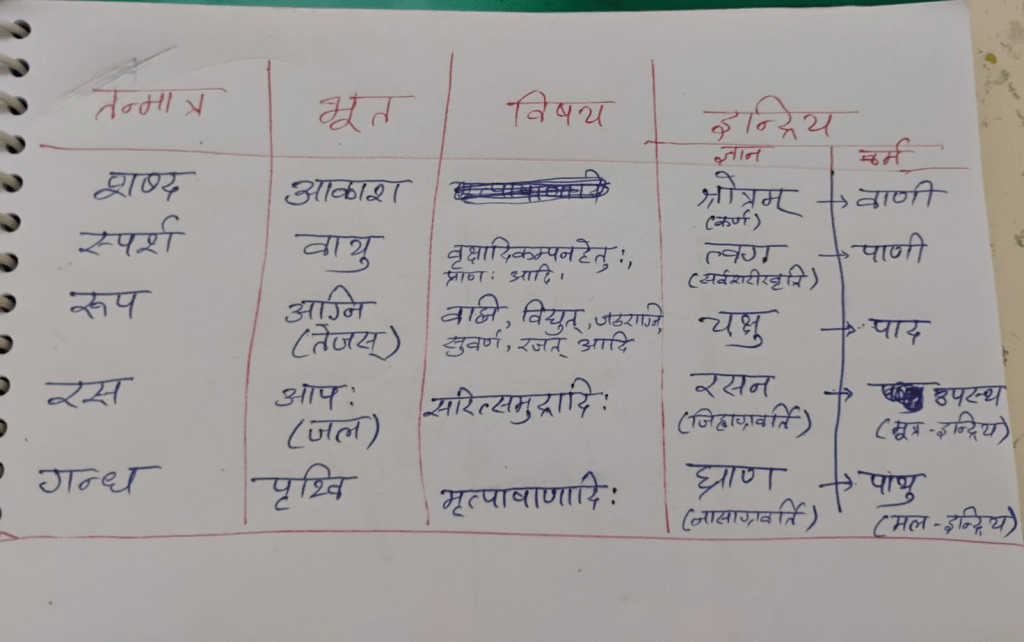
अब हम पंच-भूतों एवं 11 इन्द्रियों के सम्बन्ध के बारे में पढ़ेंगे। सभी भूतों में कौन कौन से गुण हैं एवं उनके विषय क्या हैं।

अबतक हम सात्विक अहंकार से पञ्च-ज्ञानेन्द्रिय, पंच-कर्मेन्द्रिय और मन की उत्पत्ति एवं तामसिक अहंकार से पंच-तन्मात्र एवं पंच-भूतों की उत्पत्ति पढ़ चुके हैं।

नैयायिकों के मत में इन्द्रिय भूतों से ही उत्पन्न होते हैं अर्थात इन्द्रिय भौतिक पदार्थ हैं। किन्तु ऐसा कहना शास्त्र-सम्मत नहीं है। विष्णु-पुराण की व्याख्या में विष्णुचित्त स्वामी सप्रमाण खण्डन करते हैं। इन्द्रियों को भौतिक इस कारण कहा गया है क्योंकि भूत इन्द्रियों के आप्यायक (पोषक) हैं। एवं ज्ञान-इन्द्रियों की उत्पत्ति में तन्मात्र सहायक होते हैं। कर्म-इन्द्रियों की उत्पत्ति में ज्ञान-इन्द्रिय सहायक होते हैं।

तन्मात्र के सहयोग से ज्ञानेन्द्रियों की उत्पत्ति

शब्द तन्मात्र के सहयोग से श्रोत्र इन्द्रिय, स्पर्श तन्मात्र के सहयोग से त्वग इन्द्रिय, रूप तन्मात्र के सहयोग से चक्षु इन्द्रिय, रस तन्मात्र के सहयोग से रसन इन्द्रिय एवं गन्ध तन्मात्र के सहयोग से घ्राण इन्द्रिय की उत्पत्ति होती है। पूर्व में पढ़ चुके हैं कि इन्द्रिय अणु एवं सूक्ष्म होते हैं। श्रोत्र का निवास कर्ण में, त्वग का निवास पूरे शरीर में, चक्षु का निवास आंखों के कृष्ण-तारा में, रसन का निवास जिह्वा में एवं घ्राण का निवास नासिका में। इस प्रकार प्रत्येक इन्द्रिय शरीर के किसी विशेष अंग के अग्र भाग में निवास करते हैं।

ज्ञानेन्द्रियों के सहकार से कर्मेन्द्रियों की उत्पत्ति।

श्रोत्र इन्द्रिय के सहकार से वाणी कर्मेन्द्रिय की उत्पत्ति होती है। त्वग से पाणी (हस्त) कर्मेन्द्रिय, चक्षु से पाद (पैर) कर्मेन्द्रिय, रसन से उपस्थ (मूत्र-विसर्जन कर्मेन्द्रिय) एवं घ्राण के सहकार से पायू (मल-कर्मेन्द्रिय)

भूतों के गुण

आकाश का एकमात्र विशेष गुण है शब्द।

वायु में स्पर्श के साथ शब्द (क्योंकि वो आकाश से उत्पन्न है और उसमें आकाश का भी गुण है।)

अग्नि में रूप के साथ शब्द और स्पर्श। (क्योंकि वो वायु से उत्पन्न है और उसमें वायु का भी गुण है।)

जल में रस के साथ शब्द, स्पर्श और रूप। (क्योंकि वो अग्नि से उत्पन्न है और उसमें अग्नि का भी गुण है।)

पृथ्वी में गन्ध के साथ शब्द, स्पर्श, रूप और रस। (क्योंकि वो जल से उत्पन्न है और उसमें जल का भी गुण है।)

इस प्रकार, पृथ्वी में सभी 5 गुण हैं। गन्ध गुण केवल पृथ्वी में है। शब्द गुण सभी पाँच भूतों में है।

भूतगुण
आकाशशब्द
वायुशब्द, स्पर्श
तेजस (अग्नि)शब्द, स्पर्श, रूप
आप: (जल)शब्द, स्पर्श, रूप, रस
पृथ्वी (भूमि)शब्द, स्पर्श, रूप, रस, गन्ध

भूत एवं उनके विषय

सभी भूतों के विषय भी chart में दिए गए हैं। आकाश विभू है (अहंकार, महत एवं प्रकृति में व्याप्त नहीं है), सर्वत्र व्याप्त है। आकाश का संयोग सभी मूर्त द्रव्यों से है। पृथ्वी का विषय मिट्टी, पत्थर आदि है। जल का विषय सरित, समुद्र आदि। अग्नि/तेजस का विषय वह्नि, विद्युत, सुवर्ण, रजत आदि हैं। इन सभी विषयों में हम भूतों के गुणों को समझ सकते हैं।

पदार्थ विभाग भाग 1: प्रकृति से महत एवं महत से अहंकार एवं सात्त्विक अहंकार से 11 इन्द्रियों की उत्पत्ति

पदार्थ शब्द का अर्थ क्या है? पदस्य अर्थ: पदार्थ:। इस प्रकार पदार्थ अर्थात तत्त्व।

पदार्थ के दो प्रकार हैं: द्रव्य और अद्रव्य।

अद्रव्य की चर्चा बाद में करते हैं। द्रव्य वो हैं जो गुण या क्रिया का आश्रय हैं। जो अवस्थान्तर को प्राप्त होते हैं।

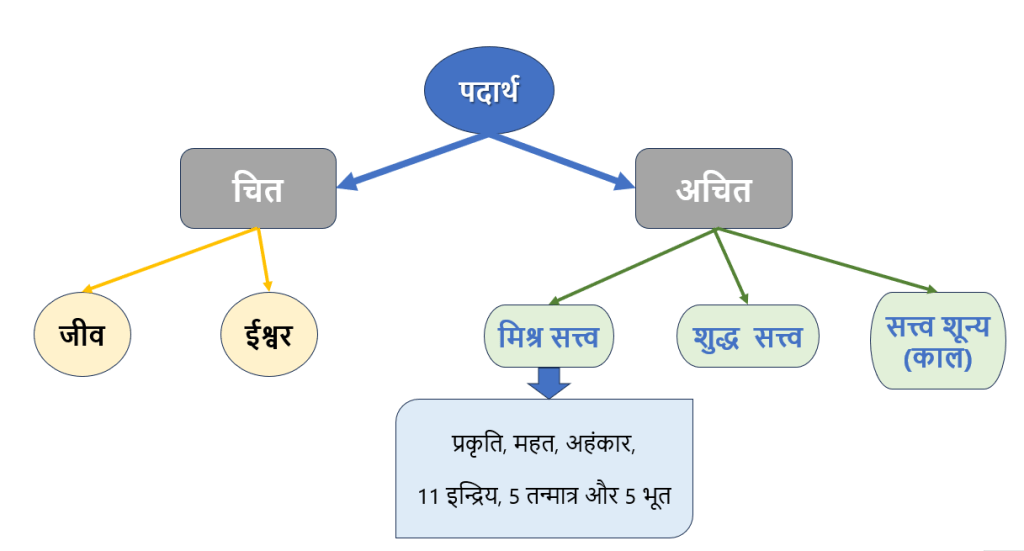
द्रव्य के दो प्रकार हैं: चित और अचित। चित अर्थात चैतन्य का आश्रय द्रव्य। जिसमें चैतन्य अर्थात ज्ञान हो। अचित अर्थात चैतन्य का अनाश्रय द्रव्य। जिसमें चैतन्य अर्थात ज्ञान न हो।

चित दो प्रकार के हैं: जीवात्मा और परमात्मा।

अचित तीन प्रकार के हैं: प्रकृति (मिश्र सत्त्व), काल और शुद्ध-सत्त्व।
प्रकृति भगवान का लीला उपकरण है।

मिश्र सत्त्व कुल मिलाकर 24 तत्त्व हैं। बाकि 23 तत्त्व प्रकृति के ही विकार हैं। प्रकृति अर्थात मूल/ उपादान कारण। इसी को अविद्या और माया भी कहते हैं। मूल प्रकृति तक सम सृष्टि है। सत्त्व, रजस एवं तमस समान मात्रा में होने के कारण अनुद्भूत होते हैं।

प्रकृति के बाद की सृष्टि विषम सृष्टि हैं। सत्त्व, रजस एवं तमस विषम मात्रा में होने के कारण उद्भूत अवस्था में होते हैं।

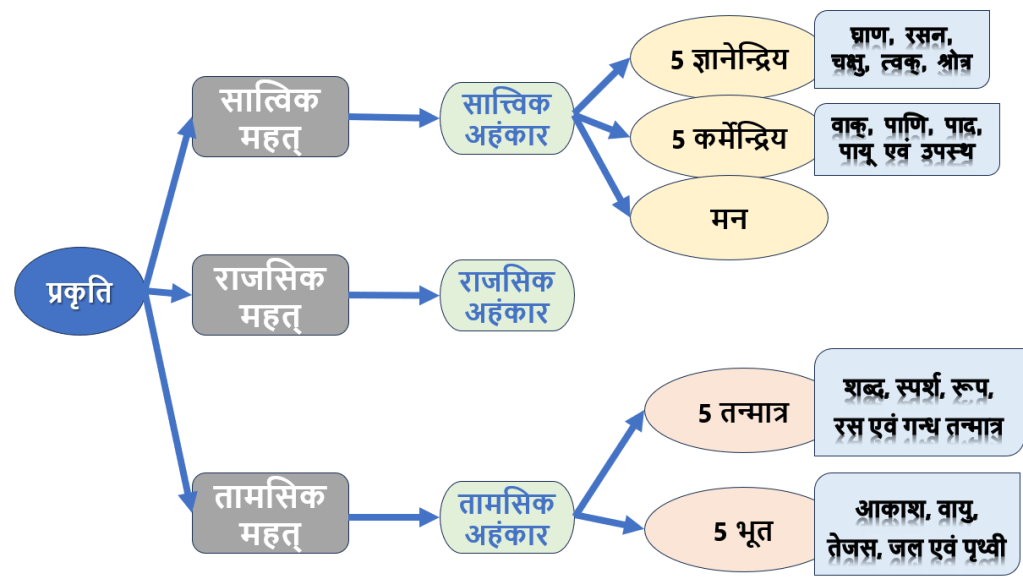
प्रकृति से उत्पन्न है महान, जो सात्त्विक, राजसिक एवं तामसिक 3 प्रकार का होता है। महान को ही बुद्धि भी कहते हैं। महान से उत्पन्न होता है सात्त्विक, राजसिक एवं तामसिक अहंकार। ये अहंकार तत्त्व ही अभिमान का हेतु है।

सात्त्विक अहंकार से उत्पन्न होते हैं 11 इन्द्रिय। ये दो प्रकार के हैं: ज्ञानेन्द्रिय एवं कर्मेन्द्रिय।

ज्ञानेन्द्रिय 6 हैं: 5 बाह्य ज्ञानेन्द्रिय एवं 1 आन्तर ज्ञानेन्द्रिय अर्थात मन या अंतःकरण। 5 बाह्य ज्ञानेन्द्रिय हैं: घ्राण (सूंघने का इन्द्रिय), रसन (स्वाद का इन्द्रिय), चक्षु (देखने का इन्द्रिय), त्वक् (स्पर्श का इन्द्रिय), श्रोत्र (श्रवण का इन्द्रिय)। ये क्रमशः गन्ध, रस, रूप, स्पर्श एवं शब्द के ग्राहक हैं। (इन्द्रिय अत्यन्त सूक्ष्म होते हैं, इन्हें शरीर के अंग नासिका, आँख आदि न समझें| अपितु इन्द्रिय शरीर अंगों के अग्र भाग में रहते हैं)|

5 कर्मेन्द्रिय हैं: वाक्, पाणि, पाद, पायू (मूत्र विसर्जनका इन्द्रिय) एवं उपस्थ (मल विसर्जन का इन्द्रिय)। ये क्रमशः वचन, आदान, गमन, विसर्जन एवं आनन्द के हेतु हैं।

तामस अहंकार से 5 तन्मात्र एवं 5 भूत उत्पन्न होते हैं।

राजस अहंकार दोनों के कार्य में सहकारी होता है।

Vyuha roopa of Bhagwan

For the purpose of creation, sustenance and destruction of the leela vibhuti, Bhagwan comes out of Paramapadam and resides in Vyuha lokam in each Andam. For these 3 purposes, bhagwan takes 3 forms: Sankarshana, Pradyumna and Aniruddha.

चतुर्विधः स भगवान् मुमुक्षूणां हिताय वै ।
अन्येषामपि लोकानां सृष्टिस्थित्यन्तसिद्धये ।।
आनन्त्यात्तव सेनाने व्यूह आद्यो मयेरितः ।
अनादिकर्मवश्यानां संसारे पततामधः ।। (Vishwaksen Samhita)

For the welfare of mumukshus (those desirous of moksha) and for the purpose of creation, protection and deluge, bhagwan becomes four-fold in Vyuha forms, as he is Ananta (infinite).

While Para Vasudeva shows all the 6 shad-gunas, the three Vyuha rupams show two gunams each, which are required for the specific tasks. Sometimes, Vyuha Vasudeva is also taken into Vyuha forms, and thus, the number of Vyuha forms is counted as four. However, Vyuha Vasudeva is not different from Para Vasudeva. He also shows all the 6 gunas and has no role in creation, sustenance and destruction. Since the same set of gunas are meditated in both Para Vasudeva and Vyuha Vasudeva, they are taken as one single Vasudeva moorti, and Vyuha forms are understood as three: Sankarshana, Pradyumna, and Aniruddha.

Sankarsha shows gyaana and bala. Pradyumna shows Aishwarya and Veerya, and Aniruddha shows Shakti and Tejas. The colour of sankarsha is like fresh gold, Pradyumna is like Indra Neelamani and Aniruddha is like Taatkaalika-megha.

It is to be noted that Bhagwan is always purna in shad-gunas in all his forms. However, some of the gunas are shown in particular forms, and some remain hidden.

Shad-gunas of Bhagwan

सत्त्वादयो न सन्तीशे यत्र च प्राकृता गुणाः ।
ज्ञानशक्तिबलैश्वर्य्यवीर्य्यतेजांस्यशेषतः
भगवच्छब्दवाच्यानि बिना हेयैर्गुणादिभिः ।। (Vishnu Puran 1-9-4)

Bhagwan has no praakrita/material gunas like sattva, rajas and tamas. On the other hand, he has kalyaan gunas like Gyaan, Shakti, Bala, Aishwarya, Veerya and Tejas. Being Bhagwan means having all these gunams in purnata and lack of heya (evil) gunas.

Gyaan, Shakti, Bala, Aishwarya, Veerya and Teja are the shad-gunas of Bhagwan. Vatsalya, Mardav etc. – all other swarupa-gunas come from these shad-gunas only.

Gyaana: Gyaanam is knowing about our karmas. Karmas are recorded in the dharmabhoota gyaana of Bhagwan. When creation happens, he provides names and forms as per our previous karma. He ensures that everyone gets fruits of their karma. Once someone surrenders, he simply deletes all his karmas from his gyaana.

Shakti: aghatit-ghatana-saamarthyam. Elevating a sansaari jeeva from this Samsara to Sri Vaikutham is the Shakti guna of Bhagwan.

Bala: बलं धारणसामर्थ्यम्। Bhagwan is holding the entire creation and yet he doesn’t get any tiredness. That is his Balam.

Aishwarya : समस्तवस्तुनियमन-सामर्थ्यम्। The bhaava of Ishwara is Aishwaryam. Bhagwan is controlling the entire creation, that is his aishwaryam.

Veerya : जगद-उपादानत्वे अपि स्वरूप-विकार-अभाव-रूप:। Though Bhagwan is the upaadan-kaaranam or material cause of the creation, just like mud is the material cause for the pot; he doesn’t get any deformation in his swarupa. This quality is Veerya.

Tejas : सहकारि-अनपेक्षा वा पराभिभवन सामर्थ्यम्। Bhagwan doesn’t need any Sahakari-kaaranam or helping cause just like a wheel is for pot in the creation. This quality is Tejas. Or Dominating the foes is called Tejas.

1. Bhagwan Sankarshana

भगवानच्युतोऽपीत्थं षड्गुणेन समेधितः ।

बलज्ञानगुणौ तस्य स्फुटौ कार्यवशान्मुने ।।

Though Bhagwan Achyuta (who never falls from his Shad-guna-purnya avastha) is qualified with all the 6 gunas, Gyaana and Bala erupt or appear in Bhagwan Sankarshana.

The works of Sankarshana are:

1. Jeeva-tattva-adhisthanam (using balam): In the deluge stage, entire mishra sattva dissolves into Mool Prakriti, and Mool Prakriti gets into the stage of tamas. Jeevatmas and mishra sattva get almost non-existent and can’t be distinguished from Ishwara. Jeevatmas are lying as if they don’t exist, without name and form, since mool prakriti itself has attained the stage of avyakta.

Bhagwan Sankarshana makes jeevatmas distinguished from Avyakta prakriti and starts the process of creation from avyakta to mool prakriti.

सङ्कर्षणस्तु देवेशो जगत्त्रष्टुमनास्ततः ।

जीवतत्त्वमधिष्ठाय प्रकृतेस्तु विविच्य तत् ।।

2. Shastra pravartanam (using gyaana): Preaches Shastras, especially Pancharatra vishesha shastra.

सोऽयं प्रद्युम्ननामा भूत्तदेकान्तवपुर्धरः

इति चोक्तप्रकारेण प्रद्युम्नावस्थां प्राप्य ।।

शास्त्रप्रवर्त्तनं चापि संहारं चैव देहिनाम् ।

बलेन हरतीदं स गुणेन निखिलं मुने ।।

ज्ञानेन तनुते शास्त्रं सर्वसिद्धान्तगोचरम् ।

वेदशास्त्रमिति ख्यातं पञ्चरात्रं विशेषतः ।

3. Sanhaar (using balam): Destroys the entire creation. Destroys Vyashti shrishti as antaryaami of Rudra, Kaala, etc., and destroys Samashti shrishti directly.

2. Bhagwan Pradyumna

ऐश्वर्य्यवीर्य्यसम्भेदाद्रूपं प्रद्युम्नमुच्यते ।

पूर्णषड्गुण एवायमच्युतोऽपि महामुने

गुणावैश्वर्यवीर्याख्यौ स्फुटौ तस्य विशेषतः ।।

Bhagwan Sankarsha has all the 6 gunas but Aishwarya and Veerya erupt/appear in him.

Bhagwan Sankarshana is the adhishtatri devata for Manas. (मत्तः स्मृतिर्ज्ञानमपोहनं च।)

मनसोऽयमधिष्ठाता, मनोमय इतीरितः ।

The works of Bhagwan Pradyumna are:

1. Creation of chara and achara in the Samsara (using Aishwarya gunam).

ऐश्वर्येण गुणेनासौ सृजते तच्चराचरम् ।

वीर्येण सर्वधर्माणि प्रवर्त्तयति सर्वशः ।।

There are two things to be noted here:

A. Creation by Pradyumna is Sadwaraka i.e. using the medium or dwara of Brahma, being his antaryami. Adwarak Srishti or Samasti srishti is done by Bhagwan Vasudeva itself. He creates Andas from his Sankalpa. Then he descends in each Andas in Vyuha loka as Sankarshana, Pradyumna and Aniruddha.

B. The creation work of Pradyumna is different from the creation work of Aniruddha.

Pradyumna carries out Shuddha-varga shrishti. He creates sattvika jeevas who are desirous of moksha, worships him alone through the dwaadashaakshar mantra and attains Bhagwan at the end.

मनूनां सर्गमकरोन्मुखबाहूरुपादतः

चतुर्णां ब्राह्मणादीनां सर्गद्वारं जगत्पतिः

2. Does dharma-pravartanam use veerya gunam.

3. Bhagwan Aniruddh

शक्तितेजः समुत्कर्षादनिरुद्धतनुर्हरि: ।

पुरुषोपि महाध्यक्षः पूर्णषाड्गुण्य उच्यते ।

शक्तितेजोगुणौ तस्य स्फुटौ कार्य्यवशान्मुने ।।

Bhagwan Aniruddha has Shakti and Tejas gunam.

The works of Bhagwan Aniruddha are:

1. Creation of jagat using Shakti.

It is to be understood here that Aniruddha does Shrishti of jeevatmas full of rajas and tamas. Shuddh-varga shrishti has already been told earlier as the work of Pradyumna. Mishra varga shrishti is done by Aniruddha using dwaara of Brahma (not directly).

Creation of Brahma is also done by Aniruddha only.

तुरीयोऽयं जगन्नाथो ब्रह्माणमसृजत्पुनः

मुखबाहूरुपज्जातो ब्रह्मणः परमेष्ठिनः ।।

2. Jagad-rakshanam using Shakti. (He eventually gives Rakshana kaaryam to Vishwaksena.)

3. Creation of kaala

4. Gives tattva-gyaana using Tejas gunam.

शक्त्या जगदिदं सर्वमनन्ताण्डन्निरन्तरम्

बिभर्ति पाति च हरिर्मणिसानुरिवाणुकम् ।

तेजसा निखिलं तत्त्वं ज्ञापयत्यात्मनो मुने ।।

Upa-Vyuhas

Earlier we studied about Sankarshana, Pradyumna and Aniruddha Vyuha roopams of Bhagwan.

Actually, the Vyuha forms are also infinite. From the 4 vyuha, comes 12 upa-vyuhas and from them comes 36 more. Keshava, Narayana and Maadhava come from Vasudeva. Govind, Vishnu and Madhusudana come from Sankarshana. Trivikrama, Vaamana and Shridhara come from Pradyumna. Hrishikesh, Padmanaabha and Damodara come from Aniruddha. These 12 Vyuhas reside at the 12 places in our bodies. From these 12 vyuhas, Padmanaabha, Dhruva, Ananata etc 36 Vyuhas come. The number of Vyuhas is thus infinite. The entire upasana of Paancharaatrikas revolves around Vyuha roopams.

LOCATION OF VYUHA LOKA

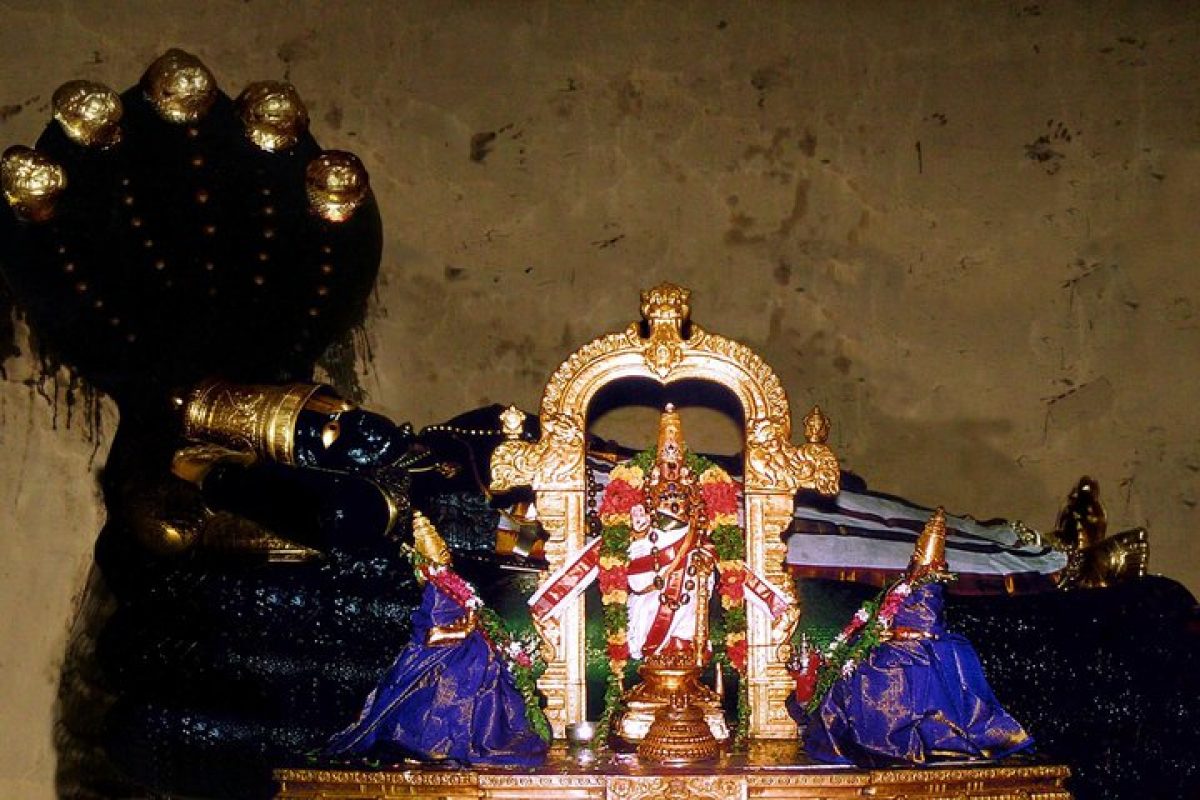
When Bhagwan creates the Andam and 14 lokas inside it, he himself comes to reside in Bhu lokam. Bhu Loka has 7 dweepas including Shweta dweepa and Jambu dwipa. It has 7 oceans including Ksheera ocean and Lavana ocean. The Vyuha lokam of Bhagwan is in the Ksheera ocean. Devas, Rudra and Brahma approach Vishnu at Shweta dweepa, where he gives them darshanam.

From the Vyuha loka in the Bhu loka, Lotus emerges from the navel of Vishnu and reaches Satya Loka. At the lotus there, Brahma takes birth. From Brahma, Rudra takes birth.

At Satyaloka, Vishnu again takes a form and resides with Rudra and Brahma as Trimurti Vishnu. In Satyaloka, there are separate Vishnu Loka, Rudra Loka and Brahma loka. These lokas are attained by their upaasakas. We have studied about the Shuddha-varga shrishti done by Pradyumna. Only those upaasakas have access to Vishnu Loka inside the Satya Loka.

In Srimad Bhagwatam, we came through an incident of 4 kumaras visiting Vishnu Loka and cursing Jaya Vijaya there. It is to be noted that Vishnu Loka is not Sri Vaikuntham but very much outside the Viraja river and exists in each Andam. The Jaya and Vijaya there are also not Nitya Suris.

MAYAVADI’S CRITICISM

Mayavaadis objects at the evolution of one vyuha from the previous Vyuha (Like ‘Sankarshana is born from Vasudeva’ etc).

However, their objections have no ground. It is their inability to understand Paancharatra. Bhagwan is not getting transformed into another form and his nirvikaaratvam is not harmed here. Bhagwan is very much the same. The change occurs only in his mangal Vigraha.

Pancharatra itself tells that it is like a deepam getting lighted from previous deepam. That’s how Bhagwan gets a new body. Aatma remains unchanged as he is vibhu (omnipresent)

ARE THERE THREE TYPES OF VISHNU?

Some people have this misconception. Vishnu is one only. Be is infinite Vyuha forms or infinite Vibhava forms, it’s only the change of body shapes for Vishnu. Bhagwan doesn’t change. But this is true, different gunas are experienced in different forms. However, he is complete with all the gunas in all the forms.

“Vishnu tu trini rupani” refers to 3 Vyuha forms in Pancharatra and not three different types of Vishnus.

Ramanuja-mata-saara-sangrah part 11

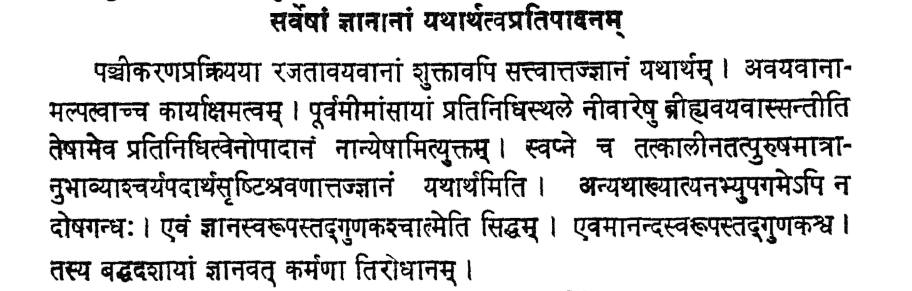
‘yathaartham sarva vigyaanam’ (yathaartha khyaati)

In VA vedaanta, there is no place for mithya. Every gyaanam is yathaartha or as-it-is and thus true.

1. Now, the question raised would be: is bhrama (illusion) also satya? Like Seashell is mistook as silver due to it’s shine. Is that also true?

Yes. That is also true. We have already studied panchikaranam. After Panchikaranam, all the bhootas have proportions of all the other bhootas as well. The rajat is already present in a seashell due to panchikaranam. Due to some upaadhis (like sunrays), the parts of tejas silver tattva are seen, and the parts of prithvi seashell aren’t seen.

What we have seen is true only since silver is undoubtedly present there. But since, the rajat is available in very small quantity after panchikaranam, Vyavhaara isn’t possible.

2. What about water seen in the desert? Is that also true? If that’s true, why can’t we drink that and remove thirst?

The water seen due to illusion is also true since water is present in prithvi, as a result of panchikaranam. Due to upaadhi, like the refraction of light or the shine of sunrays, etc., the water is seen there.

Why is water not always seen in Prithvi? It is because upaadhi is not always present. Whenever upaadhi is present, water is visible in prithvi. But since it is present in extremely small amounts, vyavhaara of water i.e. drinking and removing thirst is not possible.

3. The rope is misunderstood as a snake at night. Is that also true?

Yes, that is also true. The gyaana that was observed is true. The shape of the rope is similar to a snake. The attributes of the rope which are different from the snake were not observed due to darkness. Thus, there is a lack of observation in some parts.

If it was false, then why wasn’t there an illusion of an elephant for a rope? Moreover, the rope was visible as a lying snake only. Did anyone see it lifting its hood or moving like a snake? The gyaana which is obtained from limited observation, i.e., qualities of rope similar to snake, was not false but true only. Once light is thrown, we get the complete observation and illusion vanishes.

Conclusion

The bhrama, or illusion, is also yathaartha gyaana.

Note:

Swapna is also true, not an illusion. Paramaatma creates momentary objects for the anubhavam of that jeevatma only and for that time only, as per their karma. Thus, swapna gyaana is also to experience the karma of a jeevatma.

Lot of concepts are here to be understood like akhyaati, anyatha khyaathi, anirvachaniya khyaati etc. These are not in the scope of this book.

However, to note, we have yathaarth khyaati in VA.

Anga of Krishna: Narayana (SB 10.14.14)

shloka that is often referred and misinterpreted it:
नारायणस्त्वं न हि सर्वदेहिना-
मात्मास्यधीशाखिललोकसाक्षी ।
नारायणोऽङ्गं नरभूजलायना-
त्तच्चापि सत्यं न तवैव माया ॥ १४ ॥

Multiple commentaries are available here: https://archive.org/details/srimad-bhagavata-multiple-commentaries/sb_canto_10/page/n1481/mode/1up?view=theater

Brahma, who earlier received gyaanam from Bhagwan and who protected Vedas and gave gyaanam again to him, got deluded and considered Krishna as some ordinary child. He decided to test him and in turn repents in these shlokas:

Naarayanah na hi tvam? : Are you not NarayaNa? (Meaning, you are Narayana only. It is stressed here)

How,
1. sarvadehinaam aatma asi: Bhagwaam is antaryaami aatma of every jeevatma.

Naara means sarva dehi i.e. all jeevatmaas.
Naaraanaam ayanam NarayaNa i.e. one who is the ayana (support, means, destination) of all jeevatmas. The word ‘ayana’ comes from iN gatau dhaatu which gives several meanings to the word ayana.

Bhagwaan, being the antaryaami aatma of all, supports, owns, and holds them, and thus all the jeevatmas, being his body, are subservient to and dependent on Narayana.

2. Adheesh: Bhagwaan is the controller or pravartaka of everyone. He himself says in Bhagwan Gita “matah sarvam pravartate”

3. Akhil loka sakshi: Bhagwaan being antaryaami of every jeevatmas, is the drastha of our every activity. (iN gatau is gatyarthaka dhaatu and from ‘gatyarthah budhyarthah’ nyaaya, the word ayana would mean “sakshi”

and thus, you are NarayaNa (Naaraanaam ayanam). Meaning there is abheda (no difference) between Narayana and you.

How?
Here he quotes another meaning of the word NarayaNa which is quoted by Krishna himself in Mahabharata and also quoted in Manusmriti:

“आपो नारा इति प्रोक्ता आपो वै नरसूनवः । ता यदस्यायनं पूर्वं तेन नारायणः स्मृतः ॥

Nara refers to Bhagwaan as per Vishnu Sahasranaama (Jahnu NarayaNo Narah). From him is born waters. That was the ayanam (residing place) of Bhagwaan (and thus he is called ‘Narabhujala-ayanah’) as Vishnu (in Aniruddha vyuha form) or as Vatapatra-shaayi Krishna, who gave darshana to Markandeya. Since, Brahma here is joyous to see the Bhagwaan’s form, who had given him gyaanam; the apt meaning here is Vishnu.

Brahma had received gyaanam but he wasn’t able to see him. The story is dealt in detail earlier in Bhagwatam. Now, he is able to see him and his saying, “Are you not the Narayana, who lives on the Ksheera ocean waters?”

*नारायणोऽङ्गं नरभूजलायनात्तच्चापि सत्यं न तवैव माया ॥*

Vidwans like Sridhara swami, Sudarshana Suri, Shrinivaas suri, Sri Shukadeva and Goswami Giridhara laal etc have interpreted the word ‘anga’ as ‘murti’ or ‘vapu’.

The Narayana, lying on the waters is also your form only i.e. you are the same Narayana who gave me knowledge.

It is to be understood here that Bhagwaan as his aatma-swarupa is omnipresent. He is all-pervading, present everywhere. Bhagwaan also takes an asaadhaaran-mangal-vigraha or body to appear to us like Vishnu, Krishna, Rama etc. In Vishishtadvaita siddhanta, Bhagwaan is different from his body. Bhagwaan takes several bodies but that doesn’t make them different as the aatma is same. The shape of the body only differs. What is the asaadhaarana lakshana of his body? It’s the presence of Mahalakshmi on his chest in the form of Sri Vatsa Chinha. In Ramayanam and Mahabharatam, Valmiki and Vyaasa addresses bhagwaan as one having Mahalakshmi on his chest. Meaning, he is the Bhagwaan, Sarveshwara, Narayana.

Veer Raghavacharya swami quotes a nyaaya here

“Raho: shira iti vat tavaiva angam iti abheda sambandhe shashthi”. There is a popular nyaaya “Rahoh shiram”

“the head of Rahu”. What does this mean? The head itself is Rahu. Isn’t it? What does it mean to say the “head of Rahu”? It means ‘NON-DIFFERENCE’

Thus, ‘Narayanah angam tavaiva’ here would mean that ‘YOU ARE NON-DIFFERENT FROM NARAYANA’

Bhagwatprasaadaacharya also gives the same meaning, quoting, “raho: shir itivat tava angam iti abheda sambandhe shashthi. soapi tvameva ityarthah”

त्तच्चापि सत्यं न माया : That form/murti is satya and not maayaa.

Also, it’s important to read the shloka, along with the upcoming two shlokas, 15 and 16, failing to which people misinterpret the meanings, which goes contrary to the context.