The compassionate Bhagwan and unreciprocating Jeevatma (part 1)

The Bhagwan who is sarveshwara, Lord of all and niratishaya-anand-yuktah (possessor of infinite anandam/bliss) is forever served by infinite nitya jeevatmas in Sri Vaikuntham.

tad viṣṇoḥ paramam padaṃ sadā paśyanti sūrayaḥ  (Rig Veda)

The suris (nitya-aatmas) are always looking towards the highest abode of Vishnu. Are they only looking? It’s upalakshanam for kainkaryam (service). The anubhavam leads to preeti or bhakti and which in turn compels the jeevatma to do loving service for the happiness of Bhagwan. The whole intension of this kainkaryam is not the self-happiness but to bring smile on the face of bhagwan. Thus, it is called ‘bhagwad-anubhav-janeeta-preetikaarita-kainkaryam‘.

हताखिलक्लेशमलैः स्वभावतः सदानुकूल्यैकरसैस्तवोचितैः ॥

गृहीततत्तत्परिचारसाधनैर्निषेव्यमाणं सचिवैर्यथोचितम् ॥ ४३ ॥

Swami AlvandAr says in stotra ratnam that infinite eternally blemishless jeevatmas (nitya suris) are forever ready with the instruments for your service, whose sole delight consists in being spontaneously devoted to your service.

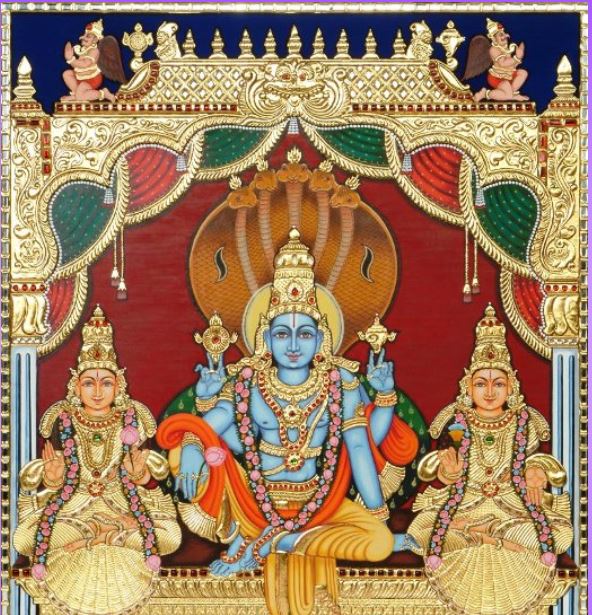
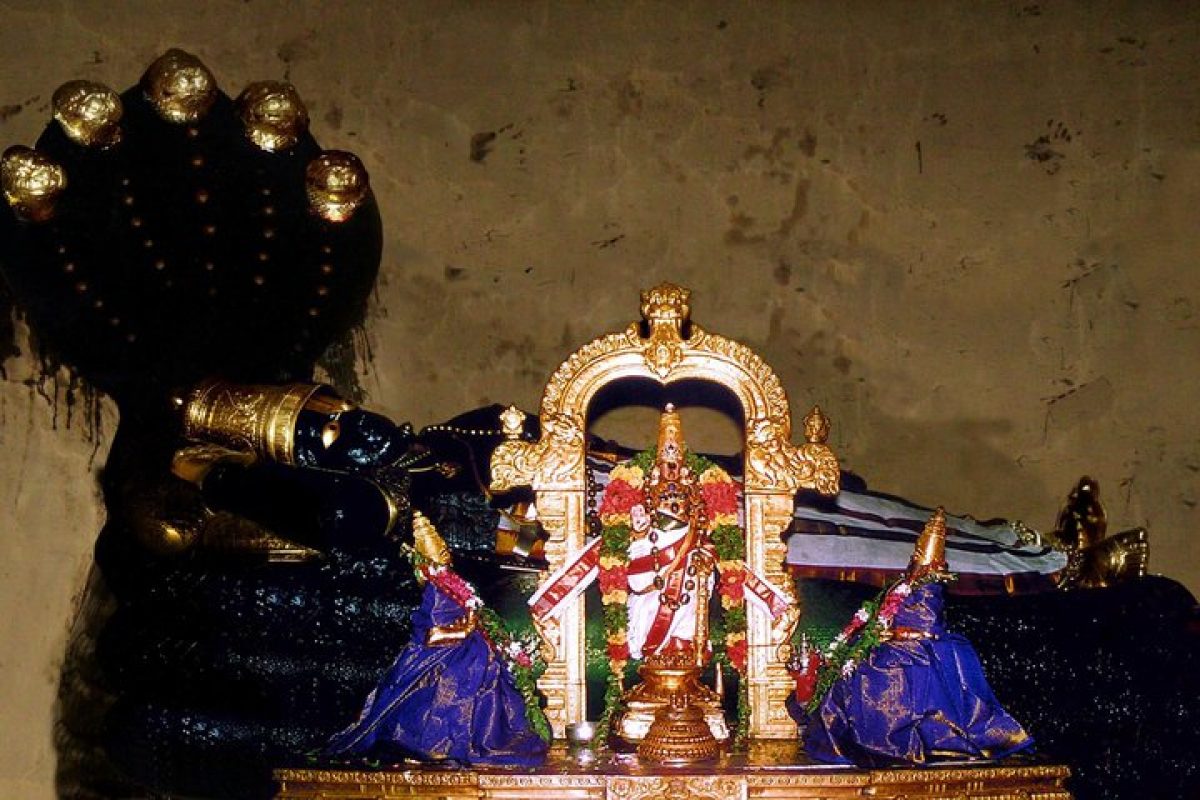
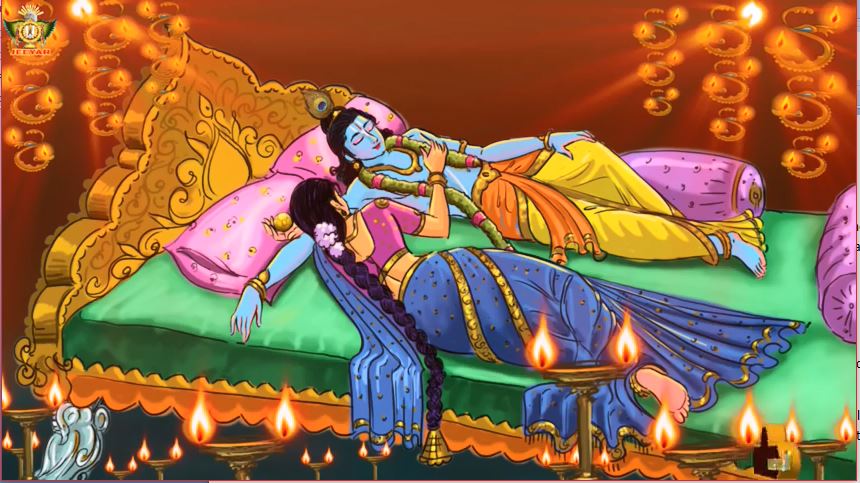
Forever, Bhagwan is united with her consorts (Sri, Bhu and Nila are the pradhaan maheeshis) and experiencing the divine rasam:

चकासतं ज्याकिणकर्कशैः शुभै: श्चतुर्भिराजानुविलम्बिभिर्भुजैः ॥

प्रियावतंसोत्पलकर्णभूषण- श्लथालकाबन्धविमर्दशंसिभिः ॥ ३३ ॥

The four auspicious arms have the rough scars of the bowstring, and which speak of their contact with the crest-lily, the ear-ornament and the loose
curls of the braid of your beloved. (Indicates loving aalingan of the divya dampati.)

Thus, the bhagwan, who is forever enjoying divine union with mahishis, served by infinite nitya jeevatmas, why does he feels being alone? Vedas says: Sa EkAkI na ramatE. He doesn’t like to be alone.

तदैक्षत बहु स्यां प्रजायेयेति तत्तेजोऽसृजत तत्तेज
ऐक्षत बहु स्यां प्रजायेयेति तदपोऽसृजत ।

the “Sat” wished that “I become the multitudinous (expanded-StUla) chit and achit tatvas ie., the universe”. The “Sat” became many, as it wished. This is “Sat’s” first Sankalpam (Wish).

Chhandogya Upanishad 6.2.1 (https://ramanujramprapnna.blog/2019/02/11/brahma-sutra-1-1-2-creation-of-universe/)

let’s move to Sri Ramayanam in search of the answer:

कदान्वहं समेष्यामि भरतेन महात्मना।

शत्रुघ्नेन च वीरेण त्वया च रघुनन्दन।।3.16.40।।

O Lakshmana! when shall I meet great Bharata, brave Satrughna and you.

इत्येवं विलपंस्तत्र प्राप्य गोदावरीं नदीम्।

चक्रेऽभिषेकं काकुत्स्थस्सानुजस्सह सीतया।।3.16.41।।

Expressing his grief in such manner, Rama reached Godavari where he took his bath with his brother and Sita.

Sri Govindaraja Jeeyar comments here: भरतसाहित्याभावेन विद्यमानाभ्यां सीतालक्ष्मणाभ्यामपि विरहितमात्मानं मन्यते भरतस्नेहातिशयप्रकातरो ऽयम् 

Though Rama is served by Lakshmana whose *sheshatvam and paaratantriyam is of no match and loving wife Sita, he feels very lonely in absence of Bharata. He goes on to say to Lakshmana, that when shall I meet YOU, though he is very taking bath with him in Godavari. It shows that in the pain of separation of Bharata and Shatrughna, Rama couldn’t relish the association of lakshmana.

(The Sheshatvam of lakshmana is extolled in the verse: भवांस्तु सह वैदेह्या गिरिसानुषु रंस्यते। अहं सर्वं करिष्यामि जाग्रत स्स्वपतश्च ते।।2.31.25।।, while, his paaratantriyam is extolled in the verse: परवानस्मि काकुत्स्थ त्वयि वर्षशतं स्थिते। स्वयं तु रुचिरे देशे क्रियतामिति मां वद।।3.15.7।।. What to say of Seeta: तुल्य शील वयो वृत्तम् तुल्य अभिजन लक्षणम् | राघो अर्हति वैदेहिम तम च इयम् असित ईक्षणा)

Sri Lokacharya swami tells in Mumukshupadi that just like a parent who is living with 3 children is forever worried about his fourth children living away from him (or, in opposition to him) and doesn’t enjoy the association of the three children in the pain of separation of his fourth child; similarly bhagwan though forever served by nitya suris and Mahalakshmi, is forever worried about his children i.e. us who are in opposition to him and in turn suffering in sansaar saagaram. Furthur, he says that a child was in opposition to his parents and left the home. The compassionate parents still arranged for his food, cloths and stay quietly in the night-stay-home on his way. Similarly, Bhagwan is also taking care of all the jeevatmas, even those who are against him, turned away for him; out of his compassion.

Bhagwan started the creation with the hope that Jeevatmas will utilise this opportunity to shackle the prakriti-sambandham and come back to his abode. Thus, creation itself is an outcome of compassion of Bhagwan. Before the creation, jeevatma were lying without gyaanam, limbs or sense organs. It lies just like an achetana. Seeing them, bhagwan gets full of compassion and creates samsaram with the purushakaaram of Mahalakshmi.

एवं संसृतिचक्रस्थे भ्रम्यमाणे स्वकर्मभि :।

जीवे दुःखाकुले विष्णोः कृपा काप्युपजायते ।।

However, jeevatmas fail to utilise this opportunity, and he keeps on adding Vaasana and Ruchi. As a result of Vasana and Ruchi, he indulges in prakriti-sambandham, does papas and punyas, and in turn develops even more Vaasana and Ruchi, which furthur impels him to do karma, and thus Avidya keeps on increasing. Bhagwan feels that it’s need of the hour to put a brake his vaasanas and ruchis or else he will keep on falling into samsara-sagara. Thus, bhagwan dissolves the creation. Thus, pralaya/dissolution is also an act of compassion of bhagwan.

Q. If Bhagwan is compassionate, how can he be a creator of a samsara full of sorrows? There is a differentiation of rich and poor etc. Doesn’t it make Bhagwan cruel?

Reply: The question is already answered by Maharshi Vyaasa in Brahma Sutra and can be studied here: https://ramanujramprapnna.blog/2019/02/15/concept-of-karma/

Q. Bhagwan is said to be dosha-mukta (blemish-less). In your Siddhanta, Bhagwan is feeling sorrow for the state of baddha jeevatmas and delighted about getting them on the right path. Doesn’t it bring dosha to Bhagwan? How can anandaghana bhagwan feel sorrow? How does something else make him delighted?

Reply: Bhagwaan feeling sorrow seeing the plight of a jeevatma is an outcome of his compassion. It’s a form of his daya. Getting pain or pleasure from the karma or prakriti-sambandha only brings blemishes. That’s not the case here. Bhagwan’s sorrow isn’t prakruta or born from three gunas of prakriti but from his own sankalpam.

In Sri Ramayanam, maharshi valmiki tells a quality of Bhagwan:

व्यसनेषु मनुष्याणां भृशं भवति दुःखितः। उत्सवेषु च सर्वेषु पितेव परितुष्यति। 2.2.40।।
He grieves profoundly whenever people are afflicted by misfortunes and rejoices like a father on festive occasions.

https://www.valmiki.iitk.ac.in/content?language=dv&field_kanda_tid=2&field_sarga_value=2&field_sloka_value=40&scgr=1&scnb=1&etss=1&choose=1

Thus, the sorrow and happiness of Sarveshwara out of compassion are his gunam and never a dosha. In fact, if some mighty person lacks the feeling of sorrow on seeing the plight of his subjects, it brings dosham (blemish) to him. How can someone be a rakshaka (protector) if he lacks these? In Sri Ramayanam, when Rama saw the plight of tapasvi rishis in Dandaka forest, he was filled with grief and lifted his bow to take a vow that he will eliminate the demon clan from the entire Dandaka Forest. Of course, it was disliked by Sita but that’s another aspect that highlights the vatsalya of a mother. Infact she herself was delighted later when Rama used his bow to eliminate the mighty army of Khara single-handedly (तं दृष्ट्वा शत्रुहन्तारं महर्षीणां सुखावहम्। बभूव हृष्टा वैदेही भर्तारं परिषस्वजे।।3.30.39।।). Let’s see the sorrow of Rama when he saw the plight of the ascetics of Dandakaaranya:

प्रसीदन्तु भवन्तो मे ह्रीरेषा हि ममातुला। यदीदृशैरहं विप्रैरुपस्थेयैरुपस्थितः।।3.10.9।।

Be pleased that brahmins like you have approached me while I should have come to you has put me to shame immeasurable.


Rama’s grief for Seeta is mentioned by Hanuman:

अनिद्रस्सततं  रामः सुप्तोSपि च नरोत्तमः। 
                                   सीतेति मधुरां वाणी व्याहरन प्रतिबुध्यते।।
Ram , best of men ,has no sleep , usually . And even when he sleeps, he wakes up uttering the sweet words `Sita , Sita .

Ramayana Sundarakandam 34.52

Bhagwan’s efforts to gain the Jeevatma

As per shastras, the Jeevatma belongs to Bhagwan. The jeevatma is the property of Bhagwan and its inherent nature is to be dependent on bhagwan and being subservient to Bhagwan. Thus, it’s the owner who makes efforts to gain his possession and not vice versa. Similarly, Bhagwan is making efforts or sankalpam to gain the jeevatmas.

What’s easier? We reaching bhagwan through our efforts or Bhagwan achieving us through his sankalpam? Certainly, the latter one. Even in loka, we can observe that reaching the sun is difficult while the sun can reach us easily. So, what’s to be done on the part of a jeevatma? What bhagwan expects from us is just the reciprocation of his efforts to gain us. Unless we acknowledge and reciprocate, the sankalpam of Bhagwan won’t work.

Let’s take an example. A person is stuck in the flood water, and fortunately, he got the rescuers to save him. They dropped a rope and told the person to hold tight and he would rescue him. What’s the expectation of the rescuer? He just wishes the person to accept him as upaaya (Means) and follow his instructions. is holding of rope on the part of the person is the means to be rescued? Certainly not. It’s just reciprocation to the efforts of the rescuer and in any case, it’s rescuer who is means for the person to get out of flood.

Now suppose, the person accepts the instruction of the rescuer, but he thinks that he should make some efforts from his end as well and starts putting his hands randomly in the water. Now, aren’t his efforts to swim a hindrance to the efforts of the rescuer? Similarly, a jeevatma who is fully surrendered to bhagwan, should be paratantra like achetana and should not make efforts from his end to rescue himself.

Let’s discuss the other details in Part 2 of the post

Srimate Ramanujaaya namah
 

Tattva Trayam: Avataarika (swami Varavara Muni)

(Note: The language of the translation is kept very simple and informal intentionally, and standard scholarly language has been avoided.). (Apologies for grammatical errors.)

श्रीशैलेश दयापात्रम् धीभक्त्यादिगुणार्णवम्-  
    यतीन्द्र प्रवणम् वन्दे रम्यजामातरम मुनीम् ||

SrisailEsa dayApAtram dhIbhaktyAdi guNArNavam
yatIndra pravaNam vandE ramyajAmAtaram munim

वाधूलवंश कलशाम्बुधिपूर्णचन्द्रं श्री श्रीनिवासगुरूवर्यपदाव्जभृङ्गम्।

श्रीवाससूरी तनयं विनयोज्जवलन्तं श्रीरंगदेशिकमहं शरणं प्रपद्ये

अनादिमायया सुप्त इत्युक्तप्रकारेणाऽनाद्यचित्संबन्धनिबन्धनाज्ञानान्धकारेणाभिभूता आत्मस्वरूपं प्रकृतेः परं ज्ञानानन्दमयं भगवदनन्यार्हशेषमजानन्तो

Baddha Jeeva is sleeping (slumber) out of ignorance anaadi Maya. This Maya is Eternal (without any beginning) and thus, the bondage of the jeevatma is also eternal. As a result of the sambandham with the Maya (anaadi-achit-sambandham), the Jeevatma has been sleeping since time immemorial. The Jnana of the Baddh Jeevatma* has diminished (अनादिमायया सुप्त:). (The very nature of prakriti is to conceal the knowledge. Since the jeevatma is associated with achit shareeram, the gyaanam of the jeevatma has got concealed)

“आत्मस्वरूपं प्रकृते: परं ज्ञानानंदमयं” The Aatma is devoid of the knowledge that I am different from the Prakriti and superior to it. My Swaroopa is of Jnanam and Aanandam (he is of the nature of knowledge and bliss). (भगवदनन्यार्हशेषमजानन्तो). Out of ignorance, the Atma is unaware that he is subservient exclusively to Bhagawan Narayana. He is not eligible to serve anyone other than Bhagawan. He belongs neither to others, nor even to himself.

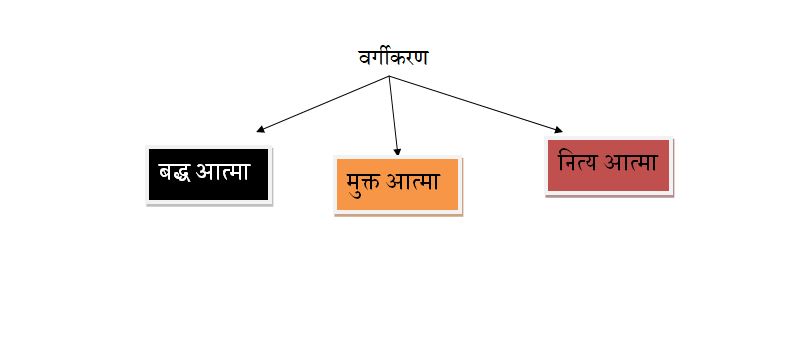
(*Baddha Jeevatma:- The jeevatma are categorized into three categories: Nitya, mukta, and Baddha. Nitya jeevatmas are those who had never been associated with samsara bandhan, while muktamas are those who were in the samsara earlier and now achieved Moksham due to the causeless mercy of Bhagwan, and now they are sitting in the goshthi of nitya jeevatmas. Baddh Jeevatmas has always been to the samsara, since time immemorial, and is tormented by the three modes of prakriti. They are again divided into mumukshu (one desirous of moksham) and bhubhukshu (one desirous of enjoying vishayanubhamas)

देवोऽहं मनुष्योऽहमिति जड़देहेऽहंबुद्धिं कुर्वन्तः, उत्पन्नेऽपि देहातिरिक्तात्मज्ञान ईश्वरोहमभोगीति स्वतन्त्रमभिमन्यमानाः, सत्यपि शेषत्वज्ञाने, प्राप्तविषयेषु तद्विनियोजयन्तः

  • As a result of this Eternal Prakriti-sambandham, the Jeevatma identifies itself with the body. E.g., the body is Devta, the body is Manushya, Tiryaka, etc but the Aatma identifies itself as Devta, Manushya, Tiryaka etc. The meaning of “I” is taken as Devta, Manushya, etc. (देवोऽहं मनुष्योऽहम्). (He performs all the actions for the fulfillment of body and nothing for the self)
  • After the adhyayana of Shaashtraas and Updesha of Acharyas, somehow the knowledge evolves in him that I am different from the body. I take the bodies of deva, manushya, tiryaka, sthaavar etc.
  • Still, as a consequence of the anaadi-achit-Sambandham, i.e., Maya, he falls into Swaatantraya-abhimaanam, i.e., he feels himself as Swatantra (independent) and not as Paratantra (dependent) on Bhagavan. Instead of considering himself shesha* to Bhagavan, he thinks that I am Swatantra i.e., I am the enjoyer of myself. (ईश्वरोहमभोगी) I am the owner, and I shall enjoy the bhogas.

*Shesha is defined in Mimansa as “Shesha: paraarthtvaat”. One who exists of his master is Shesha.
Bhagwad Ramanuja furthur refines this meaning, “paragata atishaya aadhaanechhaya upaadeyatvam yasya swarupam, sa shesh:, parah sheshi” i.e. one whose swarupam is to do atishaya to his master (doing something for his pleasure or adding to his glory) is shesha. The other is Sheshi.

  • Even if he gets the Sheshtva Gnana (सत्यपि शेषत्वज्ञाने) i.e., he is subservient to Bhagavan (I am not Swatantra; I am Paratantra to Bhagavan), he utilizes his knowledge in achieving the Apraapya Vishayas i.e. the bhogams which are not befitting to his swarupam (e.g, doing service to loukika people, or devatantaram, etc.). He engages himself in achieving those bhogas, the vishayas (shabd, sparsha, rupa, rasa, gandha are the panch-vishayas).

(The first pit is Dehaatma buddhi, the second is Swaatantrya buddhi and the third is Anya-sheshatvam. Even if one crosses one pit, he gets trapped in the next.)

एवम्

योऽन्यथा सन्तमात्मानमन्यथा प्रतिपद्यते ।

किं तेन न कृतं पापं चोरेणात्मापहारिणा ॥

इत्युक्तप्रकारेणात्मस्वरूपेऽन्यथाप्रतिपतिरूपमखिलपापमूलमात्माहारं कुर्वन्तोऽल्पास्थिरत्वादिदोषदुष्टशब्दादिभोगैकत्पराः,

Aatma is shesha to Bhagavan, but it considers itself to be the shesha of sansarikas and achetan objects. Due to this anyathaa pratipatti (considering the nature of aatma differently), what a great sin he is doing! He has done the greatest paapam since he has done the Apaharanam (the kidnapping) of its Aatma-swaroopam, which is a property of bhagwan. What other Paap (sin) is left for him to commit? i.e., he has committed all the sins. The aatmapahaara is the root of all the paapams and consequently, he gets engaged in temporary and meagree vishanya-anubhams (sensual pleasures).

(The punishment for theft is decided on two bases: (a) the value of the object the thief has acquired and (b) the position of the possessor, whose object has been stolen. Here, we have taken the dearest object of Sarveshwara, the greatest person. Also, we have stolen the most valuable object.)

NOTE

(samyak gyanam: Knowing the object as it is correctly along with it’s attribute.

Anyatha Gyaanam: identifying the object correctly but making the wrong identification of the attributes of the object. (E.g., mistaking the white dhoti as yellow dhoti).

Vipareeta gyaanam: Identifying the object itself wrong e.g., mistaking shell as silver or rope as snake).

विचित्रा देहसंपत्तिरीश्वराय निवेदितुम् ।

पूर्वमेव कृता ब्रह्मन् हस्तपादादिसंयुता ॥

इत्युक्तप्रकारेण करणकलेवरविधुरा भोगमोक्षशून्या अचिदविशेषिता बद्धात्मानस्तिष्ठन्ति ।

In Pralaya Kala (during deluge), the Aatma remains without any body, limbs or the Dharmabhoota Gnanam (the attributive knowledge). It was just like Jada Padartham/Achita Tattva. Seeing that, the Paramatma, ShrimanNarayana, has given a very mysterious wealth (vichitra-sampatti), i.e., the Deh/Shareera (body) to the Jeevatma. Why has He given this? (ईश्वराय निवेदितुम् ) To do aatma-nivedana to Bhagavan (Ishvara), to surrender itself to Bhagavan. (Thus, such a great wealth in the form of Shareera is given to a Jeevatma, so that it can perform sharanagati to Bhagavan, but the Jeevatma who is devoid of this knowledge remains as he was earlier, being entangled in the samsaara just like Jada padartham.)

Thus, not utilizing the wealth given by Bhagwan, the baddha aatmas remain without Karana and Kalevara (body and limbs), just like Achit.

तद्दशायां परमदयालुना सर्वेश्वरेण स्वचरण- कमलसमाश्रयणोपकरणतया दत्तं शरीरं प्राप्योज्जीवनौपयिकं तत्समाश्रयणमकृत्वा तदानीं “त्वद्दत्तशरीरमार्गे भ्रमामी” त्युक्तप्रकारेण पारं गन्तुं दत्तं प्लवमारुह्य प्रवाहमार्गेण समुद्रं प्रविशन्त इव संसारनिस्तरणौपयिकं संसरणहेतुं कृत्वाऽ नाद्यविद्यासञ्चितपुण्यपापकर्मानुगुणमनेकयोनिषु जनित्वा प्रतिजन्म दुरन्ततापत्रय- दावानल दह्यमाना अनादिकालं संसरन्तोऽ प्यतीतानागतानभिज्ञतया तत्र संसारे शोकरहिता गर्भ-जन्म- बाल्य- यौवन-वार्द्धक्य-मरण- नरक -रूपावस्थासप्तकं भजन्तो दुःखपरम्परामनुभूयानन्तक्लेशभाजने संसारसागरे मग्ना व्याकुलाभवन्ति ।

Seeing the Jeevatma in the state of helplessness in the Pralaya kaalam, being without any Kaarana or Kalevara, (without any Indriyaas, body, attributive knowledge, and lying just like Jada Padartham/Achit Tattva), out of His dayaa (compassion), Bhagavan gives them a Shareera.

Why?

He gives the Jeevatma a body as an instrument/means, so that they can perform Sharanagati/Samaashrayanam at the lotus feet of Bhagavan. However, the Jeevatma, even after getting the body/ujjeevanam, does not perform Samaashrayan of Bhagavan.

Shathakopa Azhwar says, (त्वदत्त शरीर मार्गे भ्रमामी) “Oh Bhagavan! The body that you have given me for Aatmakalyaanam, I am misusing it and wandering from one body to another.“

Bhagavan has given us a boat so that we can go out of this Samsaara. But what did the Jeevatma do? Instead of utilizing it to go out of the ocean, it was misused to enter it even deeper. (पारं गन्तुं दत्तं प्लवमारुह्य प्रवाहमार्गेण समुद्रं प्रविशन्त) So now, using the boat (i.e., body), the Jeevatma enters the endless cycle of birth, death, and rebirths. And because of that, the Jeevatma has accumulated countless Punya and Paap from its countless lives, and in accordance with that, it gets births in 84 lakh yonis of Jeevas. And in every birth, it is haunted by the Taapatrayam, (Adhyaatmik, Aadibhautik and Aadidaivik Taapams). (प्रतिजन्म दुरन्ततापत्रय दावानल दह्यमाना) The Jeevatma burns in the fires of the Taapatrayam. (अनादिकालं संसरन्त:) Although, the Jeevatma is travelling in this Samsaara saagara through many and many births, because it lacks knowledge of previous lives, it lives in the Samsaara without any remorse that it has lost so many opportunities that Bhagavan has provided. (तत्र संसारे शोकरहिता) Thus, without any remorse, the Jeevatma is getting the seven states of: being in the womb, taking birth, baalyakaala (child age), yuvavastha (youth), vriddhavastha (old age), Maranaa (death) and going to the Naraka. The Jeevatma goes through these seven states again and again. (संसारसागरे मग्ना व्याकुलाभवन्ति) And thus experiencing this Dukh-Parampara, the Jeevatma drowns in the Samsaara Saagara and becomes Vyaakula (restless).

(Seeing that anartha i.e., the misuse of the body by Jeevatma to get material happiness, experiencing the samsaaric vishayaas; and the boat that Bhagavan has provided to get to the shore of the ocean is being used to get more drowned in the Samsaara Sagara, Bhagavan dissolves the creation (pralaya) to stop the Vasana and ruchi, being the well-wisher of everyone.)

(Vasana: अबुद्धिपूर्वक प्रवृत्तिहेतु संस्कारविशेष: वासना

Ruchi: बुद्धिपूर्वकप्रवृत्तिहेतु कर्मारम्भ इच्छा रूचि:)

तेषामनर्थविशेषमनुसंधाय तदुञ्जीवनाय सृष्टिं कुर्वतस्सर्वभूतसुहृद सर्वेश्वरस्य ।

एवं संसृतिचक्रस्थे भ्रम्यमाणे स्वकर्मभि :।

जीवे दुःखाकुले विष्णोः कृपा काप्युपजायते ।।

Seeing this anartha (misfortune), Bhagavan who is suhrida* to all the jeevatmas, creates the sansara for their ujjivanam (revival). Seeing that the Jeevatma is trapped in this Samsaara Chakra, as a result of their own karmas, seeing its plight across births, the kripa/mercy evolvesin the heart of Bhagavan Vishnu.

(*Suhrida: Sobhana aashamsi hridayam yasya sah, One who wishes welfare of all is called Suhrida

kaapi kripa: Some kripa, for which the reason isn’t known/ ahaituki kripa)

इत्युक्तप्रकारेण हृदय उत्पन्नेनापारकारुण्येन “जायमानं हि पुरुषं यं पश्येनमधुसूदन ” इत्युक्तप्रकारेण जायमाने कृतेन विशेषकटाक्षेण निरस्तरजस्तमस्कस्य प्रवृद्धसत्वस्य मुमुक्षोश्चेतनस्य तत्वज्ञानेन विना मोक्षासिद्धेःस्तत्त्वज्ञानं शास्त्रेणोपदेशेन वा संपाद्यम्,

And thus, out of the endless compassion that has taken birth in the heart of Bhagavan, He looks at the Jeevatma at his birth (जायमान कटाक्षम्). When Bhagwan looks at the Jeevatma, out of his compassion; the Jeevatma becomes Saatvika in nature and thus a Mumukshu (one who desires Moksha). (Prerequisite for becoming a mumukshu is sattva gunam). (निरस्तरजस्तमस्कस्य प्रवृद्धसत्वस्य) Thus the Rajas and Tamas Gunas of the Jeevatma vanishes and the Sattva Guna increases.

(मुमुक्षोश्चेतनस्य तत्वज्ञानेन विना मोक्षासिद्धेः) For such mumukshus, getting Moksha is not possible without tattva Gnanam. Tattva Gnanam can be attained by two means, by Shaashtras or Upadeshas of Sadacharyas.

शास्त्रेण तस्य “शास्त्रज्ञानं बहुक्लेशं बुद्धेश्चलनकारणं ” इत्युक्तप्रकारेण बहुक्लेशसाध्यतया दुःसाधत्वा, कथंचित्साधनायोद्योगकरणेप्य “अनन्तपारं बहुवेदितव्यमल्पश्च कालो बहवश्च विघ्ना:”

The knowledge, which is achieved from the Shaashtras, gives lots of Klesha/Dukham (pains) and can even make mind Chanchala (volatile), as the Shaashtras are huge, and our intellect is very limited. It takes a lot of time to understand the Shaashtras, while we have very limited time in our lifespan. (People who learn the shastras by themselves and interpret their own meanings, Mamunigal calls them ‘MURKHAS’ in Upadesha Ratnamalai. ) However, when we receive the knowledge through Upadeshas, we get the Shaashtra Gnana without any Klesha and Dosha. (Knowledge earned through shastras are like self-earned money and knowledge gained from upadeshams are like money inherited from parents).

इत्युक्तप्रकारेण चेतनानां मन्दमतित्वात् विघ्नानामनन्तत्वात्सर्वेषां ज्ञानसिद्धेदुर्लभत्वात् शास्त्राभ्यासानधिकारिणां स्त्रीशूद्रादीनां मुमुक्षुत्वस्य निष्प्रयोजनत्वात् ,

Considering the low intellect of the jeevatmaas and infinite obstructions,. (e.g, without Upanayanam, one cannot study Vedas), it is difficult for everyone to attain the knowledge. Stree or Shudras cannot study Vedas. Even only a handful of Dwijas are qualified to study Vedas because many have given up their daily rituals for worldly pursuits. Even for them as well, who have undergone Upanayanam, the Shashtra Gnana is really difficult to comprehend.

उपदेशेन तत्संपादने उक्तदोषेषु कस्याप्यभावात् अमुं विशेषमभिप्रेत्य सर्वशास्त्रनिपुण: सकललोकोजीवनकामः परमकारुणिकः श्रीलोकाचार्यः श्रुतिस्मृतीतिहासपुराणै: दुरवगाहानन्तविस्तरेण प्रतिपादितांश्चिदचिदीश्वरतत्वानां स्वरूपस्वभावविशेषानऽखिलचेतनमुग्रहं सुव्यक्तमेतत्प्रयन्धमुखेनाह। मध्यवीथिभट्टकृष्णापादप्रभूतिपूर्वाचार्याणामपि प्रबन्धनिर्माणेऽयमेवाशय: ।

When the Gnana is received through Upadesha, from a Sadacharya, all these obstructions vanish.

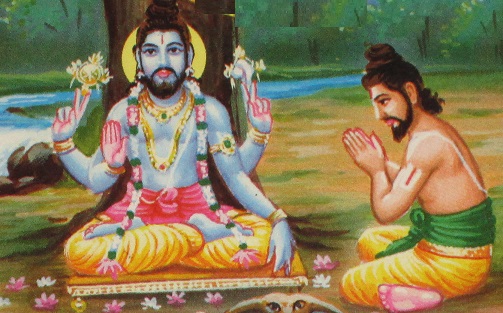
Shri Lokacharya Swami, who is an expert in all the Shaashtras and is highly compassionate, explains these tattvas, which is difficult to understand from Shruti, Smriti, Itihasas or Puranas, for the benefit of the Jeevatmas of the Lokas.

The Chit-tattva, the Achit-tattva and the Ishwar-tattva are explained in great details in this Shaashtra. Krishnapaad Suri (Vadakku Tiruveethi Pillai) and Krishnapaada Suri (Periya Achchaan Pillai) has also given the same meanings in the prabandhaas authored by them.

ननु निरहङ्काराणां परसमृद्धिप्रियाणां ख्यातिलाभनिरपेक्षाणामेतेषां प्रबन्धनिर्माणमनुचितम्, एकेन कृतस्य प्रबन्धस्यान्येन परिपालनमेवोचितमिति चेत् ? सत्यम्, दिव्यसूरिभिरैककण्ठ्येनामिधानादर्थस्याप्तता सिद्ध्यति, तथाऽऽचा- व्यैरैककण्ठयेनोक्तावर्थस्याप्ततासिद्धयति । तथा च तत्र मन्दमतीनां विश्वासो भवेदित्यभिप्रायेणैकविषयेऽ नेकैराचार्यै पृथक् प्रबन्धो निर्मितः । किञ्चैकत्राविशदा अर्थविशेषा अन्यत्रविशदतया प्रतिपाद्यन्ते, तत्र कारणं सूक्तिविशेषाः सङ्कोचविस्तरौ च इदं चैककर्तृक प्रबन्धेष्वपि तुल्यम् ।

Isn’t the writing up of so many prabandhas by the acharyas, who have no self-ego, are not desirous of fame, and wish the welfare of everyone, unwanted? As one prabandha (book) itself is enough, what’s the need for them to write separate granthas?

The doubt is not right. Saying the meaning from the same throat by so many divine suris (Alwars) proves the authenticity of the subject. Acharyas have also said the same concept about the same throat in different granthas.

The reason for the emphasis on the same concept in different granthas by the different acharyas is to bring faith to the low-intellect people in the subject matter. Also, some acharyas have written something in brief, while others have written it in detail. Some acharyas have explained the concept in the light of some particular mantras or pasurams, while others have explained it using another set of mantras and pasurams.

Thus, it’s proper by many acharyas to author different works on the same concept.

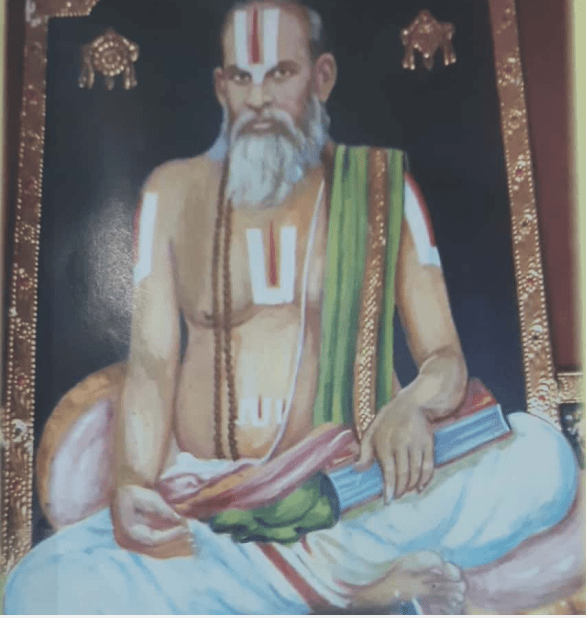
Pillai Lokacharya Swami

वाधुलाब्धिसरोजसौम्यविकसद्रङ्गार्यदौहित्रकम् ,

श्रीमत्कोविदश्रीनिवासतनयं सौशील्यभूषावितम्।

श्रीमद्वेङ्कटयोगिराजचरणे न्यस्तात्मभावं मुदा,

श्रीरङ्गार्यगुरूं भजामि सततं कारुण्यवारां निधिम्।।

Adiyen Madhava Shrinivas Ramanuja dasa

Adiyen Ramaa Shrinivas Ramanuja dasi

Adiyen Akhilesh Ramanuja SriVaishnav dasa