The Bhagwan who is sarveshwara, Lord of all and niratishaya-anand-yuktah (possessor of infinite anandam/bliss) is forever served by infinite nitya jeevatmas in Sri Vaikuntham.
tad viṣṇoḥ paramam padaṃ sadā paśyanti sūrayaḥ (Rig Veda)
The suris (nitya-aatmas) are always looking towards the highest abode of Vishnu. Are they only looking? It’s upalakshanam for kainkaryam (service). The anubhavam leads to preeti or bhakti and which in turn compels the jeevatma to do loving service for the happiness of Bhagwan. The whole intension of this kainkaryam is not the self-happiness but to bring smile on the face of bhagwan. Thus, it is called ‘bhagwad-anubhav-janeeta-preetikaarita-kainkaryam‘.
Swami AlvandAr says in stotra ratnam that infinite eternally blemishless jeevatmas (nitya suris) are forever ready with the instruments for your service, whose sole delight consists in being spontaneously devoted to your service.
Forever, Bhagwan is united with her consorts (Sri, Bhu and Nila are the pradhaan maheeshis) and experiencing the divine rasam:
The four auspicious arms have the rough scars of the bowstring, and which speak of their contact with the crest-lily, the ear-ornament and the loose curls of the braid of your beloved. (Indicates loving aalingan of the divya dampati.)
Thus, the bhagwan, who is forever enjoying divine union with mahishis, served by infinite nitya jeevatmas, why does he feels being alone? Vedas says: Sa EkAkI na ramatE. He doesn’t like to be alone.
the “Sat” wished that “I become the multitudinous (expanded-StUla) chit and achit tatvas ie., the universe”. The “Sat” became many, as it wished. This is “Sat’s” first Sankalpam (Wish).
Though Rama is served by Lakshmana whose *sheshatvam and paaratantriyam is of no match and loving wife Sita, he feels very lonely in absence of Bharata. He goes on to say to Lakshmana, that when shall I meet YOU, though he is very taking bath with him in Godavari. It shows that in the pain of separation of Bharata and Shatrughna, Rama couldn’t relish the association of lakshmana.
(The Sheshatvam of lakshmana is extolled in the verse: भवांस्तु सह वैदेह्या गिरिसानुषु रंस्यते। अहं सर्वं करिष्यामि जाग्रत स्स्वपतश्च ते।।2.31.25।।, while, his paaratantriyam is extolled in the verse: परवानस्मि काकुत्स्थ त्वयि वर्षशतं स्थिते। स्वयं तु रुचिरे देशे क्रियतामिति मां वद।।3.15.7।।. What to say of Seeta: तुल्य शील वयो वृत्तम् तुल्य अभिजन लक्षणम् | राघो अर्हति वैदेहिम तम च इयम् असित ईक्षणा)
Sri Lokacharya swami tells in Mumukshupadi that just like a parent who is living with 3 children is forever worried about his fourth children living away from him (or, in opposition to him) and doesn’t enjoy the association of the three children in the pain of separation of his fourth child; similarly bhagwan though forever served by nitya suris and Mahalakshmi, is forever worried about his children i.e. us who are in opposition to him and in turn suffering in sansaar saagaram. Furthur, he says that a child was in opposition to his parents and left the home. The compassionate parents still arranged for his food, cloths and stay quietly in the night-stay-home on his way. Similarly, Bhagwan is also taking care of all the jeevatmas, even those who are against him, turned away for him; out of his compassion.
Bhagwan started the creation with the hope that Jeevatmas will utilise this opportunity to shackle the prakriti-sambandham and come back to his abode. Thus, creation itself is an outcome of compassion of Bhagwan. Before the creation, jeevatma were lying without gyaanam, limbs or sense organs. It lies just like an achetana. Seeing them, bhagwan gets full of compassion and creates samsaram with the purushakaaram of Mahalakshmi.
एवं संसृतिचक्रस्थे भ्रम्यमाणे स्वकर्मभि :।
जीवे दुःखाकुले विष्णोः कृपा काप्युपजायते ।।
However, jeevatmas fail to utilise this opportunity, and he keeps on adding Vaasana and Ruchi. As a result of Vasana and Ruchi, he indulges in prakriti-sambandham, does papas and punyas, and in turn develops even more Vaasana and Ruchi, which furthur impels him to do karma, and thus Avidya keeps on increasing. Bhagwan feels that it’s need of the hour to put a brake his vaasanas and ruchis or else he will keep on falling into samsara-sagara. Thus, bhagwan dissolves the creation. Thus, pralaya/dissolution is also an act of compassion of bhagwan.
Q. If Bhagwan is compassionate, how can he be a creator of a samsara full of sorrows? There is a differentiation of rich and poor etc. Doesn’t it make Bhagwan cruel?
Q. Bhagwan is said to be dosha-mukta (blemish-less). In your Siddhanta, Bhagwan is feeling sorrow for the state of baddha jeevatmas and delighted about getting them on the right path. Doesn’t it bring dosha to Bhagwan? How can anandaghana bhagwan feel sorrow? How does something else make him delighted?
Reply: Bhagwaan feeling sorrow seeing the plight of a jeevatma is an outcome of his compassion. It’s a form of his daya. Getting pain or pleasure from the karma or prakriti-sambandha only brings blemishes. That’s not the case here. Bhagwan’s sorrow isn’t prakruta or born from three gunas of prakriti but from his own sankalpam.
In Sri Ramayanam, maharshi valmiki tells a quality of Bhagwan:
व्यसनेषु मनुष्याणां भृशं भवति दुःखितः। उत्सवेषु च सर्वेषु पितेव परितुष्यति। 2.2.40।। He grieves profoundly whenever people are afflicted by misfortunes and rejoices like a father on festive occasions.
Thus, the sorrow and happiness of Sarveshwara out of compassion are his gunam and never a dosha. In fact, if some mighty person lacks the feeling of sorrow on seeing the plight of his subjects, it brings dosham (blemish) to him. How can someone be a rakshaka (protector) if he lacks these? In Sri Ramayanam, when Rama saw the plight of tapasvi rishis in Dandaka forest, he was filled with grief and lifted his bow to take a vow that he will eliminate the demon clan from the entire Dandaka Forest. Of course, it was disliked by Sita but that’s another aspect that highlights the vatsalya of a mother. Infact she herself was delighted later when Rama used his bow to eliminate the mighty army of Khara single-handedly (तं दृष्ट्वा शत्रुहन्तारं महर्षीणां सुखावहम्। बभूव हृष्टा वैदेही भर्तारं परिषस्वजे।।3.30.39।।). Let’s see the sorrow of Rama when he saw the plight of the ascetics of Dandakaaranya:
प्रसीदन्तु भवन्तो मे ह्रीरेषा हि ममातुला। यदीदृशैरहं विप्रैरुपस्थेयैरुपस्थितः।।3.10.9।।
Be pleased that brahmins like you have approached me while I should have come to you has put me to shame immeasurable.
Rama’s grief for Seeta is mentioned by Hanuman:
अनिद्रस्सततं रामः सुप्तोSपि च नरोत्तमः। सीतेति मधुरां वाणी व्याहरन प्रतिबुध्यते।। Ram , best of men ,has no sleep , usually . And even when he sleeps, he wakes up uttering the sweet words `Sita , Sita .
Ramayana Sundarakandam 34.52
Bhagwan’s efforts to gain the Jeevatma
As per shastras, the Jeevatma belongs to Bhagwan. The jeevatma is the property of Bhagwan and its inherent nature is to be dependent on bhagwan and being subservient to Bhagwan. Thus, it’s the owner who makes efforts to gain his possession and not vice versa. Similarly, Bhagwan is making efforts or sankalpam to gain the jeevatmas.
What’s easier? We reaching bhagwan through our efforts or Bhagwan achieving us through his sankalpam? Certainly, the latter one. Even in loka, we can observe that reaching the sun is difficult while the sun can reach us easily. So, what’s to be done on the part of a jeevatma? What bhagwan expects from us is just the reciprocation of his efforts to gain us. Unless we acknowledge and reciprocate, the sankalpam of Bhagwan won’t work.
Let’s take an example. A person is stuck in the flood water, and fortunately, he got the rescuers to save him. They dropped a rope and told the person to hold tight and he would rescue him. What’s the expectation of the rescuer? He just wishes the person to accept him as upaaya (Means) and follow his instructions. is holding of rope on the part of the person is the means to be rescued? Certainly not. It’s just reciprocation to the efforts of the rescuer and in any case, it’s rescuer who is means for the person to get out of flood.
Now suppose, the person accepts the instruction of the rescuer, but he thinks that he should make some efforts from his end as well and starts putting his hands randomly in the water. Now, aren’t his efforts to swim a hindrance to the efforts of the rescuer? Similarly, a jeevatma who is fully surrendered to bhagwan, should be paratantra like achetana and should not make efforts from his end to rescue himself.
Let’s discuss the other details in Part 2 of the post
(Note: The language of the translation is kept very simple and informal intentionally, and standard scholarly language has been avoided.). (Apologies for grammatical errors.)
Baddha Jeeva is sleeping (slumber) out of ignorance anaadi Maya. This Maya is Eternal (without any beginning) and thus, the bondage of the jeevatma is also eternal. As a result of the sambandham with the Maya (anaadi-achit-sambandham), the Jeevatma has been sleeping since time immemorial. The Jnana of the Baddh Jeevatma* has diminished (अनादिमायया सुप्त:). (The very nature of prakriti is to conceal the knowledge. Since the jeevatma is associated with achit shareeram, the gyaanam of the jeevatma has got concealed)
“आत्मस्वरूपं प्रकृते: परं ज्ञानानंदमयं” The Aatma is devoid of the knowledge that I am different from the Prakriti and superior to it. My Swaroopa is of Jnanam and Aanandam (he is of the nature of knowledge and bliss). (भगवदनन्यार्हशेषमजानन्तो). Out of ignorance, the Atma is unaware that he is subservient exclusively to Bhagawan Narayana. He is not eligible to serve anyone other than Bhagawan. He belongs neither to others, nor even to himself.
(*Baddha Jeevatma:- The jeevatma are categorized into three categories: Nitya, mukta, and Baddha. Nitya jeevatmas are those who had never been associated with samsara bandhan, while muktamas are those who were in the samsara earlier and now achieved Moksham due to the causeless mercy of Bhagwan, and now they are sitting in the goshthi of nitya jeevatmas. Baddh Jeevatmas has always been to the samsara, since time immemorial, and is tormented by the three modes of prakriti. They are again divided into mumukshu (one desirous of moksham) and bhubhukshu (one desirous of enjoying vishayanubhamas)
As a result of this Eternal Prakriti-sambandham, the Jeevatma identifies itself with the body. E.g., the body is Devta, the body is Manushya, Tiryaka, etc but the Aatma identifies itself as Devta, Manushya, Tiryaka etc. The meaning of “I” is taken as Devta, Manushya, etc. (देवोऽहं मनुष्योऽहम्). (He performs all the actions for the fulfillment of body and nothing for the self)
After the adhyayana of Shaashtraas and Updesha of Acharyas, somehow the knowledge evolves in him that I am different from the body. I take the bodies of deva, manushya, tiryaka, sthaavar etc.
Still, as a consequence of the anaadi-achit-Sambandham, i.e., Maya, he falls into Swaatantraya-abhimaanam, i.e., he feels himself as Swatantra (independent) and not as Paratantra (dependent) on Bhagavan. Instead of considering himself shesha* to Bhagavan, he thinks that I am Swatantra i.e., I am the enjoyer of myself. (ईश्वरोहमभोगी) I am the owner, and I shall enjoy the bhogas.
*Shesha is defined in Mimansa as “Shesha: paraarthtvaat”. One who exists of his master is Shesha. Bhagwad Ramanuja furthur refines this meaning, “paragata atishaya aadhaanechhaya upaadeyatvam yasya swarupam, sa shesh:, parah sheshi” i.e. one whose swarupam is to do atishaya to his master (doing something for his pleasure or adding to his glory) is shesha. The other is Sheshi.
Even if he gets the Sheshtva Gnana (सत्यपि शेषत्वज्ञाने) i.e., he is subservient to Bhagavan (I am not Swatantra; I am Paratantra to Bhagavan), he utilizes his knowledge in achieving the Apraapya Vishayas i.e. the bhogams which are not befitting to his swarupam (e.g, doing service to loukika people, or devatantaram, etc.). He engages himself in achieving those bhogas, the vishayas (shabd, sparsha, rupa, rasa, gandha are the panch-vishayas).
(The first pit is Dehaatma buddhi, the second is Swaatantrya buddhi and the third is Anya-sheshatvam. Even if one crosses one pit, he gets trapped in the next.)
Aatma is shesha to Bhagavan, but it considers itself to be the shesha of sansarikas and achetan objects. Due to this anyathaa pratipatti (considering the nature of aatma differently), what a great sin he is doing! He has done the greatest paapam since he has done the Apaharanam (the kidnapping) of its Aatma-swaroopam, which is a property of bhagwan. What other Paap (sin) is left for him to commit? i.e., he has committed all the sins. The aatmapahaara is the root of all the paapams and consequently, he gets engaged in temporary and meagree vishanya-anubhams (sensual pleasures).
(The punishment for theft is decided on two bases: (a) the value of the object the thief has acquired and (b) the position of the possessor, whose object has been stolen. Here, we have taken the dearest object of Sarveshwara, the greatest person. Also, we have stolen the most valuable object.)
NOTE
(samyak gyanam: Knowing the object as it is correctly along with it’s attribute.
Anyatha Gyaanam: identifying the object correctly but making the wrong identification of the attributes of the object. (E.g., mistaking the white dhoti as yellow dhoti).
Vipareeta gyaanam: Identifying the object itself wrong e.g., mistaking shell as silver or rope as snake).
In Pralaya Kala (during deluge), the Aatma remains without any body, limbs or the Dharmabhoota Gnanam (the attributive knowledge). It was just like Jada Padartham/Achita Tattva. Seeing that, the Paramatma, ShrimanNarayana, has given a very mysterious wealth (vichitra-sampatti), i.e., the Deh/Shareera (body) to the Jeevatma. Why has He given this? (ईश्वराय निवेदितुम् ) To do aatma-nivedana to Bhagavan (Ishvara), to surrender itself to Bhagavan. (Thus, such a great wealth in the form of Shareera is given to a Jeevatma, so that it can perform sharanagati to Bhagavan, but the Jeevatma who is devoid of this knowledge remains as he was earlier, being entangled in the samsaara just like Jada padartham.)
Thus, not utilizing the wealth given by Bhagwan, the baddha aatmas remain without Karana and Kalevara (body and limbs), just like Achit.
Seeing the Jeevatma in the state of helplessness in the Pralaya kaalam, being without any Kaarana or Kalevara, (without any Indriyaas, body, attributive knowledge, and lying just like Jada Padartham/Achit Tattva), out of His dayaa (compassion), Bhagavan gives them a Shareera.
Why?
He gives the Jeevatma a body as an instrument/means, so that they can perform Sharanagati/Samaashrayanam at the lotus feet of Bhagavan. However, the Jeevatma, even after getting the body/ujjeevanam, does not perform Samaashrayan of Bhagavan.
Shathakopa Azhwar says, (त्वदत्त शरीर मार्गे भ्रमामी) “Oh Bhagavan! The body that you have given me for Aatmakalyaanam, I am misusing it and wandering from one body to another.“
Bhagavan has given us a boat so that we can go out of this Samsaara. But what did the Jeevatma do? Instead of utilizing it to go out of the ocean, it was misused to enter it even deeper. (पारं गन्तुं दत्तं प्लवमारुह्य प्रवाहमार्गेण समुद्रं प्रविशन्त) So now, using the boat (i.e., body), the Jeevatma enters the endless cycle of birth, death, and rebirths. And because of that, the Jeevatma has accumulated countless Punya and Paap from its countless lives, and in accordance with that, it gets births in 84 lakh yonis of Jeevas. And in every birth, it is haunted by the Taapatrayam, (Adhyaatmik, Aadibhautik and Aadidaivik Taapams). (प्रतिजन्म दुरन्ततापत्रय दावानल दह्यमाना) The Jeevatma burns in the fires of the Taapatrayam. (अनादिकालं संसरन्त:) Although, the Jeevatma is travelling in this Samsaara saagara through many and many births, because it lacks knowledge of previous lives, it lives in the Samsaara without any remorse that it has lost so many opportunities that Bhagavan has provided. (तत्र संसारे शोकरहिता) Thus, without any remorse, the Jeevatma is getting the seven states of: being in the womb, taking birth, baalyakaala (child age), yuvavastha (youth), vriddhavastha (old age), Maranaa (death) and going to the Naraka. The Jeevatma goes through these seven states again and again. (संसारसागरे मग्ना व्याकुलाभवन्ति) And thus experiencing this Dukh-Parampara, the Jeevatma drowns in the Samsaara Saagara and becomes Vyaakula (restless).
(Seeing that anartha i.e., the misuse of the body by Jeevatma to get material happiness, experiencing the samsaaric vishayaas; and the boat that Bhagavan has provided to get to the shore of the ocean is being used to get more drowned in the Samsaara Sagara, Bhagavan dissolves the creation (pralaya) to stop the Vasana and ruchi, being the well-wisher of everyone.)
Seeing this anartha (misfortune), Bhagavan who is suhrida* to all the jeevatmas, creates the sansara for their ujjivanam (revival). Seeing that the Jeevatma is trapped in this Samsaara Chakra, as a result of their own karmas, seeing its plight across births, the kripa/mercy evolvesin the heart of Bhagavan Vishnu.
(*Suhrida: Sobhana aashamsi hridayam yasya sah, One who wishes welfare of all is called Suhrida
kaapi kripa: Some kripa, for which the reason isn’t known/ ahaituki kripa)
And thus, out of the endless compassion that has taken birth in the heart of Bhagavan, He looks at the Jeevatma at his birth (जायमान कटाक्षम्). When Bhagwan looks at the Jeevatma, out of his compassion; the Jeevatma becomes Saatvika in nature and thus a Mumukshu (one who desires Moksha). (Prerequisite for becoming a mumukshu is sattva gunam). (निरस्तरजस्तमस्कस्य प्रवृद्धसत्वस्य) Thus the Rajas and Tamas Gunas of the Jeevatma vanishes and the Sattva Guna increases.
(मुमुक्षोश्चेतनस्य तत्वज्ञानेन विना मोक्षासिद्धेः) For such mumukshus, getting Moksha is not possible without tattva Gnanam. Tattva Gnanam can be attained by two means, by Shaashtras or Upadeshas of Sadacharyas.
The knowledge, which is achieved from the Shaashtras, gives lots of Klesha/Dukham (pains) and can even make mind Chanchala (volatile), as the Shaashtras are huge, and our intellect is very limited. It takes a lot of time to understand the Shaashtras, while we have very limited time in our lifespan. (People who learn the shastras by themselves and interpret their own meanings, Mamunigal calls them ‘MURKHAS’ in Upadesha Ratnamalai. ) However, when we receive the knowledge through Upadeshas, we get the Shaashtra Gnana without any Klesha and Dosha. (Knowledge earned through shastras are like self-earned money and knowledge gained from upadeshams are like money inherited from parents).
Considering the low intellect of the jeevatmaas and infinite obstructions,. (e.g, without Upanayanam, one cannot study Vedas), it is difficult for everyone to attain the knowledge. Stree or Shudras cannot study Vedas. Even only a handful of Dwijas are qualified to study Vedas because many have given up their daily rituals for worldly pursuits. Even for them as well, who have undergone Upanayanam, the Shashtra Gnana is really difficult to comprehend.
When the Gnana is received through Upadesha, from a Sadacharya, all these obstructions vanish.
Shri Lokacharya Swami, who is an expert in all the Shaashtras and is highly compassionate, explains these tattvas, which is difficult to understand from Shruti, Smriti, Itihasas or Puranas, for the benefit of the Jeevatmas of the Lokas.
The Chit-tattva, the Achit-tattva and the Ishwar-tattva are explained in great details in this Shaashtra. Krishnapaad Suri (Vadakku Tiruveethi Pillai) and Krishnapaada Suri (Periya Achchaan Pillai) has also given the same meanings in the prabandhaas authored by them.
Isn’t the writing up of so many prabandhas by the acharyas, who have no self-ego, are not desirous of fame, and wish the welfare of everyone, unwanted? As one prabandha (book) itself is enough, what’s the need for them to write separate granthas?
The doubt is not right. Saying the meaning from the same throat by so many divine suris (Alwars) proves the authenticity of the subject. Acharyas have also said the same concept about the same throat in different granthas.
The reason for the emphasis on the same concept in different granthas by the different acharyas is to bring faith to the low-intellect people in the subject matter. Also, some acharyas have written something in brief, while others have written it in detail. Some acharyas have explained the concept in the light of some particular mantras or pasurams, while others have explained it using another set of mantras and pasurams.
Thus, it’s proper by many acharyas to author different works on the same concept.
आचार्य सियाराम दास नैयायिक जी से शास्त्र चर्चा हो रही थी| उन्होंने कहा दो बातें कहीं:
१. रामानुज सम्प्रदाय में राधा जी को सूर्पनखा का अवतार मानते हैं और प्रपन्नामृत में ऐसा लिखा है|
हमने उनसे प्रमाण माँगा कि हमारे किसी भी प्रामाणिक मठों से छपा प्रपन्नामृत में यह प्रसंग दिखा दें| उन्होंने खेमराज प्रकाशन का हवाला दिया| किन्तु खेमराज तो रामानुज सम्प्रदाय का मुखपत्र नहीं है न| वो कुछ भी लिखे, उसका रामानुज सम्प्रदाय से क्या लेना देना? हमारे मठों से प्रकाशित ग्रन्थों में दिखाईये| रंगनाथ प्रेस एवं काँची मठ से प्रकाशित होता रहा है| सो तो वो दे नहीं पाए किन्तु हमने उनको कुछ दिनों का समय दिया कि खोजिये और मिल जाये तो सूचित कीजिये|
किन्तु क्या ईर्ष्यावश बिना प्रमाण ही वो रामानुज सिद्धांत पर लान्छन लगाते रहे?
उन्होंने कहा कि प्रपन्नामृत रामानुज सम्प्रदाय में दक्षिण का प्रसिद्ध ग्रन्थ है| ये बात भी सरासर झूठ है| बिना जानकारी के आचार्य कुछ भी बोल लेते हैं| दक्षिण में तो इस ग्रन्थ की प्रामाणिकता ही नहीं है| हाल फिलहाल तमिल अनुवाद होने के कारण दक्षिण के श्री वैष्णवों में इसकी ख्याति हुयी है, वहाँ भी सूर्पनखा का प्रसंग नहीं छपा है| इसके लेखक के विषय में भी विशेष जानकारी नहीं है किन्तु यह ग्रन्थ अर्वाचीन है|
हमारे सम्प्रदाय में रंगनाथ भगवान से लेकर वरवरमुनि तक की आचार्य माला है| इन आचार्यों के विरुद्ध यदि कोई लिखता है तो वह स्वतः अप्रमाण हो जाता है| आपके अनुसार प्रपन्नामृत में अयोध्यावासियों को मोक्ष नहीं मिला, ऐसा लिखा है| किन्तु कुलशेखर आलवार और कूरेश स्वामी के सुन्दरबाहू स्तव में यह स्पष्टतया वर्णित है कि श्री राम ने समस्त अयोध्यावासियों को मोक्ष प्रदान किया| टीकाकार कृष्णपाद सूरी आदि ने और भी स्पष्ट कर दिया है|
अब यदि किसी व्यक्ति ने ओरान वल्ली आचार्य परम्परा के आचार्यों के मत के विरुद्ध कुछ लिखा भी है तो क्या वह स्वतः अप्रमाण नहीं हो जाता? आपके ही सम्प्रदाय में रामभद्राचार्य जी सम्पूर्ण उत्तरकाण्ड एवं बालकाण्ड को प्रक्षिप्त मानते हैं, भागवत आदि पुराणों को भी प्रक्षिप्त मानते हैं; गोपियों को कृष्ण की बहन बताते हैं| तो इसे रामानन्द सम्प्रदाय का मत मान लिया जाए? सम्प्रदाय के ही सन्त इससे सहमत नहीं हैं|
सो, प्रथम तो हमारे मठों से प्रकाशित प्रपन्नामृत में राधा जी के विषय में ऐसा कुछ लिखा ही नहीं है| लिखा हो, हमने चुनौती दी थी कि आप दिखा दीजिये| दूसरा यह कि हमारी समृद्ध परम्परा में टीकाकारों की परम्परा है| स्तोत्रों एवं सिद्धान्त ग्रथों से धनी है हमारा सम्प्रदाय और आचार्य-परम्परा के विरुद्ध यदि किसी प्रेस ने कुछ छाप दिया तो वह अप्रमाण है| वरवर मुनि स्वामी ने उपदेश रत्नमाला में ऐसे लोगों को मुर्ख कहा है
२. आचार्य जी ने कहा कि आपका सम्प्रदाय ‘श्री सम्प्रदाय’ नहीं, अपितु लक्ष्मी सम्प्रदाय है, क्योंकि पुरुष सूक्त में श्री और लक्ष्मी भिन्न हैं| (श्रीश्च ते लक्ष्मीश्च पत्न्यावहोरात्रे पार्श्वे /ह्रीश्च ते लक्ष्मीश्च पत्नौ)
हमने उनसे कुछ प्रश्न किये जिनके उत्तर की प्रतीक्षा में अबतक हूँ:
1. श्री सूक्त की देवी के लिए ‘विष्णु-पत्नी’ शब्द प्रयुक्त है| वो विष्णुपत्नी कौन हैं?
विष्णुपत्निम क्षमां देवीम मधावीम माधवप्रियाम |
विष्णु प्रियसखीम देवीं नमाम्यच्युत्वल्लाभाम ||
महालक्ष्मी च विद्महे विष्णुपत्नी च धीमहि |
तन्नो लक्ष्मी प्रचोदयात ||
श्री सूक्त में स्पष्ट रूप से लक्ष्मी का वर्णन है
हिरण्यवर्णां हरिणीं सुवर्णरजतस्रजाम। चन्द्रां हिरण्मयीं लक्ष्मीं जातवेदो म आवह।
उनका प्रश्न था कि वेदों में परस्पर विरोध है? इसका उत्तर यह है कि आप भी यह मानते हैं कि आपकी व्याख्या के अनुसार वेदों के मन्त्रों में परस्पर विरोध हो रहा है| किसी मन्त्र का अर्थ निर्णय करते काल यह ध्यान रखें की आपके अर्थ विन्यास का दुसरे मन्त्रों से अविरोध हो| वेद नित्य-निर्दोष, स्वतः प्रमाण एवं अपौरुषेय हैं|
यदि मान लो, श्री और लक्ष्मी भिन्न हो भी गयीं, तो फिर सीता श्री देवी किस प्रकार हुयीं? श्री सूक्त में तो सीता नहीं हैं? (हमारे मत में श्री/लक्ष्मी/सीता/रुक्मिणी में कोई भी भेद नहीं)
2. पुरुष सूक्त के देवता उभय नायिका विशिष्ट हैं (यदि आपने पत्न्यौ का द्विवचन ग्रहण किया है)| यदि पुरुष सूक्त के देवता राम हैं तो आप अपने निज ठाकुर को उभय महिषी के साथ प्रतिष्ठित करने की चुनौती स्वीकार करते हैं? श्री राम के एक ओर श्री देवी और दूसरी ओर लक्ष्मी देवी|
यदि आप ऐसा कहते हैं कि श्री देवी के विस्तार होने के कारण लक्ष्मी राम की पत्नी हुयीं, फिर तो विष्णुपत्नी = रामपत्नी का सूत्र हो जाने से राम और विष्णु में अभेद सिद्ध हो गया|
3. वाल्मीकि रामायण, सीतोपनिषद एवं विष्णु पुराण में सीता को लक्ष्मी कहा गया है| आपके मत में श्री देवी और लक्ष्मी देवी भिन्न हैं| फिर तो श्री देवी और सीता भी भिन्न ही हुयीं क्योंकि सीता को लक्ष्मी कहा गया है|
देवौ धातृविधातारौ भृगोः ख्यातिरसूयत। श्रियं च देवदेवस्य #पत्नी_नारायणस्य या।।१५।।
भृगु के द्वारा ख्याति ने धाता और विधाता नामक दो देवताओं को और श्री को जन्म दिया, जो भगवान्नारायण कीपत्नी_ हुईं।
#श्रीविष्णुपुराण प्रथम अंश अध्याय 8 Śrī Viṣṇu Purāṇa First Portion Chapter 8
सीता साक्षान्महालक्ष्मी: सर्व कारणकारणम् – ( श्री पद्मपुराण ५/२२/५७/२)
तहँ बस नगर जनकपुर परम उजागर।
सीय #लच्छि जहँ प्रगटी सब सुख सागर।।
भयउ न होइहि है न #जनक सम नरवइ। सीय सुता भइ जासु सकल मंगलमइ।।
श्रीजानकीमंगल पद 5-7
देवत्वे देव देहेयं मनुष्यत्वे च मानुषी|
विष्णो: देहानुरुपां वै करोत्येषात्मन: तनुम्||
राघवत्वेऽभवत्सीता रुक्मिणी कृष्ण जन्मनी|
अन्येषु चावातारेशु विष्णो: श्री अनपायनी||
(श्रीविष्णुपुराणे महालक्ष्मी स्तोत्रं )
तो फिर आप क्या अपने को ‘श्री सम्प्रदाय’ कहना छोड़कर ‘सीता सम्प्रदाय’ कहेंगे? चुनौती स्वीकार कीजिये| विष्णु पुराण के मत से ‘विष्णु की श्री’ हमेशा उनकी अनपायनी हैं, जब वो राघव हुए तो ये सीता एवं जब वो रुक्मिणी|
श्री विष्णु सहस्रनाम में भगवान के कुछ प्रसिद्ध नाम जो श्री सम्बन्ध को प्रकाशित करते हैं:
फिर विष्णुपत्नी, लक्ष्मी, श्री, सीता और रुक्मिणी में क्या भेद रहा? शस्त्र-प्रमाण बड़ा है या व्यक्ति का अहंकार?
(बृहदब्रह्मसंहिता पृ० ८४) तंत्रायोध्या पूरी रम्या यंत्र नारायणो हरि़ रामरूपेण रमते सीता परया सह।। आदि भूता महालक्ष्मी: सीता तू विभवे मता।
राधा को भी महालक्ष्मी ही कहा गया है:
सा तु साक्षान् महा-लक्ष्मीः कृष्णो नारायणः प्रभुः
न तयोर् विद्यते भेदः स्व्-अल्पो ऽपि मुनि-सत्तम
She (Radha)is directly Goddess Mahā-Lakṣmī and Lord Kṛṣṇa is Lord Nārāyaṇa. O best of sages, there is not the slightest difference between Them.
– Sanat kumara Samihita verse 74.
हमारे यहाँ एक परम्परा है कि जिस आचार्य के ग्रन्थों का अध्ययन करते हैं, उन आचार्य का तनिया पढ़ उनकी शरणागति करते हैं| तत्त्व त्रय, श्री वचन भूषण, यतीन्द्र मत दीपिका आदि ग्रन्थ रामानन्द सम्प्रदाय में भी पढ़े जाते हैं| रामानुज स्वामी का वेदार्थ संग्रह भी पढ़ा जाता है| क्या आप नित्य ग्रन्थ पाठ में ग्रन्थकर्ता आचार्य का तनिया पढ़, नमः उक्ति से उनकी शरणागति नहीं करते?
यदि करते हैं तो उन आचार्यों के विषय में अपशब्दों का प्रयोग कैसे कर लेते हैं? लोकाचार्य स्वामी और वरवर मुनि स्वामी के विषय में न सिर्फ आप संदर्भरहित व्याख्या कर उनका अपमान करते हैं बल्कि उनके प्रति अपशब्दों का प्रयोग भी करते हैं| शतं वद एकं मा लिख| बोलना एक बात है और ग्रन्थ में लिख देना दूसरी बात| आपके प्रामाणिक मठों से प्रकाशित ग्रन्थों में उनके प्रति अमर्यादित शब्दों का प्रयोग है|
ग्रन्थ अध्ययन के काल में उन आचार्य की शरणागति और फिर उनके प्रति अपशब्द| यह कैसा शिष्यत्व है? यह कैसी कृतघ्नता है?
प्रसंगात उनके अन्य प्रलापों का भी संक्षेप में उत्तर देते चलते हैं:
3. रामानुजी शिव-निन्दक हैं| वो शिव-मंदिर नहीं जाते| रामानुजी हरि और हर में भेद करने के कारण त्याज्य हैं
आपके मत में यदि हरि और हर में भेद करना निन्दनीय है तो क्या हरि और हरि में भेद करना प्रशंसनीय है? आपने कहा कि रामानुजी हरिहर में भेद करते हैं| हम ये स्वीकार करते हैं| भक्त और भगवान में भेद स्वतः सिद्ध है| किन्तु भगवान और भगवान में भेद करना कितना बड़ा पाप है? श्री और लक्ष्मी में भेद करना कितना बड़ा पाप है?
वैष्णवों के तीन वर्गीकरण हैं। सत्कार योग्य, सहवास योग्य, सदानुभाव्य योग्य| सहवास योग्य तो केवल ऐकान्तिक वैष्णव ही हैं जो भगवान का स्व-भोग्यत्व रहित कैंकर्य करते हैं, जो भगवान के अनन्यार्घ शेष हैं।
कई लोग समझते हैं कि वैष्णव शिव द्वेषी हैं। ऐसा नहीं है। शिव तो परम योगी, परम वैष्णव हैं। देवतान्तर सभी वैष्णव हैं। किन्तु अन्य प्रकार के वैष्णव ‘सत्कार योग्य‘ होते हैं। भेंट होने पर हम उनका अपमान नहीं अपितु सत्कार करते हैं। किन्तु देवतान्तर भगवान के ऐकान्तिक भक्त नहीं हैं। सत्त्व गुण का प्राधान्य होने पर वह भगवान की उपासना करते हैं। राजो गुण एवं तमो गुण के प्रभाव में वो भगवान से द्वेष कर उनसे युद्ध भी करते हैं। राम और कृष्ण, दोनों की कथा में शिव ने युद्ध किया है। इन्द्र ने तो अनेक बार युद्ध किया है।
दूसरी बात यह कि शिव आगम के अनुसार बने मंदिरों में विष्णु जिस प्रकार से चित्रित होते हैं, वो देखकर वैष्णव क्या सहज महसूस करेंगे? भगवान के अवतारों की शिव या शक्ति द्वारा निर्मम हत्या किए जाने के चित्र या शिल्प क्या वैष्णव देख पायेंगे?
तो वैष्णव शिव मन्दिर क्यों नहीं जाते, ऐसा प्रश्न भी नहीं होना चाहिए। देवतान्तर अवश्य ही सत्कार योग्य वैष्मव हैं किन्तु अनन्यार्घ शेषत्व और अनन्य भोग्यत्व का अभाव होने के कारण वो हमारे लिए सहवास योग्य नहीं हैं।
4. रामानुजी श्री देवी को जीव मानकर उनका भगवदापचार करते हैं
श्री देवी को नारायण की अनपायनी कहा गया है शास्त्रों में। श्रीवैष्णवमताब्ज भाष्कर में भी भगवान रामानन्दाचार्य जी ने अनपायनी ही कहा है। मानस में गोस्वामीजी श्री देवी को नारायण से “भिन्नाभिन्न” कहते हैं। अर्थात अनपायनी।
अनपाय का अर्थ है अपाय से रहित। अपृथक। कभी पृथक नहीं रहने वाली को अनपायनी कहते हैं। श्री देवी भगवान की हर अवस्था में उनसे अपृथक हैं। इसका विस्तृत विवरण पराशर महर्षि विष्णु पुराण में करते हैं:
देवत्वे देवदेहेयं मानुषत्वे च मानुषी।
विष्णोर्देहानुरुपां वै करोत्येषाऽऽत्मनस्तनुम्॥
तद्वक्षस्थलनित्यवासरसिकाम्
वाल्मीकि महर्षि भी अनपायनी का उदाहरण देते हैं:
अनन्या हि मया सीता भास्करेण प्रभा यथा॥ (६/१२१/१९)
भाष्कर और उसकी प्रभा अपृथक है। दोनों प्राकार-प्राकारी सम्बन्ध है। जैसे पुष्प से उसका सुगन्ध। आत्मा और उसका शरीर। अपृथक और अनपाय सम्बन्ध के कारण प्राकार-प्राकारी भाव में अभिन्न कहते हैं। “अहं ब्रह्मास्मि” जैसे मन्त्रों का भी अनपाय और प्राकार-प्राकारी के सम्बन्ध में ही अर्थ है। प्राकार अपने प्राकारी का शेषभूत होता है। इस कारण इस मन्त्र का अर्थ हुआ कि मैं भगवान का शेष हूँ।
श्री देवी चुकि भगवान के हर रूप में उनसे अपृथक हैं, इस कारण भगवान के अंतर्यामी स्वरूप में भी उनसे अपृथक हैं। भगवान अपने स्वरूप से ही सर्वव्यापी हैं। अर्थात भगवान की आत्मा सर्वत्र व्याप्त है। जबकि श्री देवी अपने धर्मभूत ज्ञान से भगवान के साथ सर्वत्र व्याप्त हैं। इस प्रकार वो अन्य जीवात्माओं की भाँति नहीं हैं।
श्री देवी “देवदेवदिव्यमहिषी” हैं। सभी जीवों की शेषी हैं। इस कारण भी वो अन्य जीवों की भाँति नहीं है।
वेद में तीन ही तत्त्व कहे गए हैं: भोक्ता, भोग्य, प्रेरिता। जीवात्मा, प्रकृति और ईश्वर। ईश्वर तो सिर्फ एक ही हो सकता है। ईश्वर से भिन्न या तो जीव होगा या अचेतन। इस कारण श्री देवी भगवान से भिन्न होने के कारण जीवात्मा ही हैं। किन्तु वो अन्य सभी जीवात्माओं के वर्ग में नहीं आ सकतीं। वो भगवान की प्राणप्रिया महिषी होने के कारण सभी जीवात्माओं की प्राप्त-शेषि हैं।
जब तक प्रभा और प्रभावान के प्राकार-प्राकारी भाव को नहीं समझेंगे, तब तक इस श्लोक में अंतर्निहित शेष-शेषि भाव एवं पारतंत्र्य समझ नहीं आयेंगे। परतन्त्र होने के कारण ही हम अनन्य गति हैं। इसी कारण भगवान हमारे अनन्य आश्रय हैं।
माता श्री देवी यही शिक्षा प्रदान करती हैं। अपने विश्व रूप में अनुभव किये जाने पर भी, अपूर्ववत् होती और भगवान को विस्मित कर देती हैं। ऐसा है श्रीजी का कैंकर्य। इसी कारण गोस्वामीजी भी पारतंत्र्य पर प्रकाश डालते हुए लिखते है:
परवश जीव स्ववश भगवन्ता। जीव अनेक एक श्रीकंता।।
‘एक’ शब्द का प्रयोग अवधारणार्थ में होता है। एकमात्र ही। अर्थात स्ववश भगवान होते हैं, परवश जीव। भगवान ‘एकमात्र’ श्री के पति ही हैं। तो क्या यह स्पष्ट नहीं है कि श्री देवी भी श्रीकान्त के परतन्त्र हैं एवं ईश्वर एकमात्र श्रीकान्त हैं। श्री देवी तो श्रीकान्त नहीं हो सकतीं।
भगवान की प्राणप्रिय वल्लभा होने के कारण हम दोनों के शेष हैं। श्री वैष्णव सदैव युगल की सेवा करते हैं। दोनों ही हमारे प्राप्त-शेषी हैं।
किन्तु एक भक्त को सर्वाधिक कष्ट कब होगा? जब उसे कहा जाय कि आप भगवान हो। श्री देवी अन्य जीवात्मा की भाँति नहीं हैं, अपितु सभी जीवात्माओं की शेषी हैं। किंतु वेदान्त के सिद्धान्त में वो ईश्वर से भिन्न ही हैं। प्रकार-प्रकारी भाव में अभिन्न भी हैं। भगवान के भक्तों में सर्वोपरि हैं। भगवान के सभी रूपों में भगवान से अपृथक हैं।
मानस की पंक्ति है:
गिरा अरथ जल बीचि सम कहिअत भिन्न न भिन्न।
लक्ष्मी और भगवान में भिन्नाभिन्न सम्बन्ध है। लोग अभिन्न शब्द को अपना लेते हैं और भिन्न शब्द को छोड़ देते हैं।
भगवान का भगवान से भिन्नाभिन्न या भेदाभेद सम्बन्ध नहीं होता। गोस्वामीजी दो उदाहरण देकर समझाते हैं। वाणी और उसका अर्थ। अर्थ वाणी के परतन्त्र होता है| जल एवं बीचि में कार्य कारण सम्बन्ध है। भगवान का भगवान से भिन्नाभिन्न सम्बन्ध नहीं होता किसी भी सिद्धान्त में। जीव का ही होता है। कार्य-कारण भाव में एवं प्रकार-प्रकारी भाव में।
गोस्वामीजी ने दो उदाहरण देकर स्पष्ट कर दिया कि भिन्न और अभिन्न दोनों कैसे।
श्री वैष्मव सम्प्रदाय परम रसिक सम्प्रदाय है। दाम्पत्य रस से के लिए दोनों में भेद होना आवश्यक है। यदि श्री लक्ष्मीजी और भगवान में अद्वैत हो, तो फिर प्रेम रस कहाँ रहा? यदि श्रीजी और विष्णु की आत्मा एक ही है और शरीर मात्र विष्णु या राधा का है; फिर तो माधुर्य रस ही लुप्त हो जाएगा।
इस कारण भी श्री जी को भगवान विष्णु से भिन्न मनना ही सरस है। जो ईश्वर से भिन्न है, वो या तो जड़ होगा या जीव।
श्री सम्प्रदाय और माध्व सम्प्रदाय में ऐसा ही मत है। दोनों ही सम्प्रदाय में वो नित्य जीव हैं, भगवान की महिषी होने के कारण ईश्वरी हैं। इसलिए हम लक्ष्मी नारायण की सेवा करते हैं, केवल लक्ष्मी या केवल नारायण की नहीं।
यदि दोनों में अद्वैत मान लिया, फिर तो सिर्फ लक्ष्मी या सिर्फ कृष्ण की भी अकेले सेवा कर सकते हैं। कह देंगे कि दोनों एक ही हैं ना। एक ही व्यक्ति की दो मूर्ति रखें या एक, क्या फर्क पड़ता है।
इस कारण युगल कैंकर्य करने वाले श्री वैष्मव दोनों को भिन्न मानते हैं।
दोनों का प्रेम लीला मात्र नहीं है अपितु स्वाभाविक है। स्वाभाविक तभी होगा जब दोनों भिन्न होंगे।
5 रामानुजी राम द्रोही हैं, राम मूर्ति के समक्ष दण्डवत भी नहीं होते
इस आक्षेप का उत्तर देने की आवश्यकता ही नहीं| जिस सम्प्रदाय में कुलशेखर आलवार, भद्राचल रामदास, पराशर भट्टर जैसे महान राम भक्त हुए हों; जिनका मूल ग्रन्थ ही वाल्मीकि रामायण हो, जिस सम्प्रदाय में भगवान की पादुका पर ही सहस्र श्लोक में वन्दना हो, उसे अपनी राम-भक्ति सत्यापित कराने की आवश्यकता ही नहीं| हमारे १०८ दिव्यदेशों में भी अनेक दिव्यदेश श्री राम के हैं|
प्रायः ये प्रश्न आ रहा है कि क्या श्री वैष्णव राम निंदक हैं, क्या श्री वैष्णव राम मंत्र निंदक हैं?
वस्तुतः इस प्रश्न का उत्तर देना भी, इस प्रश्न के विषय में चिंतन करना भी श्री वैष्णव संप्रदाय, जो की अनादि है, शाश्वत है, अनेक आचार्यों द्वारा सेवित है, इसकी निंदा है। यह इस आचार्य परंपरा का अपचार ही होगा। हमारे सम्प्रदाय का सबसे प्रमुख आर्ष ग्रन्थ वाल्मीकि रामायण ही है। वाल्मीकि रामायण पर सबसे प्राचीन टीका, भूषण व्याख्यान, श्री वैष्णव सम्प्रदाय का ही है। 900 वर्ष पूर्व व्याख्यान चक्रवर्ती कृष्णपाद स्वामी ने रामायण पर शरणागति शास्त्र लिखा था किंतु समय की मांग है कि इसके ऊपर कुछ प्रत्युत्तर दिया जाए।
श्री वैष्णव संप्रदाय वह संप्रदाय है जिसके आचार्यों ने मात्र श्री राम की पादुका के ऊपर सहस्त्र श्लोक लिखे हैं और पादुका सहस्रं के नाम से वह ग्रंथ विख्यात है जो पूरे भारतवर्ष में, पूरे सनातन धर्म में हर संप्रदाय के आचार्यों द्वारा पढ़ा जाता है, व उनके द्वारा सेवित है।
बात केवल पादुका सहस्रं की ही नहीं, श्री राम भक्ति श्री रामानुज संप्रदाय/श्री वैष्णव संप्रदाय में किस प्रकार की है यह ५०० वर्ष पूर्व प्रतिवादी भयंकर अण्णा, जो कि वरवरमुनि स्वामी जी के अष्टदिग्गज शिष्यों में एक हैं, वही अपने वेंकटेश स्तोत्र में कहते हैं-
सुमुखं सुहृदं सुलभं सुखदं स्वनुजं च सुकायममोघशरम्। अपहाय रघूद्वहमन्यमहं न कथञ्चन कञ्चन जातु भजे॥८॥
वेंकटेश स्तोत्र भगवान वेंकटेश के प्रति है लेकिन अण्णा भगवान वेंकटेश में भी राम रूप देख रहे हैं और ऐसी वंदना करते हैं कि अपहाय – उनको छोड़ कर के, न कथञ्चन कञ्चन जातु भजे – मैं कभी भी, किसी भी तरह से किसी और की सेवा-वंदना नही करूंगा।
किसे छोड़कर, रघूद्वह – श्री रघुनाथ जी।
अर्थात्, मैं कभी भी श्री रामचंद्र को छोड़कर किसी और की सेवा-वंदना नहीं करूंगा। किसी अन्य के प्रति कैंकर्य नहीं करूंगा।
इस प्रकार की अनन्य राम भक्ति प्रतिपादित करने वाले आचार्यों को क्या कोई राम द्वेषी कह सकता है जो कहें की मैं राम को छोड़कर किसी और का भजन नहीं करूंगा, किसी और की सेवा नहीं करूंगा।
और श्री रामानुज संप्रदाय में ही, श्री कुलशेखर आळवार जैसे महान रामभक्त हुए। कुलशेखर आळवार की कीर्ति तो सभी जानते हैं, उनकी भगवान राम के प्रति भक्ति किस प्रकार की है यह बताने की आवश्यकता नहीं है।
बाद के काल में देखें तो भद्राचल रामदास स्वामी जी जैसे भक्त भी हुए हैं। भद्राचल रामदास स्वामी जी से बड़ा रामभक्त कौन हो सकता है? कोई है जो स्वयं को उनसे बड़ा रामभक्त कह सके, जिनके सामने स्वयं भगवान श्री रामचंद्र प्रकट भए। जिन्होंने इतना कैंकर्य किया की पूरा एक धाम ही बसा दिया, भद्राचलम् के नाम से जिसे दक्षिण अयोध्या के नाम से जाना जाता है। वैसे भद्राचल रामदास स्वामी जी श्री रामानुज परंपरा में ही हैं।
और तिरुमला अन्नमाचार्य स्वामी, उनके द्वारा भगवान राम की की गई वंदना सुनिए जिसकी थाह पाना मुश्किल है। ऐसे रामभक्त जिस संप्रदाय में हुए क्या वो संप्रदाय राम द्वेषि है? या क्या वो संप्रदाय राममंत्र द्वेषी है? यह विचार करने की आवश्यकता है।
श्री वैष्णव संप्रदाय में तीन चरम मंत्रों का भी विधान है जो की श्री कृष्ण चरममंत्र, श्री राम चरममंत्र और श्री वराह चरममंत्र हैं। इनमें से श्री कृष्ण चरममंत्र का महत्व सबसे अधिक है और आचार्यों ने इस पर उपाख्यान भी दिए हैं। कारण ये है की, उसमे विशेष रूप से मोक्ष के विषय में कहा गया है। इसका अर्थ यह नहीं है की श्री राम चरममंत्र और श्री वराह चरममंत्र उनसे कम हैं।
दूसरी बात वो सदैव कहते हैं कि हम गोस्वामी तुलसीदास जी के साहित्य नहीं पढ़ सकते क्योंकि तुलसीदास जी उनके हैं, हम भक्तमाल नही पढ़ सकते क्योंकि नाभादास जी उनके हैं। इस पर विचार करने की आवश्यकता हैं। क्या आप गोस्वामी तुलसीदास जी की परंपरा में हैं? क्या आप गोस्वामी नाभादास जी की परंपरा में हैं? क्योंकि वे दोनो किस रामानंद संप्रदाय में हुए, क्या आप उसी रामानंद संप्रदाय में हैं? ये विचार करने की आवश्यकता है।
भागवादचार्य अपनी जीवनी में लिखते हैं, “३०० वर्षों से जिस रामानुज संप्रदाय की हम गुलामी कर रहे थे, उस परंपरा को मैंने तोड़ दिया, क्योंकि मेरा दिल से ये मानना है की श्री रामानंदाचार्य श्री रामानुजाचार्य जी की परंपरा में शिष्य नहीं थे”।
जिन ३०० वर्षों की गुलामी की वे बात कर रहे हैं, उसी परंपरा में इनके पूर्वाचार्यों की आस्था थी। इनके पूर्वाचार्यों ने जिस गुरु परंपरा को पूजा, उसे ही बदलने की बात भागवदाचार्य ने की। उन ३०० वर्षों में ही गोस्वामी तुलसीदास जी होते हैं, उन ३०० वर्षों में ही श्री नाभादास जी होते हैं, उन ३०० वर्षों में श्री अग्रदास जी होते हैं। वो महापुरुष जिस परंपरा को मानते थे, उस परंपरा को यदि आप बदलते हैं, नई परंपरा का निर्माण करते हैं, तब आप कैसे कह सकते हैं की वो महापुरुष आपकी परंपरा के हैं।
आपकी परंपरा उनसे भिन्न है, आपने नए संप्रदाय की स्थापना की इसीलिए आपका अनेकों बार मंगलाशासन हो, आपके संप्रदाय के लिए। लेकिन आप ये किस प्रकार कह सकते हैं की आप उन तुलसीदास जी की परंपरा से हैं, आप उन नाभादास की परंपरा से हैं जब आपने उस परंपरा को ही बदल दिया।
नाभादास जी भक्तमाल में जिस परंपरा का वर्णन करते हैं बिल्कुल क्रम से उन्होंने श्री सठकोप आळवार, श्री नाथमुनी, श्री पुण्डरीकाक्षाचार्य, श्री राम मिश्र स्वामी, श्री यामुनाचार्य, श्री महापूर्ण स्वामी, श्री रामानुजाचार्य, और ऐसे परंपरा का वर्णन करते हुए वे स्वामी रामानंदाचार्य तक आते हैं। और फिर रामानंदाचार्य जी के शिष्यों की वंदना करते हैं। बिल्कुल क्रम में वंदना होने से क्या ये स्पष्ट नहीं है की रामानंदाचार्य किस परंपरा में थे।
इसपर एक और प्रलाप की रामानुजियों ने बदल दिया ग्रंथ। “श्री रामानुज पद्धति प्रताप”। किंतु भक्तमाल तो सभी संप्रदायों में है, वल्लभ संप्रदाय हो, निंबार्क संप्रदाय हो, गौड़ीय संप्रदाय के प्रियादास जी ने तो इसपर टीका भी लिखी है। क्या इन संप्रदायों में भी जाकर रामानुजियों ने बदल दिया?
इस पंक्ति को न भी माने तो क्रम में तो सठकोप आळवार से लेकर रामानुजाचार्य तक, उनके बाद देवाचार्य जी, श्री हर्यानन्द जी, श्री राघवानंद जी और फिर रामानंदाचार्य जी और उनके शिष्य आते हैं। प्रथम श्री वैष्णव संप्रदाय का ही वर्णन गोस्वामी नाभादास जी ने किया है।
यदि चतुःसंप्रदाय का उल्लेख गर्ग संहिता अथवा पद्म पुराण में भी देखें तो उनमें भी श्री रामानुजाचार्य का ही नाम आता है श्री वैष्णव संप्रदाय में। तो क्या इसपर चर्चा नहीं होनी चाहिए?
तो यदि यह बात कही जाती है की रामानुजी गोस्वामी तुलसीदास जी के ग्रंथों को पढ़ने के अधिकारी नहीं हैं तो वह तुलसीदास जी कौन थे? क्या आप जिस नव्य रामानंदी मत को मानते हैं, उस परंपरा से तो रामानंदाचार्य नहीं थे। उनके काल में तो रामानुज संप्रदाय के भाग के रूप में ही रामानंद संप्रदाय था। इसी कारण से रामाणुजी श्री वैष्णव पढ़ने के अधिकारी हैं किंतु नव्य परंपरा का पालन करने वाले अधिकारी नहीं हैं।
अब इस विषय पर पुनः आते कि क्या श्री वैष्णव राम निंदक हैं अथवा राम मंत्र निंदक हैं? जिस ग्रंथ पर ये आक्षेप उठाते हैं, श्री वचन भूषण, लोकाचार्य स्वामी द्वारा प्रणित, इस ग्रंथ की कितनी वंदना की है रामानंदी पूर्वाचार्यों ने, ये बात क्या इन निंदकों को पता है?
श्री रामहर्षण दास जी, जिन्हें कलियुग में श्री राम का प्रेमावतार कहा जाता है, ऐसे आचार्य ने श्री वचन भूषण की कैसी वंदना की है। वंदना ही नहीं अपितु इस ग्रंथ पर एक लघु लेख भी लिखा है, संस्कृत सूत्रों में। ब्रह्म सूत्र की भांति प्रपत्ति सूत्र लिखे हैं, जिसे प्रपत्ति दर्शन का नाम दिया है। उस ग्रंथ के आरंभ में ही उन्होंने लोकाचार्य स्वामी और श्री वचन भूषण ग्रंथ की अत्यंत वन्दना की है और प्रपत्ति के सिद्धांत का वहीं से वर्णन किया है। बिल्कुल अक्षरशः वर्णन किया है श्री वचन भूषण से स्वामी जी ने। तो क्या अब आप अपने आचार्यों की निंदा करेंगे जिन्होंने श्री वचन भूषण की वंदना की है।
उन्हीं लोकाचार्य स्वामी का ग्रंथ है, तत्त्वत्रय, जिसे रामानंदी गुरुकुलों में पढ़ाया जाता है और स्वामी त्रिभुवन दास जी ने इसके ऊपर टीका लिखी है जो कि चौखंभा से प्रकाशित है। आचार्य नित्य गोपाल दास जी और स्वामी राजेंद्र दास जी जैसे आचार्यों ने इस ग्रंथ की प्रस्तावना लिखी है।
तो एक तरफ तो आपके आचार्य उन आचार्य की वंदना करते हुए उनके द्वारा रचित ग्रंथों को पढ़कर ज्ञान लेते हैं, और दूसरी तरफ आप उन आचार्य की निंदा करेंगे और उन्हे अपशब्द कहेंगे, तो क्या आप अपने पूर्वाचार्यों की निंदा नहीं कर रहे जिन्होंने लोकाचार्य स्वामी की वंदना की।
आप तो स्वयं अपनी की परंपरा के निंदक साबित हुए, यदि आप लोकाचार्य स्वामी की निंदा करते हैं, यदि आप वरवरमुनि स्वामी की निंदा करते हैं क्योंकि जिस तत्वत्रय को रामानंद संप्रदाय में पढ़ाया जाता है वो लोकाचार्य स्वामी ने ही रचा है और उसपर विस्तृत टीका वरवरमुनि स्वामी ने लिखी है। और वरवरमुनी स्वामी की टीका सहित ही ये ग्रंथ पढ़ा जाता है जिसे त्रिभुवन दास जी ने भी लिखा है और अनेक रामानुजी श्री वैष्णवों ने भी उसपर अनेक टीकाऐं लिखी हैं।
अब, श्री वचन भूषण का वह सूत्र, यद्यपि उसे पढ़ने के अधिकारी सभी नहीं हैं, क्योंकि श्री वचन भूषण एक रहस्य ग्रंथ है, मुमुक्षुप्पडि एक रहस्य ग्रंथ है जो परंपरापूर्वक श्री वैष्णव हैं, जिन्होंने शंख-चक्र मुद्राएं धारण की हैं और जो श्री वैष्णव दास हुआ है वही एकमात्र इस ग्रंथ को पढ़ने का अधिकारी है। ऐसे ग्रंथ से यदि आप उद्धरण लेते हैं और वह भी आधा और अपने मन मुताबिक व्याख्या करके षड्यंत्र करने का प्रयास करते हैं तो क्या आप इस ग्रंथ को पढ़ने के अधिकारी हैं? इसको उद्धृत करने का भी अधिकार आपको नही है।
सर्वप्रथम यह समझने का प्रयास करें कि श्री वैष्णव सम्प्रदाय में भगवान ही उपाय है। श्री वैष्णव परमैकान्ति होते हैं जो भगवान के अतिरिक्त किसी भी अन्य साधन को स्वीकार नहीं करते। फिर मन्त्र जप या ध्यान से ऐहिक पुरुषार्थ प्राप्त करना तो दूर की बात है। भगवद-पारतंत्र्य स्वरूप का अनुसन्धान करते हुए भगवद कैंकर्य में ही जीवन का सार्थक्य है। कौन सा नाम कितना शक्तिशाली है, कौन सा मन्त्र कितना कारगर है, इससे हमारा कोई लेना-देना नहीं है। भगवद नाम मोक्ष देने में समर्थ अवश्य हैं, किन्तु उपाय रूप हम किसी साधन का अवलम्बन नहीं लेते।
मन्त्र-जप और नाम स्मरण आदि सब भगवद-मुखोल्लास और संसार मे जब तक रहें, तब तक समय का कालक्षेप करने मात्र हेतु ही है। ज्ञान अभ्युदय की दृष्टि से और अर्थ-सम्पूर्ति की दृष्टि से नारायण मन्त्र को सर्वश्रेष्ठ कहा गया है। इस क्रम में विष्णु और वासुदेव मन्त्र को भी नारायण मन्त्र से कमतर समझा गया है (अर्थ-प्रकाश के दृष्टिकोण से)। इसकी अधिक विवेचना रहस्यार्थ होने के कारण विस्तार नहीं कर सकता।
भगवान के मुख-विकास, उल्लास, प्रसन्नता को ही साधन और साध्य मानने वालों के लिए अन्य सभी फल क्षुद्र हैं। स्वयं भगवान की प्राप्ति रूपी फल के लिए भी यदि मन्त्र का अनुष्ठान हो तो वह भी क्षुद्र प्रक्रिया ही है।
श्री वचन भूषण ग्रंथ में नारायण मंत्र की महिमा बताई गई है। यदि आप देखें की जिस तंत्र से जगन्नाथ जी की पूजा होती है, उस तंत्र की ऐसी वंदना है कि गोपाल मंत्र के आगे सभी मंत्रों को छोटा कहा गया है। ठीक इसी प्रकार सभी अन्य संप्रदायों में भी उनका जो अपना मंत्र है उसके सिवा सभी मंत्रों को तुच्छ ही कहा जाता है। उन संप्रदाय के आचार्यों द्वारा यह कहा भी जाता है की उन्हे जो मंत्र उनके गुरु परंपरा से प्राप्त हुआ वही श्रेष्ठ है अन्य सभी मंत्र उनके लिए तुच्छ ही हैं। अन्य मंत्रों को जपने से रोका भी जाता है की अचार्यापचार होगा।
कम से कम श्री वैष्णव संप्रदाय में तो ऐसा नहीं है। आप सभी मंत्रों को जप सकते हैं यदि वो मंत्र आपको प्राप्त हो तो। लेकिन नारायण मंत्र को सबसे महान कहा गया है (प्रशंसावाद में या अर्थ की दृष्टि से)।
किस कारण से कहा गया यह भी देखने की आवश्यकता है। जिस सूत्र की चर्चा कर रहे हैं उसका बिल्कुल छोटा सा भाग निकाल कर रखा जा रहा है। यदि आप देखें तो वहां स्पष्ट लिखा है की भगवान का हर मंत्र मोक्ष देने में सक्षम है। मोक्ष देने की शक्ति भगवान के हर नाम, हर मंत्र में है, यह सूत्र में पहले ही कहा गया है।
उसके बाद, फल प्रदान की जो शक्ति है; मोक्ष देने की शक्ति तो सभी मंत्रों में है (भगवन्मन्त्रभूतत्वान्मोक्षफलप्रदत्वशक्तौ) किंतु जो मंत्र क्षुद्र कार्यों के लिए प्रयुक्त होते हैं तो उन्हें क्षुद्रफलदायकं कहा गया है। और वहा भी स्पष्ट लिखा है क्षुद्रफलदायकं औपाधिक है (इदं च औपाधिकम्), वास्तविक नहीं है। औपधिक क्यों है? क्योंकि क्षुद्र फलों के लिए उनका प्रयोग हो रहा है (चेतानानां रुच्यागतत्वात्), इस कारण यह औपाधिक है। चेतानानां रुच्यागतत्वात् : क्योंकि लोग आदि हो गए हैं, उन्हें रूचि उत्पन्न हो गयी है इन मन्त्रों का अन्य प्रयोजनों हेतु प्रयोग करने के विषय में (मोक्ष के हेतु प्रयोग करना भी अन्य प्रयोजन ही है क्योंकि सिद्ध-साधन भगवान ही साधन हैं), इस कारण परमैकान्ति प्रपन्नों के लिए ये मन्त्र क्षुद्र-फलदायक हैं।
आज भी आप अयोध्या में जाएं तो कई संत मिलेंगे जो मारन चाटन आदि के लिए राम मंत्र के प्रयोग करते हैं। यह तो सर्व विदित है। यह कोई छुपाने की बात तो नहीं है। बांकि मंत्रों का भी प्रयोग करते हैं। तो क्षुद्र कार्यों के लिए यदि कोई मंत्र प्रयुक्त हो, तो उसे औपाधिक रूप से क्षुद्रफलदायकं कहा गया है। ऐसा ही कहा है वरवरमुनि स्वामीजी ने। दूसरी बात यदि नारायण मंत्र की प्रसंगात चर्चा हो रही है, तो नारायण मंत्र के आगे तो दूसरे मंत्रों को तुच्छ ही बताए जाएंगे न, यह तो सामान्य विवेक है। क्योंकि विषय ही नारायण मंत्र है। और तो और ये रहस्यार्थ है और रहस्यार्थ में नारायण मंत्र को ही उत्कृष्ट बताया जाएगा।
इससे कहां से श्री वैष्णव राम निंदक सिद्ध हो गए। वरवरमुनि स्वामी ने भी कहा की भगवान के सभी मंत्र मोक्ष देने में सक्षम हैं, लेकिन फलप्रदत्व के कारण, क्योंकि वह क्षुद्र फलों के लिए प्रयुक्त होते हैं, उन्हें औपाधिक रूप से क्षुद्रफलदायकं कहा गया है।
यदि मोक्ष के हेतु से उन मंत्रों का प्रयोग किया जाए तो वे मंत्र मोक्ष भी देंगे। मोक्ष के लिए प्रयोग करने वही मंत्र मोक्षफलदायकं हो जाएंगे। इसमें कौन से संशय की बात है, कौन से अपचार की बात है
इसीलिए जबरन श्री वैष्णव संप्रदाय को रामद्वेषी अथवा राममंत्रद्वेषी कहना बंद कर दीजिए। रहस्यार्थों को निकालकर और अर्थ का अनर्थ करके कीचड़ उछालना बंद कर दीजिए। यह कार्य बहुत निंदनीय है।
श्रीवचनभूषण शास्त्र स्वयं रंगनाथ भगवान द्वारा प्रमाणित है/ उस काल में जब कुछ लोगों ने द्वेष में भगवान से श्रीवचन भूषण की शिकायत की तो भगवान ने आज्ञा दिया की तुरन्त लोकाचार्य को लेकर आओ| लोकाचार्य स्वामी उस वक़्त अनुपस्थित थे, इस कारण उनके भ्राता, नायनार भगवान के सम्मुख गए| भगवान ग्रन्थ पढ़कर अत्यंत प्रसन्न हुए और सभी श्री वैष्णवों को यह ग्रन्थ अध्ययन करने की आज्ञा दी| नायनार ने इस ग्रन्थ की रक्षा हेतु ‘आचार्य-हृदयम’ नामक ग्रन्थ की रचना की|नायनार ने ग्रन्थ के विरुद्ध सभी आक्षेपों का समुचित उत्तर दिया और उनका संकलन “आचार्य हृदय” नामक ग्रन्थ में है। भगवान रंगनाथ द्वारा प्रामाणित ग्रन्थ की निन्दा करने वालों को क्या कह सकते हैं? भगवान रंगशायी उन्हें सुमति प्रदान करें
भगवान श्रीमन्नारायण से प्रार्थना है की वे आप को सद्बुद्धि प्रदान करें और आपको सत्संग में रहने की कृपा करें।
Tattva Trayam, also known as ‘Laghu-SriBhashya’, an introduction to the Vishishtadvaita Vedanta is a magnum opus of the great acharya of the satsampradaya : Srimad Lokacharya swami.
Salutation to the great preceptor, Lokacharya, son of Krishnapada, and Saviour of those stung by the deadly serpent of Samsara!
The grantha has extensive commentary by Srimad Varavar muni swami (Manwala mamunigal), which brings about the real import of the rahasya grantha.
Salutation to Manavala Mahamuni, the repository of Srishailesha’s grace, the ocean of devotion and other auspicious qualities and the very personification of love for Ramanuja, the prince among ascetics!
The grantha and its commentary, originally in Tamil was translated into sanskrit by Rangacharya swami (Ranga Deshika) and translated into english by S, SATYAMURTHI AYYANGAR swami.
that is, knowledge of the Tattvas (fundamental truths or principles) is essential for attaining salvation (moksha). This is a creed to which all Vedantins subscribe. The aspirant to Moksha should, therefore, acquire a knowledge of ‘Tattvatraya’, the three fundamental truths or principles or entities, as the word Tattva’ could be interpreted, at the time of attaining salvation. The three entities are
(1) Chit (Sentient beings);
(2) Achit (non-sentient matter) and
(3) Eswara (The Lord).
No doubt, it is rightly held that even sub-human species such as animals; birds and the immobile trees etc., totally devoid of the capacity to know these truths, can attain salvation if only they had the good fortune to come in contact with a Sri Vaishnava and be graced by Him. There is, however, no inconsistency in this, inasmuch as the possession of the knowledge in question is enjoined on the Sri Vaishnava and it is only the contact with a person so qualified, which will be fruitful.
But then, it might be asked in the light of the Upanishadic text ‘Tamevam vidwan amirta iha bhavati, nanyah pantha ayanaya vidyate‘ (तमेवं विद्वानमृत इह भवति । नान्यः पन्था अयनाय विद्यते ॥), whether knowledge of Godhead alone would not suffice and where exactly is the compulsion to know all the three principles? The point to be emphasised here is that the Lord is to be comprehended as different from the other two entities, namely, sentient souls and non-sentient matter, pervading them, supporting and controlling them as the supreme Ordainer and Master of them all. In fact, it is this very Upanishad, which says “Bhokta bhogyam preritaram cha matva jushtastatastena amritatvameti” (भोक्ता भोग्यं प्रेरितारं च मत्वा जुष्टस्ततस्तेनामुतत्वमेति ।), Here Bhokta refers to the sentient soul. bhogyam’ is non-sentient matter and Prerita denotes the Lord (Eswara). Well, these are the three entities, whose detailed knowledge one ought to possess for attaining salvation.
“Chit” (sentient beings) refers to the individual souls. The essential nature of the individual soul is as indicated below: It is distinct from the body, the sense-organs, the mind, the breath and the intellect. It has an inherent sense of awareness and is blissful, and eternal. It is of the size of an atom, unmanifest to the senses, non-comprehensible in the sense that it cannot be thought of like matter, organ-less and immutable. It is the substratum of knowledge and is directed and supported by the Lord to whom it is subservient.
The soul is held to be different from the body, mind, senses etc., because the soul is the subject-matter of the word ‘I’ (aham) while all the rest are referred to as its possessions and/or attributes, as ‘My body’, ‘My mind’, ‘My sense’, etc., bringing out the distinction between the possessor and the objects possessed, even as ‘My father’, ‘My son’, would indicate the father as different from the son. And then, the possessions are denoted by the word ‘This’ or ‘These‘ and the soul by the word ‘I’.
At this stage, it might be argued that because the soul is referred to as ‘I’, the expressions ‘I am stout‘, I am lean‘ could also refer to a stout/lean soul. This doubt is resolved by interpreting these expressions as ‘I have a stout/lean body‘, the quality of being stout or lean being that of the body and not of the soul, even as ‘I am a man’, ‘I am a Deva‘ would mean ‘I have a human/celestial body‘. Further, the soul’s conciousness of a stout or a lean body enveloping it subsists only during the wakeful period and not during sleep when the conciousness of the body altogether disappears. Again, birth marks the appearance of the body and death, its disappearance, whereas the soul is an everlasting single entity and therefore it is, that one could claim, ‘This is the result of the deeds performed by me in a previous birth’, The soul, is thus comprehended as different from the body etc. Even assuming that there are limitations and/or shortcomings in intellectual reasonings of the kind, the scriptures come to our aid in pinpointing the soul as an entity apart from the body etc.
The essential nature of the individual soul has been set out earlier (aphorism 2). Now, the several attributes mentioned therein are being elaborated upon, one by one.
By the soul’s native sense of awareness is meant that it is in a position to project or manifest itself, unaided by external knowledge; in other words, the soul is self-luminous (swayam-prakaash), even as (deepa) light reveals itself and does not need another to reveal it.
When it is said that the soul is of the form of bliss, it means that by itself, the soul is blissful or delectable. To understand this calls for no special effort or the aid of the scriptures. When a person who wakes up after a spell of sleep, says ‘I slept happily’, the happiness in question should obviously be assigned to the soul which, during sleep, has no contact whatsoever with anything external. To stretch it to mean that the person slept so as to produce happiness afterwards would amount to going beyond the meaning of the words in the statement I slept happily’. Such an interpretation would be as perverse as explaining, “I sang sweetly” to mean I sang so as to produce sweetness afterwards? Does it mean anything but that the singing itself was sweet and sweetness was a concurrent experience of the singer as distinguished from something produced or experienced after the singing was over?
Also c.f. “निर्वाणमय एवायम् आत्मा””(nirvanamaya evayam atma) “ज्ञानानन्दमयस्त्वात्मा” (gnanananda-mayas tvatma), “ज्ञानानान्दैकलक्षणम्”(gnananandaika-lakshana)”” etc.
The soul exists at all times, and that is why it is said to be ‘eternal’. To the query why then there is birth as well as death, the answer is: birth only means association of the soul with the body and death means disintegration of the body or dissociation of the soul from the body. It is the body that comes and goes while the soul stays on forever.
‘Na jayate mriyate va vipaschit’ न जायते म्रियते वा विपश्चित् । (Gita II-20).
How is the soul considered to be atomic in size? It has been stated in the scriptures that the soul is located in the region of the heart, then leaves it, goes to the upper worlds and then comes down. Hence the soul is understood to be of the size of an atom. The relevant scriptural texts, such as Utkrantigatyagateenaam (उत्कान्तिगत्यागतिनाम्) of Brahma-sutra, need be referred to in this context.
6. नन्वणु हृदयदेशे तिष्ठति चेत्सर्वत्र शरीरे सुखदुःखे कथमनुभवतीति चेन्न, मणिद्युमणिदीपादीनामेकदेशस्थानां प्रभा यथा सर्वत्र व्याप्नोति, तथा ज्ञानं सर्वत्र व्याप्नोत्यतो न तद्भोगविरोधः, एकस्यैककालेऽनेकशरीरपरिग्रहस्व ज्ञान व्याप्त्या
Well, if the soul is merely of the size of an atom and stays in the cardiac region, how does it experience, all at once, pain and pleasure, from head to foot, (i.e.) all over the body?
Such an experience of the atom-sized soul, seated in the heart, is due to the permeation, all over, of its inherent attributive knowledge, from where it is seated. This is like the dispersal, in different directions, of the rays of the gem, the Sun and the lamp, located in a particular place. c.f. Brahma sutra ‘gunadva alokavat’ (गुणद्वा अवलोकवत् (ब्रह्म-सूत्र)) and the commentary thereof in ‘Sribhashya. Apart from this experience of a pervasive knowledge inside the same body, even the simultaneous assumption of a number of bodies by one and the same individual, as Sage Saubhari did, is achieved only by this very process, namely pervasion of the soul’s attributive knowledge.
7. अव्यक्तत्वं नाम घटपटादिग्राहिचक्षुराद्यऽग्राह्यत्वम् ।
The soul is unmanifest, that is, it cannot be apprehended by the sense-organs of sight, etc., in just the same way as they apprehend pots, clothes, etc. The soul can be apprehended only by the mind. It is, however, not on a par with the mythical sky-borne lotus, [the horse’s horns, or the son of a barren woman, which too cannot be comprehended by the sense-organs, because these things just do not exist.
The soul cannot be thought of, as belonging to the same class or category as the non-sentient things. c.f. ‘avyaktoyam achintyoyam’-Gita II-25. अव्यक्तोऽयम अचिन्त्योऽयम (गीता २.२५)
9. निरवयवत्वं नामावयवसमुदायानात्मकत्वम्
The soul is not an assemblage of parts-like the material things. It has no parts or limbs but is made up solely of knowledge. (vignanamayah). ( विज्ञानमयः ).
The soul is immutable, that is, non-changing. Unlike the non-sentient matter, which undergoes modifications in form and size, the soul remains in one and the same state and does not undergo changes. c.f. ‘avikaryah ayamuchyate’- (अविकार्योऽयमुच्यते।) Gita II-25. The soul is denoted by the word ‘akshara’- the non-changing.
The soul being as described above, it is beyond the mischief of sharp instruments, fire, water, air, etc. Instruments shall not cleave it, fire cannot burn it, wer cannot drench it, nor can air dry it or the Sun wither it out. c.f. Gita (II-23-24).
‘नैनं छिन्दन्ति शस्त्राणि नैनं दहति पावकः । न चैनं क्लेदयन्त्यापो न शोषयति मारुतः ॥
अच्छेद्योऽयमदाह्योऽयमक्लेद्योऽशोष्य एव च । नित्यस्सर्वगतस्स्थाणुः अचलोऽयं सनातनः ॥
12. आर्हता आत्मा देह परिणाम इत्याहुः, तच्छ्रुतिविरुद्धम्. अनेक देहान्परिगृह्णतां योगिनां स्व रुपस्य शैथिल्यं च प्रसज्येत् ।
The Jains hold that the soul is of the size of the body, so as to account for the soul’s experience of pain and pleas in different parts of it. But this is at variance with the Vedic texts which declare the soul as ‘akshara’ (i.e.), non-changing- (amritaksharm harah; अमृताक्षरं हरः) and atomic in size- (Eshonuratma; एसोऽणुरात्मा) Valagra-sathabhagasya’ (बालग्रशतभागस्य शतधा कल्पितस्य च। भागो जीवस्य विज्ञेयः) etc.
Again, the soul, according to its dessert (fruits of its actions) acquires the body of an elephant or of an ant. If the soul should be co-extensive and co-expansive with the body it takes on, from time to time, it has to alternately bloat up to the enormous size of an elephant or shrink down to the size of the tiny ant, which sounds ludicrous indeed. Further, this view will not accord with the essential nature of the Sages and Yogis, who, by dint of their special attainments, assume different forms at different times. It would be nothing short of fantastic to imagine their expanding or being cut to size, to fit in with the different bodies they assume. This has been refuted, at great length in Sribhashya.
13. ज्ञानाश्रयत्वं नाम ज्ञानस्याधारत्वम्
The soul is the substratum of knowledge, that is, the repository or seat of knowledge. The Upanishads say that the soul is knowledge itself and is also the seat of knowledge. This is like unto the light and its source, the lamp, both of which are bright. That the soul is the residence of knowledge is supported by Vedic texts such as Vignataramare kena vijaneeyat’, ‘Janatyevayam purushah’ (विज्ञातारमरे केन विजानीयात्, जानात्येवायं पुरुषः) etc.
If, however, the soul is ‘only knowledge’ and not its source, as Buddhists and certain others hold, the expression ‘I know’ has no meaning or relevance and it should be reshaped as ‘I am knowledge‘. But expressions such as ‘I have grasped this meaning‘, ‘I quite follow this‘, etc., are very much in vogue. This means, the individual soul is receptive to all that knowledge.
And where it is said that the individual soul is the knower, it should be deemed to have been said, by implication, that the soul is also the Agent (Doer) for the acts of commission and omission flowing from such knowledge and the Experiencer of the fruits of those acts.
16. केचिद् गुणानामेव कर्तृत्वं नात्मन इति वदन्ति तदाऽस्य शास्त्रवश्यत्वं भोक्तृत्वं च न स्यात्
The Sankhyas say that the doership vests only in the Gunas (Sathva, Rajas and Tamas), the components of prakriti (non-sentiment matter) and not in the individual soul, who however, tastes the fruits of the deeds.
This cuts across the obligation of the individual soul to obey the dictates of the scriptures; the soul experiencing the fruits of the acts committed by the Gunas, for which the individual is not responsible, would be meaningless and irrational. The scriptures (Sastras) are those that ordain by instilling the requisite knowledge to do certain acts and to refrain from doing certain others. This knowledge can be imparted only to the knowledgeable individual and not to the inert matter, which is devoid of the faculty of perception and understanding. The dictates of the Sastras, which are in the form of ‘Do’s (Do this, that and the other) and ‘Dont’s (Don’t de this that and the other) can hardly be addressed to the prakriti (gunas) which are nonsentient. He who enjoys the fruits such as going to swarga o: ascending the heavens ought to be the doer, to merit those fruits. c.f. Swarga-kamo Yajeta’, Mumukshuh Brahma upaseeta’ etc. ( स्वर्गकामो यजेत, मुमुक्षुः ब्रह्मोपासीत ।) The Sankhya concept is opposed to the teachings of Gita (13.21). c.f.
This theme has been elaborated in the Sribhashya while commenting on the Brahma Sutra 2.3 ‘Karta Sastrarthavattvat’. (कर्ताशास्त्रार्थवत्त्वात् )
17. सांसारिकप्रवृत्तिषु कर्तृत्वं न स्वरूपप्रयुक्तमपितु गुणसंसर्गकृतम् . कर्तृत्वं चेश्वराधीनम् ।
Having established that the doership belongs to the individual soul, will all, that he does, be in keeping with his essential nature? No, whatever he does in regard to the enjoyment of wordly pleasures, he does under the influence of, rather, in association with the Gunas. c.f. ‘Prakrteh Kriyamanhani gunhaih karmanj Karta ahamiti manyate’.
The question posed next is whether the agency (action) of the individual is dependent on the Lord or independent of Him. As knower (gnata), doer (karta) and enjoyer (bhokta) the individual soul possesses a consciousness, which expresses itself in such states as thinking (gnana) desiring (chikeersha) and striving (prayatna).
But these states are controlled by the Lord without whose assent, the thin- king etc., cannot blossom into action. The individual doership is, therefore, dependent on the Lord.
At this stage, a doubt might arise as to why, in that case, the individual should at all be affected by the merits and demerits of such acts. The freedom to act is no doubt the Lord’s gift to the individual soul as to enable the latter to utilise it for his good. The Lord as the ‘Antaryaml’, the universal controller residing inside every soul, remains neutral or passively quiescent in regard to the initial effort of the individual in the exercise of this gift of freedom of action. Thereafter, the Lord not only watches approvingly the progress of the individual and makes him prosper in his earnest endeavours (i.e.) those which con- form to the scriptural injunctions, but also infuses in him, in an ever-increasing measure, the relish for doing good acts. On the other hand, when the individual moves in the retrograde direction, the Lord visits on him His displeasure and disapproval in the form of punishments (sorrows and sufferings), thereby giving him a chance to correct himself and tread the right path.
20. धार्य्यत्वं नाम तत्स्वरूपसंकल्पव्यतिरेक प्रयुक्तस्वसत्ताव्यतिरेकयोग्यत्वम्.
If the soul is the sub-stratum or seat of knowledge, why is it mentioned in the scriptures as knowledge? ‘Yo vignane’, ‘vignanam yagnam tanute’ यो विज्ञाने तिष्ठन्, ‘विज्ञानं यज्ञ तनुते’, etc. As explained earlier, the soul is able to project itself, unaided by external knowledge. Even as knowledge is self-revealing and makes other things known, the soul is self-luminous knowledge as well as the possessor of attributive knowledge, which makes other things known. Hence it is denoted as knowledge (धर्म ज्ञान); c.f. the lamp and the light it throws all round, both of which are luminous.
21. शेषत्वं नाम चन्दनकुसुमताम्बूलादिवत्तस्येष्टविनियोगार्हत्वम् . इदं गृहक्षेत्रपुत्रूकलत्रादिवत्पृथक् स्थित्यादीनां योग्यं न भवति किंतु शरीरवत्तदयोग्यं भवति।
The Lord, who pervades all things that exist, rules and guides them all, by being the support, the ground and substance of all existence. By the soul’s subservience (शेषत्वं) to the Lord is implied that he should endear himself to the Lord like flowers, sandal paste, betel leaves etc., to be used by Him and His devotees, as they please. Unlike the houses, lands, the son, the wife, estates, household servants etc., belonging to a person staying apart from him and capable of being known independently, the soul’s subservience to the Lord should be like that of one’s body, incapable of existing and being known independently.
The individual souls at the different levels of unfoldment fall under three categories, namely
(i) those still in bondage (baddhas), caught up in the terrific involvement of birth and death;
(ii) those liberated from bondage and residing in the High Heavens, the land whence there is no returning (Muktas); this category also embraces those released from the bondage of sansara but, who prefer to remain isolated in enjoyment of their own selves, (Kevalas); and
(iii) the ever-free celestials (Nitya soories) like Adi Sesha, Garuda and Vishvaksena, who never passed through the gruelling mill of samsara with its involvement in the cycle of births and deaths.
The soul, with its inherent qualities of bliss and intelligence, got entangled in the bondage of samsara, engulfed by ignorance (avidya), the fruits of actions, good and bad (karma), impressed tendency (vasana) and predilections (ruchi), owing to its contact with the non-sentient matter, the seat of the three or gunas (Sattva, Rajas and Tamas). This is similar to water, which is cool by itself, on acquiring heat and sound, when it gets into a vessel kept on fire. The superimposed ignorance etc., will, therefore, clear off when the soul is dissociated from the non-sentient matter and its components.
24. कश्चित्संसरति कश्चिन्मुच्यते कश्चिच्छिप्यः कश्चिदाचार्य इति च न स्यात्, विषमसृष्टिश्च नोपद्यते. आत्मभेदमभिदधत्या श्रुत्या च विरोधः।
Innumerable are the souls of each of the three categories, referred to above. But then some (the Advaitins) say that there is no distinction among souls and actually, there is only one soul. If this be correct, when one person enjoys pleasure, another should not feel pain. It is, however, seen that, when some enjoy pleasures, others are afflicted by pain and sufferings. The distinction between the souls has, therefore, to be admitted.
The argument that the varying experiences are incidental to the assumption of different bodies by the same soul, will not also hold water, seeing that Sage Saubhari who assumed fifty bodies all at once and married fifty princesses did not have such alternating experience simultaneously, despite his ubiquitous appearance in different bodies. If there is no distinction between souls and one and the same soul is manifest in different bodies, one should not be bogged down the throes of Samsara while another attains salvation; one cannot be a teacher imparting instructions and another, a disciple receiving instructions; so on, and so forth, pitted in diametrically opposite situations. Nor could there be such a vast range of unequal creations. a motley crowd as Devas, men, beasts etc., some moulded in felicity and others hurled in misery.
Further, the concept of a single soul, that is, oneness of the soul comes into conflict with the scriptures, which declare the multiplicity of souls. Svetasvatara upanishad (VI-13) says that the Lord Who is the Eternal among the eternals, the Intelligent among the intelligent, singly fulfills the desires of the many :-
‘Nityo nityanam, Chetanas Chetanānām, eko bahunam yo vidadhāti Kāmān.’ (नित्यो नित्यानां चेतनश्चेतनानामेको बहूनां यो विदधाति कामान् ).
It would not be correct to hold that the scriptures refer only to the differences due to the limiting adjuncts, inasmuch as the differences persist even on the yonder side of heaven, in the state of salvation. Cf. ‘Sada pasyanti Soorayah’ ( सदा पश्यन्ति सूरयः), the word underlined being in plural number, denoting the numerous beholders of the Lord in heaven. No doubt, so far as the liberated souls are concerned, differences such as those obtaining on this side of heaven, namely, humans, devas, etc., do not exist; nor are they differentiated by passions like anger, lust, etc. Despite this kind of parity in their essential nature their multiplicity is a pronounced fact, in the same way as that of several gold pots, gems, or grains of rice of the same quality, weight and size. The multiplicity of the individual souls is thus established, both by reasoning and the authority of the scriptures.
26. एतेषां लक्षणं शेषत्वसहितं ज्ञातृत्वम्,
It will be seen from the essential nature of the individual soul, set out in aphorism 4 ante, that there are some features which differentiate the individual soul from Matter and certain others, which differentiate the soul from the Lord.
There are also certain features common to (i) the individual soul and Matter and (ii) the individual soul and the Lord. A common characteristic of all the three entities is that they are all eternal. Being controlled and supported by the Lord and being dependent on Him are common to the individual soul and Matter. Bliss, intelligence, being unmanifest to the senses, non-comprehensibility, non- changeability are all properties common to the Lord and the individual soul. The unique attribute of the individual soul, that stamps it out exclusively from the other two entities is, however, its knowledge (gnatrutva) harnessed to depence (Seshatva) on the Lord. Knowledge is common to both the soul and the Lord, while dependence on the Lord is common to both the soul and Matter. It is only dependence-based or dependence-oriented knowledge that is the characteristic attribute of the soul.
The difference between the soul’s essential nature and its attributive knowledge is, however, as follows:-
Essential Nature of the Soul.
Attributive Knowledge.
(1) It is the possessor of knowledge as an attribute.
It is an attribute of the soul.
(2) It is incapable of undergoing changes of contraction and expansion.
It is capable of contraction and expansion.
(3) It is self-numinous but does not reveal anything other than itself.
It reveals objects other than itself.
(4) It is atomic in size.
(a) It is expansive and infinite in size*.
29. तत्र केषांचित् ज्ञानं सदा विभु, केषाश्चिज्ज्ञानं सदाऽविभु, केषाश्चिज्ज्ञानं कदाचिद्वभु.
Although (*) above, depicts the natural tendency of knowledge, the actual position is that the knowledge of only some (the ever-free Nityasoorics) remains infinite at all times, the knowledge of the bound souls is not infinite at any time but very much contracted, while the knowledge of the ‘Released’ souls (Muktas) is infinite at certain times (i.e.), after Liberation from the bondage of Samsara and contracted at other times, that is, in the pre-liberation period.
If knowledge is eternal, as stated a little earlier, how is one to appreciate statements such as ‘knowledge has dawned on me’ and ‘ knowledge is extinct’? It needs to be clarified that, on attaining salvation, the knowledge of the individual becomes infinite and is thus capable of comprehending everything (Sarvam ha pasyah pasyati), (Sa chanantyaya kalpate) सर्वं ह पश्यः पश्यति, स चानन्त्याय कल्पते. But, while in a state of bondage, knowledge gets alternately contracted and expanded, according to the incidence of Karma’ and its productivity and the nature of comprehension through the sense-organs. The knowledge that is apprehended through the sense-organs, though in effect, one and the same, appears to have different facets, relative to the particular sense-organ employed-seeing, hearing, tasting, etc., and the knowledge of form, sound, taste, respectively, projected thereby.
31.द्रव्यत्वं कथमिति चेत् क्रियागुणानामाश्रयत्वादजड़त्वात् च द्रव्यम् भवति. अजड़त्व चेत् सुषुप्ति मूर्च्छादिषु कुतो न प्रकाशत इति चेत् , प्रसरणाभावान्न प्रकाशते.
The attributive knowledge of the soul is treated as a substance because it is (i) the sub-stratum of actions like contraction and expansion, (ii) the sub-stratum of qualities like conjunction and disjunction and (iii) self-luminous (ajada). C.f. ‘Kriyasrayo dravyam’ (क्रियाश्रयो द्रव्यम्) gunasrayo dravyam’ (गुणाश्रयो द्रव्यम्), ‘gnanam dravyam ajadatvat, yat ajadatvavat tat dravyam’. (ज्ञानं द्रव्यम्, अजडत्वात्, यत् अजडत्ववत् तत् द्रव्यम् ।)
Knowledge, though self-luminous (ajada), does not manifest itself during deep slumber, swoon, etc., because there is no scope for it to spread, there being nothing to be comprehended then.
Let us examine why this knowledge is said to be blissful. It is blissful when it reveals the objects comprehended by it. A doubt might instantly arise whether it is so, in all cases, and whether, for example, comprehension of objects like poison, lethal weapons, etc., is not terrifying. This is resolved by pointing out that such a feeling is due to lack of correct perspective on the part of the individual, whose vision is blurred, being bound over by his ‘Karma’. He suffers from the illusory notion that the body is the soul and fails to perceive the Lord’s immanence in all things that exist-jagat sarvam sareeram te’, (जगत्सर्वं शरीरं ते)‘tani sarvani tad-vapuh’ (तानि सर्वाणि तद्वपु:). Due to their association with the Lord, who is the soul of all substances, all of them should naturally be desirable and if, however, they are apprehended differently by different persons, the defect lies not in the things themselves but in the individuals, because of their limitations. But then, it might be asked whether a thing is not desirable by itself, irrespective of its association with the Lord (e.g.), Sandal paste, flowers, etc. The answer is: One man’s food is another man’s poison; the very things, which are relished by an individual, at certain times and in particular places, are eschewed by him at other times and at other places. So then, this is not the natural state of things. All substances forming the bodies of the Lord are inherently sweet and desirable and, viewed in this correct perspective, knowledge is blissful, when it reveals the objects comprehended by it. This is clearly brought out in the following sloka of Sri Vishnu Purana:
वस्त्वेकमेव दुःखाय सुखायेर्ष्यागमाय च । कोपाय च यतस्तस्मात् वस्तु वस्त्वात्मकं कुतः । तदेव प्रीतये भूत्वा पुनर्दुःखाय जायते । तदेव कोपाय यतः प्रसादाय च जायते ।। तस्माद्दुःखात्मकं नास्ति न च किंचित् सुखात्मकम्।।
Summing up, this section deals with:
(1) Indispensability of the knowledge of Tattvatraya, the three fundamental truths, to the Mumukshu’, the aspirant to Moksha’ (Salvation);
(2) The three fundamental truths (principles or entities) namely, (a) Sentient beings (Chit), (b) non-sentient matter (achit) and (c) The Lord (Easvara);
3) The essential nature and attributes of the sentient beings (individual (souls);
(4) Multiplicity of the individual souls-refutation of the argument that a single soul manifests itself through different bodies;”
(5) The unique characteristics of the individual soul;
(6) Difference between the essential nature of the soul and its attributive knowledge;
(7) The three categories of souls and the disparities in their standards of knowledge; and
(8) Elucidation of the self-luminosity and blissfulness of knowledge.
प्रभु सर्वज्ञ दास निज जानी| यहाँ ‘निज’ शब्द अत्यंत महत्वपूर्ण है, यह अन्य का निषेधक है| फिर भगवान स्वयं आते हैं, बिना शिव और ब्रह्मा को साथ लिए| तब दोनों ने आँखें खोली और वर माँगा|
दोनों द्वादश-अक्षर मन्त्र का ध्यान कर रहे थे| (ॐ नमो भगवते वासुदेवाय)
द्वादस अच्छर मंत्र पुनि जपहिं सहित अनुराग। बासुदेव पद पंकरुह दंपति मन अति लाग॥
विष्णु पुराण और भागवत के अनुसार इसी मन्त्र का दोनों जप कर रहे थे| इस मन्त्र के देवता विष्णु ही हैं| ‘मंत्राधिनं तु दैवतं”| जिस स्मरुप के मन्त्र की उपासना होगी, भगवान उसी रूप में दर्शन देंगे|
पूर्वपक्ष: कुछ लोगों का मत है कि षडक्षर मन्त्र दो बार जोड़ने से द्वादश अक्षर का मन्त्र हो गया|
उत्तरपक्ष: यदि ऐसी कल्पना की जाए तो जाप की संख्या के अनुसार और जापकों की संख्या के अनुसार मंत्राक्षरों की संख्या भी उतनी गुणित बढ़ती जाएगी, तो कोई भी मन्त्र अनंताक्षर ही कहला सकता है|
भगवान का संकल्प है: नारद वचन सत्य सब करिहौं|
और यह भी: भुजबल विश्व जितब तुम्ह जहिया, विष्णु मनुज तनु धरिअहीं तहिया
आगे प्रसिद्द दोहे को देखते हैं, जिसका सन्दर्भ के विरुद्ध अर्थ प्रायः किया जाता है:

उपजहिं जासु अंश ते नाना, शम्भू विरंची विष्णु भगवाना|
पूर्वोक्त प्रमाणों का सामानाधिकरण करते हुए ही इस दोहे का अर्थ उचित है|
विष्णु भगवाना, जाहिं अंश ते नाना ब्रह्मा, शम्भू उपजहिं अर्थ:- विष्णु भगवान, जिनके अंश से अनेक ब्रह्मा और शम्भू प्रकट होते हैं|
इस चौपाई के हेर-फेर से यह अर्थ अगर करें कि राम से अनेक ब्रह्मा, विष्णु और शिव प्रकट होते हैं; तो यह नितान्त अनुचित है क्योंकि इसके अनुकूल कोई प्रमाण नहीं मिलता| वेद-प्रतिपाद्य पुरुष नारायण/विष्णु ही हैं|
भगवान शब्द का यहाँ अर्थ विष्णु ही है| विष्णु एव भगवान| विष्णु पुराण में कहा है, “मैत्रेय भगवच्छ्ब्द: वासुदेवेन अन्यग:“| यहाँ भगवान शब्द का अर्थ वासुदेव है|
नारायण-सूक्त में भी स्पष्ट है: ॐ नारायणाय विद्महे वासुदेवाय धीमहि । तन्नो विष्णुः प्रचोदयात् ॥
नारायण, वासुदेव, विष्णु; तीनों एक ही हैं| श्री देवी, भू देवी, नीला देवी; तीनो इनकी पत्नियाँ हैं क्योंकि तीनों को श्री-सूक्त, भू-सूक्त, नीला सूक्त में विष्णु-पत्नी कहा गया है|
अगर राम और नारायण में भेद मानते हैं तो यह भी स्वीकार करना होगा की नारायण राम के अन्तर्यामी हैं; क्योंकि:
यच्च किञ्चित् जगत् सर्वं दृश्यते श्रूयतेऽपि वा । अन्तर्बहिश्च तत्सर्वं व्याप्य नारायणः स्थितः ॥(नारायण सूक्त) अर्थ: इस जगत में जो भी देखा जाता है, जो भी सुना जाता है, उसके अंदर और बाहर नारायण विद्यमान हैं।
तत्त्व त्रय में तीन ही तत्त्व हैं, यदि कोई ब्रह्म न होगा तो जीव ही होगा| गोस्वामी जी की वाणी है:
परवश जीव स्ववश भगवंता| जीव अनेक एक श्रीकंता||
श्री के कान्त यानी विष्णु के अलावा सभी अन्य जीवात्मा हैं| तो क्या भेदवादी रामजी को जीवात्मा मानेंगे?
एको हा वे नारायणो आसीत (नारायण उपनिषद)
इस कारण, भगवान के विभिन्न स्वरूपों में भेद बुद्धि न रखें| भगवान सभी रूपों में पूर्ण हैं, उनके अनंत रूप हैं; सभी रूपों को नारायण कहते हैं|
उपरोक्त से, एक प्रश्न उठा l प्रश्न है कि यदि और राम और विष्णु में भेद नहीं करते तो स्कन्द पुराण के रामायण माहात्म्य के इस श्लोक का क्या जो ब्रह्मा-विष्णु-महेश को श्री राम का अंश बताता है?
समाधान: प्रथम तो अंश-अंशी भाव को समझना होगा| भगवान के अंश का क्या अर्थ हो सकता है? 1. भगवान की आत्मा का एक टुकड़ा? 2. भगवान की शक्ति या प्राकार का अंश?
1. ये तो संभव ही नहीं क्योंकि ज्ञानस्वरूप आत्मा ‘अविकार’ है| उसका कोई टुकड़ा संभव ही नहीं|
2. शक्ति और शक्तिमान एवं प्राकार और प्राकारी के मध्य भेद तो सिद्ध है| अस्तु| यदि विष्णु को राम की शक्ति प्राकार मानते हैं तो विष्णु को जीवात्मा मानना होगा| तत्त्व-त्रय के सिद्धांत में तीन तत्त्व हैं: ईश्वर, जीव, प्रकृति| ईश्वर की शक्ति या प्राकार ईश्वर से भिन्न है, इस प्रकार यह तो जीव तत्त्व या प्रकृति तत्त्व ही होगा|
भयंकर भेदवादी भी ऐसा नहीं ही मानेंगे| यदि और कोई युक्ति हो तो उन विचारों का स्वागत है|
गोस्वामीजी कहते हैं:- जीव अनेक एक श्रीकंता एकमात्र श्रीदेवी के पति ही ईश्वर हैं, बाकि सब जीव| वेदों में और पुराणों में श्रीदेवी तो लक्ष्मी ही हैं, और श्रीकांत भगवान विष्णु| यदि यह आग्रह हो कि श्री लक्ष्मी नहीं हैं, तो श्री सूक्त और विष्णु-पुराण का क्या अर्थ रह जायेगा?
अस्तु
अंश का क्या अर्थ कहा जाए? भगवान विष्णु के श्वेत-श्याम केशों से बलराम-कृष्ण के अवतार की बात भी पराशर महर्षि कहते हैं| यहाँ भी अगर प्राकार-प्राकारी या शरीर-आत्मा भाव लगायें तो कृष्ण को जीवात्मा मानना होगा|
समाधान बस एक ही है| भगवान के अंश होने का अर्थ है भगवान का स्वयं अपने धर्मी ज्ञान के साथ अन्य रूप में प्रकट होना|
इस प्रकार ही विष्णुचित्त स्वामी ने विष्णु-पुराण उपरोक्त्त श्लोक का अर्थ किया है| भगवान विष्णु स्वयं विष्णु के रूप में प्रकट होते हैं और ब्रह्मा और शिव में उनके शक्ति के अंश का आवेश होता है|
शक्तयो: यस्य देवस्य ब्रह्मविष्णुशिवात्मिका यहाँ आत्मिका का अर्थ है: भगवान स्वयं विष्णु हैं, भगवान की आत्मा या धर्मी ज्ञान स्वयं प्रकट है विष्णु के रूप में तथा शिव और ब्रह्मा के वह अन्तर्यामी हैं|
जीवात्मा के ईश्वर का अंश होने का अर्थ है उनके शरीर का अंश होना| यहाँ प्राकार-प्राकारी भाव है|
क्या श्री तुलसीदास जी महाराज राम और विष्णु में तथा सीता और लक्ष्मी में भेद मानते थे?
प्रायः यह प्रश्न लोग पूछते रहते हैं। कई लोग कुछ दोहे देते हैं जिनमे राम और विष्णु में भेद किया गया है, तो कुछ लोग ऐसे दोहे लाते हैं जो राम ही विष्णु हैं, ऐसा प्रतिपादित करता है।
श्री तुलसीदास जी विशिष्टाद्वैत मत की परम्परा से थे। विशिष्टाद्वैत में भगवान का स्वरूप विभू है, और स्वरूप निरूपक धर्म (गुण) है सत्यत्व, ज्ञानत्व, अमलत्व, अनंतत्व, आनंदत्व।
भगवान का दिव्य विग्रह शुद्ध सत्त्व से निर्मित होता है जो स्वयं-प्रकाश तत्त्व है किन्तु अचेतन। अर्थात, यह ज्ञानस्वरूप तो है किंतु ज्ञानी नहीं। चित है किन्तु अचेतन। जैसे मिश्र सत्त्व पंचभूत से निर्मित है, वैसे ही शुद्ध सत्त्व पंच-उपनिषद तत्त्वों से निर्मित हैं। इनका विस्तृत वर्णन पाँचरात्र में मिलता है।
भगवान के दिव्य विग्रह के निरूपक धर्म (गुण) हैं: सौंदर्य, सौकुमार्य, लावण्य आदि।
यहाँ, इसकी चर्चा इस कारण की जा रही है क्योंकि भगवान का रूप चाहे भिन्न हो, किन्तु स्वरूप तो एक ही है। एक व्यक्ति यदि अनेक शरीर धारण कर ले, तो शरीर का भेद होने से भी आत्मा का भेद नहीं होता। भगवान का स्वरूप विभू है, सर्वव्यापी हैं। वह अनेक रूपों में प्रकट होते हैं। चाहे राम रूप हो या विष्णु या नरसिंह, भगवद-स्वरूप तो एक ही है।
रामचरितमानस की मैं वैसी ही व्याख्या करूँगा जैसा आचार्यों से श्रवण किया है और जैसा पूर्वाचार्यों के ग्रंथों में पढ़ा है|
समस्त देवता भगवान से प्रार्थना करते हैं कि वो अवतार लें| कौन हैं वो भगवान? “#सिन्धुसुता_प्रियकन्ता”| समुद्र की पुत्री लक्ष्मी के प्रिय पति, अर्थात विष्णु|
जब प्रकट होते हैं, तब की स्तुति देखिये: “#भयऊ_प्रकट_श्रीकंता”| श्री देवी कौन हैं, यह श्री सूक्त से स्पष्ट है|
महादेव्यै च विद्महे विष्णुपत्न्यै च धीमहि। तन्नो लक्ष्मीः प्रचोदयात्॥
राघवत्वे अभवत सीता रुक्मिणी कृष्ण जन्मनि; अन्येषु चावातारेशु विष्णो: श्री अनपायनी
जब विष्णु राम होते हैं तो लक्ष्मी सीता, जब विष्णु कृष्ण होते हैं तो लक्ष्मी रुक्मिणी होती हैं। अन्य सभी अवतारों में भी श्री देवी विष्णु के नित्ययोग में रहती हैं।
श्री कृष्ण की ही भाँती, चतुर्भुज रूप में, शंख-चक्र-गदा-पद्म-आदि आयुध धारण किये अवतरित हुए हैं, “#निज_आयुध_भुज_चारी”|
भगवान भृगुजी के चरण चिन्ह से शोभित हैं| “#विप्र_चरण_देखत_मन_लोभा”| भृगु जी भगवान विष्णु के वक्षस्थल पे चरण-प्रहार किया था, वही चिन्ह भगवान राम के भी वक्षस्थल पर भी दिखाई देता है| तो दोनों में अभेद नहीं हुआ? उत्तरकाण्ड का मंगलाचरण: “#विप्रपादाब्जचिन्हं”
नारद जी ने भगवान विष्णु को ही श्राप दिया है:
“मोर श्राप करी अंगीकारा, सहत राम नाना दुःख भारा|”
नारदजी के श्राप के कारण ही भगवान राम रूप में आये हैं| इससे अधिक और किसी प्रमाण की आवश्यकता ही नहीं|
नारद जी आगे भी पूछते हैं कि जब हम विवाह करना चाहते थे तो आपने क्यों नहीं करने दिया?: “जब विवाह चाहों हम किन्हां, प्रभु केही कारण करौ न दीन्हा|”
स्पष्ट है कि नारद जी की नजर में राम और विष्णु में भेद नहीं| नारद स्वयं भी कहते हैं शिव-गणों से: “#भुजबल_विश्व_जितब_तुम्ह_जहिया, #विष्णु_मनुज_रूप धरिहहिं तहिया|
भगवान विष्णु स्वयं भी कहते हैं: “#नारद_वचन_सत्य_सब_करिहौं”|
अहिल्या भगवान को किस रूप में देखती हैं?
जेहिं पद सुरसरिता परम पुनीता प्रगट भई सिव सीस धरी। सोई पद पंकज जेहि पूजत अज मम सिर धरेउ कृपाल हरी॥ एहि भाँति सिधारी गौतम नारी बार बार हरि चरन परी।
गंगा किनके पग से प्रकट हुयीं, यह तो त्रिविक्रम अवतार की लीला से स्पष्ट है|
अमरकोश के अनुसार इंदिरा, रमा, क्षीरोदतनया एक ही हैं: इन्दिरा लोकमाता मा, क्षीरोदतनया रमा|
इस कारण “#नमामि_इन्दिरापतिं, रमानिवासा, राम रमापति करधनु लेहूँ आदि” आदि से भगवान लक्ष्मीकांत होना सिद्ध होता है|
#प्रणमामि_निरंतर_श्रीरमणं;
#हरिषी_देहु_श्रीरंग
अपने परम-भक्त जटायु को वैकुण्ठ प्रदान किया: #रामकृपा_वैकुण्ठ_सिधारा
रावण के प्रति:
हिरन्याच्छ भ्राता सहित मधु कैटभ बलवान। जेहिं मारे सोई अवतरेउ कृपासिंधु भगवान। जिस जगदीश्वर भगवान् ने हिरण्याक्ष सहित हिरण्यकशिपु तथा मधु-कैटभ जैसे शक्तिशाली और मायावी दैत्यों का संहार किया था, वे ही राम के रूप में धरती पर अवतरित हुए|
पार्वती जी के द्वारा शिवजी और कुम्भज ऋषि की शिक्षा को याद करना:
“बिष्नु जो सुर हित नरतनु धारी। सोउ सर्बग्य जथा त्रिपुरारी॥”
इन प्रमाणों का आलोकन करने के बाद तो रंचमात्र भी संशय नहीं होना चाहिए कि राम और विष्णु भिन्न-भिन्न हैं। जो राम हैं वही विष्णु, जो विष्णु हैं वही राम। विष्णु के सहस्र नामों में एक नाम राम भी है। भगवान की पहचान है, वक्षस्थल पर श्रीवत्स चिन्ह, जहाँ लक्ष्मी का निवास होता है।
जीव अनेक एक श्रीकंता
ब्रह्म की पहचान है, श्री का पति। चाहे वो किसी भी रूप में हों, उनके वक्षस्थल पर श्री का निवास है। तुलसीदास भी राम को श्रीवत्स चिन्ह से विशिष्ट बताते हैं (विप्रपादाब्ज चिन्हम)। भृगु ऋषि ने भगवान विष्णु के वक्षस्थल पर चरण से प्रहार किया था, जहाँ श्रीवत्स चिन्ह होता है। गोपियाँ भी भगवान कृष्ण के वक्षस्थल में स्थित लक्ष्मी की स्तुति की थी।
इस प्रकार तो यही सिद्ध होता है कि राम, कृष्ण, विष्णु, वामन आदि एक ही ईश्वर के भिन्न-भिन्न रूप हैं, जो श्री के पति हैं।
इसके अतिरिक्त अन्य प्रमाण भी मानस में मिलते हैं जिनसे आभास होता है कि विष्णु और राम भिन्न हैं।
जैसे: जगु पेखन तुम्ह देखनिहारे। बिधि हरि संभु नचावनिहारे।। तेउ न जानहिं मरमु तुम्हारा। औरु तुम्हहि को जाननिहारा।।
तो क्या रामचरितमानस के दोहे परस्पर विरोधाभासी हैं? क्या हम इसका यही अर्थ समझें? इनका समानाधिकरण कैसे हो, विरोधाभास कैसे दूर हो?
साहित्य में प्रायः अनेक प्रकार की वाक्य संरचना होती है। लक्षणा, व्यंजना, अभिधेय आदि। एक विशिष्ट शैली है, प्रशंसावाद और नहीं-निन्दा न्याय। इस न्याय में प्रेम में भगवद-अनुभव के लिए हम प्रायः भेद करते हैं, एक को बड़ा और दूसरे को छोटा बताते हैं।
जैसे, जब राम की कथा चल रही हो तो कहते हैं कि राम से श्रेष्ठ कोई नहीं। कृष्ण आदि अवतार भी इसके जोड़ में नहीं। राम ने सारी अयोध्या को मोक्ष दे दिया जबकि द्वारका का क्या हश्र हुआ था?
वही व्याख्याकार जब कृष्ण की कथा कर रहा हो तो कहता है कि कृष्ण रूप सर्वश्रेष्ठ है। राम ने तो सिर्फ वानरराज, निषादराज, राक्षसराज आदि से मित्रता की। कृष्ण के मित्रों को देखिए, साधारण ग्वाले, जिनके मुँह का निवाला निकाल कर स्वयं पा जाते हैं।
वही व्याख्याकार, नरसिंह अवतार की लीला में नरसिंह को श्रेष्ठ कहता है क्योंकि उन्होंने प्रेम से प्रह्लाद को अपने जीभ से चाटा।
इत्यादि
यहाँ समझने की बात यह है कि व्याख्याकार का उद्देश्य भेद करना नहीं है। भेद सिर्फ लीला रस का अनुभव करने के लिए किया गया। इसे ही नहीं निन्दा न्याय कहते हैं।
पूर्वाचार्य भी जब सठकोप आळ्वार की वन्दना करते हैं तो कहते हैं कि वो हमारे कुल के नाथ हैं। उनसे श्रेष्ठ कोई नहीं। जब विष्णुचित्त आळ्वार की चर्चा होती है तो कहते हैं कि वो सभी आलवारों में श्रेष्ठ हैं क्योंकि उन्होंने भगवान का मंगलाशासन किया। परकाल सूरी और गोदा देवी की स्तुति में उनको सर्वश्रेष्ठ कहते हैं। कभी-कभी तो आचार्य लक्ष्मी को भगवान से श्रेष्ठ कह देते हैं।
अब इसका कोई यह अर्थ लगाए की व्याख्याकार भगवान के रूपों में भेद कर रहा है, आलवारों बड़ा छोटा बता रहा है तो यह तो उनके साथ अन्याय होगा। आशय का अर्थ है हृदय। वाक्यार्थ सिर्फ शब्दों का अनुवाद भर नहीं होना चाहिए अपितु लेखक के आशय/हृदय के प्रति ईमानदार होना चाहिए।
कभी कभी मैं स्वयं भी कहता हूँ कि मेरे रंगनाथ जी वेंकटेश भगवान से उत्तम हैं। वेंकट बाबू बहुत बड़े देवता हैं जबकि रंगनाथ जी के दर्शन सुलभ से हो जाते हैं। ध्यान रहे कि मुझे भी ज्ञात है कि दोनों एक ही हैं, उनमे कोई भेद नहीं है। भेद बस प्रेमवश किया गया है।
प्रशंसावाद और नहीं-निंदा-न्याय को समझना आवश्यक है तभी हम पूर्वाचार्यों के हृदय जो समझ पाएंगे।
उपरोक्त से, एक प्रश्न उठा l प्रश्न है कि यदि और राम और विष्णु में भेद नहीं करते तो स्कन्द पुराण के रामायण माहात्म्य के इस श्लोक का क्या जो ब्रह्मा-विष्णु-महेश को श्री राम का अंश बताता है?
समाधान: प्रथम तो अंश-अंशी भाव को समझना होगा| भगवान के अंश का क्या अर्थ हो सकता है? 1. भगवान की आत्मा का एक टुकड़ा? 2. भगवान की शक्ति या प्राकार का अंश?
1. ये तो संभव ही नहीं क्योंकि ज्ञानस्वरूप आत्मा ‘अविकार’ है| उसका कोई टुकड़ा संभव ही नहीं|
2. शक्ति और शक्तिमान एवं प्राकार और प्राकारी के मध्य भेद तो सिद्ध है| अस्तु| यदि विष्णु को राम की शक्ति प्राकार मानते हैं तो विष्णु को जीवात्मा मानना होगा| तत्त्व-त्रय के सिद्धांत में तीन तत्त्व हैं: ईश्वर, जीव, प्रकृति| ईश्वर की शक्ति या प्राकार ईश्वर से भिन्न है, इस प्रकार यह तो जीव तत्त्व या प्रकृति तत्त्व ही होगा|
भयंकर भेदवादी भी ऐसा नहीं ही मानेंगे| यदि और कोई युक्ति हो तो उन विचारों का स्वागत है|
गोस्वामीजी कहते हैं:- जीव अनेक एक श्रीकंता एकमात्र श्रीदेवी के पति ही ईश्वर हैं, बाकि सब जीव| वेदों में और पुराणों में श्रीदेवी तो लक्ष्मी ही हैं, और श्रीकांत भगवान विष्णु| यदि यह आग्रह हो कि श्री लक्ष्मी नहीं हैं, तो श्री सूक्त और विष्णु-पुराण का क्या अर्थ रह जायेगा?
अस्तु
अंश का क्या अर्थ कहा जाए? भगवान विष्णु के श्वेत-श्याम केशों से बलराम-कृष्ण के अवतार की बात भी पराशर महर्षि कहते हैं| यहाँ भी अगर प्राकार-प्राकारी या शरीर-आत्मा भाव लगायें तो कृष्ण को जीवात्मा मानना होगा|
समाधान बस एक ही है| भगवान के अंश होने का अर्थ है भगवान का स्वयं अपने धर्मी ज्ञान के साथ अन्य रूप में प्रकट होना|
इस प्रकार ही विष्णुचित्त स्वामी ने विष्णु-पुराण उपरोक्त्त श्लोक का अर्थ किया है| भगवान विष्णु स्वयं विष्णु के रूप में प्रकट होते हैं और ब्रह्मा और शिव में उनके शक्ति के अंश का आवेश होता है|
शक्तयो: यस्य देवस्य ब्रह्मविष्णुशिवात्मिका यहाँ आत्मिका का अर्थ है: भगवान स्वयं विष्णु हैं, भगवान की आत्मा या धर्मी ज्ञान स्वयं प्रकट है विष्णु के रूप में तथा शिव और ब्रह्मा के वह अन्तर्यामी हैं|
जीवात्मा के ईश्वर का अंश होने का अर्थ है उनके शरीर का अंश होना| यहाँ प्राकार-प्राकारी भाव है|
जब गोपियों ने नीला देवी (नप्पिनै) के व्यवहार की आलोचना की जो उनके स्वरुप और स्वभाव से मेल नहीं खाता| नीला देवी शांत रहीं और प्रभु से बात करने के समुचित क्षण की प्रतीक्षा करती रहीं| शायद नप्पिनै क्रोधित हो गयी हैं, ऐसा सोचते हुए गोपियों ने प्रभु की स्तुति की| प्रभु भी चुप रहे| शायद कन्हैया भी क्रोधित हों क्योंकि हमने नप्पिनै की आलोचना की| भगवान के क्रोध को शान्त करने के लिए चलो नप्पिनै की प्रशंसा करते हैं|
इस पाशुर में देवी आन्डाळ् (गोदाम्बा) नप्पिन्नै अम्मा और भगवान् कृष्ण दोनों को जगा रही है ।
३३ कोटि देवताओं के कष्ट निवारण का सामर्थ्य रखने वाले हे कृष्ण , उठों !भक्तों की रक्षा करने वाले , शत्रुओं का संहार करने वाले उठो! मुख पर लालिमा लिये, स्वर्ण कान्ति लिये विकसित उरोजों वाली, पतली कमर वाली हे नप्पिन्नै पिराट्टी ! आप तो माता महालक्ष्मी सी लग रही हो, उठिये. आप हमें हमारे व्रत अनुष्ठान के लिये, ताड़पत्र से बने पंखे, दर्पण और आपके स्वामी कण्णन् आदि प्रदान कर , हमें स्नान करवाइये ।
मुप्पत्तु मूवर्: जब 33 करोड़
अमरर्क्कु: देव
मुन् सेन्ऱु : जब आपकी शरण में आते हैं (संकट में हैं),
कप्पम् तविर्क्कुम् : तो आप उन्हें बचाते हैं।
कलिये : हे बहादुर कृष्ण
तुयिल् एळाय् : अपने शयन से उठो
यह एक तरह का व्यंग्यात्मक वचन है। हे कन्हैया! क्या आप केवल बहुमत की सुनते हैं? आप केवल उनके उद्धारकर्ता हैं जिनकी संख्या 33 करोड़ है? देवता का अर्थ है एक शक्ति, जो हमें दिखाई नहीं देती। वे ‘अमर्त्य’ हैं लेकिन हम ‘मर्त्य’ हैं। यदि आप रक्षक हैं, तो आपको पहले हमें बचाना चाहिए। हम तुम्हारे बिना मर रहे हैं।
ऐसा लगता है कि आप केवल स्वार्थी लोगों को बचाते हैं, उन लोगों को नहीं जो आपके दर्शन के अलावा कुछ नहीं चाहते। इंद्र के लिए नरकासुर के खिलाफ कृष्ण द्वारा युद्ध जीतने के बाद, वह जल्द ही भूल गया और कृष्ण के खिलाफ ‘पारिजात पुष्प’ के लिए युद्ध छेड़ दिया। ऐसा लगता है कि आप ऐसे स्वार्थी देवताओं की ही मदद करते हैं।
आजकल एक डिस्को सिद्धांत प्रचलित हुआ है कि सभी ईश्वर एक हैं| भगवान अनेक हैं| क्या यह संभव है? क्या अनेक हवाएं संभव हैं? क्या वायु बहुवचन हो सकता है? नहीं, इसी तरह ईश्वर भी बहुवचन नहीं हो सकता। ईश्वर की पहचान वह है जो सर्वव्यापी (विष्णु) है। जो प्रत्येक प्राणी के भीतर है और जिसके भीतर (नारायण) प्रत्येक प्राणी है। वेदों ने पुरुष को परिभाषित किया:
सहस्रशीर्षा पुरुषः सहस्राक्षः सहस्रपात्।
और अंत में :
ह्रीश्चते लक्ष्मीश्च पत्न्यौ
भू देवी और श्री देवी जिनकी पत्नियाँ हैं| जिनके वक्षस्थल में श्री देवी का निवास है, वही भगवान हैं|
सेप्पम् उडैयाय् : विश्वसनीय (भक्तों की रक्षा में);
तिऱल् उडैयाय् : शक्तिशाली (भक्तों के शत्रुओं को मारने के लिए);
सेऱ्ऱार्क्कु : दुष्टों के लिए वेप्पम् : भय
कोडुक्कुम् : देने में सक्षम
विमला : दोषरहित
तुयिल् एळाय् : शयन से उठो
समस्त हे गुणों से रहित जो हो, उसे विमला कहते हैं| इस संबोधन की विशेषता है कि भगवान दुष्टों के ह्रदय में कम्पन पैदा करते हैं लेकिन उनमें कोई भी हेय गुण नहीं आता|
क्योंकि वह एक को मारता है और दूसरे की रक्षा करता है, कुछ लोग भगवान को पक्षपाती मान सकते हैं, लेकिन चूंकि भगवान केवल किसी के पिछले कार्यों (कर्म) के कारण अनुग्रह या क्रोध करते हैं, वह जो करता है वह न्याय है, पक्षपात नहीं; तो भगवान हमेशा शुद्ध (दोषरहित) है
वेदान्त सूत्र भी कहता है : वैषम्यनैघृण्ये न सापेक्षत्वात् (ब्रह्म सूत्र 2.1.34)
ब्रह्म को परिभाषित करते हुए रामानुज स्वामीजी कहते हैं:
जो समस्त दोषों से रहित हैं। (अखिल हेय प्रत्यनिक)। निर्गुण निरंजन शब्दों का अर्थ समस्त दूषणों और रज, तम गुणों से रहित होना है।
जो अनन्त कल्याण गुणों से युक्त हैं जैसे सत्यकाम, सत्यसंकल्प, कारुण्य, ज्ञान, बल, आदि। (अनंत कल्याण गुणाकरम)।
श्रृष्टिस्थितिसंघारत्वं: जो सृष्टि की उत्पत्ति, पोषण और संहार को पुर्णतः नियंत्रित करते हैं।
ज्ञानान्दैकस्वरुपं: संपूर्ण ज्ञान और अपरिमित आनंद का भण्डार हैं।
वह जो श्रीदेवीजी, भूदेवीजी और नीलादेवीजी के प्राण प्यारे नाथ हैं।
सेप्पन्न : स्वर्णमय पर्वत के समान
मेन् मुलै : कोमल स्तन
सेव्वाय्च् : गुलाबी मुख/ होंठ
चिऱु मरुन्गुल् : कोमल पतले कमर नप्पिन्नै नन्गाय् : हे आकर्षक मंत्रमुग्ध करने वाली नीला देवी
तिरुवे : जो श्री देवी/ लक्ष्मी माता के समान हैं
तुयिल् एळाय् : शयन से उठो
श्रृंगार :
हम कई श्रृंगार श्लोकों से आते हैं और असहज महसूस करते हैं। मां हर लिहाज से बेहद खूबसूरत हैं। प्रकटन का अर्थ है कि सभी भौतिक रूप अत्यंत सुंदर होने चाहिए। उन्होंने पिता को आकर्षित किया । यह पिता के लिए आनंदपूर्ण है, बच्चों के लिए नहीं। लेकिन, यह बच्चे के लिए जीवन देने वाली वस्तु है, इसलिए इसे आभारी होना चाहिए। क्या इसकी स्तुति करना, पूजा करना हमारा कर्तव्य नहीं है? जब भी बालक को भूख लगती है तो वह माँ के स्तन (उपजीवनम्) में चला जाता है। यह बच्चे के लिए जीवन रक्षक है। पिता के लिए, यह भोग (उपभोगम्) है।हम अगर असहज महसूस करते हैं तो इसका अर्थ है कि हमने स्वयं को पिता के स्थान पर रख लिया| हमें संतान की भावना से इसका अनुसंधान करना चाहिए| जब मां भगवान के साथ होती है तो भगवान आनंदित होते हैं और जगत की श्रृष्टि करते हैं| अपने संतानों के अपराधों को क्षमा करने हेतु माता पहले भगवान को अपने सौन्दर्य और मीठे वचनों से आकर्षित करती हैं और उन्हें अपने शरण में लेने की प्रार्थना करती हैं|
हम अगर असहज महसूस करते हैं तो इसका अर्थ है कि हमने स्वयं को पिता के स्थान पर रख लिया| हमें संतान की भावना से इसका अनुसंधान करना चाहिए| जब मां भगवान के साथ होती है तो उसमें आनंद आता है। इस प्रकार, उनमें कुछ अच्छे गुण उभर आते हैं
उक्कमुम् : हस्त-पंखा
तट्टु ओळियुम् : दर्पण
तन्दु उन् मणाळनै : और आपके प्यारे कान्त (श्रीकांत कृष्ण) इप्पोदे : जल्द से जल्द
एम्मै : हमलोग
नीराट्टु : स्नान करेंगे (कृष्णानुभव में)
एलोर् एम्बावाय् : व्रत पूरा करेंगे
स्वापदेश
युगल को जगाने का यह आखिरी पासूर है|
17 वें पासूर का आरम्भ “अ” अक्षर से होता है : अम्बरमे तन्निरे सोरे अरम सैयुम
18वें पासूर का आरम्भ “उ” अक्षर से होता है : उन्दमद कलित्तन ओडाद तोल वलियन
20 वाँ पासूर “म” अक्षर से आरम्भ होता है: मुपत्तु मूवर
एक साथ ये अक्षर ओम् बनते हैं| 19 वाँ पासूर लुप्त-चतुर्थी है जिसका विस्तृत विवरण लोकाचार्य स्वामी मुमुक्षुपड़ी रहस्य ग्रंथ में करते हैं|
2. गोपियों द्वारा मांगे गए वस्तुओं का आतंरिक अर्थ नारायण महामंत्र है (ॐ नमो नारायणाय)
1. दर्पण : (अ, ओम ) :- दर्पण स्व-स्वरुप का दर्शन कराता है| शरीर के अन्दर विद्यमान आत्मा सिर्फ भगवान की संपत्ति है
2. हस्त-पंखा : ( नमः) :- यद्यपि हम ज्ञान-स्वरुप हैं और हमारे पास ज्ञान है, अभिमानवश हमारे अन्दर स्वतंत्र बुद्धि आता है| हमारे अन्दर कर्तृत्व अभिमान आता है और हम सोचते हैं कि ये कार्य मेरे द्वारा किया जा रहा है| पसीना हमारे कर्तृत्व का प्रतीक है और नमः का प्रतीक हस्त-पंखा है|
3. कन्हैया : नारायण
4. नोम्बू : आय :- कैंकर्य
विशेष अर्थ: आचार्य
मुप्पत्तु मूवर् : तीन प्रकार की इच्छा वाले : ऐश्वर्यार्थी, कैवल्यार्थी, कैंकर्यार्थी
अमरर्क्कु : जीवात्मा
मुन् सेन्ऱु : जो कृपा मात्र से प्रसन्न होकर, स्वयं आकर, हमारे स्वरुप की रक्षा करते हैं
ऐसे अनेक वैभव रामानुज स्वामीजी के हैं जो पासूर में अनुसंधान किये जा सकते हैं|
कप्पम् तविर्क्कुम्: शिष्यों के भय को दूर करते हैं|
कलिये : हे शिष्यों
तुयिल् एळाय् : नींद से जागो, गोष्ठी में आओ
सेप्पन्न मेन् मुलै : कोमल स्तन भक्ति और प्रेम का प्रतीक हैं
सेव्वाय्च् : गुलाबी होंठ ज्ञान के प्रतीक हैं
चिऱु मरुन्गुल् : पतली कमर वैराग्य के प्रतीक हैं
इन सभी गुणों से युक्त आचार्य के कालक्षेप सुनने हेतु मण्डप में आओ|
१ – ५ व्रत के बारे में चर्चा ५ – १५ महाजनों का संग । यह महाजन कैसे होंगे, इन के निकट किस तरह जाया जाए, इनसे हमें क्या कृपा प्राप्त होगी, यह सब क्रमशः दस पाशुरों में समझाया गया । १६ – २२ पाशुरों में गोपियों द्वारा श्री कृष्ण के अंतरंग पार्षदों को, जैसे कि उनके मुख्य द्वार के द्वारपाल, फिर उससे अंदर वाले द्वार के द्वारपाल, फिर नंद गोप, यशोदा, बलदेव, और नप्पिन्नइ और अंततः कृष्ण स्वयं, इन सब को जगाने का वर्णन है । श्री भगवान के प्रति शरणागति का मतलब यह नहीं है कि सभी जिम्मेदारियों को छोड़ दिया जाए । शरणागति हमें हमारी जिम्मेदारियों को निभाने के लिए सक्षम बनाती है । अक्सर लोग सोचते हैं, यदि मैं श्री भगवान से प्रार्थना करूं, तो मेरी परीक्षा पास हो जाएगी या मुझे वीजा मिल जाएगा, इत्यादि । भगवान हमारी तरफ से परीक्षा नहीं देंगे ना ही हमारे बदले वीजा ऑफिस जाएंगे । भक्त और भागवत जनों के संग से हम सशक्त होते हैं । उनके बगैर हम शायद भक्ति शरणागति को छोड़ दें और निराश हो जाएं । जब हम निराश होते हैं तब यह सोचते हैं, “जब हमने इतना कुछ किया तब भी श्री प्रभु ने हमारी सहायता क्यों नहीं की? मैं ही क्यों?” फिर वे लोग आध्यात्मिक जीवन से दूर हो जाते हैं । इससे वह विकल्पों को ढूंढने के लिए प्रेरित होते हैं । यह मौका देखकर लोग आते हैं और हमें नए उपास्य मिल जाते हैं (सांसारिक विषय आदि) । हमारी कमजोरी देखकर लोग हमारा फायदा उठा सकते हैं । शरणागति तभी संभव है जब हमारे पास सही श्री गुरु हों । क्योंकि वह शास्त्र को जानते हैं, उनका आचरण करते हैं, और उनसे हमें शिक्षा देते हैं । “आचिनोती… आचारे स्थापयति… स्वयं आचरेत् “ श्री गुरु के निकट जाने से पहले भागवत जनों का समुदाय हमें श्री गुरु के निकट जाने की सही विधि और भाव सिखाते हैं ।
शब्दार्थ नायगनाय् निन्ऱ – हमारे प्रभु या मालिक नन्दगोपनुडैय – नंद गोप के कोयिल् – निवास स्थान काप्पाने – द्वारपाल कोडित्तोन्ऱुम् – ऊंचे ध्वजाओं (से युक्त) तोरण वायिल् – मुख्य द्वार के काप्पाने – द्वारपाल मणि – रत्न जड़ित कदवम् – द्वार ताळ् तिऱवाय् – ताला खोलिए आयर् सिऱुमियरोमुक्कु – हम नन्हीं गोप कन्याएं मायन् – आश्चर्यमय कर्मों वाले मणिवण्णन् – नीलमणि सामान वर्ण वाले नेन्नले – बीते कल ही अऱै पऱै … वाय् नेर्न्दान् – आवाज करने वाले ढोल (परइ) को देने का वादा किया था पाडुवान् – गाने के लिए तूयोमाय् वन्दोम् – हम शुद्ध अवस्था में आए हैं अम्मा – हे स्वामी! मुन्नमुन्नम् – सबसे पहले माऱ्ऱादे – नकारे ना नेय निलैक्कदवम् – (कृष्ण से) महान प्रेम करने वाले यह द्वार नी – आप स्वयं नीक्कु – कृपया खोलें
श्री उ वे रंगदेशिक स्वामी द्वारा विरचित ‘गोदा-गीतावली’ से संस्कृत गद्यानुवाद
श्री उ वे भरतन् स्वामी द्वारा अनुगृहीत 22वीं गाथा का संस्कृत छन्दानुवाद:
श्री उ वे सीतारामाचार्य स्वामी द्वारा विरचित हिन्दी छन्दानुवाद:
इस पद में सभी गोपियों सहित गोदा श्री कृष्ण के निवास स्थान पर पहुंचकर द्वारपालों से द्वार खोलने की विनती करती हैं । गए दस पदों में श्री गोदा दस आळ्वारों को जगा चुकी हैं, अब इस पद में वह भगवद् रामानुज को जगा रही हैं । श्री रामानुज स्वामी जी महाराज उभय विभूति नायक हैं । उनकी अनुमति के बगैर कोई भी परम पद नहीं प्राप्त कर सकता ।
नायगनाय् निन्ऱ नन्दगोपनुडैय कोयिल् काप्पाने:
श्री नंद गोप के निवास स्थान के द्वारपाल! आप हमारे स्वामी जन हैं ।
श्री गोदा देवी द्वारपालों को स्वामी या नायक कहकर बुलाती हैं क्योंकि वह श्री कृष्ण तक पहुंचने का रास्ता देते हैं । यहां द्वारपाल आचार्य की स्थिति में है : केवल आचार्य के पुरष्कार से हमें श्री प्रभु के दिव्य चरणों की प्राप्ति हो सकती है, अतः उनको स्वामी कह कर संबोधित करना गलत नहीं है । यदि कोई हमें एक बेशकीमती रत्न उपहार में दें, हम हमेशा देने वाले व्यक्ति के प्रति ज्यादा प्रेम और सम्मान व्यक्त करते हैं और वह रत्न नजरअंदाज कर देते हैं । ठीक उसी तरह यहां श्री प्रभु अमूल्यों में अमूल्य रत्न हैं, लेकिन वह हमें श्री आचार्य द्वारा प्रदान किए जाते हैं और इसी कारण से श्री आचार्य हमारे समस्त सम्मान और आभार के पात्र हैं अतः हमारे स्वामी हैं । श्री भट्ट ने अपने शिष्य नंजीयर को कहा था, “उन्हें अपना रक्षक मानो जो श्री रामानुज स्वामी जी महाराज को अपना रक्षक मानते हैं ।” (एवं) “इस भावना से रहो कि कृष्ण आप के रक्षक हैं; क्योंकि आपको यह मैंने सिखाया है, अतः आप इस भाव से रहो कि मैं (आपका आचार्य) आपका रक्षक हूं ।”
कोडित्तोन्ऱुम् तोरण वायिल् काप्पाने : चढ़ी हुई ध्वजाओं से सज्जित मुख्य द्वार के द्वारपाल ध्वजा से ही श्री नंद गोप के निवास स्थान को दूसरों के निवास स्थानों से अलग बताया जा सकता है । श्री वैष्णव देवालयों में गरुड़ ध्वज स्तंभ और मुख्य अर्चा अवतार प्रभु के निकट गरुड़ सन्निधि होती है । इससे ही एक वैष्णव मंदिर को और मंदिरों से अलग समझा जा सकता है जो काफी मात्रा में अब पाए जाते हैं । श्री गरुड़ वेदों का प्रतिनिधित्व करते हैं । द्वारपाल का काम तो बुरे जनों को रोकना है लेकिन वह तो गोपियों को रोक रहे हैं जो कण्णा से प्यार करती हैं और जिन से कण्णा प्यार करते हैं ।
मणिक्कदवम् : कण्णा का घर काफी मात्रा में रत्नों से जड़ित है । यद्यपि हमें चाबी भी मिल जाए तो भी हम स्वयं द्वार नहीं खोल सकते । आचार्य इसे कृपा के द्वारा खोलते हैं ।
ताळ् तिऱवाय् : ताला खोलिए द्वारपाल अत्यंत सावधान है और कृष्ण बेहतरीन सुरक्षा में है क्योंकि असुर लोग पक्षी, जानवर, शकट यहां तक कि गोपी रूप धारण करके भी आ चुके हैं । पूतना गोपी के भेष में आई और श्री कृष्ण को मारने का प्रयास किया । लेकिन शुक्र है कि श्री कृष्ण ने खुद को बचाकर हम को ही बचा लिया । इतने सारे असुर हो गए कि मानो एक असुर सहस्त्रनाम ही तैयार हो जाए ।
आयर् सिऱुमियरोमुक्कु : हम नन्हीं गोप कन्याएं द्वारपाल कहते हैं कि हम आपका विश्वास नहीं करते केवल इसलिए क्योंकि आप नन्हीं हैं क्योंकि वत्सासुर भी नन्हे से बछड़े का रूप लेकर आया ताकि श्रीकृष्ण को चोट पहुंचा सके, अतः आप अपने आने का कारण बताएं ।
अऱै पऱै … वाय् नेर्न्दान् : हमें परइ ढोल, जो आवाज (कैंकर्य) करता है, देने का वादा किया था
नेन्नले वाय् नेर्न्दान् : बीते कल इसी समय हमें देने का वादा किया था ।
मायन् : आश्चर्यमय कर्मों वाले वे चाहे परम स्वामी हों, लेकिन वे अपने भक्तों द्वारा शासित हैं । हमारे संदर्भ में वह हमारे लिए आसानी से गम्य बनते हैं और हमारे छोटे-मोटे काम करना उन्हें बहुत प्रिय है; तो जब आपके स्वामी हमारे इतने आज्ञाकारी हैं, तो क्या आपको भी हमारी विनती के अनुसार ही नहीं करना चाहिए?
मणिवण्णन् : नीलमणि के समान वर्ण वाले कृष्ण नेन्नले : बीते कल ही आपको उन्हें इसके बारे में बताने की जरूरत ही नहीं है, उन्होंने हमसे बीते कल ही वादा किया था, कि हम उनके पास इस समय आ सकते हैं ।
आंतरिक अर्थ स्वयं श्री प्रभु ने ही रामायण और गीता में यह वादा किया है कि वे स्वयं ही उपाय हैं । उन्होंने हमें आश्वासन दिलाया है कि इच्छा मात्र ही पात्रता है । अब हमें अपने वचन देकर क्या वह सो रहे हैं?
तूयोमाय् वन्दोम् : हम शुद्ध अवस्था में आए हैं यहां शुद्धता से अभिप्राय श्री प्रभु को उपाय और उपेय दोनों रूपों में मानना ही है, यानी कि कार्य और प्रयोजन दोनों । यदि हम सोचे कि हम हमारी शरणागति के द्वारा परम पुरुष को प्राप्त कर सकते हैं तो यह मिथ्या अभिमान ही है । और श्री भगवान को उनकी अकारण कृपा के लिए आज्ञा देना या उन पर जोर डालना अज्ञानता है श्री गोदा देवी कहती हैं कि हम शुद्ध हैं, हमें हमारे लिए इस व्रत का कोई फल नहीं चाहिए । क्योंकि कृष्ण ने हमसे यहां आने के लिए कहा, अतः हम उन का आनंद लेने के लिए आए हैं । हम कार्य और प्रयोजन दोनों की शुद्धता में ही आए हैं । कार्य की शुद्धता यही है कि हम श्री प्रभु तक निज बल से नहीं वरन उनकी कृपा से ही पहुंचने का प्रयास करें । प्रयोजन की शुद्धता यही है कि श्री प्रभु के अलावा और किसी की भी कामना ना करें, और श्री प्रभु के दिव्य अनुभव को आत्मानंद ना समझें । तुयिल् एळप् पाडुवान् : हम यहां उनके लिए गाने आए हैं (उनको जगाने के लिए) । श्री सीता मैया ने इस बात का आनंद लिया कि किस प्रकार श्री प्रभु सो रहे थे (जब काकासुर ने मैया को तकलीफ देने की कोशिश करें, इससे पहले कि उन्होंने श्री भगवान को उठाया) । यहां यह गोपियां श्री प्रभु के जागकर धीरे धीरे उठने की झांकी को देखने का आनंद उठाना चाहती हैं ।
वायाल् मुन्नमुन्नम् माऱ्ऱादे : यद्यपि आपके भाव बहुत मधुर हों तथापि हम पर कटु वचनों की वर्षा न करें । अम्मा : उनको अच्छा महसूस कराने के लिए; क्या वह जो अंदर हैं वह दयालु हैं, या हमारे सामने आप हैं जो दयालु हैं? आखिरकार द्वारपाल ने कहा, “ताला खोल दो, और दरवाजा खोलो!”
नी नेय निलैक्कदवम् नीक्कु : आपने हमसे इतने सारे सवाल किए क्योंकि आपका विशेष ध्यान श्रीकृष्ण की सुरक्षा में है । इस द्वार में कृष्ण की सुरक्षा के लिए शायद आपसे भी ज्यादा ध्यान है (इसीलिए यह खुल नहीं रहा है और इतना भारी हो गया है) अतः कृपया इसे खोलने में हमारी मदद करें ।
स्वापदेश
इस तिरुप्पावइ के सोलहवें पाशुर में द्वारपाल जन अब आचार्य के पद पर हैं, और उनकी अनुमति व पुरष्कार की बहुत जरूरत है, उनसे ही गोपियां परम अमूल्य रत्न श्री कृष्ण को प्राप्त कर सकेंगी । गुरु शब्द का अर्थ होता है “अंधकार का या अज्ञान का निरोध करने वाले” और आचार्य शब्द का अर्थ होता है वह जो शास्त्र वचनों को समझते हैं, और उनका पालन करते हैं, और उन्हें दूसरों को अपने उदाहरण से समझाते हैं । द्वारों का खुलना हमारे ह्रदय के खुलने का प्रतीक है और हमारे मन के भगवान को प्राप्त करने का भी । यह ताला श्री प्रभु से स्वातंत्र्य की भावना है । श्री आचार्य मध्यस्थ हैं, श्री प्रभु के इस पृथ्वी पर प्रकट स्वरूप है, श्रद्धा में अडिग और ज्ञान से भरपूर हैं । वह हमारी वासनाएं, हमारी अपूर्णताएं, हमारी कमजोरियां, इन सब को हमसे व्यक्तिगत संबंध द्वारा जान जाते हैं । श्री आचार्य हमारे गुणों अवगुणों की परवाह नहीं करते । यदि हम उनके प्रति पूर्ण शरणागत हो जाएं, तो वे अपने बेशकीमती और अनर्गल प्रयासों से हमारे लिए मुक्ति अर्जित करेंगे, जिसमें यदि हम स्वयं अपने प्रयास से कर पाते, उसके मुकाबले उन्हें बेहद आसानी और निश्चितता होगी, और काफी कम जोखिम होगा ।
गोदा नौंवीं सखी को जगाती हैं । यह गोपी अत्यंत चतुर है । इसने सभी सखियों से वादा किया था कि वह सबसे पहले उठकर सबको जगा देगी परन्तु आज वह स्वयं सो रही है और सभी सखियाँ उसके दरवाजे पर खड़े हैं, उसे जगाने हेतु ।
इस गोपी के घर के पीछे सुन्दर बगीचा है, जिसमें कन्हैया उसके हाँथों में हाँथ डालकर भ्रमण करते हैं।
गोदाम्बा उसे स्वामिनी कहकर ताना मारती हैं और लज्जाहीन एवं वाचाल कहकर सम्बोधित करती हैं। (वास्तव में ये तीनों गुण ही हैं)। जब कन्हैया ये पूछेंगे कि तुमलोग यहाँ क्यों आयी हो, तब गोपियाँ इस लज्जाहीन और वाचाल गोपी को आगे कर देंगी, जो बतायेंगी की उनका व्रत कन्हैया को पति रूप में प्राप्त करने हेतु है।
शङ्ख-चक्र धारण करने वाले कन्हैया का मङ्गलाशासन किया जाता है।
ओह ! वह जो सभी प्रकार से पूर्ण है, वह जिसने प्रातः सभी को निद्रा से जगाने की जिम्मेदारी ली है, वह जो निसंकोच है, वह जो सुन्दर बातें बतियाती है।
अपने घर के पिछवाड़े के तालाब में प्रातः की सुचना देते नीलकमल मुरझा गये है, लाल कमल दल खिल रहे है, सन्यासी काषाय वस्त्र धारण किये, जिनके मुख की धवल दन्त पंक्ति दृष्टिगोचर हो रही है, मंदिर की तरफ प्रस्थान कर रहे है, मंदिर के किवाड़ खुलने के प्रतिक में शंखनाद कर रहे है।
उठो ! कमलनयन सा नेत्रों में मंद लालिमा लिये, अपने दोनों दिव्य हस्तों में दिव्य शंख चक्र धारण किये भगवान् के गुणानुवाद करो ।
श्री उ वे रंगदेशिक स्वामी द्वारा विरचित ‘गोदा-गीतावली’ से संस्कृत गद्यानुवाद
श्री उ वे सीतारामाचार्य स्वामी द्वारा विरचित हिन्दी छन्द
अर्थ
उन्गळ् पुळैक्कडैत् तोट्टत्तु वावियुळ् :उस तालाब में जो आपके घर के पीछे है
सेन्गळुनीर् वाय् नेगिळ्न्दु : लाल कमल के फूल खिल गए हैं
आम्बल् वाय् कूम्बिन काण्: नीलकमल के फूल बंद हो गए हैं; देखो!
प्रभात लक्षण : रक्त-पद्मानि विकसितानि कुमुद-मुखानी च संकुचितानि
1. साहित्य में स्त्री के नयनों नीले रंग से और पुरुष के नयनों को लाल रंग से तुलना किया गया है । नीले कमल के अस्त होने और लाल कमल के उदय होने से गोपियों का अर्थ कन्हैया ने पीछे से चुपके से आकर गोपी के नीले आँखों को बंद कर दिया और इस खुशी से भगवान के लाल नेत्र खुल कर बड़े हो गए ।
2. हमारा ह्रदय भी एक तालाब है जहाँ जीवात्मा और परमात्मा निवास करते हैं । उपनिषदों में इसे डहर आकाश कहते हैं । यह उल्टे कमल के फूल के आकार का है और इसमें 101 नाड़ियाँ हैं| मध्य नाड़ी को सुषुम्ना नाड़ी कहते हैं । जो जीवात्मा उस नाड़ी से जाता है वो वापस कर्म-बंधन में नहीं आता । वह अर्चिरादी मार्ग से भगवान के धाम चला जाता है ।
नीला कमल : हमारे पाप-पूण्य रूपी कर्म
रक्त-कमल : भगवत अहैतुकी कृपा, जीवात्मा में ज्ञान का उदय
भगवान शरणागतों के सभी कर्म नष्ट कर देते हैं और अंत समय में उसका गाढ़ आलिंगन कर उसे सुषुम्ना नाड़ी में प्रवेश कराते हैं जहाँ से अर्चिरादी मार्ग को अग्रसर होता है । अन्य 100 नाड़ी से जाने वाला मार्ग ‘धूमादी मार्ग’ कहलाता है ।
सेन्गल् पोडिक्कूऱै : जो काषाय वस्त्र पहनते हैं
वेण् पल् : जिनके दांत सफेद हैं
तवत्तवर् : तप करने वाले सन्यासी
तन्गळ् तिरुक्कोयिल् : मंदिर में
सन्गिडुवान् : शंखनाद हेतु
पोदन्दार् : जा रहे हैं
सुबह होने का प्रमाण यह भी है कि सन्यासी अपने सन्ध्यावन्दन को पूर्ण कर भगवत-अराधना हेतु मंदिर जा रहे हैं ।
अनंताचार्य स्वामी इस पासूर का अर्थ करते हैं, “ जीयर स्वामी भगवान के कैंकर्य हेतु तिरुवेंकट पहाड़ पर पधार रहे हैं”
प्राचीन काल में मंदिर किसी मठ से सम्बंधित होते थे और उनकी जिम्मेदारी जीयर सन्यासी के हाथों होती थी । आजकल तो हर चौक-चौराहे और रेलवे स्टेशन पर मंदिर हैं । धर्म की ऐसी अवनती हो चुकी है ।
एन्गळै मुन्नम् एळुप्पुवान् : सुबह सबको जगाओगी
वाय् पेसुम् : ऐसा वादा किया था
नन्गाय् : ओ हमारी स्वामिनी
तुम हमारी स्वामिनी कैसे हो सकती हो जब तुम्हारे वाणी और आचरण में तारतम्य नहीं है ।
एळुन्दिराय् : निद्रा त्यागो
नाणादाय् : अहंकार-रहित
तुम बेशर्म हो । पहले तो तुमने सबको जगाने का वादा किया, अब हमारे आने के बाद भी सोयी हो ।
नावुडैयाय् : वाचाल / वाक् शिखामणि
तुम बहस करने में निपुण हो । वाक्-युद्ध छोड़ो और बाहर आओ
सन्गोडु चक्करम् : शंख और चक्र
एन्दुम् : धारण करने वाले
तडक्कैयन् : अपने लम्बे हाथों में
पन्गयक् कण्णानैप् : कमलनयन प्यारे कन्हैया
पाडु : उनके गुण गायेंगे
एलोर् एम्बावाय् : व्रत हेतु बाहर आओ
श्री प्रतिवादी भयंकर स्वामी इस गोपी के तीन संबोंधनों की विस्तृत व्याख्या करते हैं । उत्तम पुरुष को नम्पी और उत्तम स्त्री को नन्गाई कहते हैं । नन्गाई कहने से तात्पर्य है कि गोपी को सभी विभागों का पूर्ण ज्ञान है (सकल पांडित्य) और अनुष्ठान-संपत है ।
नान का अर्थ है मैं| इस प्रकार यह अहंकार का प्रतीक है । ‘नानादाई’ कहने का अर्थ है अहंकार-रहित होना ।
नाक का अर्थ है (तमिल भाषा में) जीभ । जीभ वही सफल है जो भगवान का गुणगान करे । सा जिह्वा या हरिं स्तुति । नावुडैयाय् कहने का अर्थ है आचार्य जो अपनी वाणी से सारे जगत का मंगल करते हैं । हनुमान के वाक-कौशल की प्रशंसा सीता करती हैं ।
आगे श्री प्रतिवादी भयंकर स्वामी ‘प्रमाण-निर्धारण-रूप-शास्त्रार्थ’ की व्याख्या करते हैं । वेदांत में तीन प्रमाण मान्य हैं : प्रत्यक्ष, अनुमान और शब्द (शास्त्र) ।
प्रत्यक्ष प्रमाण: लाल कमल का खिलना और नील कमल का अस्त होना
अनुमान प्रमाण: कषाय वस्त्र वाले सन्यासी का शंखध्वनि हेतु मंदिर जाना
शब्द प्रमाण : सबको सुबह जगाओगी, ऐसा तुमने वादा किया था

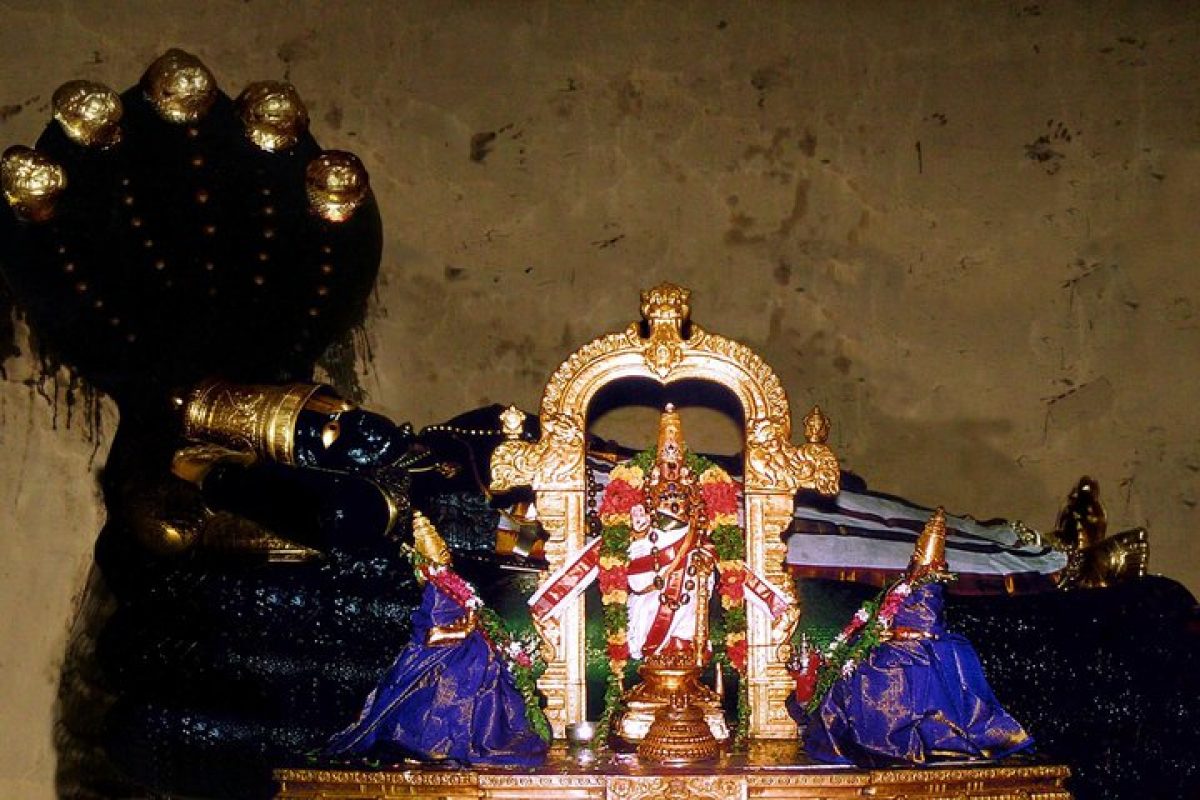
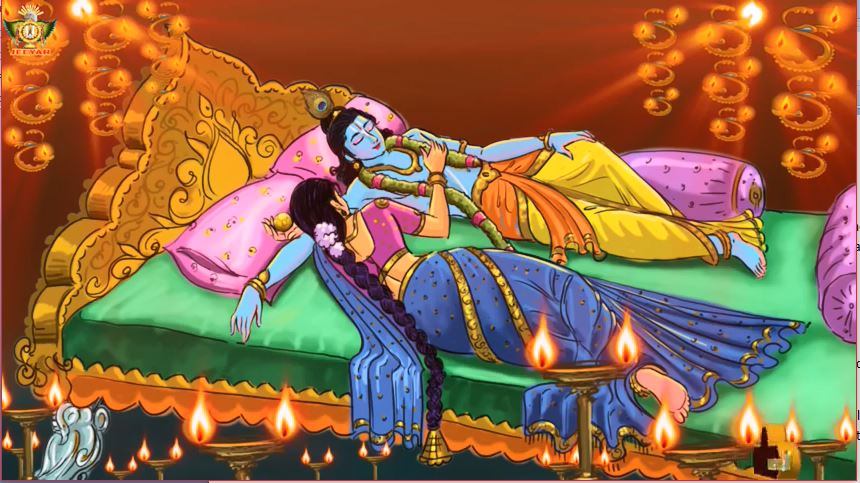

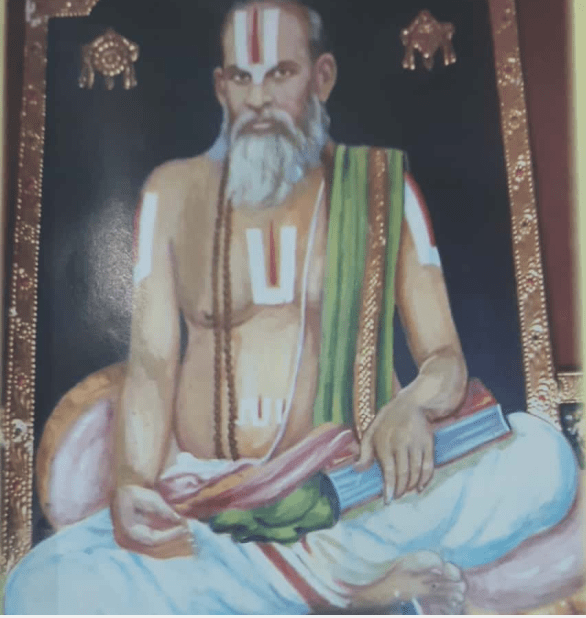
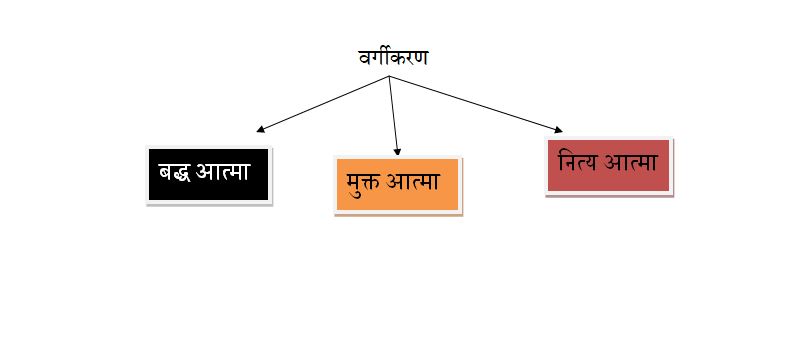

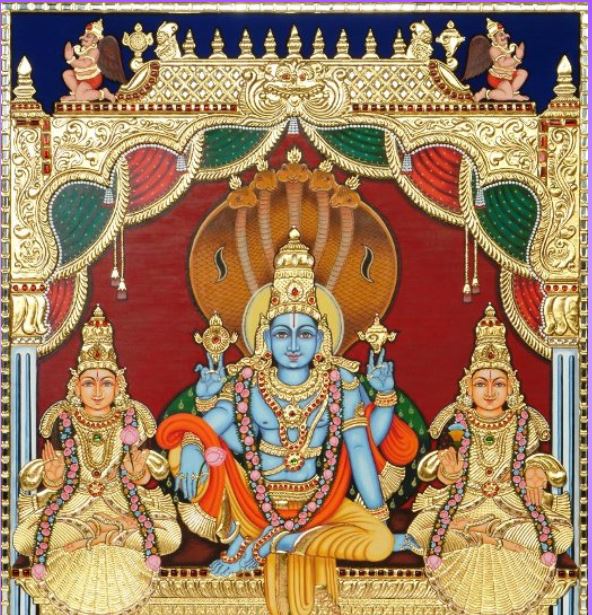
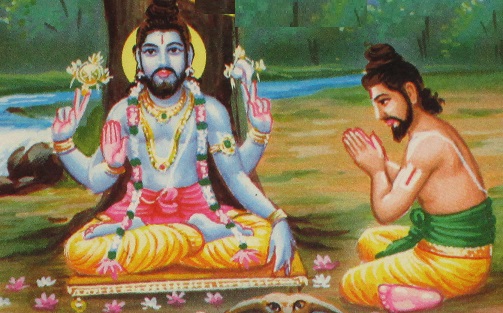

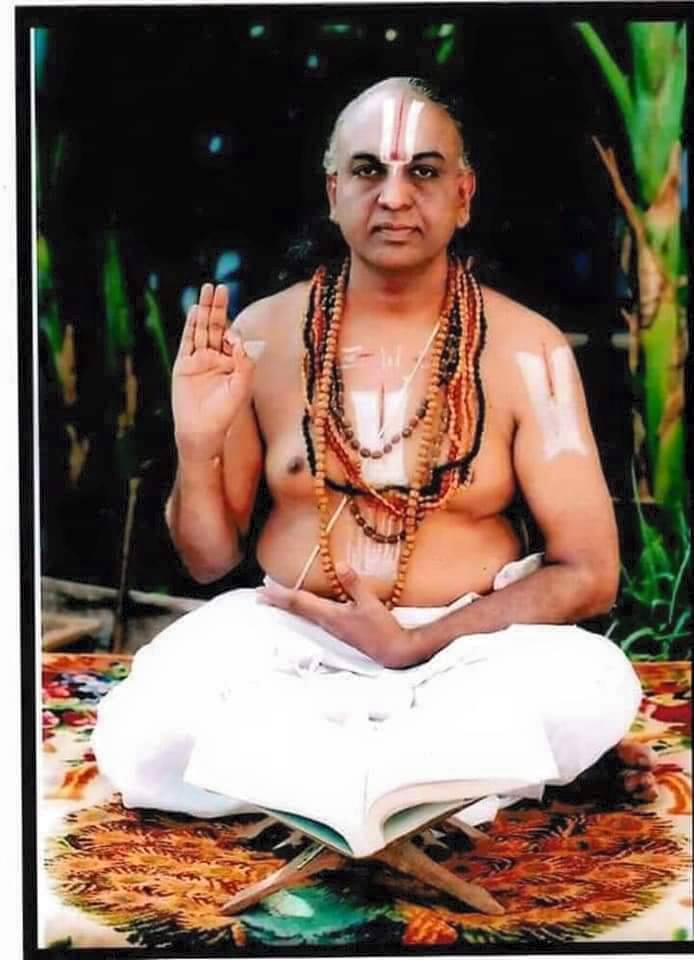
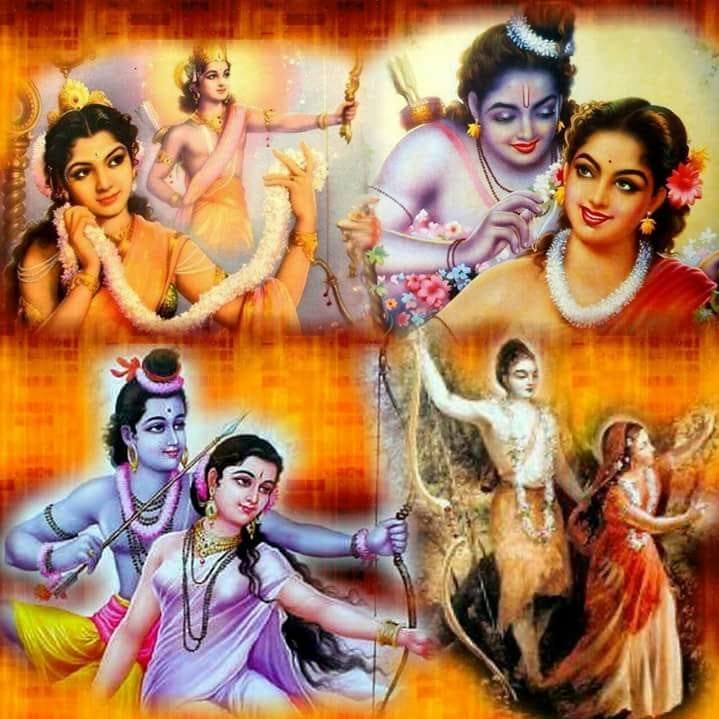
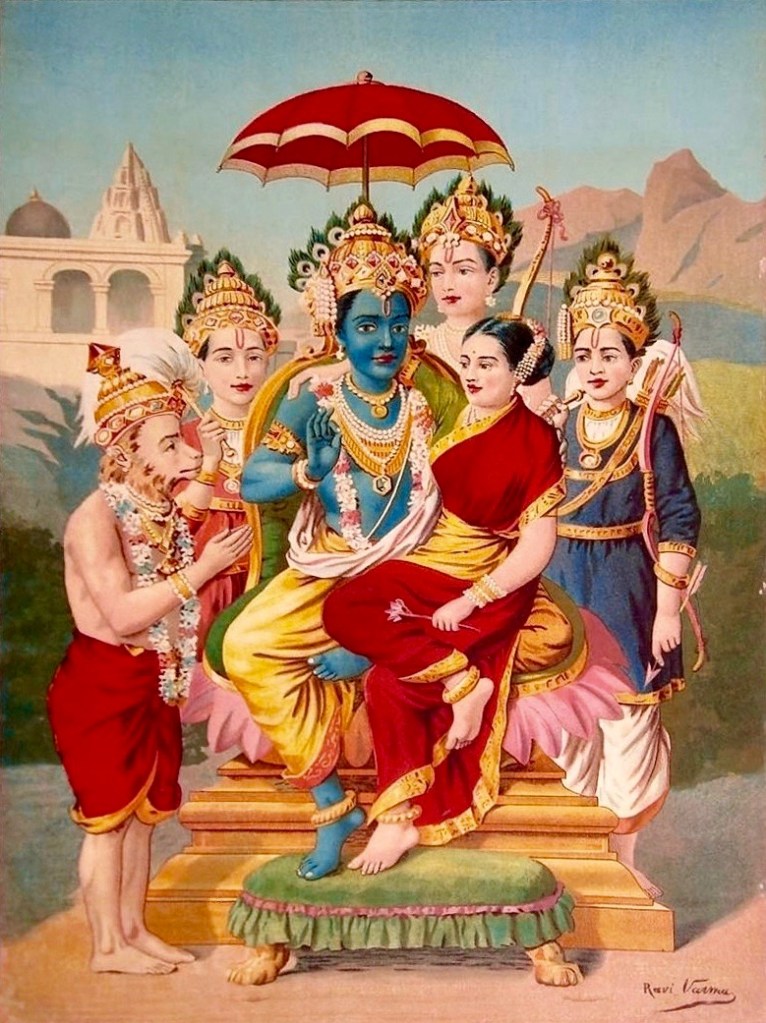

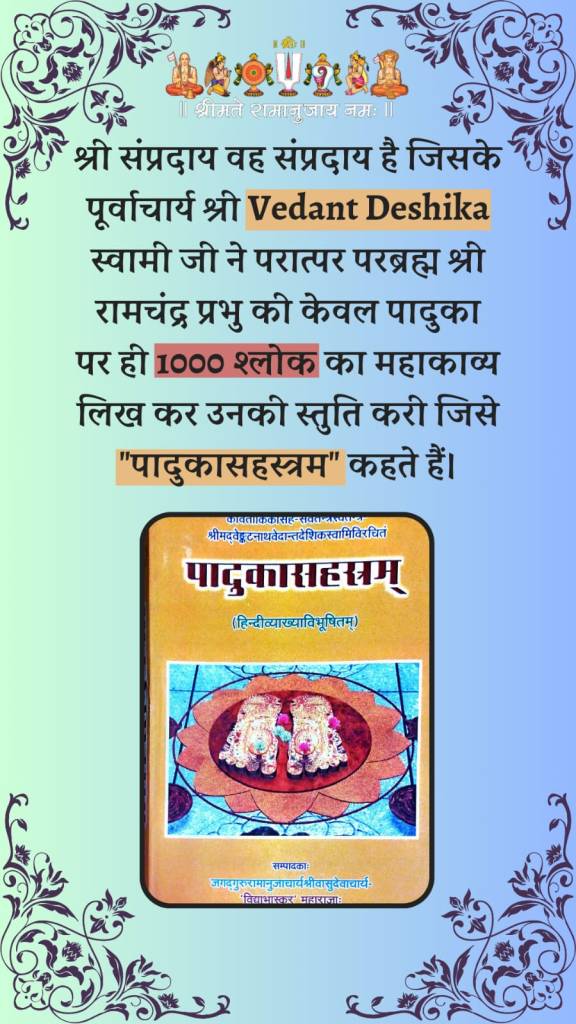
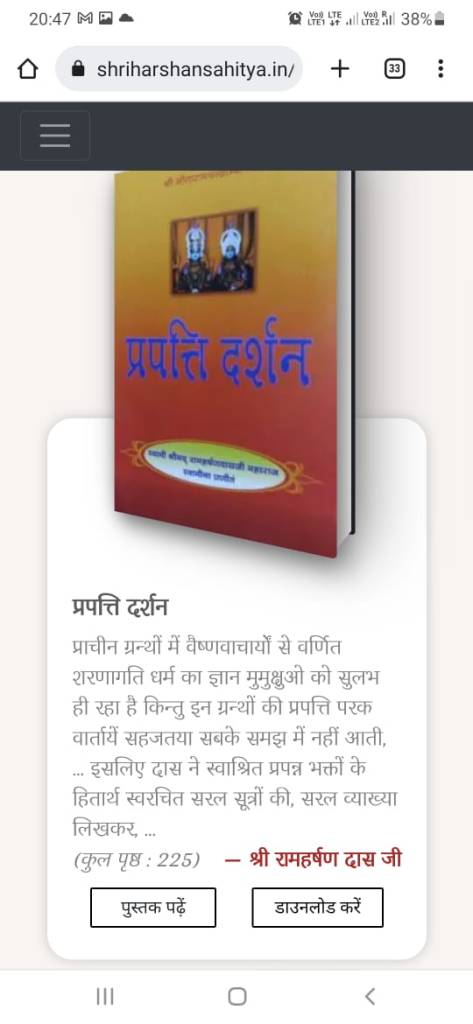

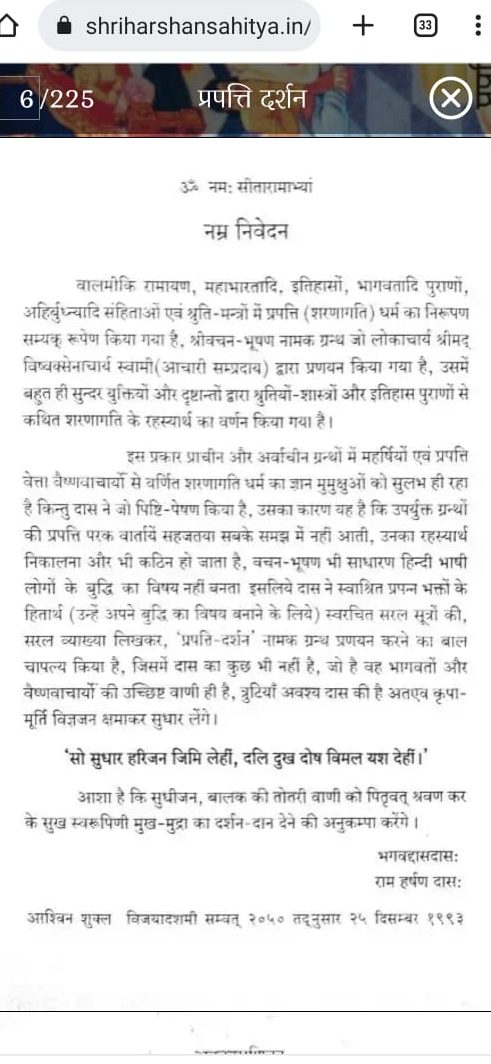
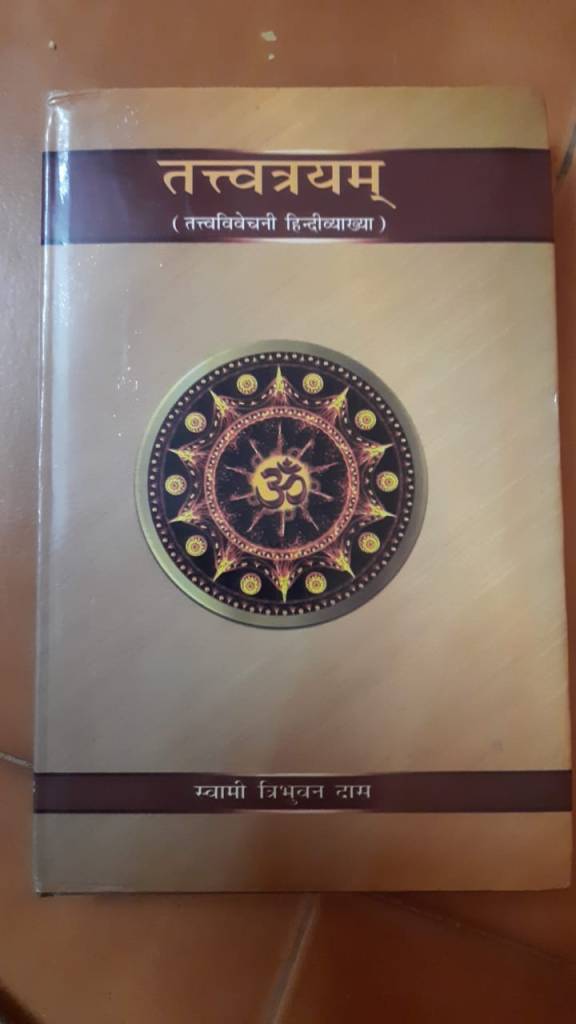
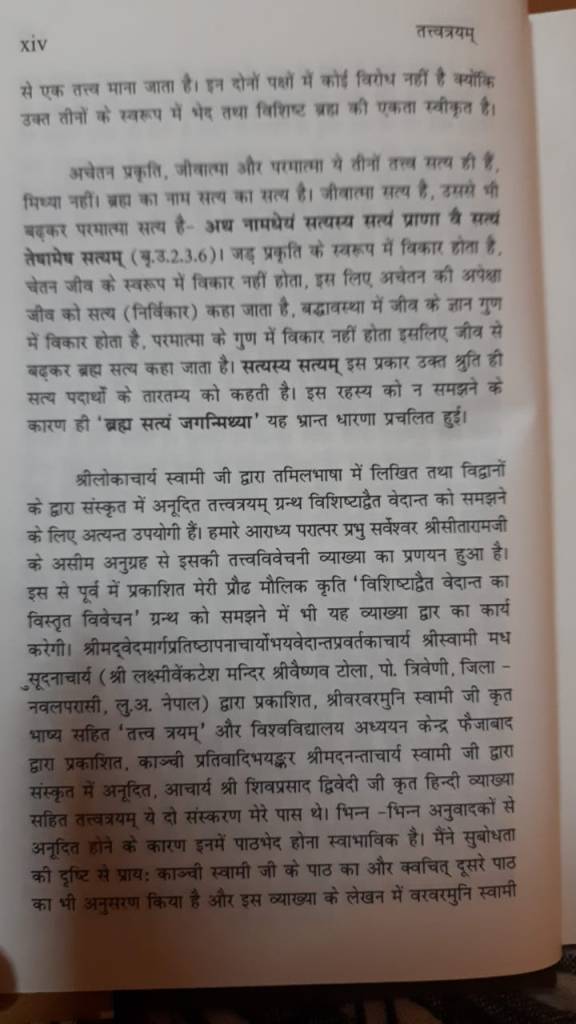
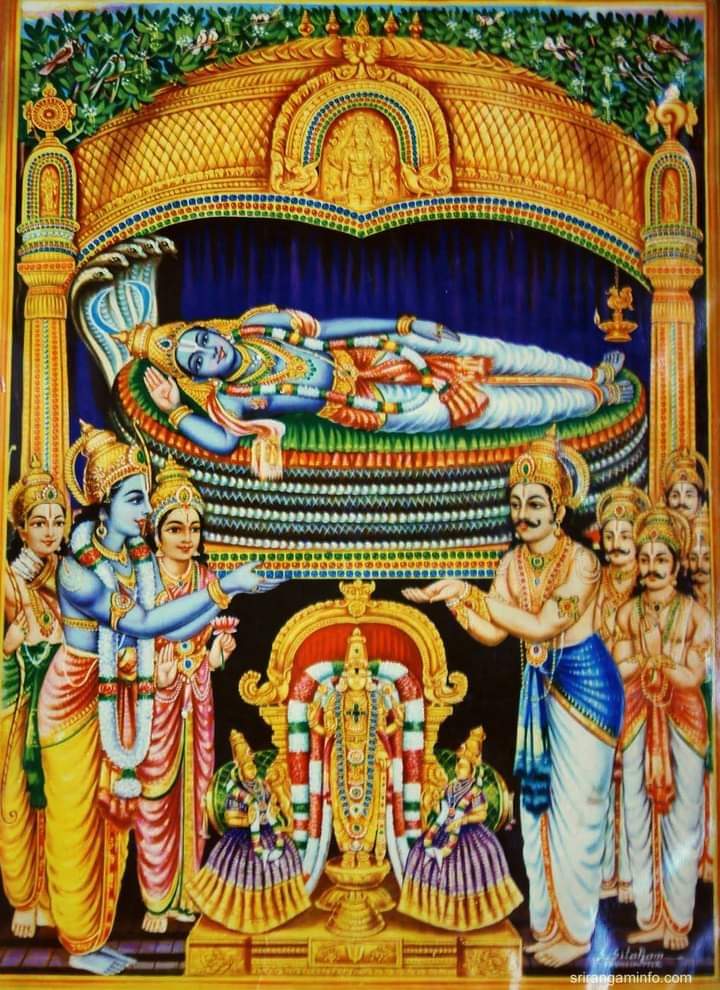
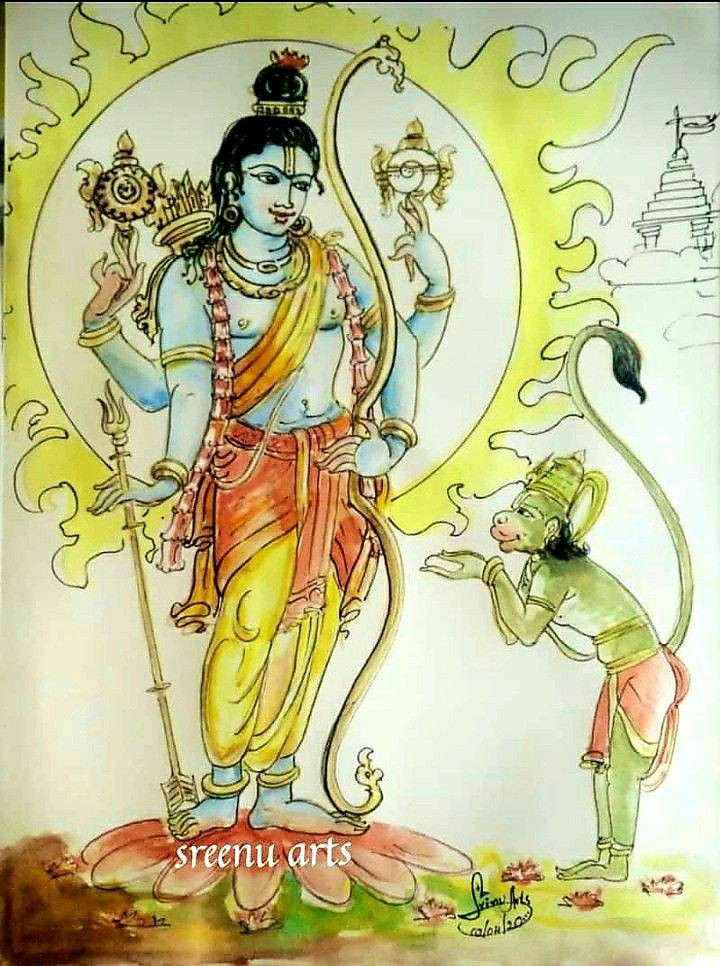
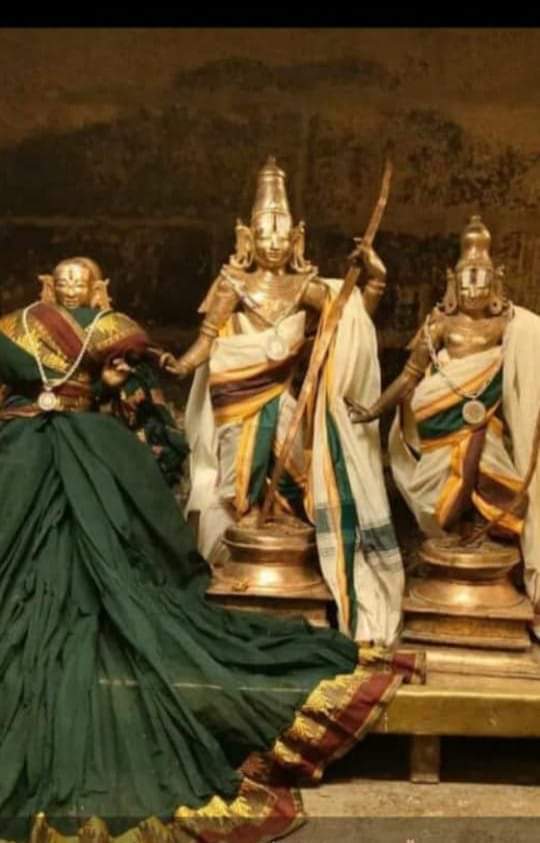
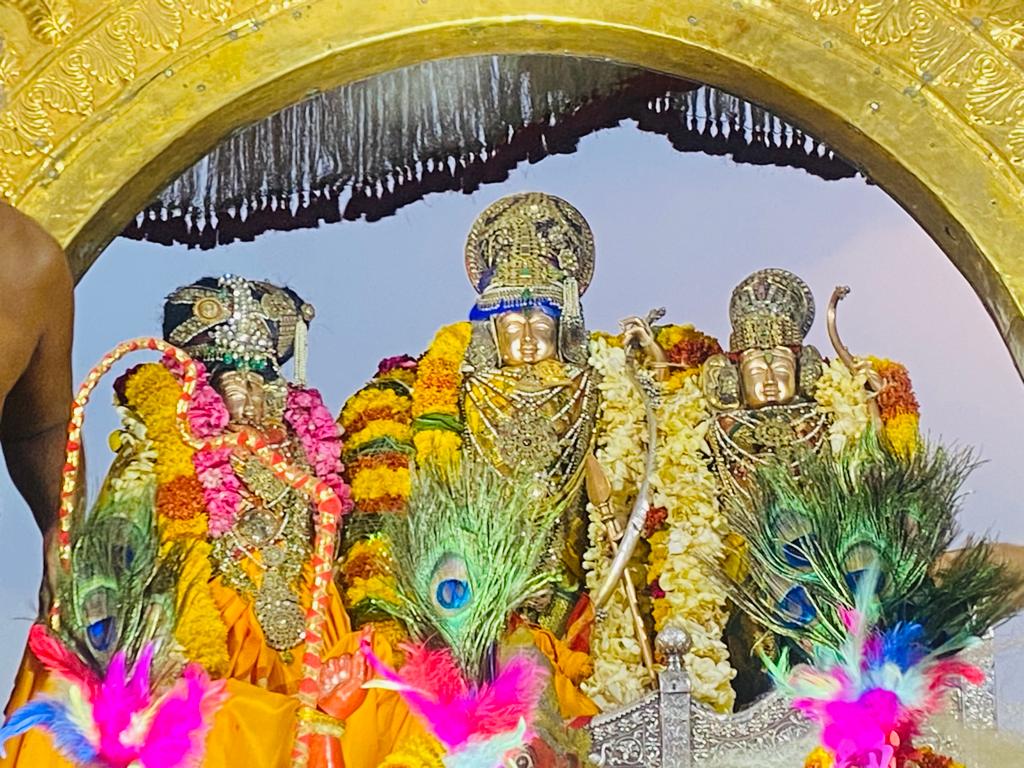
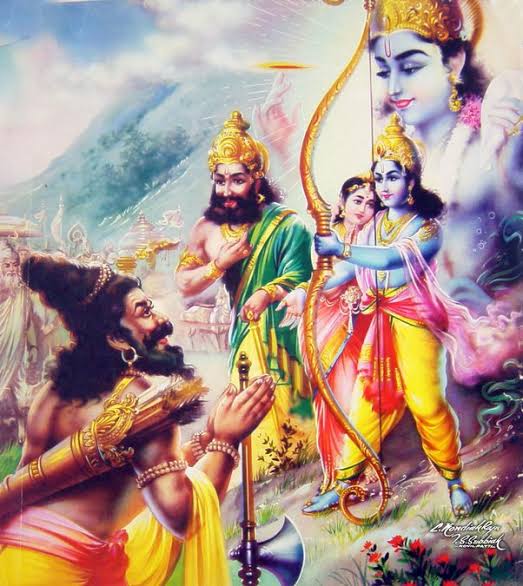

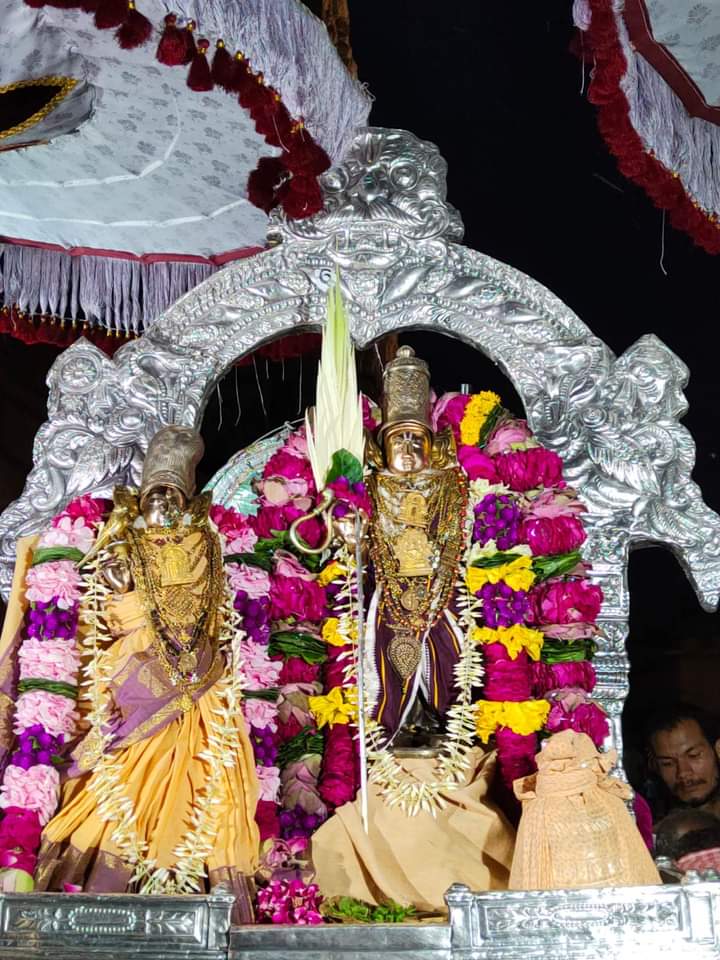
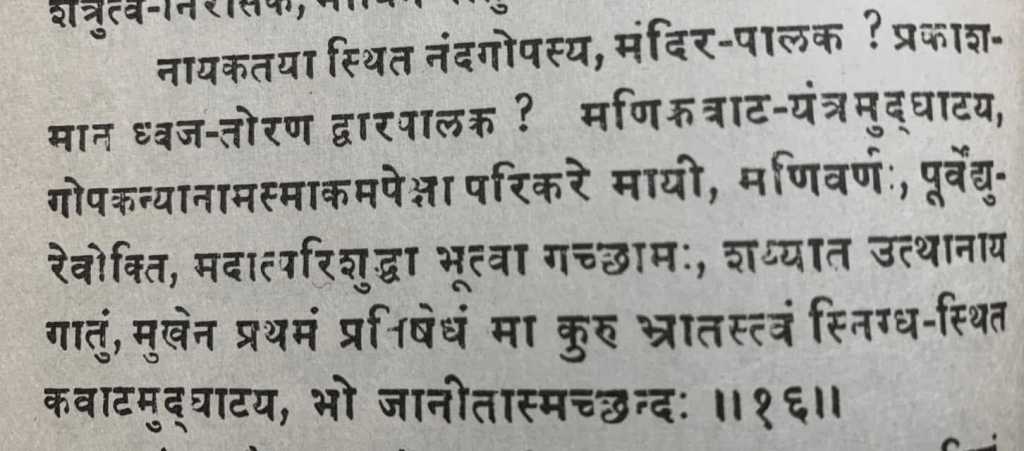

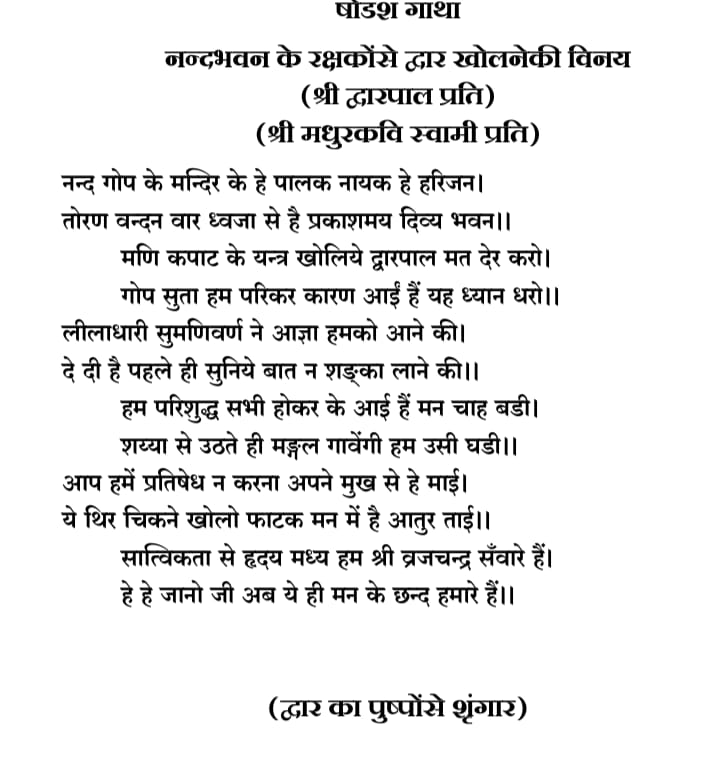
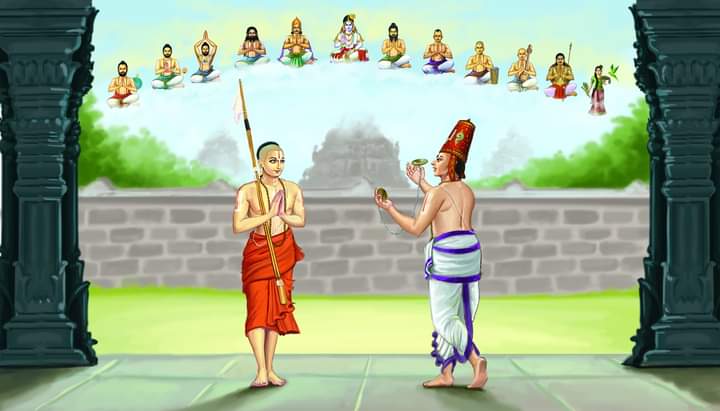
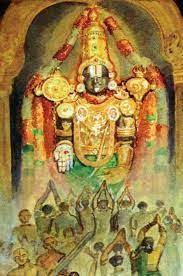

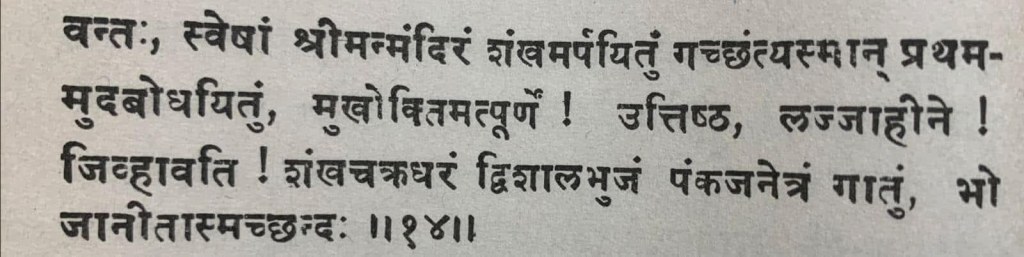


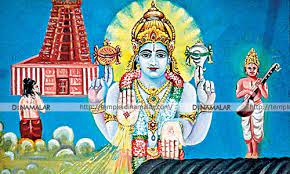
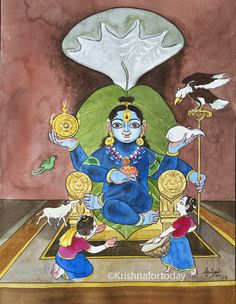
 Ramanujasiddhantam