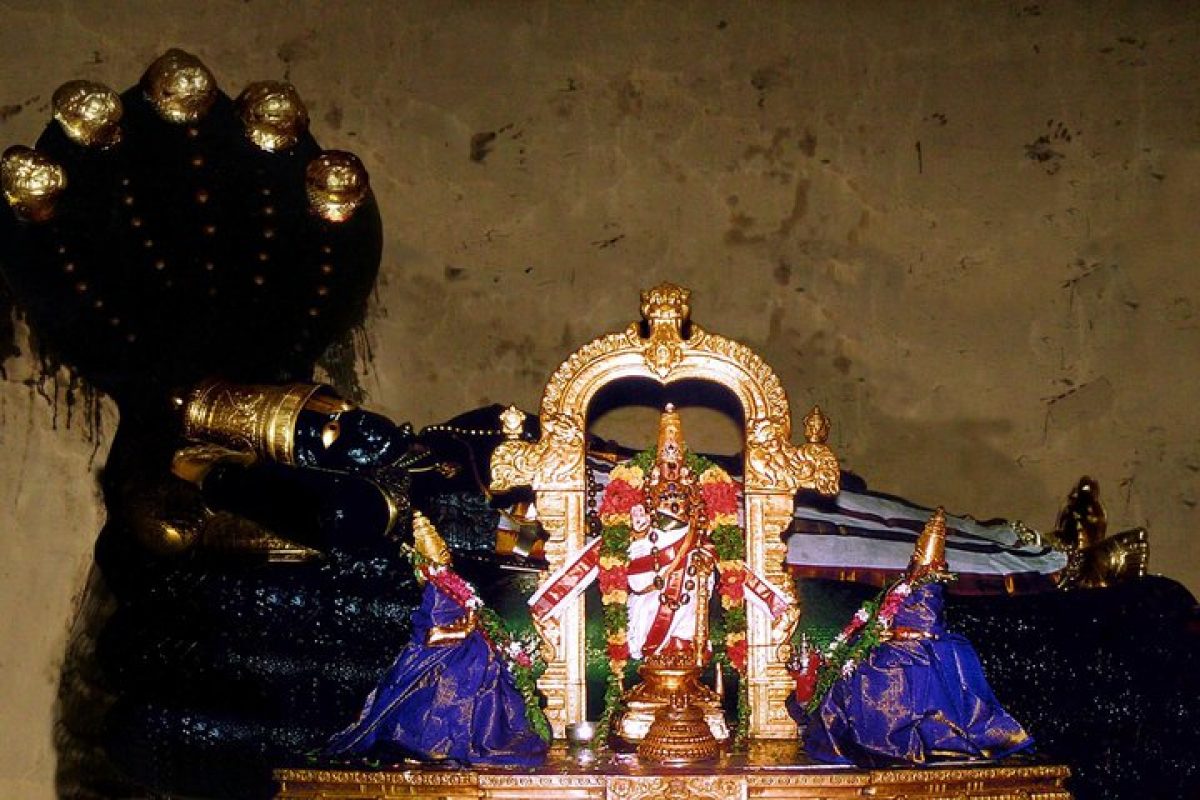
Vibhava roopa of Bhagwan

Vibhav roopams of Bhagwan

अजोऽपि सन्नव्ययात्मा भूतानामीश्वरोऽपि सन्।
प्रकृतिं स्वामधिष्ठाय संभवाम्यात्ममायया।।BG 4.6।।

Though I am unborn, blemisheless; I am born out of my own free will, by employing my own self-nature (swabhaava).

बहूनि मे व्यतीतानि जन्मानि तव चार्जुन।

The number of births of Bhagwan is infinite. He is born among devaas, Manushyas, tiryak, sthaavar etc and takes bodies similar to them.

अजायमानो बहुधा विजायते।

Bhagwaan out of his own free will, comes down in various forms. Those forms are called Vibhava avataras.

Q. How are we translating ‘maayaa’ as ‘free will’

माया वपुनं ज्ञानम् (कोश)

Here, Maya means gyaanam. Thus, maaya here (संभवाम्यात्ममायया) is the ‘free Will’ of Bhagwan. प्रकृतिं स्वामधिष्ठाय means Bhagwan comes with his own prakriti or nature. He doesn’t change. He is the same Bhagwan who is present in Sri Vaikuntham.

In Bhagwad Gita Bhashya, Ramanuja swami writes:

ब्रह्मादिदेवमनुष्याणां ध्यानाराधनाद्यगोचरः अपि अपारकारुण्यसौशील्यवात्सल्यौदार्यमहोदधिः, स्वमेव रूपं तत्तत्सजातीयसंस्थानं स्वस्वभावम् अजहद् एव कुर्वन् तेषु तेषु लोकेषु अवतीर्य अवतीर्य तैः तैः आराधितः, तत्तदिष्टानुरूपं धर्मार्थकाममोक्षाख्यं फलं प्रयच्छन्, भूभारावतारणापदेशेन अस्मदादीनाम्अपि समाश्रयणीयत्वाय अवतीर्य सकलमनुजनयनविषयतां गतः।

Key point here is: स्वस्वभावम् अजहद् एव कुर्वन्। Without leaving his very nature, when he is born among devas, manushyas, tiryak etc.

Why are avataras called Vibhava?

स उ श्रेयान भवति जायमानः ।
By taking birth only he becomes glorified.

Thus, when he is born in the sansara and becomes the subject of the eyes of everyone, that is what makes him glorious. In Vibhava avatara only, the vaibhav of bhagwan is seen.
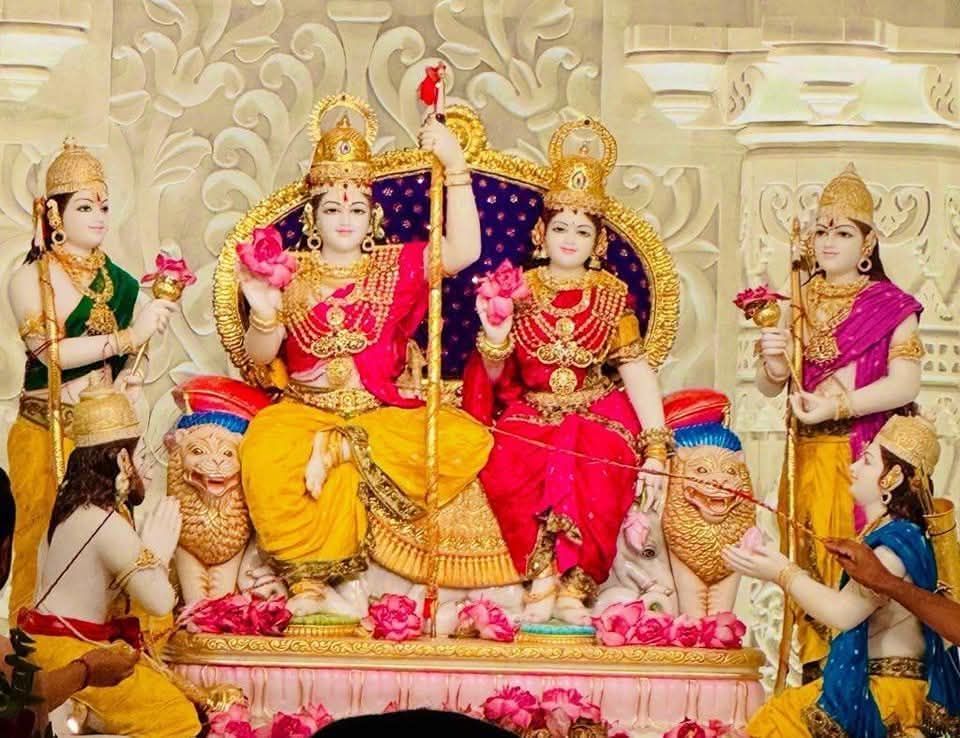
Shri Ram darbaar, Ayodhya

What is the purpose of Bhagwan taking vibhava avataras?

Bhagwan himself says:

परित्राणाय साधूनां विनाशाय च दुष्कृताम्।
धर्मसंस्थापनार्थाय संभवामि युगे युगे।।4.8।।

Bhagwan lists three reasons for his avataras: saadhu paritraanam, dushkrit vinaasham, dharm sansthaapanam. Out of the three, Bhashyakaar swami explains that Saadhu paritraanam or protecting his devotees is the mail goal of his incarnation. As these Saadhus are foremost of the vaishnavas and they can’t live without him. Without him, their life is fish out of the water. For the sake of them, Bhagwan comes and shows his mangal vigraham in front of them and protects them.

In Gita Bhashya, Bhashyakaara swami says that for devotees like Akrura, Maalaakara etc, he has come as Krishna. Dusht-vinaashanam is just a vyaaja.

Q. Some people say that Bhagwan took birth due bhrugu-shraapa etc karmas?

Rishi shraapa as vyaaja for avatara

Answer: There is a difference between our birth and the birth of Bhagwan. Our birth is due to karma and to suffer the fruits of karma. Whereas, the birth of bhagwan is due to his own will/ichchha.

Bhrigu had given a curse that you will suffer with separation from wife:

पतिव्रता धर्मपरा हता येन मम प्रिया ।
स तु प्रियाविरहितश्चिरकालं भविष्यति ।।

However, Bhagwan himself says that rishi-shraapa was his own will and he took it as vyaaja to come as Rama.

तपसाऽऽराधितो देवो ह्यब्रवीद्भक्तवत्सलः ।
लोकानां सम्प्रियार्थन्तु शापं मद्भाह्यमुक्तवान् ।।

In Linga purana:

सर्वावर्तेषु वै विष्णोर्जननं स्वेच्छयैव तु ।
जरकास्त्रच्छलेनैव स्वेच्छया गमनं हरेः ।।
द्विजशापच्छलेनैवमवतीर्णोऽपि लीलया ।।
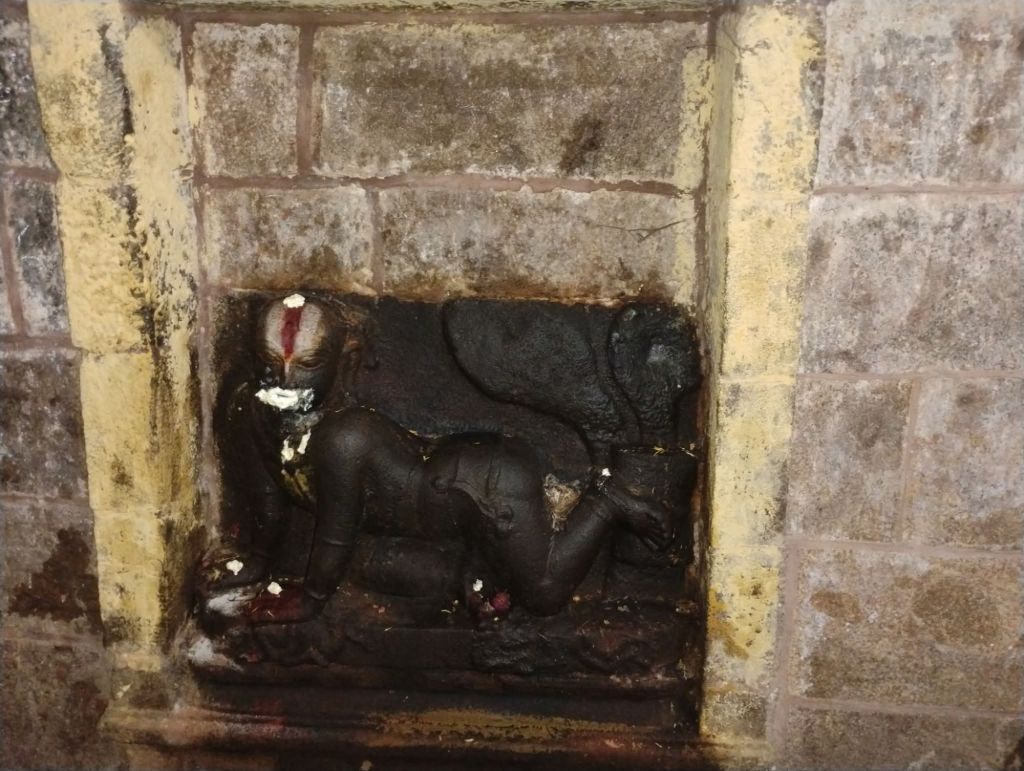
Krishna in SriRangam

Classifications of Vibhava avataras

Among the Vibhava avataras, there are two broad categories:

  1. Pramukha avataras or swayam avataras.
  2. Gauna avataras or aavesha avataras.

Both mukhya and gauna avataras are infinite.

अवतारा ह्यसङ्ख्येया हरे: सत्त्वनिधेर्द्विजा: ।
यथाविदासिन: कुल्या: सरस: स्यु: सहस्रश: ॥ श्रीमद्भागवत १.३.२६ ॥

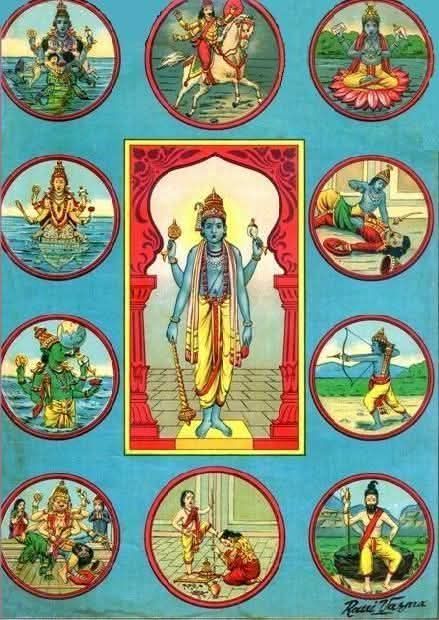
Mukhya avatara means Bhagwan himself taking forms of deva, manushya, tiryaka etc. In all these forms, he is ‘swayam bhagwan’. Mukhya avataras are superior. Examples are: Varaaha, Narasimha, Rama, Krishna, Vaamana, Kalki etc.

Gauna avataras are amukhya. In these avataras, bhagwan doesn’t take form himself but empowers a jeevatma with his swarupa or shakti. Thus, gauna avataras can also be classified into two categories:

A. Swarupa aavesha : Being present with his asaadhaarana vigraha inside a jeevatma. E.g. Parashuram, Buddha etc.

B. Shakti aavesha : Empowering a jeevatma for a certain period of time, for a particular function, with his shakti. Examples are Rudra, Brahma and also Kaartaveerya Arjuna etc.

Important note:

In swayam avataras, bhagwan takes shareera which are not prakrita but shuddha-sattva apraakrita tattvas. Shuddha Sattva is swayam-prakash dravyas. Thus, they are called shubhaashraya tirumeni. Upon meditating on these forms, we get filled with sattva gunas and rajas, tamas vanishes away.

Whereas, aavesha avataras are jeevatmas only, with prakrita vigrahas (made of panch-bhootas). Praakrita tattvas are ‘bhagwad-swarup-tirodhaan-kareem’. They don’t reveal the bhagwad-swarupa.

It’s not recommended for mumukshus to meditate on aavesha avtaras, they will enhance rajas and tamas in us. However, bhubhukshus meditate on them for material gains.

अनर्ध्यानपि वक्ष्यामि प्रादुर्भावान् यथाक्रमम् ।
चतुर्मुखस्तु भगवान् सृष्टिकार्ये नियोजितः ।।
शङ्कराख्यो महारुद्रः संहारे विनियोजितः ।
मोहनाख्यस्तथा बुद्धो व्यासश्चैव महानृषिः ।।
वेदानां व्यसने तत्र देवेन विनियोजितः ।
अर्जुनो धन्विनां श्रेष्ठो जामदग्न्यो महानृषिः ।।
वसूनां पावकश्चापि वित्तेशश्च तथैव च ।
एवमाद्यैश्च सेनेश प्रादुर्भावैरधिष्ठिताः ।।
जीवात्मानः सर्व एते नोपास्या वैष्णवैः सदा ।
आविष्टमात्रास्ते सर्वे कार्यार्थममितद्युते ।।
अनर्ध्याः सर्व एवैते विरुद्धत्वान्महामते ।
अहंकृतियुताश्चेमे जीवमिश्रा व्यधिष्ठिताः ।।
(Vishwaksen Samhita)

We can see in SriRamayanam that Swarupa aavesha avatar Paradhurama wins over Shaktyaavesha avataar Kaartaveerya Arjuna. While swayam avatara Sri Rama wins over Parashurama. Thus, Mukhya avatara is greater than aavesha avataras.

ऋषयो मनवो देवा मनुपुत्रा महौजस: ।
कला: सर्वे हरेरेव सप्रजापतय: स्मृता: ॥ २७ ॥

एते चांशकला: पुंस: कृष्णस्तु भगवान् स्वयम् ।
इन्द्रारिव्याकुलं लोकं मृडयन्ति युगे युगे ॥ २८ ॥

“Rishis, Manu, devas etc are aavesha avatars of Hari. Krishna etc are swayam bhagwan.”
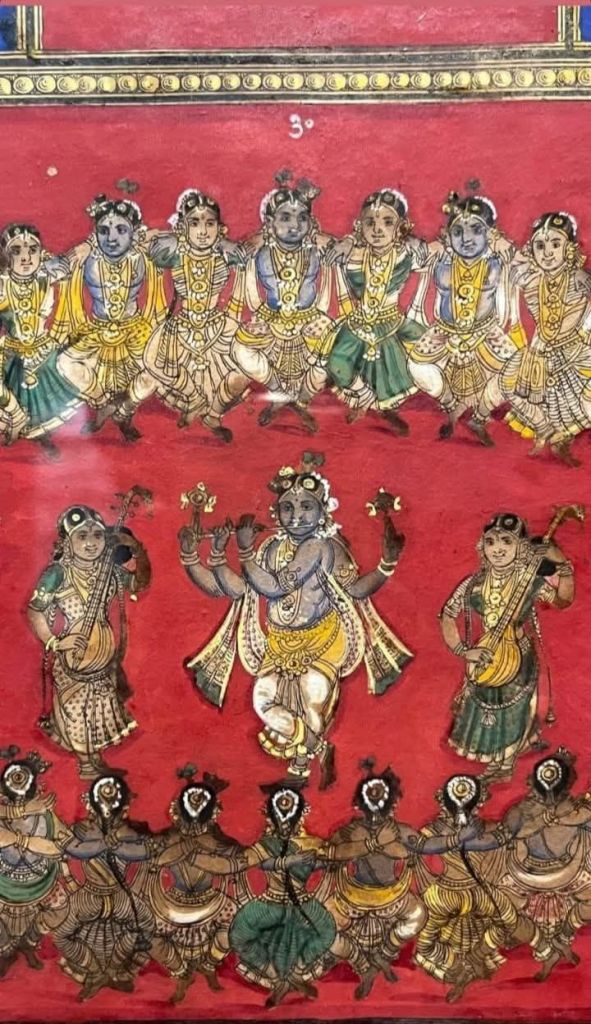
Rama, Krishna, Varaha, Vaamana, Narasimha etc mukhya avataras are called ‘swayam bhagwan’.

Buddha is sometimes counted in swayam avataras as well as aavesha avataras. Parashurama is counted as both swarupa aavesh and Shakti aavesha. This has to be understood as kalpa bhedas.

Glories of Vibhava avatara

Kooresha swami says:

(वरदराजस्तव)

एवं स्थितेत्वदुपसंश्रयणाभ्युपायो
मानेन केनचिदलप्स्यत नोपलब्धुम् ।
नो चेदमर्त्यमनुजादिषु योनिषु
त्वमिच्छाविहारविधिना समवातरिष्यः ।।

If you don’t descend with manushya shareera, and remain in Para loka, none could know about upaay and none could reach.

Thus, coming down as vibhava avataras by taking sajaatiya bodies is the greatest kripa of bhagwan.

Mukhya Vibhava avataras are those in which bhagwan himself takes a body, as per his avataram. The bodies of bhagwaan in these swayam avataras are apraakrita, Shuddha Sattva, Swayam Prakasha and shubhaashraya.

Only these swayam avataras are upaasya for mumukshu jeevatmas.

As told in ‘ajo api san avyavyaatma bhutaanaam Ishwaro api san‘; such bhagwan who is blemish-less and controller of all, takes a form without leaving his swabhaaba of sarva-Ishwaratvam.

Just like a deepam (diya) is lighted from another deepam, similarly bhagwan takes one form from another form. Just like when a deepam is lighted from another deepam, it doesn’t differ it’s swarupa, similary when one mangal vigraha (body) emerges from another mangal vigraha, it doesn’t lose it swabhaavam and remains apraakrita mangal vigraha.

It should be noted that in all the swayam avatara forms, bhagwan remains the same. There is only change in the forms of the body. Aatma of all those bodies is the same Ishwara.

All the avtaras evolves from Aniruddha Vyuha as rakshana kaarya belongs to Aniruddha. As discussed earlier, In Aniruddha, Shakti and Tejas guna are meditated. Shakti is aghatit-ghatana-saamarthyam of taking a fallen jeevatma to Nitya loka and Tejas is overpowering the evils and not needing any sahakaari.

भुजायुधानां नियम: तत्रतत्रेच्छया मया (Vishwaksen Samhita)

The number of hands and the types of aayudhas in a particular Vibhava avatara depends upon the free-will of Bhagwan. There is no fixed rule. The only rule is his wish.
As these are atyant gopaneeya (highly secret), it is not generally revealed in open and revealed only to yogya upasakas.

Also in Vishnu Puran:
इच्छागृहीताभिमतोरुदेह:।

निज इच्छा निर्मित तनु माया गुण गोपार (मानस)

Bhagwan takes bodies as per his will.
Vyuha roopa of Bhagwan

For the purpose of creation, sustenance and destruction of the leela vibhuti, Bhagwan comes out of Paramapadam and resides in Vyuha lokam in each Andam. For these 3 purposes, bhagwan takes 3 forms: Sankarshana, Pradyumna and Aniruddha.

चतुर्विधः स भगवान् मुमुक्षूणां हिताय वै ।
अन्येषामपि लोकानां सृष्टिस्थित्यन्तसिद्धये ।।
आनन्त्यात्तव सेनाने व्यूह आद्यो मयेरितः ।
अनादिकर्मवश्यानां संसारे पततामधः ।। (Vishwaksen Samhita)

For the welfare of mumukshus (those desirous of moksha) and for the purpose of creation, protection and deluge, bhagwan becomes four-fold in Vyuha forms, as he is Ananta (infinite).

While Para Vasudeva shows all the 6 shad-gunas, the three Vyuha rupams show two gunams each, which are required for the specific tasks. Sometimes, Vyuha Vasudeva is also taken into Vyuha forms, and thus, the number of Vyuha forms is counted as four. However, Vyuha Vasudeva is not different from Para Vasudeva. He also shows all the 6 gunas and has no role in creation, sustenance and destruction. Since the same set of gunas are meditated in both Para Vasudeva and Vyuha Vasudeva, they are taken as one single Vasudeva moorti, and Vyuha forms are understood as three: Sankarshana, Pradyumna, and Aniruddha.

Sankarsha shows gyaana and bala. Pradyumna shows Aishwarya and Veerya, and Aniruddha shows Shakti and Tejas. The colour of sankarsha is like fresh gold, Pradyumna is like Indra Neelamani and Aniruddha is like Taatkaalika-megha.

It is to be noted that Bhagwan is always purna in shad-gunas in all his forms. However, some of the gunas are shown in particular forms, and some remain hidden.

Shad-gunas of Bhagwan

सत्त्वादयो न सन्तीशे यत्र च प्राकृता गुणाः ।
ज्ञानशक्तिबलैश्वर्य्यवीर्य्यतेजांस्यशेषतः
भगवच्छब्दवाच्यानि बिना हेयैर्गुणादिभिः ।। (Vishnu Puran 1-9-4)

Bhagwan has no praakrita/material gunas like sattva, rajas and tamas. On the other hand, he has kalyaan gunas like Gyaan, Shakti, Bala, Aishwarya, Veerya and Tejas. Being Bhagwan means having all these gunams in purnata and lack of heya (evil) gunas.

Gyaan, Shakti, Bala, Aishwarya, Veerya and Teja are the shad-gunas of Bhagwan. Vatsalya, Mardav etc. – all other swarupa-gunas come from these shad-gunas only.

Gyaana: Gyaanam is knowing about our karmas. Karmas are recorded in the dharmabhoota gyaana of Bhagwan. When creation happens, he provides names and forms as per our previous karma. He ensures that everyone gets fruits of their karma. Once someone surrenders, he simply deletes all his karmas from his gyaana.

Shakti: aghatit-ghatana-saamarthyam. Elevating a sansaari jeeva from this Samsara to Sri Vaikutham is the Shakti guna of Bhagwan.

Bala: बलं धारणसामर्थ्यम्। Bhagwan is holding the entire creation and yet he doesn’t get any tiredness. That is his Balam.

Aishwarya : समस्तवस्तुनियमन-सामर्थ्यम्। The bhaava of Ishwara is Aishwaryam. Bhagwan is controlling the entire creation, that is his aishwaryam.

Veerya : जगद-उपादानत्वे अपि स्वरूप-विकार-अभाव-रूप:। Though Bhagwan is the upaadan-kaaranam or material cause of the creation, just like mud is the material cause for the pot; he doesn’t get any deformation in his swarupa. This quality is Veerya.

Tejas : सहकारि-अनपेक्षा वा पराभिभवन सामर्थ्यम्। Bhagwan doesn’t need any Sahakari-kaaranam or helping cause just like a wheel is for pot in the creation. This quality is Tejas. Or Dominating the foes is called Tejas.

1. Bhagwan Sankarshana

भगवानच्युतोऽपीत्थं षड्गुणेन समेधितः ।

बलज्ञानगुणौ तस्य स्फुटौ कार्यवशान्मुने ।।

Though Bhagwan Achyuta (who never falls from his Shad-guna-purnya avastha) is qualified with all the 6 gunas, Gyaana and Bala erupt or appear in Bhagwan Sankarshana.

The works of Sankarshana are:

1. Jeeva-tattva-adhisthanam (using balam): In the deluge stage, entire mishra sattva dissolves into Mool Prakriti, and Mool Prakriti gets into the stage of tamas. Jeevatmas and mishra sattva get almost non-existent and can’t be distinguished from Ishwara. Jeevatmas are lying as if they don’t exist, without name and form, since mool prakriti itself has attained the stage of avyakta.

Bhagwan Sankarshana makes jeevatmas distinguished from Avyakta prakriti and starts the process of creation from avyakta to mool prakriti.

सङ्कर्षणस्तु देवेशो जगत्त्रष्टुमनास्ततः ।

जीवतत्त्वमधिष्ठाय प्रकृतेस्तु विविच्य तत् ।।

2. Shastra pravartanam (using gyaana): Preaches Shastras, especially Pancharatra vishesha shastra.

सोऽयं प्रद्युम्ननामा भूत्तदेकान्तवपुर्धरः

इति चोक्तप्रकारेण प्रद्युम्नावस्थां प्राप्य ।।

शास्त्रप्रवर्त्तनं चापि संहारं चैव देहिनाम् ।

बलेन हरतीदं स गुणेन निखिलं मुने ।।

ज्ञानेन तनुते शास्त्रं सर्वसिद्धान्तगोचरम् ।

वेदशास्त्रमिति ख्यातं पञ्चरात्रं विशेषतः ।

3. Sanhaar (using balam): Destroys the entire creation. Destroys Vyashti shrishti as antaryaami of Rudra, Kaala, etc., and destroys Samashti shrishti directly.

2. Bhagwan Pradyumna

ऐश्वर्य्यवीर्य्यसम्भेदाद्रूपं प्रद्युम्नमुच्यते ।

पूर्णषड्गुण एवायमच्युतोऽपि महामुने

गुणावैश्वर्यवीर्याख्यौ स्फुटौ तस्य विशेषतः ।।

Bhagwan Sankarsha has all the 6 gunas but Aishwarya and Veerya erupt/appear in him.

Bhagwan Sankarshana is the adhishtatri devata for Manas. (मत्तः स्मृतिर्ज्ञानमपोहनं च।)

मनसोऽयमधिष्ठाता, मनोमय इतीरितः ।

The works of Bhagwan Pradyumna are:

1. Creation of chara and achara in the Samsara (using Aishwarya gunam).

ऐश्वर्येण गुणेनासौ सृजते तच्चराचरम् ।

वीर्येण सर्वधर्माणि प्रवर्त्तयति सर्वशः ।।

There are two things to be noted here:

A. Creation by Pradyumna is Sadwaraka i.e. using the medium or dwara of Brahma, being his antaryami. Adwarak Srishti or Samasti srishti is done by Bhagwan Vasudeva itself. He creates Andas from his Sankalpa. Then he descends in each Andas in Vyuha loka as Sankarshana, Pradyumna and Aniruddha.

B. The creation work of Pradyumna is different from the creation work of Aniruddha.

Pradyumna carries out Shuddha-varga shrishti. He creates sattvika jeevas who are desirous of moksha, worships him alone through the dwaadashaakshar mantra and attains Bhagwan at the end.

मनूनां सर्गमकरोन्मुखबाहूरुपादतः

चतुर्णां ब्राह्मणादीनां सर्गद्वारं जगत्पतिः

2. Does dharma-pravartanam use veerya gunam.

3. Bhagwan Aniruddh

शक्तितेजः समुत्कर्षादनिरुद्धतनुर्हरि: ।

पुरुषोपि महाध्यक्षः पूर्णषाड्गुण्य उच्यते ।

शक्तितेजोगुणौ तस्य स्फुटौ कार्य्यवशान्मुने ।।

Bhagwan Aniruddha has Shakti and Tejas gunam.

The works of Bhagwan Aniruddha are:

1. Creation of jagat using Shakti.

It is to be understood here that Aniruddha does Shrishti of jeevatmas full of rajas and tamas. Shuddh-varga shrishti has already been told earlier as the work of Pradyumna. Mishra varga shrishti is done by Aniruddha using dwaara of Brahma (not directly).

Creation of Brahma is also done by Aniruddha only.

तुरीयोऽयं जगन्नाथो ब्रह्माणमसृजत्पुनः

मुखबाहूरुपज्जातो ब्रह्मणः परमेष्ठिनः ।।

2. Jagad-rakshanam using Shakti. (He eventually gives Rakshana kaaryam to Vishwaksena.)

3. Creation of kaala

4. Gives tattva-gyaana using Tejas gunam.

शक्त्या जगदिदं सर्वमनन्ताण्डन्निरन्तरम्

बिभर्ति पाति च हरिर्मणिसानुरिवाणुकम् ।

तेजसा निखिलं तत्त्वं ज्ञापयत्यात्मनो मुने ।।

Upa-Vyuhas

Earlier we studied about Sankarshana, Pradyumna and Aniruddha Vyuha roopams of Bhagwan.

Actually, the Vyuha forms are also infinite. From the 4 vyuha, comes 12 upa-vyuhas and from them comes 36 more. Keshava, Narayana and Maadhava come from Vasudeva. Govind, Vishnu and Madhusudana come from Sankarshana. Trivikrama, Vaamana and Shridhara come from Pradyumna. Hrishikesh, Padmanaabha and Damodara come from Aniruddha. These 12 Vyuhas reside at the 12 places in our bodies. From these 12 vyuhas, Padmanaabha, Dhruva, Ananata etc 36 Vyuhas come. The number of Vyuhas is thus infinite. The entire upasana of Paancharaatrikas revolves around Vyuha roopams.

LOCATION OF VYUHA LOKA

When Bhagwan creates the Andam and 14 lokas inside it, he himself comes to reside in Bhu lokam. Bhu Loka has 7 dweepas including Shweta dweepa and Jambu dwipa. It has 7 oceans including Ksheera ocean and Lavana ocean. The Vyuha lokam of Bhagwan is in the Ksheera ocean. Devas, Rudra and Brahma approach Vishnu at Shweta dweepa, where he gives them darshanam.

From the Vyuha loka in the Bhu loka, Lotus emerges from the navel of Vishnu and reaches Satya Loka. At the lotus there, Brahma takes birth. From Brahma, Rudra takes birth.

At Satyaloka, Vishnu again takes a form and resides with Rudra and Brahma as Trimurti Vishnu. In Satyaloka, there are separate Vishnu Loka, Rudra Loka and Brahma loka. These lokas are attained by their upaasakas. We have studied about the Shuddha-varga shrishti done by Pradyumna. Only those upaasakas have access to Vishnu Loka inside the Satya Loka.

In Srimad Bhagwatam, we came through an incident of 4 kumaras visiting Vishnu Loka and cursing Jaya Vijaya there. It is to be noted that Vishnu Loka is not Sri Vaikuntham but very much outside the Viraja river and exists in each Andam. The Jaya and Vijaya there are also not Nitya Suris.

MAYAVADI’S CRITICISM

Mayavaadis objects at the evolution of one vyuha from the previous Vyuha (Like ‘Sankarshana is born from Vasudeva’ etc).

However, their objections have no ground. It is their inability to understand Paancharatra. Bhagwan is not getting transformed into another form and his nirvikaaratvam is not harmed here. Bhagwan is very much the same. The change occurs only in his mangal Vigraha.

Pancharatra itself tells that it is like a deepam getting lighted from previous deepam. That’s how Bhagwan gets a new body. Aatma remains unchanged as he is vibhu (omnipresent)

ARE THERE THREE TYPES OF VISHNU?

Some people have this misconception. Vishnu is one only. Be is infinite Vyuha forms or infinite Vibhava forms, it’s only the change of body shapes for Vishnu. Bhagwan doesn’t change. But this is true, different gunas are experienced in different forms. However, he is complete with all the gunas in all the forms.

“Vishnu tu trini rupani” refers to 3 Vyuha forms in Pancharatra and not three different types of Vishnus.

Ramanuja-mata-saara-sangrah part 12

Ananda-swarupa

Earlier, it was told that Jeevatma is gyaana-swarupa and gyaana-gunaka and shesha to Bhagwan.

If we say only gyaana swarupa, then there is ati-vyaapti since Dharma-Bhoota gyaana is also gyaana-swarupa. If we say only gyaana-swarupa and gyaana-gunaka then there will be ati-vyaapti with Ishwara. Thus, sheshatva is important to add in the lakshana (identification) of jeevatma.

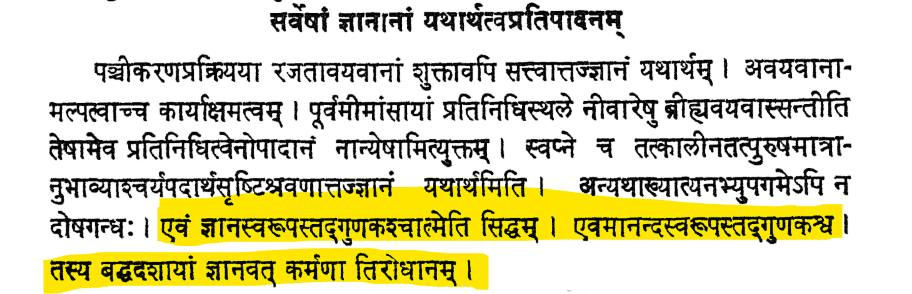
Now it is told that jeevatma is aananda-swarupa and aanand-gunaka.

There is no contradiction in saying so. aananda is nothing but anukoola gyaaa. The subject of any gyaana is anukoola to a jeevatma. We consider it pratikoola as we identify ourselves as shareera as a result of agyaana, arising out of karma.

Once agyaana is gone and we identify ourselves as aatma, different from shareera, there will always be aananda, no dukham.

Ramanuja-mata-saara-sangrah part 11

‘yathaartham sarva vigyaanam’ (yathaartha khyaati)

In VA vedaanta, there is no place for mithya. Every gyaanam is yathaartha or as-it-is and thus true.

1. Now, the question raised would be: is bhrama (illusion) also satya? Like Seashell is mistook as silver due to it’s shine. Is that also true?

Yes. That is also true. We have already studied panchikaranam. After Panchikaranam, all the bhootas have proportions of all the other bhootas as well. The rajat is already present in a seashell due to panchikaranam. Due to some upaadhis (like sunrays), the parts of tejas silver tattva are seen, and the parts of prithvi seashell aren’t seen.

What we have seen is true only since silver is undoubtedly present there. But since, the rajat is available in very small quantity after panchikaranam, Vyavhaara isn’t possible.

2. What about water seen in the desert? Is that also true? If that’s true, why can’t we drink that and remove thirst?

The water seen due to illusion is also true since water is present in prithvi, as a result of panchikaranam. Due to upaadhi, like the refraction of light or the shine of sunrays, etc., the water is seen there.

Why is water not always seen in Prithvi? It is because upaadhi is not always present. Whenever upaadhi is present, water is visible in prithvi. But since it is present in extremely small amounts, vyavhaara of water i.e. drinking and removing thirst is not possible.

3. The rope is misunderstood as a snake at night. Is that also true?

Yes, that is also true. The gyaana that was observed is true. The shape of the rope is similar to a snake. The attributes of the rope which are different from the snake were not observed due to darkness. Thus, there is a lack of observation in some parts.

If it was false, then why wasn’t there an illusion of an elephant for a rope? Moreover, the rope was visible as a lying snake only. Did anyone see it lifting its hood or moving like a snake? The gyaana which is obtained from limited observation, i.e., qualities of rope similar to snake, was not false but true only. Once light is thrown, we get the complete observation and illusion vanishes.

Conclusion

The bhrama, or illusion, is also yathaartha gyaana.

Note:

Swapna is also true, not an illusion. Paramaatma creates momentary objects for the anubhavam of that jeevatma only and for that time only, as per their karma. Thus, swapna gyaana is also to experience the karma of a jeevatma.

Lot of concepts are here to be understood like akhyaati, anyatha khyaathi, anirvachaniya khyaati etc. These are not in the scope of this book.

However, to note, we have yathaarth khyaati in VA.

Ramanuja-mata-saara-sangrah part 10

Dharmabhoota gyaana nirupanam

DB gyaana is nitya (eternal) by swarupa. It is Swayam prakaasha , however, in baddha chetanas it’s self-revealing nature is obstructed due to karma and it expands through particular Indriyas.

In Muktas, Nityas and Ishwar, however, there is no contraction of DB gyaana and is thus truly self-revealing. It is able to observe all the vishayas without the need of Indriyas etc. (Thus, there is no need of eyes to see, ears to hear etc. Though they may be using it or may not be using it out of their free will.)

Sukh, Dukh, Ichchha, dwesh, prayatna are avastha bhedams of Gyaana. In Nyaaya siddhanta, they are understood as different dravyas. However, in Ramanuja vedanta, they are different forms of gyaana.

Sukham: Anukoola gyaana is Sukham. When any knowledge is favourable or suitable to us, that is Sukham.

Dukham: Pratikoola gyaanam is dukham. When any knowledge is unfavourable or unsuitable to us, it is dukham.

Similarly, ichchha (desire) and dwesh (jealousy) are also forms of dharmabhoota gyaanam only. There is no pramaana to consider them as different padaarthas.

Ramanuja-mata-saara-sangrah part 9

Jeevatma nirupanam

Earlier we discussed that “that which possess Chaitanyam is Chit”. Chaitanyam means Swasmai-Swayam Bhaashamaanatvam.

Now, Chit is again two fold: Jeevatma and Eeshwar. Now, he defines what is Jeevatma.

“Different from Eeshwara, Chit is Jeevatma.” Or

“being Shesha by nature and chetana (gyaana swarupa) is Jeevatma “.

Jeevatma is Anu (extremely minute sized). Though it’s Anu, it is spread throughout the body through its gyaana. Just like a deepam is placed at a location but its light is spreading all through the room.
Yogis can maintain kaaya-vyuha i.e. being present in more than one body. This is again done through the spread of gyaana only. In all these places, gyaana means dharmabhoota gyaana. The aatma is present in any one body only. It has entered and is controlling other bodies through dharmabhoota gyaana and is experiencing Sukham and dukham through those bodies.

If it isn’t accepted like that, the shruti vaakyas which tells jeevatma to be Anu-parimaana will not be upheld.
Jainas accepts Jeevatma of the shape of body. In that case, if a jeevatma enters into another body through yoga, it has to expand or shrink itself. What to say of the shape of aatma when it occupies multiple bodies like Saubhari. This is again illogical.

Tarkika’s matam refuted

Taarikas/Naiyaayikas considers Jeevatma to be Vibhu or all pervading. Since a jeevatma performs a karma at one place and experiences the fruits of that karma at another places, by Karma-samaanaadhikaranyam the jeevatma is present in all the locations and thus vibhu.

In our matam, Punya is Bhagwan’s preeti and paapa is Bhagwan’s apreeti. Thus, Bhagwan provides the fruits of Karma to a jeevatma. Thus, there is no issue of karma being performed at different location and karma-fala being received at different location, since Bhagwan is all-pervading.

Even the other way, take the example of Jaatyesthi. The Sanskaara is done by parents when the jeevatma isn’t even present. But the fruit is experience by jeevatma.

Thus, Taarkikas philosophy of Jeevatma being Vibhu is faulty.

Gyaan-swarupa: and Gyaana gunaka:

Jeevatma is gyaana-swarupa and gyaana-gunaka. It means that jeevatma-swarupa itself is gyaana or jeevatma itself is gyaana-ghana. It is also having gyaana as it’s gunam or attribute.

Gyaana-swarupa : Jeevatma is called gyaana since it is swayam-prakasha dravyam. The aatma tattva is self-revealing, without needing help of any external source of gyaana to reveal it.

Gyaana-gunaka : Jeevatma is also aashraya of gyaana, which is it’s attribute or guna. This gyaana is known as “Dharma-Bhoota-gyaana”. Bhoota here means aatma and dharma means attribute. Thus, the gyaana which is attribute or dharma of aatma or bhoota.

Swarupa gyaana reveals only itself to the aatma. It is responsible for the feeling of ‘I’ness in all the Chetanas. To know ourselves as ‘I’; no any external source of gyaana is needed. Thus, it is swayam prakaasha.
Swayam prakasha to whom? Only to itself. Thu drs, it’s called “Swasmai Swayam Prakasha” dravyam.

It is also called Dharmi gyaana. Dharmi is that which possess Dharma. Since aatma possess dharma gyaana, it is called Dharmi gyaana.

Dharmabhoota gyaana : DB gyaana is also self-revealing. Thus it is also gyaana swarupa or swayam-prakasha.

Swayam prakaasha to whom?

Not to itself since it is achetana. It is self-revealing to jeevatma. Thus, it is “Parasmai-swayam-prakaasha” dravya.

DB gyaana flows out from jeevatma to manas and then to Indriyas and thus goes out, have Sanyoga with objects outside and collects information. It comes back to Indriyas, Manas and then to jeevatma. Thus, DB gyaana is the means for jeevatma to gain knowledge and being aware of surroundings.

NOTE:
The concept of Swasmai-swayam-prakaasha and Parasmai-swayam-prakaasha needs careful study.

Also to be noted, gyaana is a dravya in Vedanta. If translated as ‘knowledge’; it will be improper and may lead to incorrect understanding.

Ramanuja-mata-saara-sangrah part 8

Shuddh-Sattva swarup pratipaadanam

Till now, we studied about Mishra Sattva. It’s called so since it is a mixture of Sattva, Rajas and Tamas (depending upon its origin). Everything in leela vibhuti is Mishra Sattva.

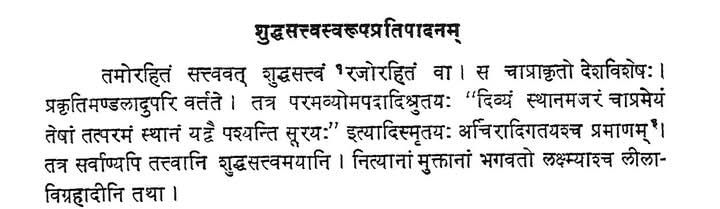
In Nitya Vibhuti, everything is Shuddh Sattva, since Rajas and Tamas don’t exist there. It is evident from the Ved pramanas.

क्षयन्तमस्य रजसः पराके (ऋक्स0 2।6।25।5)
यो अस्याध्यक्षः परमे व्योमन् (ऋक्सं0 8।9।17)

So, Sattva guna is devoid of Rajas and Tamas is Shuddh Sattva. (It is to be noted that Sattva, Rajas and Tamas are not dravyas. They are adravya or guna. Any object in that particular guna is being told Mishra Sattva dravya or Shuddha Sattva dravya.)

Shuddh Sattva is apraakrita (doesn’t belong to 24 tattvas arising from mool prakriti, know as praakrita vikaaraas) and exists in a particular Desha (place), beyond the leela vibhuti. It is known as ‘Parama Vyoma, Parama padam, Ayodhya, Aparaajita, Vaikunth’ etc names in Vedas.

All the achetan tattvas in Nitya Vibhuti possess the quality of Shuddh Sattva. (They are five with names: Parameshthi, Pumaan etc and known as Panch-upanishad tattvas).

Archiraadi gati or Smritis are pramanas for this:

The bodies of Bhagwan, Lakshmi devi, Nityas and Muktas are made of these Shuddha Sattva tattva Panchopanishad dravyaas.

Note:
Shuddha Sattva tattvas are Swayam prakasha dravyas. They are ajada. Thus, they are called Gyaana-swaroopa.

But they are achetanas as they don’t have Swasmai-swayam-prakaasha.

Ramanuja-mata-saara-sangrah part 6

This part discusses a very important concept:

Anupravesha

After Panchikaranam, the creation of sthoola jagat have been done. Till now, the creation is adwaraka. Bhagwan creates the universe directly. Henceforth, the creation is Sadwaraka. Bhagwan creates being Antaryami of Brahma and other jeevatmaas.

An important concept here is ‘Anupravesha’ (following entering). Before creation, jeevatmas had no names and forms and their gyaana was almost zero. They were lying like achit objects. The purpose of creation is to create names and forms and thus provide limbs to jeevatmas to enable them to make efforts for achieving moksham.

For creating names and forms, the anupravesha of Bhagwan is ‘jeeva-dwara’ I.e. making jeevatmas as the medium. He enters a jeevatma and from being an antaryami there, he evolves various forms and give them a name. Whatever exists to have name and form, should be understood to have been developed through ‘jeeva-dwara-anupravesha’ of Bhagwan.

“अनेन जीवेनात्मना
अनुप्रविश्य नामरूपे व्याकरवाणि” । – छान्दोग्योपनिषत् ६-३-२

तत् सृष्ट्वा तदेवानुप्राविशत्‌। तदनुप्रविश्य। सच्च त्यच्चाभवत्। निरुक्तं चानिरुक्तं च। निलयनं चानिलयनं च।विज्ञानं चाविज्ञानं च। सत्यं चानृतं च सत्यमभवत्‌।यदिदं किं च। तत्सत्यमित्याचक्षते।तदप्येष श्लोको भवति॥
-Taittriya Upanishad

Thus, by creating these names and forms, he himself became known by those names and forms. As he is their antaryaami, these all are his shareera. The rivers, the mountains etc are seen as Bhagwan (since they are shareeratayaa (like body) inseparable from Bhagwan (aprithak siddha Visheshana). Even the names and forms a jeevatma gets can be understood as names and forms of Bhagwan, as bhagwan is the antaryami of that jeevatma.

NOTE:

After studying ‘anupravesha’; some may develop the understanding that Bhagwan enters the jeevatma as antaryami after creation. That’s not a correct understanding. The inseparable or aprithak siddh relation means that Bhagwan is always the antaryaami of jeevatmas, without any gap. If for any moment, Bhagwan isn’t the antaryami of jeevatma, the existence of jeevatma itself will get destroyed.

Ramanuja-mata-saara-sangrah part 5

Panchikaranam

In the previous posts, we discussed the srishti krama upto panch-bhootas and also understood how Bhagwaan is both cause and effect of the creation (upaadaana and upaadeya).

Now, let’s understand the important concept of Panchikaranam. Bhagwan mixes the Panch-Bhootas in a definite proportion for the creation of gross srishti.

First he divides the bhootams into half. The other half is again divided into 4 parts. Then the bhootas are mixed together. The half portion of a bhoota is mixed with 1/8th of the other four bhootas.

Thus, 1/2 + 1/8 * 4 = 1.

Thus, all the bhootas have the properties of other bhootas as well, due to panchikaranam. This panchikaranam holds very much importance in the Jagat-Srishti. It will be dealt with later in the book.

Ramanuja-mata-saara-sangrah part 4

Nimitta and Upaadaana kaarana

Now the acharya discusses about Bhagwaan being abhinna-nimittopaadaana kaaranam.
Kaarana: Cause
Kaarya: Product

Both kaarana and Kaarya in jagat-sristhi are Bhagwaan himself.

Kaaranam is two fold: Upaadaana kaaranam (material cause) and Nimitta kaaranam.

The nimitta and upaadaana kaaranam for the creation is Bhagwaan himself.

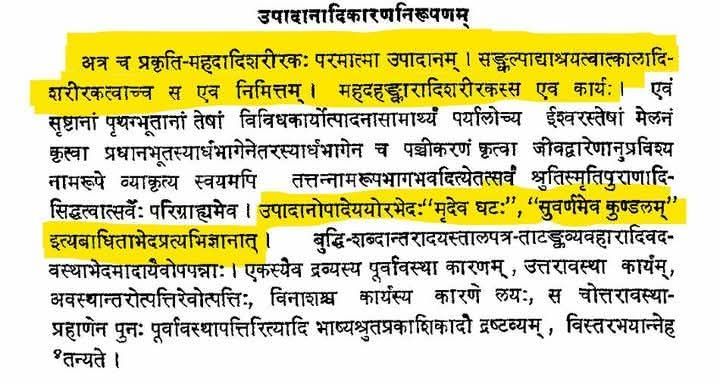
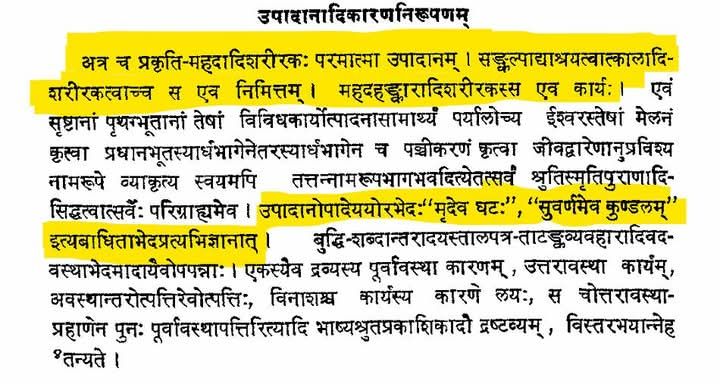
Upaadaana kaaranam is that which transforms into the product. For the product pot, clay is the upaadaana kaaranam or material cause, and potter is the nimitta kaaranam. In Ramanuja-siddhantam, Bhagwan is Upaadaana kaaranam as well as Nimitta Kaaranam the srishti of the universe. Let’s see how:

Upaadaana kaarana‘: Prakriti-Mahadaadi-shareerak Bhagwaan. Bhagwaan who has for its body, Mool Prakriti and Mahat etc.

Nimitta kaarana‘: aashraya of sankalpa and Shareeraka of Kaala is nimitta kaarana. (Bhagwan who possesses sankalpa-shakti and has kaala as his shareera).

Kaarya‘: Mahadaadi-shareeraka Bhagwaan is the kaarya or product. (Bhagwan who has Mahat, Ahankaara etc as his body. Important to note here that Mool-Prakriti is never a kaarya and is only a kaarana).

So, we can see Bhagwaan having as his shareera mool-prakriti etc., is the material cause, and the Bhagwan having as his shareera Mahat etc., is the kaarya or product. Bhagwan with his sankalp shakti is the Nimitta kaarana.

There is no difference between the kaarana and kaarya or, in other words: upaadana (material cause) and upaadeya (product) are one and the same i.e., Bhagwan. Like, Mud and the pot are one and the same. Gold and Golden ornaments are one and the same. On looking at the pot and ornament, we say that it is mud or gold, respectively. There is no hindrance in this identification. Bhagwaan is both Upasana and update i.e. Bhagwan who is a mool-prakriti shareer, transforms into a Mahat etc shareer.

There is only avastha bhedam or difference of stage. Like taala leaves were used to make ear-ornaments. It goes through different stages but at all the stages it is taala leaf only.

Similarly, Before creation and after creation; there is transformation of the shareera of bhagwan from sukhma (subtle) to sthoola (gross).

NOTE

Question can be asked regarding the shareera and shareeri but the doubts will get clear when we discuss how Ramanuja defines shareera.

Another question can be that, “Bhagwan’s shareera is the upaadana kaaranam. Why do you say that Bhagwan is the upaadaana kaaranam?”

These doubts will be cleared when we study ‘aprithak-siddhi-visheshan’. Entire chit and achit are aprithak or inseparable from Bhagwan in both Sukshma avastha and sthoola avastha, as bhagwaan pervades them as shareeri. No any substance can be seen separately from Bhagwan.

Next, we shall discuss Panchikaranam.