Shankar Gita Bhasya and Vishnu-Paratvam

Srimad Bhagwat Gita 6.47

योगिनामपि सर्वेषां मद्गतेनान्तरात्मना।

श्रद्धावान्भजते यो मां स मे युक्ततमो मतः।।6.47।।

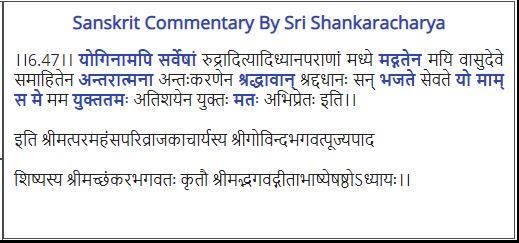
Sanskrit Commentary By Sri Shankaracharya

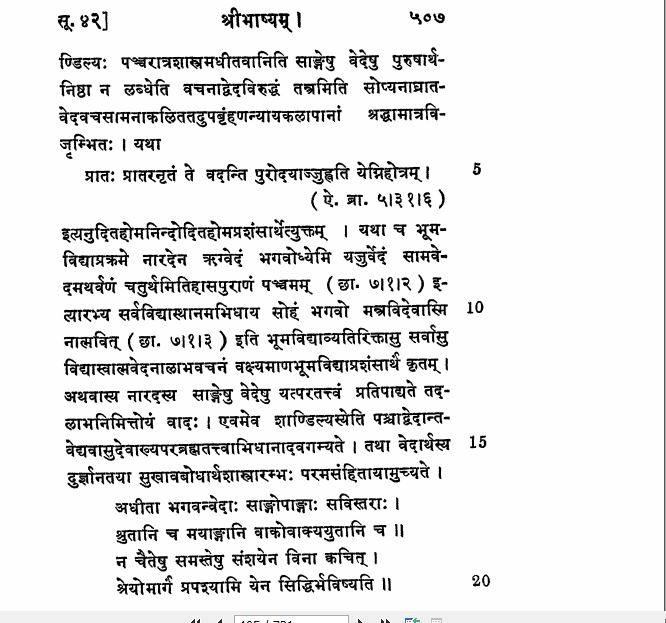
।।6.47।। योगिनामपि सर्वेषां रुद्रादित्यादिध्यानपराणां मध्ये मद्गतेन मयि वासुदेवे समाहितेन अन्तरात्मना अन्तःकरणेन श्रद्धावान् श्रद्दधानः सन् भजते सेवते यो माम् स मे मम युक्ततमः अतिशयेन युक्तः मतः अभिप्रेतः इति।।

इति श्रीमत्परमहंसपरिव्राजकाचार्यस्य श्रीगोविन्दभगवत्पूज्यपाद शिष्यस्य श्रीमच्छंकरभगवतः कृतौ श्रीमद्भगवद्गीताभाष्येषष्ठोऽध्यायः।।

capture

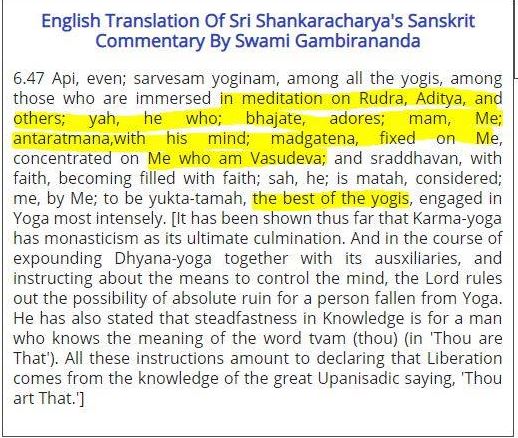
English Translation Of Sri Shankaracharya’s Sanskrit Commentary By Swami Gambirananda

(The yogi who worships me with mindful dedication is alone greater than yogis who worship rudra,sun etc.).

capture

Api, even; sarvesam yoginam, among all the yogis, among those who are immersed in meditation on Rudra, Aditya, and others; yah, he who; bhajate, adores; mam, Me; antaratmana,with his mind; madgatena, fixed on Me, concentrated on Me who am Vasudeva; and sraddhavan, with faith, becoming filled with faith; sah, he; is matah, considered; me, by Me; to be yukta-tamah, the best of the yogis, engaged in Yoga most intensely. [It has been shown thus far that Karma-yoga has monasticism as its ultimate culmination. And in the course of expounding Dhyana-yoga together with its ausxiliaries, and instructing about the means to control the mind, the Lord rules out the possibility of absolute ruin for a person fallen from Yoga. He has also stated that steadfastness in Knowledge is for a man who knows the meaning of the word tvam (thou) (in ‘Thou are That’). All these instructions amount to declaring that Liberation comes from the knowledge of the great Upanisadic saying, ‘Thou art That.’]


BG 9.25

यान्ति देवव्रता देवान् पितृ़न्यान्ति पितृव्रताः।

भूतानि यान्ति भूतेज्या यान्ति मद्याजिनोऽपि माम्।। BG 9.25।।

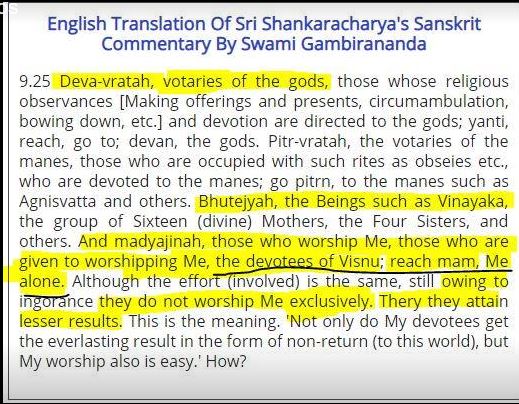
Sanskrit Commentary By Sri Shankaracharya
।।9.25।। –,यान्ति गच्छन्ति देवव्रताः देवेषु व्रतं नियमो भक्तिश्च येषां ते देवव्रताः देवान् यान्ति। पितृ़न् अग्निष्वात्तादीन् यान्ति पितृव्रताः श्राद्धादिक्रियापराः पितृभक्ताः। भूतानि विनायकमातृगणचतुर्भगिन्यादीनि यान्ति भूतेज्याः भूतानां पूजकाः। यान्ति मद्याजिनः मद्यजनशीलाः वैष्णवाः मामेव यान्ति। समाने अपि आयासे मामेव न भजन्ते अज्ञानात्? तेन ते अल्पफलभाजः भवन्ति इत्यर्थः।।न केवलं मद्भक्तानाम् अनावृत्तिलक्षणम् अनन्तफलम्? सुखाराधनश्च अहम्। कथम् –,

capture

Deva worshippers attain devaas, Pitru worshippers attain Pitrus, worshippers of bhutaas attain vinayaka, Maatrugana, Chaturbhagini etc. bhutaas. Worshippers of me, the vaishnavas attain me alone. Worshippers of others, though the efforts being same, because of ignorance of the fact that I am the swami of all yagyas, do not attain me. Hence they get meagre fruits only .This is the meaning.

Adi Shankara here who says those who don’t worship him exclusively, attain lesser results. The Worshippers of Vishnu attain highest.

BG 7.21

यो यो यां यां तनुं भक्तः श्रद्धयार्चितुमिच्छति।

तस्य तस्याचलां श्रद्धां तामेव विदधाम्यहम्।।7.21।।

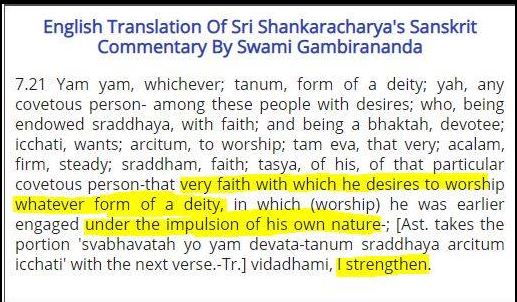
Translation: Whichever devotee seeks to worship with faith whatever form, I make that very faith steadfast.

Sanskrit Commentary By Sri Shankaracharya
यः यः कामी यां यां देवतातनुं श्रद्धया संयुक्तः भक्तश्च सन् अर्चितुंपूजयितुम् इच्छति तस्य तस्य कामिनः अचलां स्थिरां श्रद्धां तामेव विदधामिस्थिरीकरोमि।।ययैव पूर्वं प्रवृत्तः स्वभावतो यः यां देवतातनुं श्रद्धया अर्चितुम् इच्छति
Capture.JPG
BG 7.22
स तया श्रद्धया युक्तस्तस्याराधनमीहते।

लभते च ततः कामान्मयैव विहितान् हि तान्।। BG 7.22।।

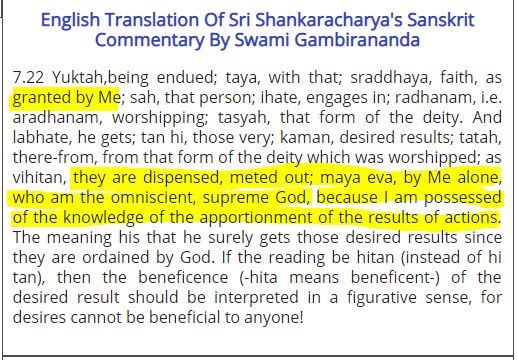
Translation: 7.22 Endowed with that faith, he worships that form and thence gets the objects of his desire, granted in reality by ME ALONE.

Sanskrit Commentary By Sri Shankaracharya

।।7.22।। स तया मद्विहितया श्रद्धया युक्तः सन् तस्याः देवतातन्वाः राधनम्आराधनम् ईहते चेष्टते। लभते च ततः तस्याः आराधितायाः देवतातन्वाः कामान्ईप्सितान् मयैव परमेश्वरेण सर्वज्ञेन कर्मफलविभागज्ञतया विहितान् निर्मितान् तान् हियस्मात् ते भगवता विहिताः कामाः तस्मात् तान् अवश्यं लभते इत्यर्थः। हितान् इति पदच्छेदे हितत्वं कामानामुपचरितं कल्प्यम् न हि कामा हिताः कस्यचित्।।यस्मात् अन्तवत्साधनव्यापारा अविवेकिनः कामिनश्च ते अतः

1.JPG

BG 7.23

अन्तवत्तु फलं तेषां तद्भवत्यल्पमेधसाम्।

देवान्देवयजो यान्ति मद्भक्ता यान्ति मामपि।।7.23।।

Sanskrit Commentary By Sri Shankaracharya
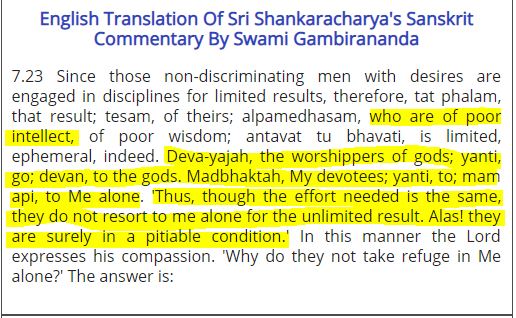
।7.23।। अन्तवत् विनाशि तु फलं तेषां तत् भवति अल्पमेधसां अल्पप्रज्ञानाम्। देवान्देवयजो यान्ति देवान् यजन्त इति देवयजः ते देवान् यान्ति मद्भक्ता यान्ति मामपि। एवं समाने अपि आयासे मामेव न प्रपद्यन्ते अनन्तफलाय अहो खलु कष्टं वर्तन्ते इत्यनुक्रोशं दर्शयति भगवान्।।किंनिमित्तं मामेव न प्रपद्यन्ते इत्युच्यते


English Translation By Swami Adidevananda
7.23 But limited is the fruit gained by these men of small understanding. The worshippers of the gods will go to the gods but My devotees will come to Me.

Capture.JPG

Now, someone may say; what can’t there be more than One Ishwara? Since Shankara himself rules out:

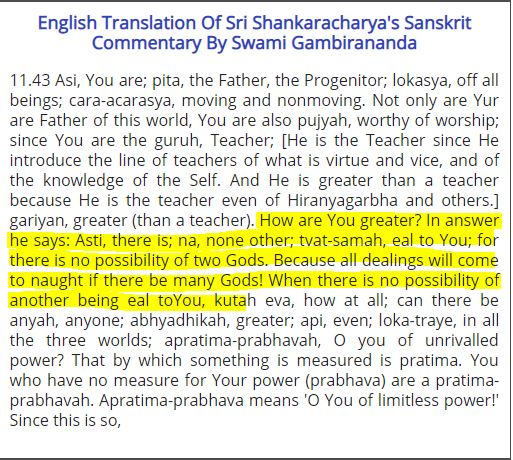
 In BG 11.43 commentry, Adi Shankar rules out that possibility of two Gods and boldly declares that only Krishna is God.

न त्वत्समोऽस्त्यभ्यधिकः कुतोऽन्यो

लोकत्रयेऽप्यप्रतिमप्रभाव।।11.43।।

Sanskrit Commentary By Sri Shankaracharya

 न त्वत्समः त्वत्तुल्यः अस्ति। न हि ईश्वरद्वयं संभवति? अनेकेश्वरत्वे व्यवहारानुपपत्तेः। त्वत्सम एव तावत् अन्यः न संभवति कुतः एव अन्यः अभ्यधिकः स्यात् लोकत्रयेऽपि सर्वस्मिन् अप्रतिमप्रभाव प्रतिमीयते यया सा प्रतिमा? न विद्यते प्रतिमा यस्य तव प्रभावस्य सः त्वम् अप्रतिमप्रभावः? हे अप्रतिमप्रभाव निरतिशयप्रभाव इत्यर्थः।।यतः एवम् –,

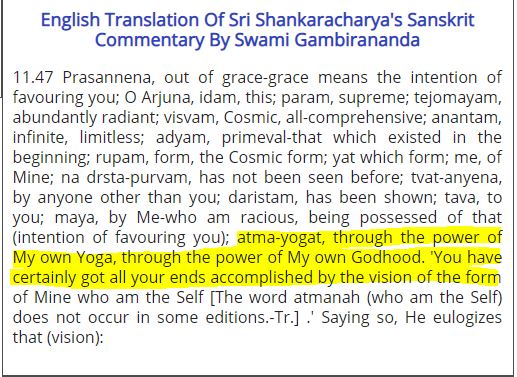
Regarding few Neo-Advaitins who have began claiming the Krishna was in Yoga with Shiva while delivering Gita Discourse, I want to quote the commentry the Adi Shankaracharya here about the word ‘Aatma-Yogat’.

Capture.JPG

श्री भगवानुवाच

मया प्रसन्नेन तवार्जुनेदं रूपं परं दर्शितम आत्मयोगात्।

तेजोमयं विश्वमनन्तमाद्यं यन्मे त्वदन्येन न दृष्टपूर्वम्।।11.47

English Translation By Swami Adidevananda

11.47 The Lord said By My grace, O Arjuna this Supreme Form, luminous, universal, infinite, primal, never seen before by anyone but you, has been revealed to you through My own free will.

captureCapture.JPG


Shankar and Vaishnavism

1.
In Diwali special publication of” Ananda vikatan” weekly magazine in the year 1971, an article appeared in which it was written that Sri Adi Shankaracharya established “shan matam”, i.e. worship of six Dieties meaning by resorting to any one of them one can realise the ultimate truth. Accordingly, one can worship Ganapati (Gaanaapatyam), kaartikeya (kaumaaram), Shiva (shaivam), Shakti (Shaktam), Vishnu (Vaishnavism) & Sun (Sauram).
Sri Krishna swamy Iyengar, author of monthly magazine “Srivaishnava sudarsanam” & publisher of many research books & Srivaishnava Sampradaya books gave a fitting reply refuring this claim of Adi Shankara being the establisher of Shan Mataas. This reply was published as a book named “Shankara & vaishnavism” in Tamil. I would like to present some excerpts from the book for the benefit fit of those who cannot read Tamil.


Thanking @Vasan Srirangachari swamijee for this priceless translation out of his nirhaituk kripa:

To download in pdf format click hereShankar and Vaishnavism

2.
There is no basis for the claim that Adi Shankara established six worships except in works like shankara vijayam which were composed within 500 years. There is no basis for this in the works of previous advaitacharyas like Adi shankara & other great acharyas. In works of great acharyas shat darsana (six philosophies) considered were Boudhdham, Vaisheshikam, Naiyaayikam, jainism, kapila saankhyam & Patanjalu’s yogam. Since Gaanaapathyam etc shan matams are not found in any works prior to 500 years, it is clear such imagination has occurred within last 500 years. From the works of Adi Shankara which are accepted by all researchers like his commentaries on Brahma sutras, Bhagavad Gita, Upanishads & Vishnu sahasranaam, it is quite evident that acharya did not establish these six worships.

images.jpg
Let us see some of the evidences for this from his commentarys.

3
While commentating on a sentence from Brihad aaranyakopanishad, Shankara writes “यः- ईदृगीश्र्वरो नारायणाख्यः,पृथिवीम्-पृथिवीदेवताम् ,यमयति-नियमयति स्वव्यापारे, अंतरः-अभ्यंतरस्थिष्टन्,एष ते आत्मा -ते तव मम च सर्वभूतानाम् च इत्युपलक्षणार्थमेतद्”
(Thus Ishwara whose name is Narayana controls the earth god in his activities by staying within him. That ishwara is atmaa for you, me & all).

Thus though in the vedic text name of almighty is not mentioned, acharya writes that his name is Narayana. While commenting thus acharya has the sentence of Subaalopanishad in his mind which says “यस्य पृथिवी शरीरम् – दिव्यो देव एको नारायणः”. Thus Shankara has clearly shown that Narayana is that controlling atma or GOD.

4
For this bhashya of Shankara,following is the vaartika (meaning) given by traditional advaitaacharya:
कृष्ण द्वैपायनो व्यासो वेदात्मा ध्वांत हानिकृत्।
प्राहेममेव बहुशः प्राणीनाम् हित काम्यया।।
नारायणः परोSव्यक्तात् अंडमव्यक्तसंभवम्।
अंडस्यान्तस्त्विमे लोकाः सप्तद्वीपा च मेदिनी।।
तस्मै नमोSस्तु देवाय निर्गुणाय गुणात्मने।
नारायणाय विश्र्वाय देवानम् परमात्मने।।
एतमेव समुद्दिष्य मंत्रो नारायणस्तथा।
वेदविद्भिर् महाप्राग्ज्ञैः पुरुषैः विनियुज्यते।।
(Krishnadvaipaayan named vyaasa who removes the darkness of ignorance himself by being embodiment of vedas for the sake of redemption of jivas has said this many times; Narayana is beyond the moola prakruti called avyaktam; and from that avyaktam, andam (a group of 14 lokaas) came into existence. In that andam are these planets (lokaahaa) & this earth with seven islands (continents). Namaskaaram to that Narayana who is attributeless & also with attributes & who is paramatma to all devas. The great (प्रांग्ज्ञैः) knowers of vedas chant the (Taittreeya) Narayana mantras for Him alone).
Thus the vaartikacharya says that shankara accepted Narayana alone as supreme GOD following the path shown by vyasa.
Age-old advaita teekacharya Anandagiri who composed teeka (detail explaination) for this vaartika has written as below:
“न केवलम् पुराणागमाभ्यामेव सोSधिगम्यते। किन्तु श्रुत्यक्षरैरपीत्याह-एतमेवेति।” सहत्रषीर्शम देवम् विश्र्वाक्षम् विश्र्वशंभुवम् ।विश्र्वम् नारायणम् देवमक्षरम् परमं प्रभुम्” इत्यादिः मंत्रो वेदार्थविद्भिः अंतर्यामिणमुद्दिष्य विनियुक्तः।अतः स वैदिक इत्यर्थः।।”
(Narayana is not only to be known from puranas & aagamaas but also He is known from vedas.This is expressed in the shloka एतमेव (in vaartikaa).The Narayana anuvaaka mantra which begins with “sahasra sheersham devam” is said by knowers of vedas for antaryami.Hence Narayana is vedapratipadya antaryami only is the meaning.)”. Thus the teekaacharya established that Narayana alone is the param supreme tatva of vedas.

5
In Chaandogya upanishad there is sentence which starts with “brahma वा इदमgra आसीत्” lists the creatures created by brahma. In that while commentating on sentance “इन्द्रः वरुणः सोमो rudraha”, Sri Shankara says “इन्द्रःदेवानां राजा….Rudraha पशूनाम्”. By wriring so ,Shankara shows that rudra who is pasupati is a created being,

While Shankar completely refutes Sakhy, nyay, and Shaiv and shakt agmas, he pauses to accept aradhana and Narayan partvam of Pancharatra.

6
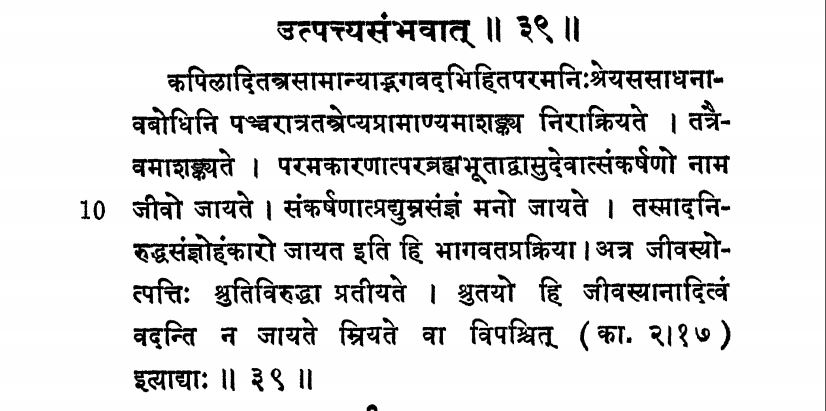
While commentating on brahma sutra “उत्पत्यसम्भवात्” (2-2-4) which discusses about pancharatra agama ,Sri Shankara writes “तत्र यत्तावदुच्यते योSसौ नारायणः परोSव्यक्तात् प्रसिद्धः परमात्मा सर्वात्मा…इति तन्न निराक्रियते।….यद्यपि तस्य भगवतोSभिगमनादि लक्षण माराधनमजस्रमनन्यचित्ततयाभिप्रेयते तदपि न प्रतिषिद्धयते।।”

(I do not refute the statements of Pancharaatris that Narayana is beyond avyakata, He is well known paramatma, He is sarvaatmaa. I also do not reject their practice of worshipping Bhagavan by precedures of abhigamanam etc. without the mind thinking about any other (deity)”.

Here Adi Shankara has shown that Narayana alone is Paramaatma & that it is his opinion too to worship Narayana without thinking about other devatas as stated in Pancharaatra agama.

7

In Gita bhashyam, Sri Shankara writes the mangala shloka “नारायणः परोSव्यक्तात् अंडमव्यक्तसंभवम्। अण्डस्यांतस्त्विमे लोकाः सप्तद्वीपा च मेदिनी।।”

(as quoted by vaartikaacharya shown in post 4) which shows Narayana as cause for all creations.
Then in preface he writes “आदि कर्ता नारायणाख्यो विष्णुः भौमस्य Braahmanaha Braahmanasya च अभिरक्षणार्थं देवक्यां वसुदेवादंशेन कृष्णः किल संबभुव”
(The first cause of universe Vishnu who is called Narayana ,in order to protect braahmanaas & braahmanatvam was born as Krishna to Devaki & Vasudeva) thus upholding the paratatvam of Vishnu.

8
In Gita bhashyam while commentating on many shlokas ,Adi Shankara has shown that Narayana alone is Paramaatmaa.Some of the shloka bhasyam are as under:
In bhashya of shloka (6-47), acharya says “योगीनामपि सर्वेशां- रुद्रादित्यादिपराणां, मत्गतेन-मयि वासुदेवे समाहितेन,अंतरात्मना-अंतःकरणेन, श्रद्धावान्-श्रद्धधानः सन्, भजते-सेवते, यो माम् स मे-मम,युक्ततमः-अतिशयेन युक्तः, मतः-आभिप्रेतः इति।।”(The yogi who worships me with mindful dedication is alone greater than yogis who worship rudra,sun etc.).

9
On the shloka of Gita (7-23), Sri Shankara says
“अंतवत्-विनाशी तु फलं तेषां तत् भवति अल्पमेधसां अल्प प्रज्ञानां।देवान् यजन्त इति देवयजः ते देवान् यान्ति मद्भक्ताः यान्ति मामपि।एवं समाने अपि आयासे मामेव न प्रतिपद्यन्ते अनंतफलाय,अहो खलु कष्टतरं वर्त्तते इत्यनुक्रोषं दर्शयति भगवान्।।”

(People worshipping other gods being of meagre intellect receive only meagre fruits by worshipping them. Worshippers of other gods are called devyajaha. They attain those gods. My devotees attain me. Thus though the worshippings efforts being same these people do not worship me for the sake of limitless eternal fruits. Alas!what a tragedy! thus Bhagvaan expresses His sorrow.)

10
On the shloka of Gita (9-23 to 25) Sri Shankara says

“…येSपि…..अन्यासू देवतासू भक्ताः संतः….पूजयन्ति….तेSपि मामेव यजन्ति अविधिपूर्वकं।अविधिः अज्ञानं तत्पूर्वकं यजन्ते इत्यर्थः।।देवvrataahaa देवान् यान्ति पित्रून् यान्ति पितृvrataahaa…भूतानि विनायक मातृगण चतुर्भगिन्यादीन् यान्ति भूतेज्याः -भूतानाः पूजकाः…मद्याजिनः -मद्यजनशीला वैष्णवाः मां एव यान्ति।समाने अपि आयासे मामेव न भजन्ते अज्ञानात्।तेन ते अल्पफलभाजः भवन्ति इत्यर्थः।।”

(Those who worship other gods they too worship me alone but with ignorance. Deva worshippers attain devaas, Pitru worshippers attain Pitrus, worshippers of bhutaas attain vinayaka, Maatrugana, Chaturbhagini etc. bhutaas. Worshippers of me, the vaishnavas attain me alone. Worshippers of others, though the efforts being same, because of ignorance of the fact that I am the swami of all yagyas, do not attain me. Hence they get meagre fruits only .This is the meaning.).

Thus acharya has strongly expressed his views like a stone inscription.

11
In Brahmasutra bhashyam for Yaavadadhikaaraadhikaranam Sri Shankara writes “सनत्कुमारोSपि brahmana एव मानसः पुत्रः स्वयं रुद्राय वरप्रदानात् स्कन्दत्वेन प्रादुर्बभूव”

Meaning: skanda or kartikeya was an incarnation of Sanatkumar & not of Paramatma or Param Ishwara.

Veda says “तमसः पारं दर्शयति भगवान् सनत्कुमारः तं स्कन्द इत्याचक्षते”। keeping this in mind Sri Shankara gave such a bhashyam .It is popular in the puranas that Sanatkumara was son of Bramha. His jivatvam & his being vibhuti of Bhagavan are too known in puraanaas. By the Bhagavad vakyam “सेनानीनामहं स्कन्दः” in Gita too, vibhuti roopam of skanda is established.

Hence skanda is said to be aadhikaarika purusha in the above mentioned adhikaranam too of Brahma sutra, kaumaara matam is refuted.

12

Veda vakyas like “न तत्र सूर्यो भाति”, “भीषोदेति सूर्यः”, “य आदित्ये तिष्ठन्नादित्यादन्तरः”
(“There the sun does not shine”,”By whose fear sun rises”, “One who is in the sun ..”) establish jivatvam of sun. Sri Shankara too in many places has mentioned aadhikaarika purushatvam of sun.
Hence Sri Shankara established jivatvam of shiva, shakti, Vinayaka, skanda & surya etc by his own sentences. He has roared about the paratvam of Narayana in many places in his bhashyas.
He has never ever attributed jivatvam or Aadhikaarika purushatvam to Vishnu even in light vein.Hence religion of Adi Shankara is vaishnavam only.

13
It can be asked let Sri Shankara uphold Vishnu but what is the harm in accepting paratva for other gods? In that case it will result in many ishwaras .Sri Shankara while commentating on Gita shloka beginning with “न त्वत्समोस्त्यभ्यधिकः कुतोSन्य; states that
“न च त्वत्समः त्वत्तुल्यः अन्यः अस्ति न हि ईश्र्वरत्वं संभवति अनेकेश्र्वरत्वे व्यवहारानुपपत्तेः।त्वत्सम एव तावदन्यो न संभवति कुत एव अन्यः अभ्यधिकः स्यात्”।
(There is no one equal to you because otherwise if there are more than one ishwara, jagat vyavahara will be in chaos). Thus acharya having refuted the existence of more then one ishwara established Vasudava as the only Param Ishwara who is devoid of none equal or above Him.

14
While commentating on Vishnu sahasranaam explaining the naam “संप्रमर्दन”, Sri Shankara writes “सम्यक् प्रमर्दयति रुद्रकालादिभिर्विभूतिरिति संप्रमर्दनः”
(The one who destroys the jagat through His vibhutis Rudra,Kala etc..). Thus acharya has expressed that Rudra is one of the vibhuti of Bhagavan & not param Ishwara.

15
Again while explaining the name “भूत महेश्र्वर”, Sri Shankara writes “भूतेन सत्येन स एव परमो महानीश्र्वर इति वा भूतमहेश्र्वर”. Thus acharya intends that Vishnu is really Maheshwar while Maheshwaratam of siva etc are aupachaarikam means they are called maheshwar due to respect. While commentating on “महेज्य”, acharya says “सर्वासु देवतासु यष्टव्यासु प्रकर्षेण यष्टव्यो मोक्षफलदातृत्वादिति महेज्य” meaning Vishnu worship is greater than worship of others, as He is the giver of moksham.

16

Sri Shankara writes while commentating on “यावदधिकाराधिकरणं in his Brahmasutra bhashyam that “यथासौ भगवान् सविता सहस्त्रयुगपर्यन्तं जगतोSधिकारं चरित्वा तादवसाने उदयास्तमयवर्जितं कैवल्यं आनुभवति”. (Savita (sun god) after completing his tenure of thousand yuga experiences kaivalyam devoid of rise & set).
Here too Sri Shankara says that sun god too is a adhikaarika purusha & not param Ishwara thus refuting Soura matam in which sun god is held as supreme ishwara,

17
While commentating on mantra “तद् विष्णोः परमं पदं” (3-9), acharys writes
“तद् विष्णोः-व्यापन शीलस्य Brahmanaः परमात्मनो वासुदेवख्यस्य, परमं -उत्कृष्ठं, पदं-स्थानं”.
Since he writes Vasudeva for the word Vishnu & since for word padam instead of writing swaroopam, he writes staanam (abode), acharya has considered here attainment of abode of saguna brahmam & he considers Vishnu alone to be saguna brahmam.
Even whenever acharya gives example of symbolic worship, he mentions “Saalagraame वैष्णु दृष्ठिः”, “यथा प्रतिमादौ विष्ण्वादिबुद्धिः” & not “लिंगे शिवदृष्ठिः”.Thus acharya’s contemplation is always on Bhagavan Narayana,

18
Sri Shankara in Gita bhashya at many places writes “परं देवं नारायणं” (9-22), “वासुदेवाख्यं परbrahma भूतं” (15-3) meaning Narayana is parabrahma, paramatma but never ever described Shiva etc. by such words.On the contrary mentions that these gods are created by saguna brahma Narayana.

19
Generally present day advaitins say Bramha, Vishnu & Rudra are same & thet there is no difference between them. Such a thinking is proved to be wrong by Sri Shankara in his bhashyas.

Gita bhashya shloka (8-16 “किम् पुनः त्वत्तः अन्यत् प्राप्ताः पुनः आवर्तन्ते इति? उच्यते-आ bramhaभुवनात्, -bramhaभुवनं bramha लोक इत्यर्थः,आ bramhaभुवनात्- सह bramha लोकेन लोकाः सर्वे पुनरावर्तिनः-पुनरावर्तिन स्वभावाः.,,,मां एकं उपेत्य तु कौन्तेय पुनर्जन्म पुनरुत्पत्तिः न वैद्यते”

(People who attain others & not yourself, do they return to this world? listen answer to this. Bramhabhuvanam means bramha’s place. All places upto bramhaloka have the nature of return to this world.But those who attain me alone do not return). Here acharya writes that krishna shows the vast difference between bramha & Himself.
Gita shloka (11-37)
“Bramhan:-हिरण्यगर्भस्यापि आदिकर्ता-कारणं”. Here acharya writes that arjuna says krishna is the cause of bramha too.
Gita shloka(4-16)Sri Shankara writes the meaning of “भूतानां ईश्र्वरः”as “bramhaaदिस्तंभपर्यन्तानां ईश्र्वरः”(One who has nature of controlling everything from bramha to tiny grass).Here acharya shows that among the controlled jivas, bramha is the first & Krishna is the natural controller of him.

20
While commentating on names” भूतकृत् भ्तभृत्”, acharya writes
“रजोगुणं समाश्रित्य विरिंचरुपेण भूतानि करोति इति भूतकृत्।तमोगुणमधिष्ठाय रुद्रात्मना कृन्तति हिनस्तीति वा भूतकृत्।सत्वगुणमधिष्ठाय भूतानि बिभर्ति पाति धारयति पोषयति इति वा भूतभृत्।”

(By attaining rajo guna in the form of bramha creates & hence is called bhootakrut,By attaining tami guna in the form of rudra destroys & hence also bhootakrut.By attaining satva guna He protects the creations ,holds them & make them flourish & hence He is called bhootabrut”.
Sri Shankara who wrote that by having forms of raajasik Bramha & taamasik Rudra, he could have writtem by taking form of saatvik Vishnu he protects but instead wrote” by attaining satva guna, he protects”. Thus acharya intends that Vishnu alone does creation & dissolution through Bramha & Rudra & Himself directly does the protection .Thus acharya ,having attributed greater satva guna to Vishnu & lower rajasik guna to Bramha & lowest taamasik guna to Rudra ,accepts difference among the trimurtis in the vyavahaarika state.
Acharya has explicitly accepted Vishnu to be saguna bramha, & first place among jivas to Bramha & second place to Rudra.

21

while commentating on the word “सर्वभूतांतरात्मा” of Mundakopanishad (2-4),Sri Shankara writes

“एषदेवो विष्णुरनंतः प्रथमशरीरि त्रेलोक्यदेहोपाधिः सर्वेषां भूतानां आंतरात्मा”
(This dev who is known as Vishnu & Anantha, the foremost among those having body & also one who has the universe as His body, is antaratma of everyone). Thus in saguna tatva, first place is given to Vishnu by acharya.
Thus acharya has not considered someone above Vishnu which is evident from his prasthanatraya bhashya & saharanaama bhashya & acharya has quoted from satvika puranas like Vishnu purana & not touched the taamasa purana vaakyaas which abuse Vishnu.

22
Sri Shankara while commentating on first kaarikaa of Maandukyopanishad writes “ईश्र्वरो यो नारायणाख्यः” (Ishwara who is known as Narayana).
In bhashya of Paanchataatra adhikarana of brahmasutra ,Sri Shankara that Narayana is very much known in shruti ,smriti as Ishwara.(“श्रुतिस्मृत्योरीश्र्वरप्रणिधानस्य प्रसिद्धत्वात्”). In Gita bhashya too writes “मयि देवे परमेश्र्वरे सर्वज्ञे सर्वात्मनि वासुदेवे”(3-30) (In me who is pram ishwara ,omniscient sarvaatmaa Vasudeva), “परमेश्र्वरे विष्णुं”(8-5) (In parameshara who is Vishnu), “मयि -वासुदेवे परमेश्वरे”(4-35), “ईश्र्वरस्य विष्णोः”(7-14),”परमेश्र्वरं नारायणं”(7-15),”रुपं ऐश्र्वरं-वैष्णव रुपं”(11-3), “विष्णोः परमेश्र्वरस्य”(12-20), “ईश्र्वरस्य विष्णोः”(13-2), “मयि परमेश्र्वरे सर्वज्ञे परमगुरौ वासुदेवे”(13-18), “परमश्चासौ ईश्र्वरश्च ईशनशीलश्च इति परमेश्र्वरः”(13-27), “ईश्र्वरं नारायणं”(14-26), “भगवतः ईश्र्वरस्य नारायणाख्यस्य”(15-16), “ईश्र्वरः-सर्वज्ञः नारायणाख्यः ईशनशीलः”(15-17), “ईश्र्वरः-ईशनशीलः”(18-61).
While commentating on names like ईशान, ईश्र्वर, परमेश्र्वर in Vishnu saharanaama bhashya, Sri Shankara shows that meaning of common nouns like ishwara,maheshwara ,ishaana, parameshwara etc. are applicable to Narayana alone, But while commentating on the word Narayana ,he writes “नारायणाख्यः,वासुदेवाख्यः etc. considering them to be proper nouns. But acharya has never indicated in all of his works, supreme as “ईश्र्वराख्यः”, “परमेश्र्वराख्यः”, “ईशानाख्यः”, “शिवाख्यः”, “महेश्र्वराख्यः”.Thus it can be concluded from Sri Shankara’s prasthana traya & Sahasranaam bhasya that acharya held Narayana alone as Saguna Brahman & other gods as jivas being controlled by HIM.

Now let us find out the reasons for present non praamaanika advaitins not accepting Vishnu as supreme in the next post.

23

Five hundred ago advaitins had accepted th Vishnu paratvam which is crystal clear from the works of advatins.During the period of Appaiya Deekshit within 500 years ago, severe endeavour was undertaken to establish shiva paratvam in the basis of vedas. During his period this attempt was vigorously refuted by Srivaishnav acharyas like Mahaacharya & dvaitaacharyas. Having hurt by this defeat, he & his followers composed many false works. Those were:

1. They composed some upanishads holding shiva as param & claimed upanishads are 108.

2. They made the advaitins to apply bhasma tiryak pundaram who were applying urdhva pundram with gopi chandan (today too we can see some of the advaitins wearing this urdhva pundram).

3. They composed Srikandabhashyam on brahma sutras claiming shaiva vishishtaadvaitam. No one follows this sampradayam now.

4. Stotras on shiva, shakti, Ganapati, kartikeya etc.were composed in the name of Adi Shankara. These stotras have not be quoted by any advaitacharya before 500 years.

5. They composed “Shankara vijayam” in which it is mentioned that sri Shankara defeated Neelakanda (so that people will believe that Srikanda bhashyam is ancient) & that Sri Shankara established “shan मत”(so that it can be believed that it is ancient).

24
Shakti is Shiva’s wife, Kartikeya & Ganapati are Shiva’s sons. Shiva & Ganapati are jivas created by Narayana as per Sri Shankara is shown in the previous posts.”भीषोदेति सूर्यः; (the sun rises being afraid of lord), Such vedic sentences declares sun to be a jiva who is afraid of Supreme .Those who worship this sun gets meagre results says Shankara .This is also shown is shown before.
Even children will appreciate the fact that the Sri Shankara would not have established Shaivam & Souram which claim supremacy for these gods .When it is shown that Sri Shankara could not have established shaivism where Shiva is supreme, it is but natural that Shankara could not have established shaaktam, Ganapathyam & kaumaram for his wife, & both the sons where they are considered supreme. The prasthana traya bhashyas which were done by Sri Shankara for establishing the tatva (Truth), nowhere has mentioned Shiva as supreme Godhead. On the contrary ,he has roared in hundreds of places in his bhashya that Narayana alone is Supreme GODhead who creates, sustains & destroys these gods.
If one says that in the stotras of these gods, he has claimed supremacy for them, the reply is since these stotras were not quoted anywhere by any advaitaacharya before the period of Appaiya deekshit, it is evident that these were composed by advaitins in last 500years. Just by the statement found at the end of these stotras that they are composed by shankaracharya, how can one infer that they are Sri Shankara’s compositions? They could have been composed by pontiffs of shankara muttas established in name of Sri Adi Shankara. Hence how can say that Sri Shankara established six worships, (षण् मत)?
25

If it is said that in biographical works like ” Shankara Vijayam” ,it is claimed that Adi Shankara established the “षण् मताः”(six religious sects),reply to this is that those works were composed within 500 years as per research scholars .Adi Shankara’s period was many centuries earlier than these works.How to accept against his authentic works that he established these six religious sects?”Shankara Vijayam” mentions about Udayana,Bhaskara,Abhinabhinavagupta whose periods were after Adi Shankara’s period & it also mentions Sri Harsha who existed after even Sri Ramanuja .Hence it can be inferred that the work is not authentic .It is unknown anywhere that there can be a sect for a male claiming supremacy for him & at the same time sects for his wife,& his two sons where they too are claimed to be supreme GODheads.If one says that such sects were established by one person,will it not become laughing stock?The shaiva sidhdhaant claims that Shiva took the forms of Ganapathy & Skanda.Then how can there be seperate sects like Ganaapathyam & Kaumaaram?If it is so,then Vishnu’s each incarnation should be called as seperate sects.

26

Thinking that if a lie is repeatedly said ,it will be accepted as truth,some advaitins claim that Sri Adi Shankara composed many stotras on gods like Shiva,Shakti,Ganapathy ,Skanda & that he established the six religious sects.By applying one bramhaastra which will prove the unauthenticity of these claims,let us conclude this article.
In the popular work “Naraayaneeyam” composed by 16Th century advaiti Sri Narayana bhattadri,while proving the Narayana supremacy ,has written which is as follows:
“श्री शंकरोSपि भगवान् सकलेषु तावत्
त्वामेव मानयति यो न हि पक्षपाती।
त्वन्निष्टमेव स हि नामसहस्त्रकादी
व्याख्यातभगवत्स्तुतिपरश्र्च गतिं गतोंते।।”
( Adi Shankara who is impartial to Shiva & Vishnu has regarded you,Narayana , as Saguna brahma in all of his works.He has commentated on works like Sahasranaam(Gita,upanishads,brahmasutra) that these works aim at your supremacy.At the end,Sri Shankara left for Nirvana by composing praise for you alone)”.
The sanskrit commentary on this shloka by an advaitin named Deshamangalavarya is as follows:
“किंच।श्रीशंकरः भगवत्पादाचार्यः।त्न्निष्टं विष्णुपरं।नामसहस्त्रकादीति।आदी शब्देन श्री गीतादी गृह्यते।सोSपि तदुभयमपि शिवपरतया व्याख्यातुं शक्यमपि विष्णुपरत्यैव व्याख्यातवान्।अंते च भवस्तुतिपरः श्रीमत्पादादीकेशस्तुतिं कुर्वन् गतिं
मोक्षं गतः,न तु शिवस्तुतिपरः।।”
(Sri Shankara known as Bhagavadpaadaacharya wrote commentaries on works like Sahasranama,Gita,(upanishads,brahmasutra)claiming your supremacy, Though he could have commentated on these works claiming supremacy for Shiva (like Appaiya deekshit who did it with great difficulty),he did them claiming Vishnu supremacy .In end too, he attained moksha singing your praise in SriVishnupaadaadikesha stotra & not by singing praise of Shiva,). Thus Narayana bhattadri says that Sri Adishankara roared Vishnu to be saguna brahmam in all of his works & that without indulging in praise of Shiva, he attained moksha by singing praise of Vishnu alone.
Hence from all these proofs, it is evident that the stotras claimed to be composed by Adi Shankara on gods like Shiva etc. & stories like he established six sect are imaginations done within last 500 years.

Thus the translation work by Srinivasadasan of excerpts from the book “Shankarum Vainavamum” written by Sri Ubhaya Vedantacharya S.Krishnaswamy Iyengar is completed. This translation consists of 26 posts .This number indicates 26 tatvas of Srivaishnava sidhdhantam(24 prakriti tatvas,jivatma tatva & Paramatma tatva) & if one considers the one subject discussed here it indicates one tatva (parabrahma) of advaita sidhdhanta.
we are all grateful to the author of the book Sri Krishna swamy iyengar for bringing out the truth.I am grateful to all the readers of this translation as their encouraging response inspired me to complete this work,I am grateful to Sri Raghavendra rao swamy who asked me to write the translation & post it in Traditional Sanatana dharma group of Facebook.
Jai Sri Ramanuja.

adhishankara-bajagovindam


Brahm Sutra 1.1.1 part 1

Some previous articles which may be helpful to study prior to Brahm-Sutras:

  1. Philosophies of India
  2. Is Vedas mutually contradictory?
  3. Advait, Dvait and Vishishtadvait
  4. तत्त्व त्रय (सारांश)
  5. अर्थ-पंचक , श्री वैष्णव संप्रदाय का आधार

Sri Ramanuja has bequeathed three works on the Brahma-Sutra: the Vedanta-Sara, Vedanta-Dipa, and the Sri-Bhashya. The first work merely enunciates the meaning of the Sutras. The second goes beyond this summary of conclusions and indicates the dialectical framework. The third is the fullest and all-sufficient commentary. Pious tradition records that the Goddess Sarasvati was so charmed by it that she blessed it with the prefix ‘Sri’. He did advance his special philosophical point of view in his early work, the Vedarthasangraha in a brilliant and spirited manner.

In his Mangala sloka in Sri Bhashya, the great Vaishnava acharya Sri Ramanuja declares in no uncertain terms the resplendent glory of Lord Sriman Narayana.

अखिल भुवन जन्म स्थेम भङ्गादि लीले
विनत विविध भुत व्रात रक्षैक दिक्षे |
श्रुति शिरसि विदीप्ते ब्रह्मणि श्रीनिवासे
भवतु मम परस्मिन् शेमुषि भक्ति रूपा ||

May my intellect assume the form of Bhakti in Srinivasa, the highest Reality, revealed in the Vedanta as the Lord who creates, protects and destroys the whole universe with sportive ease and who has taken a vow to protects all creatures who seek him.


अखिल भुवन जन्म स्थेम भङ्गादि लीले 

The Supreme Brahman, as a matter of play /recreation / fun is involved in the creation, sustenance and dissolution of the all Universes.

विनत विविध भुत व्रात रक्षैक दिक्षे |

The Supreme Brahman, has taken up a unique and singular vow to protect all types of beings who surrender unto him.

श्रुति शिरसि विदीप्ते ब्रह्मणि श्रीनिवासे

The Supreme Brahman, is well explained by all the Upanishads is the residing place of Sri. i.e. Brahman is that who is the husband of Sri (Mahalakshmi).

भवतु मम परस्मिन् शेमुषि भक्ति रूपा ||

May he shower ‘shemushi bhakti’ to me.

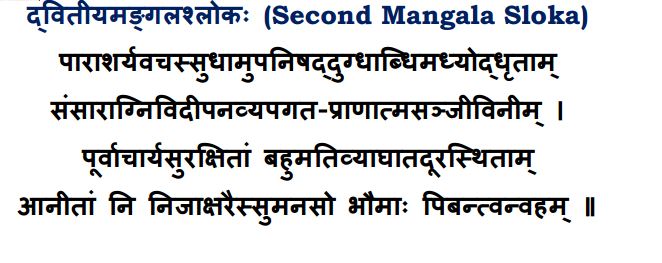
2nd Mangal Shloka of Sri-Bhasya

2nd mangal shloka.JPG

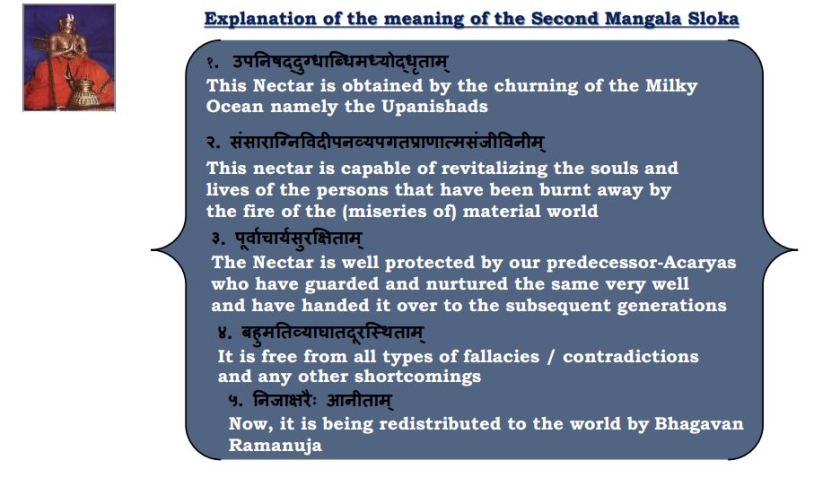
Meaning:  Let all the beings in this earth consume the nectar which is in the form of the words of Sage Badarayana (son of Sage Parashara).  This Nectar is obtained by the churning of the Milky Ocean namely the Upanishads and well protected by Purv-Acharyas. Now it is to be re-distributed to the world by me.

NOTE:

Ramanuj Proudly proclaims that he is not postulating any new concept or his own philosophy. The Vishishtadvait doctrine can be traced back to time immemorial. Bhagwat Bodhyayan (desciple of Ved-Vyaas), wrote commentry on Vedant-sutra after Ved-Vyaas compiled it. He is just re-destributing it.


2nd mangal shloka.JPG


In the introduction to Sri Bhashya, Sri Ramanuja says:  

Bhagavad Bhodayana kritam vistirnam Brahma-sutra – vrttim purvacharyah samskipuhtan-mata-anusarena sutraksarani vyakhyasyante

‘The previous Masters have abridged (purvacharyah samskipuh) the detailed commentary on Brahma sutra which had been composed by Bhagavad Bodhayana (Bhagavad Bhodayana kritam vistirnam Brahma-sutra – vrttim). The words of the Sutra will be explained (sutraksarani vyakhyasyante) in accordance with their views and traditions (tan-mata-anusarena).


भगवद-बोधायन-टङ्क-द्रमिड-गुहदेव-कपर्दि-भारुचि-प्रभृत्यविगीत- शिष्टपरिगृहीत-पुरातनवेदवेदान्त-व्याख्यान- सुव्यक्तार्थ-श्रुतिनिकरनिदर्शितो ‘यं पन्थाः । — Vedarthasangraha, par. 130.

Bhagavad Bodhayana- Tanaka- Dramida- Guhadeva- Kapardi – Baruchi – prabhrty- avigita-sista- parigrahita-puratana – Veda-Vedanta- vyakhyana-suvyaktar-thasrutinikaranidarshito-yam- panthah I

This path is declared in many Srutis, whose meaning has been made very clear by the ancient commentators on Veda and Vedanta, accepted by Masters such as Bhagavad Bodhayana- Tanaka- Dramida- Guhadeva- Kapardi – Baruchi.

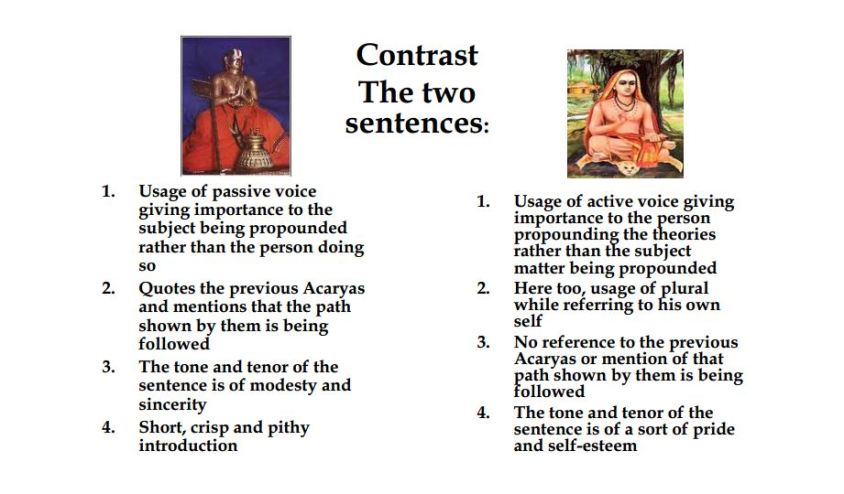
Comparing with the introduction by Aadi-Shankar

“यथा च अयमअर्थो वेदान्तानां तथा वयंस्यां शारीरकमीमांसायां प्रदशानयष्यामैः”

contrast

Mangal Shloka of Vedarth-Sangrah:

अशेष चिदचिद् वस्तु शेषिणे शेषशायिने ।

निर्मलानन्त कल्याण निधये विष्णवे नमः ।।

I offer adoration to Vishnu, the all-pervading Supreme Being, who is the overlord of all
sentient and non-sentient entities, who reposes on the primordial Shesa, who is pure
and infinite and in whom abound blissful perfections.

Lord Viṣṇu is the Brahman and he is characterized in three ways:

[i] aśeṣa-ciḍ-acid-vastu-śeṣin

He is the Master of all entities, without exception. all sentient and non-sentient entities are subordinate to a Higher Principle. Hence, they are called śeṣabhūtas or mastered-beings. The Independent One who masters them to suit His purpose is called śeṣī.

[ii] śeṣaśāyin

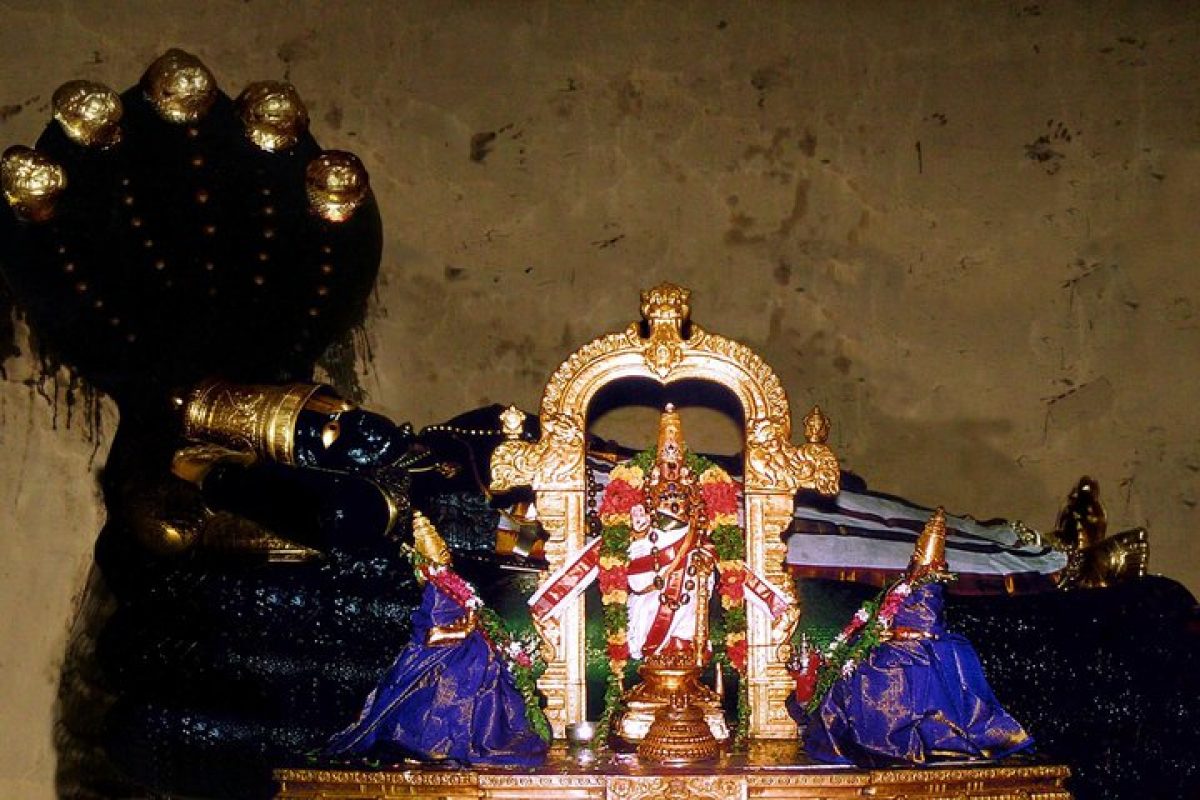
He reclines on Ādiśeṣa, the divine serpent. Ādiśeṣa

iii] nirmalānanta-kalyāṇa-nidhiḥ

Lord Viṣṇu is the possessor of pure and endless auspiciousness. He is not devoid of qualities but home of infinite divine qualities. He is blemishless i.e. devoid of any bad qualities.

Mangal Shloka of Vedant-Saaram

vedat saram

Brahman has for his body all the sentient and insentient beings. The jeevatma and prakriti is inseparable from Brahman and associated in Sharir-aatma bhaav. Brahman being the universal aatman and Chit-Achit being his body.

शरीर-आत्मा भाव, घटक श्रुति

bhed Abhed and Ghatak shruti

Brahman is

  1. Ananat Kalyaan Gunaakar: Ocean of infinite divine qualities/attributes
  2. Akhil hey Pratyanik: Devoid of any bad/material attributes.

1st Sutra

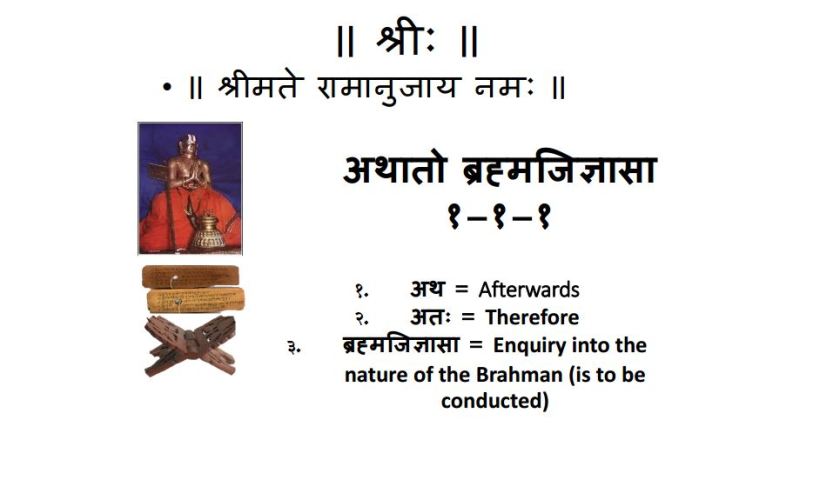
1.1.1

Then, Therefore, inquire into Brahman.

Brahman is derived from the root word- “Brih” which means “great or massive”

Bruhyati Brahmyati iti brahma: One who is giant/ great and makes everyone approaching him equally massive/ great is Brahman.

ब्रह्मशब्देन च स्वभावतः निरस्तनिखिलदोषः अनधिकाशय असंख्येयकल्याणगुणगणः पुरुषोत्तमो अभिधीयते

Thus Brahman primordially denotes that supreme person who is abode of all auspicious qualities to an infinite degree and is free from all the worldly taints.

Akaar-artho vishnuh: Akaar represents Vishnu. (aksharanaam akaaro asmi (BG 10th chap)). Ramanuj starting his commentry with A-kaar has great significance.


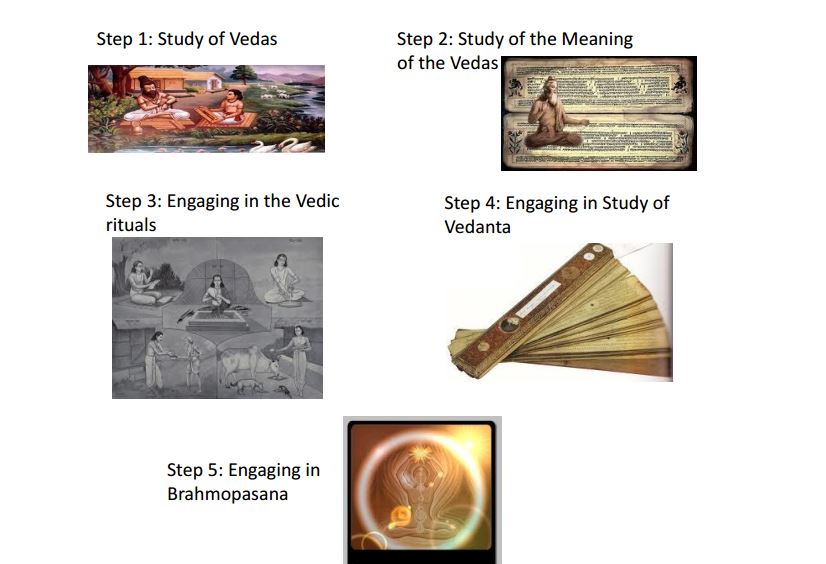
Steps involved in a person starting to study Vedanta
(in an ideal situation or as it existed in those days)
(According to Bhagavan Ramanuja)

Capture.JPGStep 1:
A person should engage in the study of Vedas as per the Vedic Injunction 
Step 2:
As soon as he memorizes the text of the Vedas, he will, automatically / by instinct try to understand the Meaning of the Vedic texts
Step 3:
As ordained in the Vedic texts, he engages in Vedic rituals that give him worldly fruits like progeny, prosperity etc.
Step 4:
In due course, he realizes that these worldly fruits give momentary happiness; such happiness is also relatively of an ordinary nature
Step 5:
He then begins to enquire into the Upanishadic texts that speak about a state where there is unalloyed happiness / bliss that is also permanent, which is attained by the knowledge of the Supreme Brahman. Having belief in the same, he starts to study Vedanta.


Satyabhama-Krishna Story

One sweet day, Govinda was sleeping in satyabhama’s bedroom. Satyabhama was looking at the beauty of Madan Mohan..Quite enchanted, she was not getting sleep. She went into old thoughts..How much Krishna loved her!! He brought Paarijaat tree and defeated Indra. She was even honoured to accompany Krishna in battlefield. Who else in the world have such a husband with broad, enchanting, lotus like eyes, curly hairs, shyamal moon-like face and Sun like radiance.

32130495_1540892682676685_7333259717042503680_n (1)

While Satyahama was having goosebumps of her thoughts, she suddenly noticed Krishna murmuring something in his dreams.


“Neele! tav nayane smaraami..satatm.”

(Nila!! I remember ur eyes)


What?? Krishna was remembering someone else in his dreams?


Madhre! tav vachanam smaraami..satatam”

(Mudhra!! I ever remember your voice)


Who is Neela and Madhura?? May be next time he calls my name.


Kamale!! tav adhare smaraami satatam

(kamala! ….)

32207530_1540892732676680_6848206322748358656_n

That’s too much..Ohh Lord!! Who can more unfortunate than me? Sleeping in my bedroom, he is remembering other girls. Not even once he called my name. What a fool I am, who considered that Krishna love me the most. Heartbroken.. She waked Krishna of his dreams.
Krishna woke up and Satyabhama played the video-recording infront of him. Krishna was clueless. He was caught red-handed. Satyabhama was about to weep when Krishna intervened.
“Priye listen to me..I love only you.”
“Then who are Nila, Madhura and Kamala”?
“Ohh satyabhama!! These are not names but adjectives. You are nila-nayane (blue-eyed), Madhur-vachane (sweet-voiced) and kamal-adhare (lotus-lips).
All the time I think of none but you. See, even in dreams, I remember you.
Satyabhama blushed. She got tears of love. Krishna wiped off her tears and thus husband and wife giggled.

Such are the glorious pastimes of bhu-devi and Perumal.

32187564_1540892856010001_1913049163159830528_n

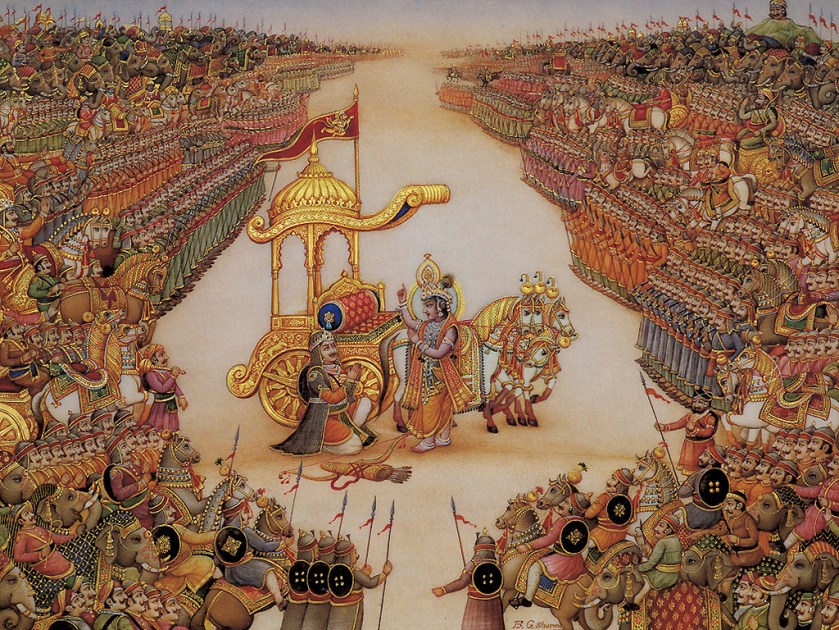
Who delivered Bhagwat-Gita?

Was Krishna in Yoga with Shiva or kal-purush?

Was Krishna not able to recollect Bhagwat-Gita to Arjun?

Today i would like to clear all the doubts regarding the original speaker of the most revered text “Bhagawadgita”.

Now-a-days few Shavaites are claiming that Krishna was in “yog awastha” with Lord Shiva while imparting Bhagwadgita knowledge.

let us see how much true is this.

Two main reasons given by shaivates are=

  1. Shri Krishna said in Mahabharat that it is impossible for him to impart Gita to arjun again.
  1. The Gita was undoubtedly not spoken by Krishna since it is “Shri Bhagwan uvaca” and actually not Shri krishna.

Reply:

First I would like to encounter second point because it is very silly reasoning.

In the same Mahabharata,Krishna is referred to as “Bhagavan”

and  it occurs as #558th name of lord Vishnu in Vishnu Sahasra namam which is from same Mahabharata. The Vishnu Sahasranama as found in the Anushasana Parva[1] of Mahabharat

Secondly,

Lord Krishna preached Bhagwat Gita in Kurukshtera. Again he preached the whole Gita in short to Arjuna called- ‘Anu-Gita’. Anu-Gita contains Karm-Yoga, Gyaan-Yoga and Bhakti-Yoga in short.

Again he preached ‘Uddhav-Gita’ to Uddhav.

Later, Bhism too, before preaching Vishnu-sahastranaam, identifies Krishna as Brahman and cause of all causes. The Vishnu Sahasranama as found in the  of Mahabharat, Yuddhishtir asks several questions to Bhism. It has been commented upon by Adi Shankaracharya,

Do Shaivites agrue that, all the three times, it was Shiva who preached using Krishna as an ‘instrument’?

Why Krishna was not able to recite the whole Gita again?

Answer is that it wasn’t necessary at all. Krishna preached Gita in short as it would have been sufficient for him. Krishna being sitted in the Heart of Arjun Knew the need of Arjun. It was just like a crash-course, since the student had already done the basic course.

In Anugita Parva of Aswamedha Parva, Arjuna asked Krishna to repeat Bhagavadgita.

That foremost of speakers, embraced Phalguna and replied unto him as follows.

“Vasudeva said, ‘I made thee listen to truths that are regarded as mysteries. I imparted to thee truths that are eternal. Verily, I discoursed to thee on Religion in its true form and on all the eternal regions. It is exceedingly disagreeable to me to learn that thou didst not, from folly, receive what I imparted. The recollection of all that I told thee on that occasion will not come to me now. Without doubt, O son of Pandu, thou art destitute of faith and thy understanding is not good”

http://www.sacred-texts.com/hin/m14/m14016.htm

Here,Krishna clearly points out that the gyaan  (Knowledge ) which he delivered was more than enough to understand brahma. that is Arjuna was imparted with adequate knowledge then. the situation in kurukshetra was very much suitable to make Arjuna aware of the divine knowledge.

abuddhvA yanna gR^ihNIthAstanme sumahadapriyam |
nUnamashraddadhAno.asi durmedhAshchAsi pANDava || 10||
Meaning: pANDava! It is to my great displeasure that you have not grasped it due to not possessing the determination to pursue it (ie, interest). Therefore, ie, due to a lack of determination, you are indeed devoid of a firm conviction in the truth, and are certainly of a perverse intellect (thus ineligible for liberation).
“abuddhva” refers to a lack of determination. “buddhi” means determination and in turn interest. In other words, Arjuna lacked the interest in parabrahman and was still possessed of interest in vishayAntarams.

Krishna never used a single word referring to Shiva when he imparted Gita.

https://narayanastra.blogspot.com/p/sridhara-anu-gita-and-miscellaneous.html

yOga-yuktEna” has been misused and abused by a number of internet vishNu-dvEshis.

If they had read how many times “yOga” occurs in the gIta, they wouldn’t be misusing this term to claim that “krishNa was in yOga with shiva to discourse gIta”. For that matter, why bizarrely introduce shiva when he is nowhere mentioned either here or in the bhagavad gIta?

yogaH sannahana upAya dhyAna san’gati yuktishu (amara kosha 3.3.22)

Based on this, “yoga” can be interpreted in the following way for bhagavAn:

“yoga” means “dhyAna” – for bhagavAn, “dhyAna” means “thought” or “will”.

“yoga-yukta” – By engaging or making use of my divine will, which is unimpeded by anything. It was his will or sankalpa to discourse the gIta to Arjuna, and he does not have that sankalpa now, due to Arjuna causing displeasure for him.


Thus, “yOga-yukta” has the same meaning as “Atma yOgAt” here. It is not to be interpreted as “meditation”, etc.

So, bhagavAn, anticipating the objection mentioned previously, is saying, “Do not think, Arjuna, that you had any merit back then. Because even back then, I discoursed the gIta out of my own will to favor you, not because you were eligible, but because you didn’t reject my grace, which is an alpa-vyAjam for me. But now, by forgetting everything, you have rejected my grace. So in that sense, I am not acting arbitrarily. The “acceptance or rejection of my grace” is my reason for deciding to teach you”.


By his divine will, he explained the gIta earlier to Arjuna although the latter, even back then, had not done any sAdhana and didn’t deserve it. It was purely his unconditional grace. The excuse he took for discoursing to Arjuna back then was, “Look, this Arjuna has not done any sAdhana, but he does not stop me from lecturing to him. I will consider that as “acceptance of my grace” and teach him”.

But now, he does not wish to explain again as Arjuna has not made use of that good fortune as follows.

BhagavAn himself has said this in the gIta itself, as follows:
maya prasannena tavarjunedam rupam param darsitam atma-yogat (~gIta 11.47)
Meaning: Through the unfettered power of my will (Atma-yOgAt), out of grace to you, ie, favoring you who are devoted to me (prasannEna), I have shown my cosmic form to you.


“yoga” can also be interpreted as follows – “yujyatE iti yogaH” – That which is united with bhagavAn is called “yoga”. What is united with him? Well, he is ever associated with innumerable auspicious attributes, which are denoted by “yoga”. That is one meaning of the word. Yet another meaning is “upAyatva”, as bhagavAn is of the nature of being the means.

So, bhagavAn, anticipating the objection mentioned previously, is saying, “Do not think, Arjuna, that you had any merit back then. Because even back then, I discoursed the gIta out of my own will to favor you, not because you were eligible, but because you didn’t reject my grace, which is an alpa-vyAjam for me. But now, by forgetting everything, you have rejected my grace. So in that sense, I am not acting arbitrarily. The “acceptance or rejection of my grace” is my reason for deciding to teach you”.

Ref:

https://narayanastra.blogspot.com/p/sridhara-anu-gita-and-miscellaneous.html

BGKrishnaArjuna

Bhisma’s View on Krishna’s Paratvam:

yudhiṣṭhira uvāca
kimekaṃ daivataṃ loke kiṃ vā‌உpyekaṃ parāyaṇaṃ
stuvantaḥ kaṃ kamarcantaḥ prāpnuyurmānavāḥ śubham || 8 ||

ko dharmaḥ sarvadharmāṇāṃ bhavataḥ paramo mataḥ |
kiṃ japanmucyate janturjanmasaṃsāra bandhanāt || 9 ||

Yudhishthira asked:

In this wide world, Oh Grandpa,

  1. Which is that one God,
  2. Who is the only shelter? Who is He whom,
  3. Beings worship and pray, And get salvation great?
  4. Who is He who should oft, Be worshipped with love?
  5. Which Dharma is so great, There is none greater?
  6. And which is to be oft chanted, To get free. From these bondage of life, cruel?

śrī bhīṣma uvāca
jagatprabhuṃ devadeva manantaṃ puruṣottamam |
stuvannāma sahasreṇa puruṣaḥ satatotthitaḥ || 10 ||

tameva cārcayannityaṃ bhaktyā puruṣamavyayam |
dhyāyan stuvannamasyaṃśca yajamānastameva ca || 11 ||

anādi nidhanaṃ viṣṇuṃ sarvaloka maheśvaram |
lokādhyakṣaṃ stuvannityaṃ sarva duḥkhātigo bhavet || 12 ||

brahmaṇyaṃ sarva dharmaṅñaṃ lokānāṃ kīrti vardhanam |
lokanāthaṃ mahadbhūtaṃ sarvabhūta bhavodbhavam|| 13 ||

eṣa me sarva dharmāṇāṃ dharmo‌உdhika tamomataḥ |
yadbhaktyā puṇḍarīkākṣaṃ stavairarcennaraḥ sadā || 14 ||

Bhism replies:

  1. That purusha with endless devotion, Who chants the thousand names, Of He who is the lord of the Universe, Of He who is the God of Gods, Of He who is limitless, Would get free
  2. That Purusha who does not change, That Vishnu who does not end or begin, That God who is the lord of all worlds, And Him, who presides over the universe
  3. This worship of the Supreme Lotus-eyed Lord at all times by a person endowed with devotion is regarded as highest dharma.
  4. Of Him who is purest of the pure, Of That which is holiest of holies, Of Him who is God among Gods, Of That father who lives Without death.
  5. From Whom all beings originate in the beginning of the first Yuga and in Whom they merge again at the end of the Yuga.
  6. O King! Hear from me the Thousand Names which remove sins and drive away fear. The appellations of that Vishnu, Lord of the Universe and Ruler of the World.

319642823

Philosophies of India

Non-Vedic systems:

Those who don’t believe in Vedas are said to be Nastikaas.Non-Vedic systems: Those who don’t believe in Vedas are said to be Nastikaas.

1. Chaarvaak: This philosophy believes in only that which is seen. They don’t believe in God or Karma.

Source of Knowledge: Sense Perception only.

Purusharth (Destination): Materialistic pleasure. Lazy people indulge in  rituals of Vedas, intelligent people enjoy their life.

2. Buddhism: Their philosophy is of ‘Shunya-vaad.’ Nothing is real. Nothing is created or born. All the external appearances are untrue. Nothing exist for more than a moment.
Source of Knowledge: Knowledge is not permanent but keeps changing. What was true a second before, is not true now.
Objection: I may say that Buddhist philosophy was true a second before, not now. If you say that there is nothing, then who is the observer to ensure that there is nothing? Certainly there is something that is not untrue, which observes the untrue.

3. Jainism: Jainism doesn’t believe in Vedas because as per them, Vedas encourage animal-sacrifices. They believe in ‘karma’ and ‘rebirth. Knowledge about life and happiness is hidden due to Karma.
Source of Knowledge: Whatever you see in front of your eyes didn’t really exist in past, neither in present, nor will be in future.
Purusharth (Destination): Those who clear their karmas, which keeps accumulating from birth to birth; one gets liberated, becomes Yog-Siddhas. Yog-Siddhas look after the world.

4. Agamas: Panchratra aagma has been proved to be Vedic in Vyas’s Vedant-sutra. Also, in Mahabharat and other purans, Panchratra is help to be strictly in accordance of Vedas. However, Pashupatha Agama runs counter to the authority of Vedas. ‘Paashupati deeksha’ renders anyone as Brahmin. Everyone is Shiva himself. There are 36 principles and Pashupati is the Paratatva in this system.

Authenticity of Panchratra

Vedic systems

Vedic System: Those who believe in Vedas are said to be Aastikaas.

1. Nyaay: Propounded by Akaashpaad Gautam. (not Buddha). Nyay means analytical investigation. However, don’t accept Brahman as soul cause of universe and inner soul of all.

Source of Knowledge:

a) Pratyaksha: direct perception with senses and mind.

b) Anumaan: Inference based Knowledge.

c) Shabd: Verbal testimony i.e. Vedas are given the highest place. Ex- If there is smoke, there must be fire.

d) Upamaan: Comparison.

2. Vaisheshik: Propounded by Sage Kanaad.  Acording to him, Akaash is eternal. Based on Atomic School. Combination of atom-size particles of ‘Panch-Bhutas’ give rise to materials in the universe. Deluge means all the compounded things return to their original size and state.Excepting the atman, all things are achetan (non-sentient).

Source of Knowledge:He promoted argumentative techniques and mode of cognition.

Destination: Jivas undergo karma and in any particular birth, owing to knowledge of the nature of universe, the aatman gets liberated.

3. Sankhya: Propounded by Sage Kapil. It is based on the school of enumeration. It enumerates 25 principles (Purusha) and 1 prakriti. Prakriti is the first cause of creation (seed matter) representing subject and object. The world was like this before and will continue to be so in future too. Karma has to be gone through to earn falam finally. The term for cosmic consciousness is ‘Mahat’.

Source of Knowledge:Pratyaksh, Anumaan and Shabd Pramaan.

Destination: Not to do things prohibited in Vedas and carry out daily chores to be able to enjoy heavenly pleasures.

4. Yoga: Propounded by Sage Patanjali. It is based on ‘Sankhya’ school of enumeration and Meta-Physics. The term for cosmic consciousness is ‘Chitta’.  There is no subtle body (mind, intelligence) but Purusha contracts or expands to lower or increased consciousness. Ishwara, included among males, is dependent on Prakriti  and responsible for creation and deluge. Doesn’t accept Brahman as sole cause of universe and inner soul of all.

Destination: This theory is based on 7 Chakras (Kundilini) or hidden energy in our body which lies at the base of the spine.

Meemansha Darshan

For the sake of comprehension and interpretation, Vedas have been divided into two parts- Purv-Meenasha and Uttar-Meemansha. There are 20 chapters in Meemansha darshan out of which 16 chapter lies in Karm-Kand or Purv-Meemansha and 4 lies in Brahm-Kand or Uttar-Meemansha.
5. Purv-Meemasha (Karm-Kaand): Meemansha means investigation or interpretation of Vedic injunctions. This section has been dealt by JAIMINI. It’s not much about philosophy but details of rituals and yagnas performed to to invoke devtaas or gods.

Destination: Aatnman is the subject to births and deaths due to ‘Karma’. Performance of Dharma or Karm-kand separates the aatman from mind and it goes to Brahm-Loka. There it remains till the end of the days and the end of the world.

6. Uttar-Meemasha (Gyaan-Kaand or Brahm-Kaand): It is also termed as Upanishads or Vedanta. It is dealt by Badraayan/ Ved-Vyaas in his Brahm-Sutra or Vedant-Sutra.

Which is the Object of Worship? ——- Upanishads.

What is worship?—————– Purv-Meemansha.

Both the Meemanshas, totaling 20 chapters form one single unitary Meemansha system. Many sages including Bodhayan and Ramanuj have declared so in no uncertain terms. Brahm-sutras are highly condensed presentations of Upanishadic texts and give a synoptic insight of its author. It deals with the many of systems discussed above and have been refuted by the Sutras.

The sutrakaar is none other than Ved-Vyaas, the author of Mahabharata. He was called Ved-Vyaas, a sage revered as unifier of Vedas. He was also Known as Krishna Dvaipaayan. Krishna means dark-black and dvaipayan means born in island. He was born in the month of ‘Aashaad.’ He is also called BADRAYAN as he used to be moving in the hills and jungles around his ashram in Badri.

images

Broad division and Structure:

It comprises of 4 chapters and then further sub-divided into Padas. Each Padas has several Adhikarans. Adhikarans are the group of Sutras who form a central meaning.

1st chapter (Samanvay Adhyay) expounds the nature of Brahman as the ultimate ground of the universe of Chit (Aatman) and Achit (Non-sentient).

2nd chapter (Avirodha Adhyay) refutes non-Vedic theories.

3rd chapter (Sadhana Adhyay) deals exclusively with Saadhana or means to attain Brahman.

The last chapter i.e. 4th, (Phala Adhyay) deals with ‘Purusharth’ or ‘phala.’ It reveals the nature of ‘mukti’ and end-result of whole philosophical enquiry.

Different commentators have divided Brahm-Sutra into different number of Sutras.

Shankar- 555 sutras.

Ramanuj: 545 Sutras.

Madhav: 564 sutras.

Adhikaari-Bheda

There is no room for contradiction in Vedas. Each and every shloka of Vedas are sacred and equally important. Not any one part of Vedas can be taken and said to be superior to other.

Adhikaari-bheda means differences arising from the levels of interpretations by the readers. While Vedas seems to be mutually contradicting, they give non-contradictory message actually. Abhed shruti talks about one-ness of Jeevatma and Parmatma while Bhed Shruti talks about difference between Jeevatma and Parmatma.  Are Vedas mutually contradicting? No, Vedas themselves provides the solution in form of Ghatak-Shruti which combines both Abhed-Shruti and Bhed-Shruti. That’s the contribution of Sri Ramanuja to Vedant philosophy. When Ramanuj arrived in the scene, there was utter darkness all around. He appeared like a becon-light in the dark-phase.

We would discuss about Bhed, Abhed and Ghatak shrutis in coming articles.

18198573_1398367980185815_1885732526965632188_n.jpg

Vedant Philosophy:

1. Advait by Adi Shankaracharya.

2. Dvait-Advait by Bhashkaracharya and Yadava Prakash.

3. Vishishtadvait by Swami Ramanujacharya.

4. Dvait by Madhavacharya.

5. Dvait-Advait by Nimabark Swami.

6. Suddhadvait by Vallabhacharya.

7. Achintya Bhed-Abhed by Sri Chaitnya Mahaprabhu

8. Purna-Advait by Sri Aurbindo Ghosh

9. Modern-Vedant by Sri RamKrishna Paramhansh (Swami Vivekanad)

We would discuss about these philosophies in coming articles.

श्रीमद भागवतम महात्म्य भाग 1

नारायणं नमस्कृत्य नरं चैव नरोत्तमम्। देवीं सरस्वतीं व्यासं ततो जयमुदीरयेत् ॥
निगमकल्पतरोर्गलितं फलं शुकमुखादमृतद्रवसंयुतम् ।
पिबत भागवतं रसमालयं मुहुरहो रसिका भुवि भावुकाः ॥
शृण्वतां स्वकथां कृष्णः पुण्यश्रवणकीर्तनः। हृद्यन्तःस्थो ह्यभद्राणि विधुनोति सुहृत्सताम् ॥

भाग 2: श्रीमद भागवतम महात्म्य भाग 2

सर्गश्च प्रतिसर्गश्च वंशो मन्मंतारानी च, वंशानुचरितनचेति पुराणं पञ्चलक्षणं।
पुराणों के पाँच विषयों का वर्णन है- १) सृष्टि २) प्रलय ३) सूर्यवंश और चन्द्रवंश का विवरण ४) अलग-अलग काल के मनुओं का विवरण ५) विस्तृत कथा

श्रीमदभागवत पुराण और विष्णु पुराण में इन पाँचों विषयों की पूर्ण रूप से चर्चा है, इसलिए ये दोनों ही पूर्ण-पुराण कहे गए हैं।
ऋग्यजुःसामाथर्वाख्या वेदाश्चत्वार उद्धृताः। इतिहासपुराणं च पञ्चमो वेद उच्यते ॥10.4.20॥

श्रीमद भागवत पुराण सभी शास्त्रों का सार है। जब वेदों के संकलन और महाभारत, पुराणों की रचना के बाद भी उन्हें शांति न मिली तो उनके गुरु नारद मुनि ने उन्हें श्रीमद भागवत पुराण लिखने को प्रेरित किया। यह श्री वेदव्यासजी की आखिरी रचना है और इस कारण पूर्व के सारे रचनाओं का निचोड़ है।

वेदव्यास जी का नाम “कृष्ण द्वैपायन” है। कृष्ण अर्थात श्याम वर्ण के और द्वैपायन अर्थात छोटे कद के या द्वीप में निवास करने वाले।  व्यासदेव स्वयं भगवान के शक्त्यावेश अवतार थे और आने वाले कलयुग का ध्यान कर उन्होंने वेदों को ४ भाग में विभक्त किया और शास्त्रों को लिखित रूप में संरक्षित किया।भगवान स्वयं शब्दात्मक स्वरुप में भागवत में विराजते हैं।

व्यासं वसिष्ठ नप्तारं शक्तेः पौत्रमकल्मषम् ।
पराशरात्मजं वन्दे शुकतातं तपोनिधिम् ॥ (व्यास जी वशिष्ठ के प्रपौत्र, शक्ति के पौत्र एवं पराशर केपुत्र हैं)

व्यासाय विष्णु रूपाय व्यासरूपाय विष्णवे ।
नमो वै ब्रह्मनिधये वासिष्ठाय नमो नमः ॥ (व्यासदेव स्वयं भगवान के अवतार हैं)

भगवतः इदं भागवतम।

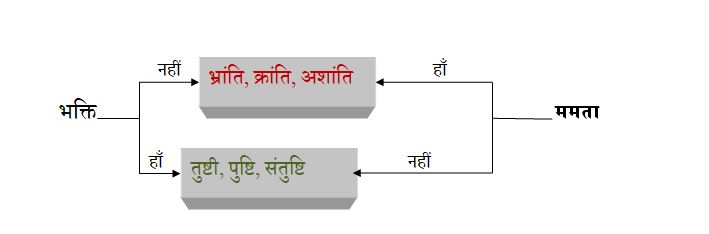
इसके दो अर्थ निकलते हैं- भगवान के द्वारा कहा गया, भागवत और भगवान का जो है, भागवत। भगवत मूल शब्द में तद्धित प्रत्यय लगने से बना है भागवत। भागवत का अर्थ है- “भगवान का”। ‘का, के, की’ चिन्ह है संबंध का, जैसे माता का पुत्र, पिता की पुत्री; वैसे ही भगवान का भागवत। भगवान के होने का यह मतलब नहीं की हम बेटे के बाप नहीं रहेंगे बल्कि संसार के नातों के प्रति ममता (आसक्ति) का त्याग है। अ

संसार में हर व्यक्ति किसी का होकर जीता है जैसे नाना का नाती, पति का पत्नी। लेकिन इन सांसारिक आसक्तियों से हमें मिला क्या? अवसाद, ग्लानी, पीड़ा, दर्द और परेशानी। जड़ वस्तु से हमारा नाता ही हमें दुःख देता है। लेकिन क्या कोई ऐसा नाता है जो हमें आनंद की ओर ले जाये?

भगवान के होने का यह मतलब नहीं की हम बेटे के बाप नहीं रहेंगे बल्कि संसार के नातों के प्रति ममता (आसक्ति) का त्याग है। असली हम भगवान के हैं। क्या पिता का पुत्र हो गया तो पत्नी का पति वह नहीं है? मामू का भांजा नहीं है? नाना का नाती नहीं है? सबका रहेगा पर पिता का पुत्र, बस दिल से मान लिया तो पिता के सम्पति का वह अधिकारी हो गया। बस ह्रदय से मान लो और मान कर जान लो। इतना ही पर्याप्त है। यही मानाने वाले मुक्त हो गए, नहीं मानने वाले धोखा खा जाते हैं, यहीं रह जाते हैं। जब से मानव बुद्धिमान माने जाने लगा, तभी से किसी ‘का’ होकर जीना सिख गया। सबसे संबंध स्थापित किया पर भगवान का होना नहीं सिखा और इसलिए उसकी ग्लानी, पीड़ा, दर्द आजतक समाप्त नहीं हुआ। अगर संसार का नाता लेते हुए हम भगवान से संबंध जोड़ लें, फिर हमारी पीड़ा सहज ही दूर हो जाए। हम भगवान से किसी भी तरह का संबंध जोड़ लें जैसे पिता, मित्र, पति या दुश्मन भी, तो बड़ा पार हो जायेगा। हम संसार के संबंधों का आधार लेकर भगवान से संबंध जोड़ सकते हैं।

अंशी का स्वाभाव हमेशा अंश की ओर जाने का है। जैसे पत्थर या पत्ता हमेशा पृथ्वी की ओर, अग्नि हमेशा सूर्य की ओर और जल हमेशा समुद्र की ओर। जीव भी भगवान का शाश्वत अंश है (ईश्वर अंश जीव अविनाशी) और इसलिए जीव का सहज स्वाभाव है ‘भगवान का हो जाना’। जब तक जीव भगवान से संबंध नहीं जोड़ लेता तब तक दुनिया की फैक्ट्री में ऐसा कोई टैबलेट या इंजेक्शन नहीं है जो उसकी पीड़ा को दूर कर दे।

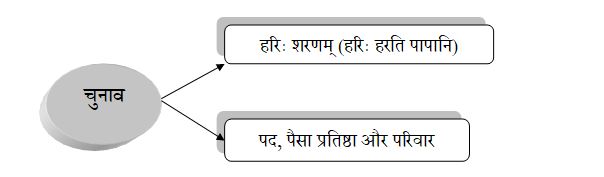
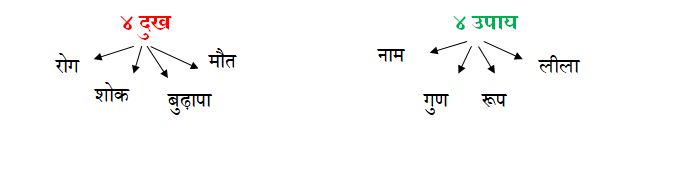
पीड़ा के चार प्रकार हैं: रोग, शोक, बुढ़ापा और मौत। चारों ही लाइलाज हैं और चरों कोई कोई नहीं चाहता पर चारों हीं मिलते हैं। इन चार पर विजय प्राप्त करने हेतु मनुष्य चार चीजें अर्जित करना चाहता है- ‘पद, पैसा प्रतिष्ठा और परिवार’; पर ऐसा आजतक न हुआ है न होगा। मनुष्य जो भी पाप करता है वो इन चार चीजों के लिये ही करता हैं। भगवान से संबंध स्थापित करके ही हम इन चार चीजों पर विजय प्राप्त कर सकते हैं।

b1.JPG

भगवान यह नहीं कहते की उन्हें दान दो, खेत लिखकर दो; बल्कि मुझे अपना मानकर प्रेम करो। जैसे रोता हुआ बच्चा हुआ कोई कितना भी प्रयास क्यों न करे, चुप नहीं होता पर माँ की थपकी मात्र से चुप हो जाता है क्योंकि माँ से दूरी के एहसास ने ही तो उसे रुलाया था। हमारे दुःख का कारण भी भगवान से दूरी ही है। हम भगवान से दूरी और जड़ वस्तु से आसक्ति बढ़ाते हैं। जड़ वस्तु का स्वभाव ही है मिटना पर हम चाहते हैं की वो हमेशा हमारे पास रहे। मिटने वाली वस्तु यानी अचित से आसक्ति ही हमारे दुःख का कारण है। वस्तु या व्यक्ति से संबंध जितना ही घनिष्ठ हो, हमें उतना ही रुलाता है। यह शरीर जिसे हम अपना समझते हैं वो भी हमें एक दिन छोड़ना होगा। जिसे शरीर से आसक्ति नहीं होगा, वो शरीर छूटने का भी भय नहीं होगा।
सच्चिदानन्दरूपाय विश्वोत्पत्यादिहेतवे। तापत्रय विनाशाय, श्री कृष्णाय वयं नमः।।
भगवान का स्वरुप है- सत, चित और आनंद। सत शब्द अस धातु से बना है जिसका है, “वह जो है”। चित का अर्थ है जिसमें जागृति हो और आनंद का अर्थ है जो मुरझाये नहीं, रोये नहीं, मुस्कुराता रहे। यदि आनदंरूप भगवान से नाता जोड़ लें तो दुखों से विजय प्राप्त कर सदा के लिये आनंदमय हो जायेंगे।
सत्यम ज्ञानम् अनंतम ब्रह्म।


भक्ति देवी की व्यथा

श्रीमद भागवत पुराण का महात्म्य पद्म पुराण में आता है। जबतक हम किसी चीज का महत्व नहीं जानते तब तक उसे समझने में समय नहीं देते। एक बार की बात है, नारद ऋषि पुष्कर, काशी, कुरुक्षेत्र, गोदावरी आदि तीर्थों का भ्रमण करते-करते वृन्दावन पहुंचे। उन्होंने अद्भुत घटना देखा। एक 5 वर्ष की युवती पास में दो 85-90 वर्ष के मूर्छित पड़े वृद्धों को “हे पुत्र! हे पुत्र!” कहकर संबोधित कर रही थी। नारद जी जे देखकर युवती ने कहा, “महाराज! हमारे दुःख को दूर कीजिये”
“कौन है तु”।
अहं भक्तिरिति ख्याता इमौ मे तनयौ मतौ । ज्ञानवैराग्यनामानौ कालयोगेन जर्जरौ” ॥

bhakti born dravid.JPG
“मैं भक्ति हूँ। द्रविड़ देश में पैदा हुयी, महाराष्ट्र तक आयी थी, गुजरात की सीमा में प्रवेश करते मैं बुढ़िया हो गयी लेकिन जवान बेटों के सहयोग से मैं यमुना किनारे मथुरा-वृंदावन आयी। यहाँ आते ही नजारा बदल गया। मैं युवती से वृद्धा हो गयी और मेरे जवान बेटे मूर्छित (बेसुध) हो गए। इन्ही की दशा देखकर मैं रो रही हूँ”?

जब भक्ति वैकुण्ठ से चली तो भगवान ने उसकी दासी मुक्ति को साथ-साथ भेज दिया।

(मुक्तिं दासीं ददौ तुभ्यं ज्ञानवैराग्यकाविमौ ॥)

उन दोनों की मदद के लिये भगवान ने ज्ञान और वैराग्य को भेजा। द्वापर के शुरुआत में भक्ति वैकुण्ठ वापस चली गयी और कहा कि जब भी तुम मुझे बुलाओगी, मैं जरुर आउंगी। कलयुग आते आते ज्ञान-वैराग्य भी मूर्छित हो गए। अब भक्ति बैठे बैठे रो रही थी।

अर्थात: ज्ञान-वैराग्य युक्त भक्ति  के लिए मुक्ति दासी की तरह है|

नारद जी ने ज्ञान को जगाने वाला और वैराग्य को प्रवृद्ध करने वाला वेद मंत्र सुनाने लगे लेकिन परिणाम बेअसर रहा। कभी-कभी आँख खोलकर करवट बदलने की चेष्टा की पर मूंह खोल न सके, कुछ बोल न सके। नारद जी ने प्रतिज्ञा की कि जबतक इनकी मूर्छा दूर न होगी, मैं तपस्या करूँगा, भगवान को प्रसन्न कर उन्हीं से उपाय पूछूँगा। नारद जी संत-महात्माओं से उपाय पूछते चले। बद्रिकाश्रम की ओर चले तो उन्हें ४ कुमार मिले (सनक, सनंदन, सनातन, सनत कुमार), जो देखने में ५-६ वर्ष के बालक लगते हैं पर वास्तव में हैं बूढ़ों के बूढ़े।

(कुमारान् ,वृद्धान् दशार्धवयसो विदितात्मतत्त्वान्)।

योगबल से उम्र का असर अपने शरीर पर नहीं होने दिया। दिगंबर महात्मा हैं। नारद जी के बैचैनी को उन्होंने समझ लिया। कुमारों ने कहा, “ज्ञान यज्ञ करो भागवत का, यही वास्तविक सत्कर्म है”।

इदं भागवतं नाम पुराणं ब्रह्मसम्मितम् । भक्तिज्ञानविरागाणां स्थापनाय प्रकाशितम् ॥
ज्ञानयज्ञं करिष्यामि शुकशास्त्रकथोज्ज्वलम् । भक्तिज्ञानविरागाणां स्थापनार्थं प्रयत्नतः ॥

जब भगवान अपनी लीला खत्म कर अपने दिव्य जाने को तत्पर हुए तो उनके घनिष्ठ मित्र उद्धव ने उन्हें रोक लिया। उन्होंने कहा, “आप मुझे छोड़कर अकेले कैसे जा सकते हैं। हम आपके बिना कैसे रह पायेंगे। मुझे भी अपने साथ लेते जाईये”। रामावतार में भगवान अपने साथ पूरी अयोध्या को लेते गए थे। लव-कुश के राज्य करने के लिये कोई भी प्रजा नहीं बची थी। भगवान ने उद्धव से कहा, “बद्रिकाश्रम के गंधमातन पर्वत पर जाकर मेरे स्वरुप का ध्यान करो। जब भी तुम्हें मेरी दर्शन की लालसा हो, मुझे स्पर्श करना या प्रत्यक्ष अनुभव करना चाहो; तो मैं अपने स्वरुप सहित भागवत पुराण में प्रवेश कर रहा हूँ”।
४ कुमारों ने संसार संसार में प्रवेश करने से मना कर दिया। हरिद्वार तक आये। नारद जी भक्ति, ज्ञान और वैराग्य को भी हरिद्वार ले आये और गंगा किनारे, आनंद घाट पर, सनकादिक कथा बाचने लगे। कार्तिक शुक्ल-पक्ष, अक्षय नवमी से पूर्णिमा तक सप्ताह का योगं हुआ। ७ दिन बाद ज्ञान और वैराग्य युवक होकर नाचने लगे। मूर्छा सदा के लिये मिट गयी। सनकादिक गाने लगे और नारद जी बीना बजने लगे। भक्ति भी आनंद विह्वल होकर नाचने लगी।
बिना ज्ञान और वैराग्य के भक्ति नहीं आती। भगवान से संबंध स्थापित करने के लिये ज्ञान की आवश्यकता है। ज्ञान के चार प्रकार हैं- सामान्य, विशेष, विशेषतर और विशेषतमसामान्य ज्ञान (आहार, निद्रा, भय, मैथुन) का ज्ञान पशु को भी है। इसके ज्ञान के लिये किसी विश्वविद्यालय जाने की जरुरत नहीं है। विशेषतर ज्ञान है कवि, आचार्य या राष्ट्रपति बन जाना। विशेषतम ज्ञान ये है कि हम भगवान के हैं, भगवान हमारे हैं और बाकी सारे सपने हैं। इस ज्ञान को ही विवेक कहते हैं। ज्ञान जब परिपक्व होता है तो विवेक कहलाता है। परिपक्व, जागृत ज्ञान विवेक कहलाता है और विवेक वो तेज तलवार है जो अज्ञान से होने वाले मोह और उससे पैदा होने वाले अहंकार को जड़ से काट देता है। विवेक बिना सत्संग के नहीं आता। जब कई जन्मों का पुण्य संचित होता है तो सत्संग मिलता है।

भाग्योदयेन बहुजन्मसमार्जितेन सत्सङ्गमं च लभते पुरुषो यदा वै।
अज्ञानहेतुकृतमोहमदान्धकारनाशं विधाय हि तदोदयते विवेकः

बिना सत्संग के सुनी हुयी बातें जीवन में नहीं आयेंगी इसलिए भक्तों का संग करो और भौतिकवादियों का संग काम से काम करने का प्रयास करो।

बिनु सत्संग विवेक न होई, राम कृपा बिनु सुलभ न सोई।

होई विवेक मोह भ्रम भागा, तब रघुनाथ चरण अनुरागा।।

सत्संग——-(से)——विवेक———-(से)—————वैराग्य——–(से)———-भक्ति

जिस तरह से जानवरों को पालतू बनाने के लिये हम बल और हथियारों का इस्तेमाल करते हैं वैसे ही मनुष्य को सही दिशा में मोड़ने का काम करती है सत्संग। सत्संग करने से हमें विवेक की प्राप्ति होती है। विवेक की प्राप्ति के बाद मोह और भ्रम भाग जाते हैं। जब मोह और भ्रम भाग जाते हैं तब हम भगवान से सम्बन्ध स्थापित कर लेते हैं। विवेक का अर्थ है परिपक्व ज्ञान। जैसे फुलौना के फूट जाने पर बच्चा फूट-फूट कर रोता है पर बाप नहीं रोता क्योंकि बाप को ज्ञान है की बैलून का स्वभाव ही है फूटना। इस उदाहरण में फुलौना विषय है, बालक अज्ञानी और बाप विवेकी। हम भी इस संसार में रो रहे हैं क्योंकि हमें अपने स्वरुप का ज्ञान नहीं है। साधु नहीं रोते क्योंकि उन्हें अपने और इस संसार के स्वरुप का ज्ञान है।

b4

उमा कहों कछु अनुभव अपना, सत हरि भजन जगत सब सपना।।
उमा राम स्वाभाव जेहि जाना, तेहि भजन तजि भाव न आना।।

अज्ञान का कारण है ६ गन्दगी- काम, क्रोध, मद, लोभ, मोह और मात्सर्य (इर्ष्या)। जब मन की गन्दगी मिट जायेगी तो हम बालक बन जायेंगे और जब बालक बन जायेंगे तो संसार की स्त्रियाँ माँ नजर आयेंगी। जैसे छोटा बालक संसार को देख रहा है पर संसार के पीछे नहीं भागता, उसकी आँखें रूप को देख रहीं हैं पर रूप के पीछे आँखें नहीं भागती। संसार में नाँव की भाती रहो। नाव पानी में रहे पर नाव में पानी न आ पाये। अगर पानी आ रहा है, तो ४ बर्तन हैं जिससे पानी उबीछते रहो: भगवान का (१) नाम (२) रूप (३) गुण और (४) लीला।
निर्मल मन जन सो मोहि पावा, मोहि कपट छल छिद्र न भावा।

b2.JPG
वैराग्य के भी दो प्रकार हैं-कच्चा वैराग्य और पक्का वैराग्य। यदि भक्ति को चंगा बनाना है तो वैराग्य पक्का होना चाहिए। वह विवेक किस काम का जो पक्का वैराग्य न दे पाए। कभी-कभी लोग कच्चा वैराग्य को भी पक्का वैराग्य समझ लेते हैं। जैसे फल्गु नदी, उपर से देखो तो सुखा हुआ और खोद कर देखो पानी ही पानी। नकली वैराग्य लोगों को धोखा देने के लिये होता है। बाहर से ऐसे लोग साधु हैं, विरागी हैं पर भीतर से विरागी हैं। पद्म पुराण के इस कहानी से व्यास देव कहते हैं कि पक्का वैराग्य संसार की वास्तविकता को बतलाता है।

विवेक और वैराग्य साथ-साथ चलते हैं, अकेले नहीं। ज्ञान और वैराग्य भक्ति के पुत्र हैं। किताबी ज्ञान से नहीं बल्कि सत्संग, भक्ति और महापुरुषों के सानिध्य एवं सेवा से विवेक उत्पन्न होगा। ज्ञान और वैराग्य के सहयोग से जब भक्ति आपके जीवन में लहराएगी, तो आपकी दुर्दशा और दयनीय दशा सदा के लिये समाप्त हो जाएगी और खुशहाली आ जाएगी।


भागवत की कथा के प्रभाव से धीरे धीरे ज्ञान-वैराग्य की मूर्छा दूर हुई| ज्ञान-विशिष्ट-भक्ति  उलास के मारे नृत्य करने लगी| अलौकिक भक्ति देख भगवान स्वयं अपने लोक से उतर आये।

अथ वैष्णवचित्तेषु दृष्ट्वा भक्तिमलौकिकीम् । निजलोकं परित्यज्य भगवान् भक्तवत्सलः ॥
वनमाली घनश्यामः पीतवासा मनोहरः । काञ्चीकलापरुचिरो लसन्मुकुटकुण्डलः ॥
त्रिभङ्गललितश्चारुकौस्तुभेन विराजितः । कोटिमन्मथलावण्यो हरिचन्दनचर्चितः

47685704_101662107547161_709171788596117504_n

श्रीमद भागवत एक कड़वी मिश्री है। अगर कड़वी दवा सीधे दी जाये तो बच्चा लेने के लिये तैयार नहीं होता लेकिन वही कड़वी दवा अगर मिश्री के साथ मिला कर दी जाए तो बच्चा खा लेता है। श्रीमद भागवत में कथाएँ मिश्री हैं और सिद्धांत (शिक्षाएँ) कड़वी दवा। अगर हम दोनों का सेवन करें तो ‘दुखालयम अशाश्वतं’ से ‘नित्य आनंद’ की ओर निश्चित ही जायेंगे। एक प्रकार के मिट्टी में कोई विशेष फसल, किसी विशेष मौसम में बढ़िया पैदावार देती है। कलयुग में भागवत पुराण का भी वैसा ही महत्व है क्योंकि इसमें स्वयं भगवान श्री कृष्ण का वास है।
सप्ताहश्रवणाल्लोके प्राप्यते निकटे हरिः । अतो दोषनिवृत्त्यर्थमेतदेव हि साधनम् ॥
शृण्वतां सर्वभूतानां सप्ताहं नियतात्मनाम् । यथाविधि ततो देवं तुष्टुवुः पुरुषोत्तमम् ॥

अगर १०० साल आयु है तो १५ साल बाल्यावस्था में, १ साल बारात में और बच्चा हुआ तो बाकी जीवन रोटी और भात में। १०० में से ५० साल तो रात्रि में बेहिसाब बीत जाता है। जीवन की सच्चाई को कब समझ पाओगे? इसलिए भागवत पुराण है। इसमें भगवान स्वयं स्थित हैं, जगत के कल्याण के लिये।
श्रीमद्भागवताख्योऽयं प्रत्यक्षः कृष्ण एव हि । स्वीकृतोऽसि मया नाथ मुक्त्यर्थं भवसागरे ॥


भाग २: श्रीमद भागवतम महात्म्य भाग 2

b5.JPG

Authenticity of Panchratra

The Brahma Sutra in its second chapter categorically rejects and refutes the number of works authored such as authored works by the Saankyaas, Yoga, Chaarvaakas, Vaiseshikas, the four kinds of Buddhist schools of thoughts (namely Maadyantika, Vaibhashika, Sowntrantika and Yogaachara), the Jainas and the Paasupata-Saiva. The only authored work accepted by the Brahma Sutra as authoritative as Vedas is the Paancharaatra Aagama.

I have heard few saying that the Brahma Sutra has not mentioned directly the name of Shreeman Naaraayana as the Para Brahman. This is absurd to say so because the Brahma Sutra has clearly established that Paancharaatra Aagama as authoritative as the Vedas and there is no room for any doubt regarding Shreeman Naaraayanan is the Parabrahman. The qualities declared for Para Brahman in the Brahma sutra only identifies with Shereeman Naaraayanan who is declared as the Para Brahman in the Vedas – “Naaraayana param brahma Tatvam Naaraayana Paraha: Naaraayana Paro Jyothihe Aatmaa Naaraayana paraha”.

Aagmas

The Aagamas are authored works. They have divisions called samhitas. There are numbers of such aagamas found to be existing based on which religions have evolved. All such Aagamas are not to be accepted as authoritative because it has to be analytically studied whether the Aagama supports the Veda or not. In case of an Aagama contradicting the veda, it has to be appropriately synchronized in accordance with veda or if such aagama if found to deviate from veda, it has to be rejected.
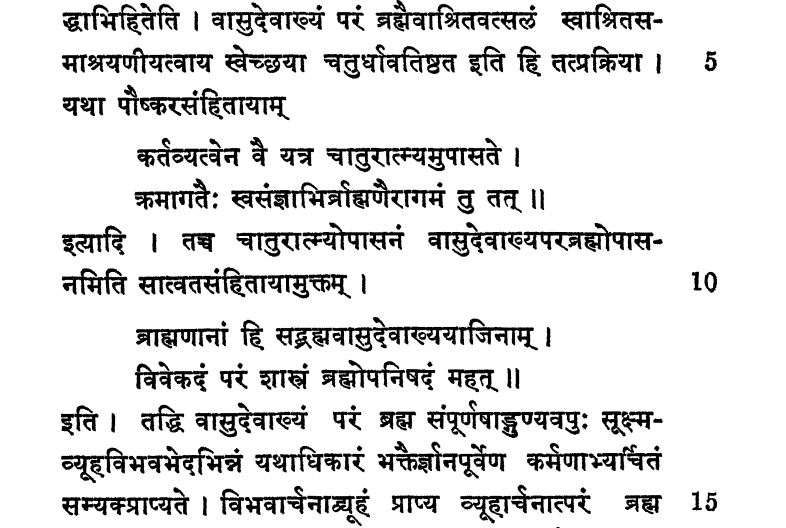
Pancharaatra aagama has numerous samhitas of which Saatvata, Jayaakya and Pouskara Samhitas are considered as gems. Shreeaman Narayanan himself authors Pancharaatra aagama.

Capture.JPG

MahaBharata (Shanti-Parv) says that the author of Pancharaatra is Shreeman Narayanan himself. Paancharaatra aagama deals with the tatva (reality), hita (means) and the purushaartha (goal). It also talks about temple constructions, worshiping of the Lord in temples, the temple festivals and consecration of aarcha form of Vishnu. It also talks about yoga, mantra, yantra, dharma and code of conduct for people. It is in strict agreement with the Veda.
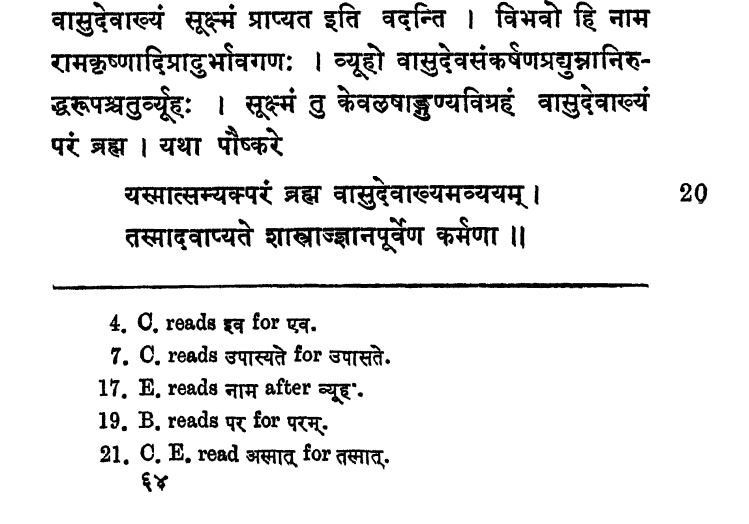
Paancharaatra specifically deals with a class of forms of Vishnu called the Vyuhaa Roopas. It also talks about the mighty discus (Sudarsana Chakra) of Shreeman Naaraayana. The eternal abode of the Lord namely Shree Vaikunta Paramapada is also described by it. In short Paancharaatra covers every aspect of the Vedic philosophy and practice which is Visistaadvaita (Shree Vaishnavam). Its origin can be traced to a Vedic branch called Ekaayana Veda.

Authority in Vedanta-Sutra

Having declared the Samkhya, Vaisheshika, Yoga, Bauddha, Jaina, and Pashupata doctrines as contradictory to the Vedas in the previous adhikaraNas, these opponents retaliate by raising objections against the pAncarAtra system accepted by the author of the sUtras himself (Brahma Sutras, 2.2.42-43). The first two sUtras of this adhikaraNa is the pUrvapakSha portion that describes the objections. The next two sUtras (2.2.44-45) is the siddhAnta portion that answer these objections. One can refer to Sribhashya of Ramanuja for the details

Utpatiyasambhava-adhikaranam is otherwise called as Paancharaatra-Adhikaranam. This is the last aadhikaranam present in the second paada of second chapter of the Brahma Sutra.

Meaning of Adhikaranam

Before going into the analysis of the four sutras present in this aadhikarana, may I present to you the meaning of the term Aadhikaranam. Aadhikaranam is a sub-section in paada of an aadyaaya in Brahma sutra. Each aadhikaranam has five components. They are Vishayam (Subject), Samsayam (Doubt), Poorvapaksham (Opponent view), Sidhaantam (Established truth with proof) and Prayojanam (Benefit of establishing the truth with proof).
In this Utpatiyasambhavaadhikaranam (otherwise called as Paancharaatraadhikaranam), we find the above five components.

  • The “Subject” is regarding the authenticity/authority of Paancharaatra Aagama.
  • The “Doubt” is “whether Paancharaatra is a authentic authority or not”.
  • The “Opponent View” is “Paancharaatra is not an authentic authority as it contradicts the Veda”.
  • The “Established truth with proof” is “Paancharaatra is an authentic authority as it is not contradicting the Veda and only is in perfect accordance with the Veda”.
  • The “Benefit” of establishing this truth is accepting Paancharaatra aagama as authentic authority as that of the Veda and comprehend its philosophy and practice to attain all the four purushaarthas.

Veda Vyasa has categorically rejected many authored scriptures – those authored by Chaturmukabrahma (Yoga) and that of Pasupathi (Paasupata Saivam). Chaturmukabrahma can recite all four vedas. Pasupati (Siva) is called Sarvajnya (he who know everything). When Vyasa has rejected even their smruties, is this Paancharaatra which is authored by Vishu to be accepted or rejected? Thus is the doubt.

Sutras:

  1. Utpatiyasambhavat (Subject and doubt))

(The Views of Pancharatra System are untenable) on account of the impossibility of Origination.”From Vasudeva, Sankarshan (Jiva) is born; From Sankarshan, Pradyumn (mind) is born; from Pradyumn, Aniruddh (ego) is born”. Like Sankhya, Pancharatra says that individual selves are created. This is opposed to what is stated in scriptures.1 2. Na cha kartuhu karanam (opponent’s view) “And, there is no Origination of the instrument from the agent”. Again the opponent objects that Paancharaatra contradicts the Veda by declaring that the Indriyas like Manas (mind) etc., are born from the Jeeva. The Veda has declared that the Indriyas like Manas are born from Iswara who is Shreeman Naaraayana.

Mundak upnishad 2.1.3:

एतस्माज्जायते प्राणो मनः सर्वेन्द्रियाणि च। खं वायुर्ज्योतिरापः पृथिवी विश्वस्य धारिणी।।2.1.3।।

From Him originates the vital force as well as the mind, all the senses, space, air, fire, water, and earth that supports everything. But, Panchratra as opposing views:”Samkarshanaat Manas Samiyjna Pradyumno Jaayate” meaning – “From Sankarshana, the mind called Pradyumna was born”


  1. 2

3.Vignyjanaadi bhaave vaa tataprathishedaha

Or, if they (the four Vyhaas) are held to be the lord, who is knowledge and the origin, there is no contradiction in the system.

अजायमानो बहुधा विजायते (Taitriya Aranyak 3.13.1; Purush-Suktam)

“He is unborn, yet he is born as many, in various forms”.

The Sankarshan and others are of the form of Knowledge i.e. Brahman. He assumes on his own accord, these four forms for the good of devotees. Sankarshan and others are called jivas etc. as they are the presiding deities of the jivas, mind, ego etc. Hence, the nomenclecture is appropiate as Brahman too is declared as ‘Akash, Praan, Indra” etc. 3.13.23.33.4 4. Viprathishedaancha

And on the account of denial (of the birth of the Jeeva)

4.14.2

The Paancharaatra itself has clearly stated that the Jeeva(Chit), Achit and Iswara are eternal. It itself has clearly negated the birth of jeeva.”The connection between Prakriti and the self is an inseparable in nature”.It is similar to Chhandogya Upanishad (6.2.3)

 तत्तेज ऐक्षत बहु स्यां प्रजायेयेति तदपोऽसृजत । तस्माद्यत्र क्वच शोचति स्वेदते वा पुरुषस्तेजस एव तदध्यापो जायन्ते ॥

‘That Being willed, “May I become many, may I grow forth.” It created fire. That fire willed, “May I become many, may I grow forth”. It created water. Therefore whenever a man grieves or perspires, then it is from fire that water issuesTherefore the Paancharaatra is fully in accordance to the Veda and there is no contradiction with Veda.

Objection: Sandilya is said to have promulgated the Pancharatra system. He found that the teachings of the Vedas couldn’t help him. This shows that the system is opposed to Vedas.

Ans: As regards to the Sandilya’s statement, it’s similar to the Narada’s statement in Chhandogya Upanishad (7.1.2-3).

  1. ऋग्वेदं भगवोऽध्येमि यजुर्वेदm+ सामवेदमाथर्वणं चतुर्थमितिहासपुराणं पञ्चमं वेदानां वेदं पित्र्यm+ राशिं दैवं निधिं वाकोवाक्यमेकायनं देवविद्यां ब्रह्मविद्यां भूतविद्यां क्षत्रविद्यां नक्षत्रविद्याm+ सर्पदेवजनविद्यामेतद्भगवोऽध्येमि ॥ ७.१.२॥ सोऽहं भगवो मन्त्रविदेवास्मि नात्मविच्छ्रुतm+ ह्येव मे भगवद्दृशेभ्यस्तरति शोकमात्मविदिति सोऽहं भगवः शोचामि तं मा भगवाञ्छोकस्य पारं तारयत्विति तm+ होवाच यद्वै किंचैतदध्यगीष्ठा नामैवैतत् ॥                                                                          ‘Revered sir, I know the Rig-Veda, the Yajur-Veda, the Sama-Veda and the Atharvanas the fourth, the Itihasa-Purana as the fifth, grammar, the rules for the worship of the ancestors, mathematics, the science of portents, the science of treasures, logic, the science of ethics, etymology, the ancillary knowledge of the Vedas, the physical sciences, the science of war, the science of the stars, the science related to serpents, and the fine arts – all this I know, revered sir.’ VII-i-3: ‘Revered sir, however, I am only a knower of verbal texts, not a knower of Atman. Indeed I have heard from persons like your revered self that a knower of Atman goes beyond grief. I am in such a state of grief. May your revered self take me across it.’ Sanatkumara replied to him,’ Whatsoever you have studied here, really it is only a name.                                                                                                                                  Such a statement is not meant to disparage the Vedas, but to praise the bhuma-vidya taught by Sanat-Kumar teaches later as gives in clear and succinct manner, the teachings of Vedas which can be grasped even by dulls.

    Sri Yamuna Muni shows that itihAsas and purANas and praise pA~ncarAtra highly:

    MAHABHARATA

    bharat2.JPGइदं महोपनिषदं चतुर्वेदसमन्वितम्।
    सांख्ययोगकृतं तेन पञ्चरात्रानुशब्दितम्॥ 12-348-62
    नारायंणमुखोदीतं नारदोऽश्रावयत्पुनः। (Mahabharata, Shanti parvan)

    Meaning: This great doctrine, that takes one close to Brahman (upaniShad), explains the purport of the four Vedas harmoniously. It is based on sAMkhya (j~nAna) and yoga (bhakti) and called ‘pancarAtra’. It has been expounded by Narayana, and Narada explained it once more.

    “ब्राह्मणैः क्षत्रियैर्वैश्यैः शूद्रैश्च कृतलक्षणैः ।
    सेव्यतेऽभ्यर्च्यते चैव नित्ययुक्तैः स्वकर्मभिः ॥ 6-66-39
    द्वापरस्य युगस्यान्ते आदौ कलियुगस्य च।
    सात्वतं विधिमास्थाय गीतः संकर्षणेन वै” ॥ 6-66-40 (Mahabharata,  Bhishma parvan)

    Meaning: Brahmins, Kshatriyas, Vaishyas, and Shudras, worship Him (shrI vAsudeva) in their daily rituals and activities. They are to worship Him in the dvApara and in the beginning of kali yuga, using the sAtvata rules expounded by Sankarshana (in the Pancharatra texts).

    “तैरेकमतिभिर्भूत्वा यत्प्रोक्तं शास्त्रमुत्तमम्॥ 12-343-28
    वेदैश्चतुर्भिः समितं कृतं मेरौ महागिरौ।” (Mahabharata, Shanti parvan)

    Meaning: This lofty pancaratra shAstra that has been expounded unanimously, has been declared equal to the four Vedas on the great mountain Meru.

    Purans

    VARAHA PURANA (proof)

    “वेदेन पञ्चरात्रेण भक्त्या यज्ञेन च द्विज ।
    प्राप्योऽहं नान्यथा प्राप्यो वर्षलक्षशतैरपि ॥” (Varaha Purana, Chapter 66)

    Meaning: I am attainable by means of Vedas, Pancharatra, as well as by devotion-filled worship. I am not attainable by any other means even in millions of years.

    “पञ्चरात्रं सहस्राणां यदि कश्चिद्ग्रहीष्यति ।
    कर्मक्षये च मां कश्चिद् यदि भक्तो भविष्यति ॥
    तस्य वेदाः पञ्चरात्रं नित्यं हृदि वसिष्यति ।” (Varaha Purana, Chapter 66)

    Meaning: He who, among a thousand people, grasps the pancarAtra, and he who remains my devotee after his deeds are exhausted (i.e., at the time of his death after he has surrendered to me), in his heart the Vedas and Pancaratra will remain forever.

    “यदिदं पञ्चरात्रं मे शास्त्रं परमदुर्लभम् ।
    तद्भवान् वेत्स्यते सर्वं मत्प्रसादादसंशयम् ॥” (Varaha Purana, Chapter 66)

    Meaning: You will know in entirety this pAncarAtra shAstra belonging to me, which is the highest means, and which is easy to follow, through my grace. There is no doubt about this.

    Pancharatra Authority accepted by Advaitins:

In his commentary to Srimad Bhagavatam, Shridhara Swami says that the highest devotee of the Lord follows the dharma explained in the pAncarAtra texts, and performs worship of Vishnu according to them (Proof: 1, 2):

(11.10.1) “ मयोदितेष्ववहितः स्वधर्मेषु मदाश्रयः वर्णाश्रमकुलाचारम् अकामात्मा समाचरेत् ” मया – पञ्चरात्राद्युक्तवैष्णवधर्मेषु, अवहितो अप्रमत्तः।

Meaning: “Taking full shelter in Me, with the mind carefully fixed in the devotional service of the Lord as spoken by Me, one should live without personal desire and practice the social and occupational system called varṇāśrama.” Here, ‘devotional service spoken by me’ refers to the Vaishnava dharma explained in the pAncarAtra texts. ‘Fixed in such devotional service’ means to be attentive/careful.

(3.29.15) “ क्रियायोगेन शस्तेन नातिहिंस्रेण नित्यशः ” क्रियायोगेन – पाञ्चरात्राद्युक्तप्रकारेण
Meaning: “Without excessive violence, one should regularly perform one’s devotional activities.” Here, kriyA yoga means “by the method of worship enjoined in the pAncarAtra etc.”
If Sridhara Swamin had considered these Vaishnava Agamas as veda-bAhyas, he would not have said that exemplery devotees of the Lord follow the Vaishnava dharma of pA~ncarAtra diligently.
Sridhara Swamin also says that the Vishvaksena the commander of Lord’s army in Shri Vaikuntha, is the personification of the pA~ncarAtra tantra, just as Shri Garuda the Lord’s mount is the personification of the Vedas, in Srimad Bhagavatam 12.11.19-20.

Even Aadi Sankara Bhagavat paada is in agreement with Paancharaatra but he says “the portions of paancharaatra, which do not contradict the Veda, are authentic authority”. But as established by the Sutrakaara (Veda Vyasa) and the Bhaashyakaara (Shree Raamanuja), there is no portion in the Paancharaatra aagama, which is contradiction, the Veda. Therefore the entire Paancharaatra Aagama is authentic authority. The paancharaatra aagama is a treasure of knowledge. It stresses that he/she who has undivided faith in Lord Shreeman Naaraayananan alone can reach the eternal abode attaining moksha and doing eternal service to His lotus feet. I will elaborate this more in the future lessons after a detailed study of certain Veda verses.


“विद्याविनयसम्पन्ना ब्राह्मणा वेदपारगाः । मयि भक्तिं न कुर्वन्ति ये ते चण्डालतां गताः ॥
ब्राह्मणो वैष्णवो ज्ञेयो न ह्यस्मादन्यदेवता । मातृवत् परिरक्षन्तं जगत्स्रष्टारमीश्वरम् । यो हि नार्चयते मूढस्तमाहुर्ब्रह्मघातकम् ॥
वृथा जप्तं वृथा दत्तं वृथा चेष्टं वृथा हुतम् । वृथा तप्यं च तप्तञ्च यो न भक्तो मयि द्विजः ॥
यत्कृतं हुतञ्चापि यदिष्टं दत्तमेव वा । अवैष्णवकृतं सर्वं राक्षसा एव भुञ्जते ॥”

Meaning: Those brAhmaNas who are not devoted to Me must be considered fallen to the state of outcastes. It does not matter if such persons are thorough experts in the Vedas, endowed with learning and qualities such as humility. A Vaishnava must be considered a brAhmaNa. There is no devatA to be worshipped other than such a Vaishnava. I create, protect and rule this universe like a mother. Therefore, a person who does not worship Me is a fool and a killer of brAhmaNas. If a Vedic rite is performed by a person who is not devoted to Me — whether it is chanting (japa), gifting (dAna), sacrificial offering (iShTam), oblations (hutam), austerity performed and yet to be performed — all of it will go in vain. Vedic rites performed by a non-Vaishnava will only nourish evil beings like rAkShasas.

Thus says bhagavAn shrI kR^iShNa to yudhiShThira. (This shloka is quoted in the Adyar library edition of Shankara’s Vishnu Sahasranama Bhashya of name- Vishwa.).
Moreover, advaitins like amalAnanda has acknowledged total acceptance of pAncarAtra siddhAnta as vedic.
amalAnanda says thus in shAstra darpaNa as well as in bhAmati kalpataru (Proof: 12) —
जीवाभिन्नब्रह्मणो जगत्सर्गं वदतः समन्वयस्य जीवोत्पत्तिप्रतिपादकपाञ्चरात्रस्मृतिविरोधसंदेहे, अधिष्ठातैवेश्वर इति मते निरस्ते, प्रकृतिरपि स इति मतस्य वेदसंमतत्वाज्जीवोत्पत्तावपि प्रमाणत्वम् — एवंभूतावान्तरसंगतिलोभेन स्मृत्पादसंगतमप्यधिकरणमिह लिखितम् । तत्र —
ईशोक्तं न पुराणेषु व्यामोहार्थमितीरितम् ।
पञ्चरात्रमतो जीवो विकार इति मीयते ॥
पञ्चरात्रकर्तुर्वासुदेवस्य वेदादेव सर्वज्ञत्वावगमात् कपिलपतञ्जल्यादीनां च जीवत्वात्, पञ्चरात्रस्य च पुराणेषु बुद्धादिदर्शनवत् व्यामोहार्थमीश्वरप्रणीतत्वाश्रवणात् ब्रह्मनिमित्तत्वप्रकृतित्वसंप्रतिपत्तेश्च जीवोत्पत्तावप्यद्वैताव्याघातात्तत्सिद्धजीवोत्पत्तिरबाध्या । अत एवागतार्था च । एवं प्राप्ते, अभिधीयते —
“बुद्धिपूर्वकृतिस्तन्त्रं ब्रह्मनिःश्वसितं श्रुतिः ।
तेन जीवजनिस्तत्र सिद्धा गौणी नियम्यते ॥”
यावद्ध्येकदेशे वेदाविरोधादीश्वरबुद्धेर्वेदमूलत्वं वेदाद्वा सर्वविषयत्वं प्रतीयते, तावदेव स्वतःप्रमाणवेदाज्जीवानुत्पत्तिप्रमितौ तादृशबुद्धिपूर्वकेश्वरवचनान्न जीवोत्पत्तिरवगन्तुं शक्यते । अतः प्रमाणापहृतविषये गौणं तद्वचनम्, न तु भ्रान्तं पूर्वोक्तयुक्तिभिरिति ।
Meaning: The adhikaraNa is begun as follows — there is a doubt as to whether the the origination of the individual soul (jIvotpatti) must be accepted literally from statements in the pAncarAtra Agama. This tantra was composed by the Omniscient Lord, and are in agreement with the Veda in terms of the oneness of material and efficient causes. It cannot be said that these statements are made in error, since they were uttered by the Lord Himself, compared to other darshanas like sAMkhya, yoga, etc. that were composed by jIvas like Kapila, Patanjali, etc. Moreover, we do not see anywhere in the Puranas that the pAncarAtra tantra was propagated by the Lord Himself for the sake of delusion not unlike the doctrine of the Bauddhas propagated again by Himself to delude the wicked. Such a doubt is raised here.
The correct position, on the other hand , is as follows: “Since the Lord’s voluntary composition is the pAncarAtra tantra, and His involuntary breath is the shruti, statements of origination of the soul are secondary and figurative, not primary and literal”. The omnscience, benevolent nature, and infalliability of the Lord are all understood to be true only from the self-evident shruti. Hence, the pAncarAtra Agamas are dependent on the Veda for their authority. Hence, it cannot be said that they propagate the theory of origin of the individual soul literally, since it would contradict the shruti that says the individual soul is eternal. Therefore, such statements in the pAncarAtra are to be understood as secondary and conveying something else, and are not erroneous due to the reasons given in the prima facie position.
Note also that amalAnanda agrees with the pUrvapakSha’s reasons to believe in the infalliability of pAncarAtras, which we have highlighted above. This guru notes that no purANa condemns pAncarAtra as un-vedic.

Refereces:

  1. Sri Bhasya translation by Swami Sarveswaaranand and Swami Adidevanand
  2. https://narayanastra.blogspot.com/2013/05/vishnu-supreme-brahman-according-to-all.html#h.65zjr22zskcg


प्रपत्ति (शरणागति)

प्रपत्ति (शरणागति, न्यासं, आत्मसमर्पण, आत्म-निक्षेपं, भरन्यासम)

अनन्यसार्थे स्वाधिष्ठे महाविश्वासपूर्वकं, तदेको उपायताकांक्ष प्रपत्ति शरणागति।अनन्यसार्थे स्वाधिष्ठे महाविश्वासपूर्वकं, तदेको उपायताकांक्ष प्रपत्ति शरणागति।जब व्यक्ति यह समझता है कि वो खुद अपनी रक्षा करने में असमर्थ (कर्म, ज्ञान एवं भक्ति से हीन) है और भगवान के अलावा कोई और उसकी रक्षा करने में समर्थ नहीं हैं तो वह भगवान को असहाय भाव में रक्षा करने को पुकारता है। मन कि इस अवस्था को को शरणागति (शरणं आगति) कहते हैं। अपनी हार स्वीकार कर भगवान को उपाय बनने की विनती करना ही उपाय है। ‘उप आयते इति उपायः’। जो लक्ष्य के करीब ले जाए उसे उपाय कहते हैं। शरणागति में तत्त्व नारायण हैं, पुरुषार्थ भी नारायण हैं और हित (उपाय) भी नारायण ही हैं।

अहमस्य अपराधानाम आलयः अकिंचनोगति:

     त्वमेव उपाय भूतो में भवति प्रार्थनाम इति शरणागति।।

     शरणागति इति उक्त्वा सा देवेऽस्मिन प्रयुज्यताम। (अहिर्बुध्व संहिता)

अपनी आत्मा को परमात्मा को सौंप देना ही शरणागति (आत्म-निक्षेप) है।

आत्मा आत्मीय भारन्यासो ही आत्मनिक्षेप उच्यते।। (लक्ष्मी तंत्र 17.29)

प्रपत्ति दो मूल धातु से बना है- ‘प्र’ और ‘पद’। ‘प्र’ का अर्थ है ऊँचा और ‘पद’ यानि कदम। अर्थात सर्वोच्च की ओर कदम बढ़ाना ही प्रपत्ति है।

प्रमाण

  1. नायमात्मा प्रवचनेन लभ्यो, न मेधया न बहुना श्रुतेन।

        यमेवैष वृणुते तेन लभ्यः, तस्यैष आत्मा विवृणुते तनूँ स्वाम्॥

{मुण्डक उपनिषद (3.2.3) और कठोपनिषद (1.2.23)}

लघु सिद्धांत में रामानुज स्वामीजी, इस श्लोक की व्याख्या करते हुए लिखते हैं:

यथा अयं प्रियतमः आत्मानम् प्राप्नोति, तथा भगवान स्वमेव प्रयतत इति भगवतैव उक्तं।

अर्थ: जैसे हम अपने प्रियतम को स्वयं प्रयत्न कर प्राप्त करते हैं, वैसे ही भगवान स्वयं, अपनी निर्हैतुक कृपा से, शरणागत जीवात्मा को अपना लेते हैं।  एक शरणागत को भगवत-प्राप्ति हेतु अपनी ओर से कोई प्रयत्न नहीं करना चाहिए क्योंकि ऐसा करना भगवान की निर्हैतुक कृपा में बाधा होगा।

  1. यो ब्रह्माणं विदधाति पूर्वं यो वै वेदांश्च प्रहिणोति तस्मै ।

        तं ह देवमात्मबुद्धिप्रकाशं मुमुक्षुर्वै शरणमहं प्रपद्ये ॥ – (श्वेताश्वतरोपनिषत् 6-18)

जो श्रृष्टि के आरम्भ में ब्रह्मा को उत्पन्न करता हैऔर जो उसके लिये वेदों को प्रवृत करता है, अपनी बुद्धि को प्रकाशित करने वाले उस देव की मैं मुमुक्षु शरण ग्रहण करता हूँ।

  1. अनन्यचेताः सततं यो मां स्मरति नित्यशः।

      तस्याहं सुलभः पार्थ नित्ययुक्तस्य योगिनः।। (गीता 8.14)

जो पुरुष मुझ में अनन्य-चित्त होकर सदा ही निरंतर मुझ पुरुषोत्तम को स्मरण करता है, जो मेरे साथ निरंतर संपर्क चाहता है, उसे मैं सहज ही प्राप्त हो जाता हूँ।

अहं सुलभ’ की व्याख्या करते हुए स्वामीजी लिखते हैं: अहम् एव प्राप्यः न मद्भाव ऐश्वर्यादिकः

मैं एकमात्र वस्तु हूं जो वह प्राप्त करना चाहता है और न कि मेरे किसी भी तरीके की संप्रभुता आदि। मैं उससे बहुत प्रिय हूं, वह मुझे याद किए बिना खुद को बनाए रखने में असमर्थ है। मैं उसे खुद को प्राप्त करने के लिए आवश्यक भक्ति अभ्यास में पूर्ण परिपक्वता प्राप्त करने की क्षमता प्रदान करता हूं।

तात्पर्य चन्द्रिका में स्वामी वेदांत देशिका ‘अहमेव’ शब्द की व्याख्या करते हुए लिखते हैं:

परमकारुणिकस्य ममैव अयं भर इति अभिप्रायः

  1. राम चरम श्लोक (रामायण युद्धकाण्ड 18.33)

जब विभीषण अपना सब कुछ त्यागकर भगवान की शरण में आते हैं तो भगवान ने शरणागति-मार्ग की व्याख्या करते हुए कहा:

‘सकृदेव प्रपन्नाय तवास्मीति च याचते | अभयं सर्व भूतेभ्यो ददाम्येतद् व्रतं मम ||’

जो एक बार भी मेरी शरण में आकर ‘मैं तुम्हारा हूँ’ ऐसा कहकर मुझसे अभय चाहता है, उसको मैं सब भूतों का अभयदान देता हूँ, यह मेरा व्रत है।

  1. कृष्ण चरम श्लोक (गीता 18.66)

    भगवान ने गीता में पहले कर्म-योग, उसके बाद ज्ञान योग और फिर भक्ति योग की विस्तृत व्याख्या की। सभी प्रकार के योगों के बारे में भगवान से सुनने के पश्चात अर्जुन ने अपनी असमर्थता व्यक्त की तो भगवान ने आखिरी उपदेश दिया:

सर्व धर्मान परित्यज्य मामेकं शरणं व्रज |

अहं त्वा सर्व पापेभ्यो मोक्षिष्यामी मा शुचः||

सभी उपायों (कर्म-योग, ज्ञान योग, भक्ति योग) को त्यागकर मेरी शरणागति करो, मैं तुम्हारे सभी पापों को नष्ट कर तुम्हें मोक्ष प्रदान करूँगा|

  1. लक्ष्मी तंत्र (१७.१००)
  2. शरणागतिः इति उक्त्वा सा देवे अस्मिन प्रयुज्यताम।

         इदं तितिरिष्टाम पारं सर्वे नाश्यन्ति तातक्षनात।। {अहिर्बुधन्य संहिता (37.3)}

  1. न धर्म निष्ठो, न च आत्मवेदी; न भक्ति माम त्वात चरणारविन्दे।

        अकिंचनो अनन्यगति शरण्यं, त्वत पाद मूलं शरणम् प्रपद्ये ।। (स्त्रोत रत्न. 22)

हे प्रभो! मैं न निष्ठापूर्वक धर्म का पालन (कर्म-योग) करनेवाला हूँ और न आत्म-तत्त्व (ज्ञान-योग) का ज्ञाता हूँ। न आपके चरण कमलों की भक्ति में संपन्न हूँ, न कोई अन्य साधन प्राप्त करने में समर्थ हूँ। असहाय अवस्था में, अन्य कोई गति न होने के कारण, आपके चरणतल में शरणागति करता हूँ।

  1. कोटि विप्र वध लागहिं जाहूं। आये शरण ताजऊँ नहीं ताहू।।

       सनमुख होई जीव मोहि जबहीं। जन्म कोटि अध नासहिं तबहीं।। (रामचरितमानस)


उपाय को दो भागों में वर्गीकरण किया गया है:

१) साध्योपाय: वह उपाय जो हमारे द्वारा स्थापित किया जाये और हमारे द्वारा क्रियाशील हो। इसे स्वगत स्वीकारा भी कहते हैं क्योंकि इस उपाय में हम अपने प्रयत्नों द्वारा भगवान तक पहुँचने का प्रयत्न करते है। उदाहरण स्वरुप बांदरी का बच्चा जो स्वयं उछलकर अपने माँ को पकड़ता है। इसलिए इस उपाय को मर्कट-किशोर-न्याय भी कहते हैं। कर्म योग, ज्ञान योग और भक्ति योग साध्योपाय है।

images (1)

२) सिद्धोपाय: वह उपाय जो पहले से स्थापित है और हमें सिर्फ उसका चुनाव करना है। इसे परगत स्वीकारा भी कहते हैं क्योंकि इस उपाय में हमारे भगवान तक पहुँचने का उत्तरदायित्व भगवान पर ही होता है और भगवान ‘सत्य-संकल्प’ हैं, कभी भी अपनी जिम्मेदारी से नहीं चूकते। उदाहरण स्वरुप बिल्ली का बच्चा जिसे पकड़कर ले जाने की जिम्मेदारी स्वयं बिल्ली की है। इसलिए इस उपाय को मर्घर-किशोर न्याय भी कहते हैं। शरणागति सिद्धोपाय है। शरणागति भी भक्ति ही है पर भक्ति योग में भक्ति उपाय है और शरणागति में स्वयं भगवान ही उपाय हैं। एक शरणागत कर्म, ज्ञान, भक्ति सबका अनुशीलन करता है पर उपाय के तौर पर नहीं बल्कि सिर्फ भगवान के मुखोल्लाष के लिये। इस मार्ग में सफलता कि १०० फीसदी गारंटी है क्योंकि बांदरी का बच्चा शायद चूक भी जाए अपनी माँ को पकड़ने में, पर बिल्ली अपने बच्चे को सुरक्षित उस पार करने में कभी नहीं चुकती। यह उपाय खास तौर पर अयोग्य, लाचार और सभी साधनों से हीन साधकों के लिये है।

images

पञ्चरात्र आगम में आता है:भक्त्या परमया भावी, प्रपत्या वा महामदे। (भक्ति और प्रपत्ति ही केवल दो मार्ग हैं भगवान तक पहुँचने के लिये।)दोनों ही मार्ग के अपने फायदे और कमियाँ हैं। भक्ति योग के कर्म और ज्ञान योग दो अंग हैं। ज्ञानयुक्त कर्म ही भक्ति की ओर ले जाता है। भक्ति योग में मन, बुद्धि और शरीर निर्बाध भगवान की ओर होने चाहिए (अनन्य चिंतयतो माम; सततं कीर्तयन्तो माम)। प्रपत्ति मार्ग की सबसे बड़ी परेशानी यह है की मानसिक रूप से एक शरणागत के ढाँचे में ढलना मुश्किल है और दूसरा यह की हमें शरण्य (भगवान) के प्रति यह अटूट श्रद्धा होनी चाहिए की वो अवश्य हमारी रक्षा करेंगे। लेकिन एक बार शरणागत होने के बाद आगे का मार्ग अत्यंत सुगम हो जाता है।

उदाहरणस्वरुप छत पे जाने के दो उपाय हैं। एक तो सीढियों के द्वारा और दूसरा लिफ्ट से। सीढ़ी से चढ़ना साध्योपाय है क्योंकि व्यक्ति को अपने सामर्थ्य पर भरोसा है। लिफ्ट के द्वारा जाना सिद्धोपाय है क्योंकि लिफ्ट का उपयोग करने का अर्थ ही है की हमने अपनी हार स्वीकार कर ली है कि हम अपने स्वयं के प्रयास से छत पे चढ़ने में असमर्थ हैं और दूसरा की हम जल्दी से जल्दी छत पे जाना चाहते हैं। इस उदाहरण में लिफ्ट भगवान हैं और लिफ्टमैन गुरु। हमें लिफ्ट और लिफ्टमैन पर पूर्ण विश्वास होने की जरुरत है।

अन्यथा शरणं नास्ति त्वमेव शरणं मम। तस्मातकारुण्यभावेन रक्ष रक्ष परमेश्वर।।

शरणागत होने के लिये पूर्वापेक्षा

यूँ तो सभी तरह से अयोग्य होना ही सबसे बड़ी योग्यता है प्रपत्ति में, फिर भी आचार्य कुछ पूर्वापेक्षा बताते हैं:

अनन्यसार्थे स्वाधिष्ठे महाविश्वासपूर्वकं, तदेको उपायताकांक्ष प्रपत्ति शरणागति।

1) स्वाधिष्ठे अनन्यसार्थे (निराश्रयता) :-

  1.  आकिंचन्यम: शरणागति ‘अहंकार, ममत्व और स्वातंत्र्य’ का त्याग है। इस दुनिया में कोई भी व्यक्ति अपनी हार स्वीकार करने को तैयार नहीं है। हर व्यक्ति अपने-अपने अलग अलग प्रकार के अभिमान के साथ जी रहा है। अहंकार त्याग करने की मुश्किल के कारण ही शरणागति मुश्किल दृष्टिगोचर होती है। हमें यह स्मरण रखना चाहिए की सर्वोत्तम तत्त्व क्या है, सर्वोत्तम पुरुषार्थ क्या है और उसका उपाय क्या है। अगर मैं अपने प्रयासों से मोक्ष प्राप्त करने में सक्षम होता तो कई हजार वर्ष पहले ही कर चूका होता। आकिंचन्यम का अर्थ है अपने आप को कर्म, ज्ञान और भक्ति से हीन समझना और पछताते हुए भगवान से उपाय बनने की प्रार्थना करना। “हे श्रीमन नारायण! मैं सभी साधनों से हीन हूँ पर मैं आपके दिव्य धाम में आपके नित्य कैंकर्य की प्रार्थना करता हूँ कृपया अपने अहैतुकी कृपा से मुझे मोक्ष प्रदान करें।
  2. अनन्य-गतित्वं : इस बात का पूर्ण विश्वास की भगवान के अलावा कोई और हमारी मदद नहीं कर सकता। लोकाचार्य स्वामी बताते हैं की यदि पिता रक्षक होते तो हिरण्यकशिपू ने प्रह्लाद की रक्षा की होती। यदि माता रक्षक होती तो कैकेयी ने भरत की रक्षा की होती, यदि भाई रक्षक होता तो रावण ने विभीषण की रक्षा की होती। यदि पति रक्षक होते तो द्रौपदी के पाँच महाबली पतियों ने उनकी रक्षा की होती। यदि हम स्वयं अपने रक्षक होते तो गजराज ने ग्राह से स्वयं की रक्षा की होती। इन सभी की रक्षा श्रीमन नारायण ने ही की इसलिए श्रीमन नारायण ही एकमात्र रक्षक हैं। अन्य देवताओं के पास इस भाव से जाना की वो हमारी रक्षा करेंगे, यह शरणागति के प्रतिकूल है। शिव, इंद्र आदि देवता स्वयं संसार-मंडल में फंसे हैं अपनी रक्षा के लिये श्रीमन नारायण पर आश्रित हैं।

2) महाविश्वास : श्रीमन नारायण पर यह पूर्ण विश्वास की वो अवश्य ही हमारी रक्षा करेंगे। अगर महाविश्वास न हो तो फिर शरणागति का अर्थ ही क्या है।

उपजई राम चरण विश्वासा, भवनिधि तरहीं नर बिनहिं प्रयासा

संसारकूपे पतितोऽत्यागाधे, मोहान्धपूर्णे विषयाभितप्ते।

करावलम्बं मम देहि विष्णो, गोविन्द दामोदर माधवेति।।

हे गोविन्द! दामोदर! माधव! मैं मोह रूपी अंधकार से व्याप्त और समस्त विषयों की ज्वाला (दावाग्नि) से संतप्त इस संसार रूपी गहरे कुएँ में पड़ा हूँ। हे विष्णो! आप मेरा हाथ पकड़कर इस कुएँ से बाहर निकालिए। मुझे अपने हाथ का सहारा दीजिये, मैं अपने प्रयत्न से बाहर नहीं निकल सकता।

सवाल) भगवान हमारे ‘उपाय’ बनने को क्यों तैयार होंगे?

उत्तर):  भगवान हमेशा ही हमारे उपाय बनने को उत्सुक रहते हैं पर हमें अपने बल, बुद्धि और सामर्थ्य पर यकीन होता है। हम भगवान से पृथक हो इस संसार का आनंद लेना चाहते हैं, इसलिए भगवान हमारे ‘उपाय’ नहीं बनते। जबतक हम अपनी हार स्वीकार कर भगवान से असहाय अवस्था में प्रार्थना नहीं करेंगे तबतक भगवान हमारे उपाय कैसे बन सकते हैं। गजेन्द्र और द्रौपदी के संकट में भी भगवान ने तबतक ‘उपाय’ बनना स्वीकार नहीं किया जबतक उन्होंने शरणागति नहीं की।

(नारायण अखिलगुरो भगवन नमस्ते)। (गजेन्द्र स्तुति)

कृष्ण! कृष्ण! महायोगिन्! विश्वात्मन! विश्वभावन। प्रपन्ना पाहि गोविन्द कुरुमध्येवासीदतीम्। (द्रौपदी स्तुति)

कोई कंजूष से महा-कंजूष व्यक्ति ही क्यों ना हो, यदि कोई भिखारी उसका चरण पकड़ ले तो वह कुछ न कुछ भीख अवश्य देगा तो फिर अपार-वात्सल्यमय भगवान हमारे उपाय बनने को तैयार क्यों नहीं होंगे। एक मालिक अपने कर्मचारियों को उनके योग्यता के अनुसार ही वेतन देता है पर यदि कोई उसके आगे दंडवत हो जाये और अपनी लाचारी जताए तो मालिक बिना किसी योग्यता के कुछ रुपये अवश्य देगा। इसी तरह हमारे कर्म, ज्ञान और भक्ति हीन होने के वावजूद भी हमें मोक्ष अवश्य प्रदान करेंगे अगर हम उनके चरणों का आश्रय लें। ऐसा स्वयं भगवान की प्रतिज्ञा है. (धनं मदीयं तव पाद-पड़्कजं)।

जिस तरह एक बछड़ा के धूल में लिपटे होने के वावजूद गाय उसे चाट-चाटकर साफ करती है, उसी प्रकार भगवान भी अपने शरणागतों के दोष और पूर्व के संचित पाप नहीं देखते। (वात्सल्यं),

सवाल) क्या शरणागति उपाय है?

उत्तर) वास्तव में शरणागति उपाय नहीं योग्यता (व्याचम) है। उपाय तो केवल श्रीमन नारायण की अहैतुकी कृपा है।

सवाल) क्या कोई भी शरण्य बन सकता है?

उत्तर) एक आदर्श शरण्य के पास निम्न दो गुण होने चाहिए:

१) परत्वं : जिसके जोड़ का दूसरा कोई न हो।

२) सौलभ्यम: जो सर्व-सुलभ हो ( भगवान अन्तर्यामी, अर्चा और आचार्य के रूप में सर्व-सुलभ हैं)

सवाल) क्या शरणागति कोई भी कर सकता है?

उत्तर): हाँ। शरणागति में जाति, कुल, रंग, जन्म आदि का कोई भेद नहीं है। शबरी (शूद्र वर्ण में जन्म); निषाद, सुग्रीव (बन्दर), विभीषण (राक्षस), विदूर (दासीपुत्र) इत्यादि उदाहरण हैं।

मां हि पार्थ व्यपाश्रित्य येऽपि स्युः पापयोनयः। 

स्त्रियो वैश्यास्तथा शूद्रास्तेऽपि यान्ति परां गतिम् ।। (गीता 9.73)

“हे अर्जुन! स्त्री, वैश्य, शूद्र तथा पापयोनि चाण्डाल आदि, जो कोई भी हो; वे भी मेरी शरण में आकर परमगति को ही प्राप्त होते हैं”।

आनयैनं हरिश्रेष्ठ दत्तमस्याभयं मया।

                                      विभीषणो वा सुग्रीव यदि वा रावणः स्वयं।। ( रामायण युद्धकाण्ड 18.34)

हे वानरश्रेष्ठ सुग्रीव! वह व्यक्ति विभीषण हो अथवा स्वयं रावण भी हो, तो भी उसको ले आओ, मैं उसे अभी अभयदान दे दूँगा।


शरणागति के 6 अंग

आनुकूलश्च संकल्पः प्रातिकूलश्च वर्जनं; रक्षिष्यती इति विश्वासः,

गोप्त्रिप्त वर्णनश्तथा;कार्पण्य आत्मनिक्षेपे षड्विधा शरणागति।।

१) भगवान के अनुकूल कर्म करना

२) भगवान के प्रतिकूल कर्म का परित्याग

३) यह विश्वास की भगवान अवश्य हमारी रक्षा करेंगे

४) भगवान से शरणागति की प्रार्थना करना, दैन्यभाव (कार्पण्यं)

५) स्वयं को कर्म, ज्ञान और भक्ति से हीन समझना (कार्पण्यं)

६) आत्मा जो की भगवान की सम्पत्ति है, भगवान को वापस सौंप देना।
कहानी: परकाल सूरी आलवार एक बार जब शालिग्राम गए थे, जहाँ विश्व का सबसे गहरा दर्रा है, उन्होंने देखा की दो कीड़े आपस में बात कर रहें हैं। पहले कीड़े ने कहा मैं दर्रे के उस पार सामने वाली पहाड़ी पे जाउँगा। दुसरे कीड़े ने मानने से इनकार कर दिया। एक कीड़े की आयु ही कितनी होती एक पहाड़ से उतरकर दूसरे पहाड़ पर चढ़ने में तो उसके कई जन्म बीत जायेंगे। दोनों में शर्त लगी। पास ही एक शेर छलाँग लगाने को था। उस कीड़े ने अपने को उसके पैरों के सामने कर लिया और वो शेर के पैर से चिपका हुआ उस पार चला गया। यही शरणागति है। सभी प्रकार से मोक्ष के अयोग्य होने के वावजूद भी अगर हम श्रीमन नारायण के चरणों का आश्रय लें तो श्रीमन नारायण अवश्य ही हमें परमपद देंगे।

टिप्पणी:- नारायण के प्रति कोई भी शरणागति बिना श्री (महालक्ष्मी माता) के पूर्ववर्ती शरणागति के सफल नहीं होती।

‘श्री’ शब्द महालक्ष्मी मैया को सूचित करता है, यह श्री सूक्तं से स्पस्ट है| हम माता महालक्ष्मी के माध्यम से भगवान नारायण की शरणागति करते हैं| वात्सल्यमयी माता (लक्ष्मीआषः ऋषिकेष: देव्या कारुण्यरुपया) अपने पुत्रों को उसके दोषों समेत अपनाती हैं और हमारे अनर्थों को नष्ट कर, भगवान के समक्ष हमारे शरणागति कि सिफारिश करती हैं| माता के इस गुण को ‘पुरुषकारत्वं’ भी कहते हैं|

श्री शब्द का निम्न ३ अर्थ बताये गए हैं:

१) श्रयते श्रीयते इति श्रियः

जो भगवान का आश्रय लेती हैं एवं जीवात्माओं को आश्रय प्रदान करती ।

२) श्रुनाती श्रावयति इति श्रियः

जो जीवात्माओं के प्रार्थनाओं को सुनती हैं एवं भगवान को सुनाती हैं (बाधा चढ़ा कर) ।

३)श्रृनाती श्रीनाति इति श्रियः

जो हमारे पापों सहित संचित कर्मों को नष्ट करके हमें निर्मल बनाती हैं एवं भगवान के करीब लाती ।


Ras-Krida (रास-लीला)

Excerts from various lectures and my notes.

There are various questions that people raise on Krishna’s character. today’s youth are not aware of krishna’s timeline .he was not young when he was in Vrindavan. he was a small little kid of vrindavan when he danced with gopis (7-10years differs with versions). What today’s ppl are collectively doing wrong is showing krishna in painting and daily soaps as if he was a grown up young boy which gives a wrong thought that he romanced with gopis. And even if he does ras krida there is nothing wrong in that because it was in consent of gopis. gopis themselves wanted manohar.

The gopis were actually rishis of dandakaranya so,though disguised as householders they were completely detached. They took next birth only with a dream of experiencing the madhurya of Rama (Krishna). they took next birth only with a dream of experiencing the madhurya of Rama (Krishna ).
AS per Padm Puran

/ drishtva Ramam hari tatra, bhoktumaichhan suvigraham|

te sarve stritvamapannah samudbutaasch gokule|| //

Meaning: When the Rishis of Dandkaranya wished to be the consorts of Ram, when they were filled with ‘kaam’ toward Ram; Ram assured them to be loved by him in Dwapar Yuga. The Rishis were then born near Gokul.

padm puran


35238988_458485871260099_3690265780810678272_n.jpg

Even Parikishit had this doubt. Let’s visit the pastime.

Ras-krida was a particular form of dance. One Krishna-one gopika, one Krishna-one gopika, they alternated. Krishna decided to perform Ras-krida, a type of dance. He invited many girls, even wives of other husbands arrived to dance with Krishna. Krishna said, “why are you here? You have your home. Mind your responsibility. Why did you come”? They replied, “We are here for you. Don’t reject us. Don’t send us away”. Krishna accepted and started dancing with them.

रास-क्रिडा एक विशेष प्रकार का नृत्य था। एक कृष्ण-एक गोपीका, एक कृष्णा-एक गोपीका, इस प्रकार वो । कृष्णा ने रास-क्रिडा, एक विशेष प्रकार का नृत्य करने का फैसला किया। उन्होंने कई लड़कियों को आमंत्रित किया, यहां तक तक ​​की अन्य पतियों की पत्नियां भी कृष्णा के साथ नृत्य करने आईं। कृष्णा ने कहा, “तुम यहाँ क्यों आयी हो? तुम्हारा आपका घर है अपनी ज़िम्मेदारी याद रखो। तुमलोग क्यों आए”? उन्होंने जवाब दिया, “हम यहां आपके लिए हैं। हमें अस्वीकार मत करो। हमें दूर मत भेजो “। कृष्ण ने उनकी प्रार्थना स्वीकार किया और उनके साथ नृत्य शुरू किया।

Quickly Parikshit asked Shukacharya, “Is it right? Can Krishna do this? Is it not wrong”?


Shukacharya replied, “It’s perfectly right. It’s perfectly in order. Be the gopikas or her husbands or her parents or her children; Krishna resides in everyone. It’s not her husband, parent or children but ‘Krishna-rupam’. Every aatman has Krishna as their antaryaami. Every aatman is the body of Krishna. Bhagwaan creates everything and permeates. He is omnipresent (Sarv-vyapak). He is not found in Vaikunth or ksheerabdhi alone, even Prahlaad confirms.

urvyAm asti, udakEshu cha asti, vidikshu Vayu nabhasO tiryakshu atiryakshu cha asti anta:

bahirasti sati asati vA sArEshu asArEshu vA sarvatra asti sadA asti kim bahunA tvayi asti mayi asti cha (Srimad Bhagwatam)

Meaning: the Lord was to be found on the earth, in water, in air, in the sky and in the four directions. He is ever present inside and outside all animals and others. “He is present everywhere all the time, present in you and me”, concludes Prahlada.

He is found in everyone. We all are his body. Aatma has many limbs. It has eyes, head, legs, and nose.Now see, if a girl is married to her husband, will she only love only the nose, only the ears or only the hands? Not at all. She loves all parts of her husband and husband loves all parts of her wife.

If that is not found wrong, similarly, if Parmatma is the atma, he permeates and all the the jeevatmas are part and parcel of his body, then what is wrong in aatma loving the body? When Krishna is residing inside everyone, it’s nothing wrong for him to dance with everyone. Krishna permeates (vyapaka) and we all are permeated (vyapya). So, Shukacharya clarifies, “don’t worry, there is nothing wrong in this happening”.

Afterall, when any father weds his daughter with a husband, there is a mantra, “Vishnurupaay varaay dadaami”. When every husband is Vishnu-rupa, of course, there is nothing wrong.

‘Striyam prayam itaram jagat.’ As per Vedas, Krishna is the husband of all the aatmas. He is the only Purusha. Entire prakriti is female.

So, Ras-Krida is the accepted practice for Krishna, not for us.

तुरंत परीक्षित ने शुकाचार्य से पूछा, “क्या यह सही है? क्या कृष्ण ऐसा कर सकते हैं? क्या यह गलत नहीं है “?

शुकाचार्य ने जवाब दिया, “यह बिल्कुल सही है। यह पूरी तरह से क्रम में है। गोपीका, उसके पति, उसके माता-पिता या उसके बच्चे; कृष्ण सभी में वास करते हैं। ये पति, माता-पिता या बच्चे नहीं बल्कि ‘कृष्णा-रुपम’ है। कृष्ण हर आत्मा के अन्तर्यामी हैं। हर आत्मा कृष्ण का शरीर है। भगवन सब कुछ बनाता है और पारगम्य बनाता है। वह सर्वव्यापी है। वह अकेले वैकुंठ या क्षीराब्धि में नहीं पाए जाते हैं।

वह हर किसी में पाए जाते हैं। हम सब उनके शरीर हैं।

  1. यः पृथिव्यां तिष्ठन्। पृथिव्या अन्तरो यं पृथिवी न वेद यस्य पृथिवी शरीरं यः पृथिवीमन्तरो यमयति स त आत्मान्तर्याम्यमृतः – {शतपथब्राह्मणम् १४.६.७.[७]} satpath Brahman 14.6.7 (7)

  2. य आत्मनि तिष्ठन् आत्मनोऽन्तरो यमात्मा न वेद यस्यात्मा शरीरं य आत्मानमन्तरो यमयति स त आत्मान्तर्याम्यमृतः – {शतपथब्राह्मणम् १४.६.७.[३०]}           Satpath Brahman 14.6.7 (30)    ‘जो आत्मा में स्थित होकर आत्मा की अपेक्षा भी आन्तरिक है, जिसको आत्मा नहीं जानता, आत्मा जिसका शरीर है, जो आत्मा के अन्दर रहकर उसका नियमन करता है, वह अन्तर्यामी अमृत तेरा आत्मा है।’

  1. यः सर्वेषु भूतेषु तिष्ठन्सर्वेभ्यो भूतेभ्योऽन्तरो यं सर्वाणि भूतानि न विदुः। यस्य सर्वाणि भूतानि शरीरं यः सर्वाणि भूतायन्तरो यमयति। एष त आत्मान्तर्याम्यमृतः (बृहदाअरण्यक उ0 3।7।15Brihadaranyak Upanishad 3.7.15

‘जो सब भूतों में स्थित होकर समस्त भूतों की अपेक्षा आन्तरिक है, जिसको सब भूत नहीं जानते, सब भूत जिसके शरीर हैं, तथा जो सब भूतों के अन्दर रहकर उनका नियमन करता है, वह सर्वान्तर्यामी अमृत तेरा आत्मा है।

  1. जगत् सर्वं शरीरं ते  (वालमीकि रामायण-युद्धकाण्ड-117/25)
  2. हमात्मा गुडाकेश सर्वभूताशयस्थितः। अहमादिश्च मध्यं च भूतानामन्त एव च।। गीता 10.20।।(अर्जुन! सब भूतों के हृदय में स्थ्ति आत्मा मैं हूँ और मैं ही सारे भूतों का आदि, मध्य और अन्त हूँ)।।


शरीर के कई अंग हैं- आंखे, सिर, पैर, नाक। क्या कोई विवाहित स्त्री अपने पति के केवल नाक, केवल कान या केवल हाथों से प्यार करेगी? बिल्कुल नहीं। वह अपने पति के सभी हिस्सों से प्यार करती है और पति अपनी पत्नी के सभी हिस्सों से प्यार करता है।

यदि यह गलत नहीं पाया जाता है, वैसे ही, अगर परमात्मा अन्तर्यामी है, वह आत्मा में प्रवेश करते हैं और सभी आत्मा उनके शरीर का अभिन्न हिस्सा हैं, तो आत्मा का शरीर से प्रेम करने में क्या गलत है? जब कृष्णा हर किसी के अंदर रहते हैं, तो उसके लिए हर किसी के साथ नृत्य करना गलत नहीं है। कृष्ण पारगम्य (व्यापाका) और हम सभी पारगम्य (व्याप्त) हैं। शुक्राचार्य ने स्पष्ट किया, “इस घटना में कुछ भी गलत नहीं है”।

आखिरकार, जब कोई पिता अपनी बेटी को पति को दान करता है, तो वैदिक मंत्र है, “विष्णुरूपाय वराय ददामि“। जब हर पति विष्णु-रूप है, तो विष्णु का गोपियों के संग नृत्य करने में निश्चित रूप से कुछ भी गलत नहीं है।वेदों के अनुसार, कृष्ण सभी जीवात्माओं के पति है। वह एकमात्र पुरुष है। पूरी प्रकृति स्त्री-स्वरुप है।

रास-क्रिडा कृष्ण के लिए स्वीकार्य अभ्यास है, न कि हमारे लिए।

There are many types of questions on the theme of Srimad Bhagwat’s Ras that people raise in today’s environment. It is described in five chapters (Ras-Panchaydani). Kamdev was very egoistic that I had not even put any less in distraction of Shankar. Although Shankar ji got angry and burnt Kamdev, the anger did not left him.  Cupid’s aspiration did not fall, but rather high. Kamdev promised that I would have got a rival. In the full moon moonlight of Autumn, the waist came tightly to fight Kamdev. Kamdev also started attacking his Krishna with his five arrows.

Shyam Sundar accepted the challenge of Cupid and defeated Kamdev so that his name became Madan-Mohan. Also, That is why at the end of the Ras-Panchaydya, it is written that by reading and meditation everyone can conquer Kaam-Dev.

रसानां समूहो रासः

श्रीमदभागवत के रास के प्रसंग पे बहुत तरह के प्रश्न आज के वातावरण में लोग करते हैं। पाँच अध्यायों में (रास-पंचाध्यायी) इसका वर्णन है। कामदेव बहुत अहंकार में था कि मैंने तो शंकर को भी विचलित करने में कोई कोर-कसर नहीं रखा था। शंकर जी यद्यपि क्रोध में आ गए और कामदेव को जला दिया पर क्रोध ने तो उनको पटक ही दिया न। कामदेव का मनोरथ गिरा नहीं बल्कि ऊँचा हो गया। कामदेव ने प्रतिज्ञा किया की मेरा जोड़ देने वाला कोई प्रतिद्वंदी मिले। शरद ऋतू की पूर्णिमा चाँदनी में कामदेव लड़ने के लिये कमर कसकर आया था। कामदेव भी अपने पाँच बाणों को लेकर श्री कृष्ण पे प्रहार करने लगा।

श्याम-सुन्दर ने कामदेव की चुनौती स्वीकार की और कामदेव को ऐसा परास्त किया कि उनका नाम हो गया मदन-मोहन। कामदेव को भी मोह देने वाला। इसलिए रास-पंचाध्यायी के अंत में लिखा है कि इसका पाठ और चिंतन करने से हर मनुष्य कामदेव पर विजय प्राप्त कर सकता है।


Why Can’t I do Ras if Krishna did?

Oriya baba of Vrindavan used to say, “O fools! if you want to copy Krishna, then, before Ras-nritya, there is naag-nritya, Krishna danced on 101-hooded snake. If u think that you too can enjoy Ras-nritya then at least dance over ordinary snakes. Dance over cobra”.

You face turns pale on the name of dancing on snake, but you are ready to dance with girls? Now-a-days even elders and gaurdians are dancing with their siblings on leud songs. What would be the character of younger generation?

वृन्दावन के उड़िया बाबा कहा करते थे कि तु कृष्ण को देखकर यह कहते हो हम भी रास करेंगे? अरे अभागे! रास-नृत्य से पहले है नाग-नृत्य। रास-पंचाध्यायी से पहले भगवान ने १०१ फन वाले नाग को नाथा था। नाग-लीला करने वाले को रास-लीला करने का अधिकार है। नाग लीला न सही, गेहुमना-लीला ही कर दो।  नाग-लीला करने में नानी मरती है और रास-लीला करने आगे आ जाते हो?

आजकल तो डिस्को चला है। किसको क्या कहा जाए? नृत्य करना अपराध नहीं है पर नृत्य के नाम पर फूहड़पना और बच्चों को उसमें शामिल करना, यह आने वाली पीढ़ी के लिये अभिशाप होगा, वरदान नहीं। दिलेरी दिखाना है तो कोसी के बाढ़ में, रोटी-कपड़ा के अभाव में कितने लोग मर जाते हैं, जरा उसमें दिलेरी दिखाओ। ये नहीं कि आप फूहड़पना के द्वारा छोटे-छोटे बच्चे को बिगाड़ दो।

afcb743ccb0ad75d859850d345d10a40-d2qgarv.jpg


Krishna was just seven years old at the time of Ras-nritya

जिस समय भगवान का रास हुआ था वृन्दावन में, उस समय उनकी आयु कितनी थी? सात वर्ष। आज भी सात-आठ वर्ष के बालकों में काम-वासना नहीं होता। आयुर्वेद भी मानता है। उसके लिये काम-से-काम १४-१५ वर्ष की आयु चाहिए। इसलिए आज के ५००० वर्ष पहले ७ वर्ष की आयु में काम-वासना का आविर्भाव हुआ, यह मत उचित नहीं है।

At the time of Ras-nritya in Vrindavan, at that time how old was his age? Seven years Even today, seven-eight-year-olds do not have sexual desire. Ayurveda also believes in affirmative. For him, minimum age should be 14-15 years old. Therefore, saying that 5000 years ago, there was an appearance of lust in the age of 7, this opinion is not appropriate.

आत्मारामो परिरवत।

जो अपनी आत्मा में रमण करते हैं। उनका नाम योग-योगेश्वर है। अखंडानंद सरस्वती का मत है कि जो कालिया नाग के विष से बेअसर है, उसके लिये कामदेव का मान-मर्दन करना कोई अतिश्योक्ति या काल्पनिक बात नहीं है।

aatmaramo parirvat.

Who who takes pleasure in his soul. His name is Yoga-Yogeshwar. He doesn’t need anything outside to experiance pleasure. Akhandanand Saraswati is of the opinion that it is not an exaggeration or a fictitious thing to say that Krishna doomed over Kaam-dev as  with the venom the Kaliya is ineffective over him.


Possible interpolation?

Another argument that Vidwans provide is that, these 5 chapters are later additions or interpolations by people like those of Sakhi-sampraday who dresses like women. Krishna, who preached karma-Yoga, can never present such an example.

Sishupala gave 101 abuses to Krishna but did not say that you danced with the other’s women. “Makhan-thief, cow-herd, woman-kidnapper” etc. – these all he said. Why such an envious enemy doesn’t mention the incident that is vastely quoted today to raise questions over the character of Krishna?

yadyadācarati śrēṣṭhastattadēvētarō janaḥ.

sa yatpramāṇaṅ kurutē lōkastadanuvartatē৷৷3.21৷৷

Whatever ‘an eminent man,’ i.e., he, who is famous for his knowledge of all the scriptures and for his observance of the scriptural dictates, performs, others who have incomplete knowledge of the scriptures will also perform, following his example.

This argument stands no ground. All the commentators on Bhagwatam has commented on the 5 chapters including Madhvacharya. Problem lies in their understanding.

विद्वानों द्वारा प्रदान किया जाने वाला एक अन्य तर्क यह है कि, इन 5 अध्यायों में बाद में जोड़ दिया गया, या हस्तक्षेप हैं जो सखी-संप्रदाय जैसे महिलाओं की तरह कपड़े पहनते वाले भक्तों ने किया है। कृष्ण, जिन्होंने कर्म-योग का प्रचार किया, कभी ऐसा उदाहरण नहीं दे सकते।

यद्यदाचरति श्रेष्ठस्तत्तदेवेतरो जनः।

स यत्प्रमाणं कुरुते लोकस्तदनुवर्तते।।3.21।।

श्रेष्ठ पुरुष जैसा आचरण करता है अन्य लोग भी वैसा ही अनुकरण करते हैं वह पुरुष जो कुछ प्रमाण कर देता है लोग भी उसका अनुसरण करते हैं।।

शिशुपाल ने भगवान को १०१ गालियाँ दी लेकिन यह नहीं कि तु दूसरे कि स्त्रियों के संग नाचने वाले हो “माखन-चोर, ग्वाला, स्त्री-हरण करने वाला”  इत्यादि कहा। कृष्ण के चरित्र पर प्रश्न उठाने के लिए इतने ईर्ष्यापूर्ण दुश्मन इस घटना का जिक्र क्यों नहीं किया, जो आजकल के लोग प्रायः उठाया करते हैं?

(Thanking my sis Tanuja for her contributions)

Gopi Geet

जब गोपियों के मन में आया कि श्रीकृष्ण तो हमारे कठपुतली हैं, जैसा नचाते हैं, वैसा नाच रहे हैं; तभी श्रीकृष्ण उनके बीच से गायब हो गए।  अब गोपियाँ व्याकुल, बिह्वल हो गयीं, खोज रहीं हैं पर खोजना व्यर्थ हो गया। भगवान कहीं मिले नहीं। बड़ा सुन्दर भाव हमारे गुरुदेव ने व्यक्त किया है:

When the Gopis came to understanding that Shri krishna is our puppet, as we dance,he is dancing like this; Then Shr ikrishna vanished from them. Now the gopis are distraught, have become disturbed, are searching, but the search was in vain. They couldn’t find Krishna anywhere. Our gurudev has expressed great beauty

दृष्टो वा कश्चित् अस्वथ?

अस्वथ नाम है पीपल के पेड़ का संस्कृत में। तिष्ठति इति थ, यानि खड़ा रहने वाला। स्व यानि सोने वाला और अस्व यानि कभी न सोने वाला। गोपियाँ ‌‍‍‌पीपल से कहति हैं, “तुम तो हमेशा खड़े रहते हो। कृष्ण अभी रास-मंडली में थे पर अब निकल गए। तुम्हें तो दूर तक दिखाई पड़ता है क्योंकि लम्बे हो न। दृष्टो वा? तुमलोगों ने देखा? नंदनंदन श्रीकृष्ण चला गया। चला भी गया तो खाली नहीं गया, हमलोगों के मन को चुराकर चला गया।

मन तो भीतर होता है, चुराया कैसे? गोपियाँ कहतीं हैं, “प्रेमहासा अवलोकनी”।पहले तो उसने प्रेम का प्रस्ताव रखा, मीठे-मीठे प्रेम भरे वचनों से हँस दिया। जब हँस दिया तो हमें भी हँसी आ गयी, हमारा मुँह खुल गया और मुँह खुलने से भीतर घुसकर मन को चुरा लिया। जैसे तालाब के बीच में खिले कमल के फूल के सौरभ/पराग को भौंरा लेकर उड़ जाता है, वैसे ही काला-काला कन्हैया हमारे मन को लेकर भाग गया। जब उद्धव जी ज्ञान देने आये थे तो गोपियों ने यही कहा था, “तुम्हारे ज्ञान की बात सुने कौन उद्धव। एक ही मन तो सबके पास होता है, उस मन को तो कन्हैया लेकर भाग गए। जब मन नहीं है, संकल्प-विकल्प करने वाला साधन नहीं है तो तुम्हारे कर्म, ज्ञान और उपासना की हमें कैसे समझ पड़ेगा? तुम्हारे उपदेश देने का कोई प्रयोजन नहीं रह गया।”

उद्धव मनन भये दस बीस

एकहूँ तो सो गयो श्याम संग, थोड़ा 

मन जिस विषय में नहीं लगेगा, उस विषय का आकरन आप नहीं कर सकते हैं। सुनने के बाद शब्द कान के द्वारा कहा जाता है? मन के पास। मन बुद्धि को पहुंचाता है और बुद्धि आत्मा से संपर्क करती है।

गीता का मनोवैज्ञानिक विश्लेषण है- “व्यक्ति जब किसी के पास कुछ पाने की आशा लेकर जाता है और वह मिल जाता है तो व्यक्ति को लोभ हो जाता है। नहीं प्राप्त हुआ तो क्रोध”। ऐसे गए गुजरे के पास गए की हमको कुछ दिया नहीं।  हर हालत में आप मनोविकार पर विजय प्राप्त नहीं कर सकते हैं। इसलिए मैंने शुरुआत में कहा था कि भीतर की लड़ाई संत लोग लड़ते हैं- काम, क्रोध, मद, लोभ, मोह, मात्सर्य से। पराजित हो जाने पर उनका संत होना सिद्ध नहीं होता। बाहर की लड़ाई तो रोज लोग लड़ रहे हैं- पद, पैसा, प्रतिष्ठा, परिवार के लिये।  पेड़ कभी जबाब देते हैं। गोपियों को जबाब नहीं मिला। श्री राम भी कहते हैं: हे खग मृग हे मधुकर श्रेणी, तुम देखी सीता मृगनयनी? यहाँ लक्ष्मण जी राम को समझा रहे हैं, वहाँ गोपियों को उद्धव जी समझा रहे हैं।

जब पीपल ने उत्तर नहीं दिया तो पलाश (पाकड़) से पूछ रही हैं। पलाश में नए-नए लाल-लाल पत्ते निकले थे। गोपियाँ कहती हैं, “ऐसा प्रतीत होता है कि तु भी रास देख रहा था। रात भरे जगे हो तभी तुम्हारी आँखे लाल-लाल हैं। किसलय को आँख समझ रही हैं। जब पलाश ने उत्तर नहीं दिया तो उलाहना देते हुए कहने लगीं, “तभी तो तुम पाप का परिणाम मिल रहा है। दिन-रात धूप में, पानी में, ठण्ड में सिकुड़ते हो”। बरगद के पास गयीं। सबके पास गयीं पर निराशा के सिवा कुछ न मिला। जब जीव परमात्मा की खोज में व्याकुल हो जाता है, व्याकुलता के बाद भी सफल नहीं होता है; जब अनाथ होकर रोने लग जाता है तो निश्चय ही परमात्मा की प्राप्ति हो जाती है। जब गोपिकाएं विह्वल होकर रोने लग जाती हैं, भाव-विभोर हो जातीं हैं तो श्याम-सुन्दर अचानक प्रकट हो जाते हैं। जब काम में व्यस्त माँ बच्चे पर ध्यान नहीं देती है तो बच्चा कुछ नहीं करता बस रोने लग जाता है। जब रोते हुए बच्चे को देख माँ सारे काम को छोड़कर दौड़ आती है, तो उस माँ से कई गुना अधिक वात्सल्यमय परमात्मा क्यों नहीं आयेंगे? आप ह्रदय से रोयें। पत्नी और बेटे के वियोग में रोते हो, पैसा-मोबाइल खो जाए तो रोते हो पर परमात्मा के लिये कहाँ कभी रोते हो? कभी ह्रदय से रोकर देखो। जिस दिन तेरे ह्रदय से करुण पुकार निकलेगी, परमात्मा निश्चय तेरे पास होंगे।